
AMANI AFRICA MONTHLY HIGHLIGHTS
August 2026
The Month at A Glance
HIGHLIGHTS
Research
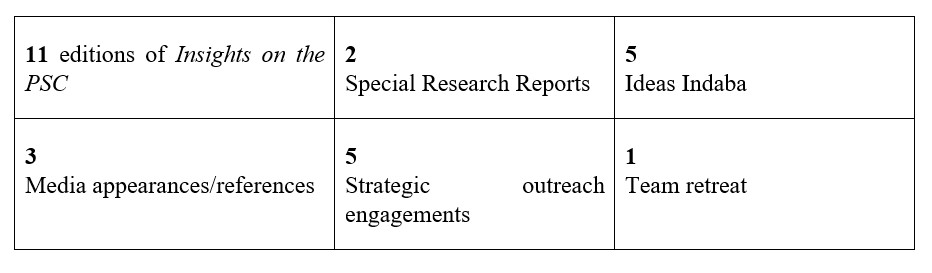
I. Insights on the PSC
Amani Africa’s flagship work, Insights on the PSC, provides current information and independent analysis ahead of PSC sessions to inform the preparation for and deliberation of Council members on the agenda of each session of the PSC. During August, the series tracked both country/region specific and thematic agenda items.
- Education in Conflict Situations | 2 August 2026
This edition of Insights on the PSC offered background analysis on previous engagements of the PSC on the theme and recent trends concerning education in various conflict settings. It identified four policy issues on the agenda of the session: protecting education, sustaining continuity of learning, recovery and inclusion, and financing and measuring delivery.
- Quarterly briefing by the A3 to the PSC | 4 August 2026
In this edition, the analysis shed light on efforts towards and gaps in institutionalizing the quarterly briefing by the African three (A3+) members of the UN Security Council (UNSC) as an avenue for enhancing close coordination between the PSC and the A3+. Apart from highlighting the factors that constrain the operation of the A3+ as an increasingly influential bloc in the UNSC such as weak strategic guidance and coordination with PSC on files of concern for Africa on the agenda of the UNSC, it drew attention to the need for operaitonalising the modalities the PSC identified over the years for enabling the A3+ to effectively project the collective voice of Africa on the basis of AU decisions including PSC–A3+ coordination mechanisms, enhanced role in agenda-setting and penholding, and strengthening accountability to the AU.
- Update on the situation in the Sahel | 6 August 2026
The analysis assessed the deepening security and humanitarian crisis in the Sahel amid escalating terrorist violence and changing external partnerships. It highlighted renewed AU engagement and the need to rebuild regional cooperation around a multidimensional response linking governance, security and development.
The analysis in this edition provided an assessment of why Africa’s deteriorating conflict landscape remains sharply at odds with the Silencing the Guns (STGs) program of the AU and as the 2030 deadline approaches. It drew on a special research report that assessed the first ten-year implementation of STGs, highlighting the gaps that stunted progress and the policy actions required to change the trajectory of conflicts.
- Consultation between the PSC, the AGA–APSA Platform and the PRC Sub-Committee on Human Rights, Democracy and Governance | 13 August 2026
This edition of Insights on the PSC focused on recent efforts in establishing dialogue with structures of AU’s Permanent Representatives Committee (PRC) having relevant mandate and the need for bridging institutional silos by strengthening coordination across governance, human rights, democracy, peace and security.
- Consultative Meeting Between the Peace and Security Council and the Pan-African Parliament | 18 August 2026
The analysis in this edition examined how to give greater substance to the institutionalised annual PSC–PAP consultation and the complementary peace and security mandates of the two organs. It focused on implementing earlier commitments and strengthening structured cooperation, parliamentary engagement and follow-up.
- PSC–ACHPR Consultation | 20 August 2026
In this edition, the analysis centred on making the Article 19 relationship between the PSC and ACHPR more operational and effective. It emphasised the need for oprationalising modalities for close working relationship identified in various earlier consultative meetings between the PSC and the human rights body, including consistent information exchange and more systematic use of human-rights findings and mechanisms to support conflict prevention, early warning and PSC decision-making.
On this session, the analysis focused on moving from parallel institutional reporting towards an integrated continental risk picture linking security, governance, intelligence and policing information. It stressed that the emerging threats-and-risks mapping tools should function as decision-support mechanisms that connect early warning to timely preventive action.
- Briefing on the Situation in South Sudan | 25 August 2026
This edition of Insights on the PSC assessed South Sudan’s worsening political, security and humanitarian environment as the December 2026 elections fast approach. It highlighted the need for an objective assessment of electoral readiness, implementation of outstanding transition commitments and sustained AU and regional engagement to avert renewed large-scale conflict in the context of an electoral process convened in conditions of major institutional and legal gaps and political and security volatility.
- PSC’s Provisional Programme of Work for September 2026 | 31 August 2026
Issued at the end of August, this edition of Insights on the PSC presented analysis of PSC’s Provisional Program of Work (PPoW) for September 2026, during Benin’s chairing of the Council. The analysis offered background information on the agenda of the five substantive sessions, alongside the major commemorative and high-level engagements envisaged for the month.
- Briefing on the Situation in the Central African Republic | 31 August 2026
The Insight assessed developments in CAR against the backdrop of recent developments in the peace process, continuing security fragility and discussions on a possible MINUSCA drawdown or reconfiguration. It stressed that any adjustment should be conditions-based and carefully sequenced, while calling for a clear AU position ahead of UN Security Council deliberations.
II. Special Research Reports
- Revitalising African Union’s Role in Peace and Security: Insights and Lessons from AU’s Ad Hoc Mechanisms for Peace | 12 August 2026
Against the background of AU’s recent declining agency in peace and security amid proliferating conflicts, weakening multilateralism and growing external intervention, the report provided analysis on lessons from AU’s ad hoc peace mechanisms. It identified insights on how strategic leadership, mobilization of collective consensus and member states support, strategic guidance and follow up by the PSC, the articulation of factually and analytically sound peacemaking strategy, strong technical and logistic support, strategic coherence and coordination for mobilizing leverage can help revitalise the AU’s conflict-prevention and resolution roles.
- Review of African Union’s Peace and Security Architecture in a New Era of Insecurity and Global Uncertainty | 27 August 2026
Produced to complement the AU’s report on the review of the African Peace and Security Architecture (APSA), this special report situates the AU Assembly-mandated review of APSA within the context of the new era of conflicts and threats on the continent and the disorder that characterizes the multilateral system. It examines how APSA should be adapted and strengthened to improve political effectiveness, strategic coherence and the AU’s role in peace and security in a changing context.
III. Ideas Indaba
Ideas Indaba is Amani Africa’s platform for workshopping opinion, commentary and debate on current developments affecting Africa and the AU.
- Regional order and the new geopolitics of ports, maritime infrastructure, and transport corridors in the Horn of Africa | 3 August 2026
Arguing that ports and transport corridors are transformed into strategic instruments in the Horn of Africa, in which economic integration, sovereignty, security, political authority and geopolitical alignment are negotiated, our latest Ideas Indaba feature article, by Dr Seife Ayalew, makes a case for why the governance of infrastructure needs to become part of the region’s peace architecture.
- With no viable collective plan emerging from the AU and Kampala summit, it falls on each AUSSOM TCC to plan for saving itself individually | 7 August 2026
The Ideas Indaba feature article warns that the announced end of U.S. support for continuing UNSOS beyond December 2026 could leave AUSSOM operationally incapable even if its mandate is renewed. As the Kampala Summit did not produce a viable collective worst-case contingency plan, it argues that troop-contributing countries should prepare individual plans for an orderly withdrawal if replacement financing and logistics are not secured.
- Libya’s latest turmoil has the hallmarks of the African Union Peace and Security Council’s diagnosis of why its transition remains stalled | 14 August 2026
The Ideas Indaba article, reacting to the latest incidents of violence and PSC’s most recent session, links Libya’s latest political, security and economic shocks to three structural problems identified by the PSC: institutional and political fragmentation, the shadow or war economy and external interference. It argues that while the PSC’s diagnosis is broadly accurate, AU prescriptions have yet to match the depth of the factors perpetuating Libya’s stalled transition.
- Africa’s stake in the future of the UN | 24 August 2026
The article argues that the weakening of multilateralism is a strategic concern for Africa that makes the selection of the new UN Secretary-General a matter of major policy engagement. Instead of being a matter to be approached passively, the prevailing geopolitical developments necessitate an active role by Africa and the AU to ensure that the selection produces someone who possesses the qualities of a political leader of unusual competence, independence and judgement that helps the UN navigate the prevailing fraught multilateral terrain and deliver a reform. It calls on Africa to engage earlier and more coherently so that it becomes a co-author, rather than merely a subject, of the multilateral system that emerges.
- The Luanda AU summit should declare a state of emergency on the conflict situations | 30 August 2026
Ahead of the Luanda Extraordinary AU Summit, this Ideas Indaba article argues that Africa’s proliferating conflicts require emergency-level political action rather than business-as-usual summitry or further declaratory commitments. It calls for concrete, measurable and time-bound measures that use the AU’s diplomatic and normative tools to arrest the continent’s worsening conflict trajectory.
STRATEGIC OUTREACH & MEDIA ENGAGEMENT
I. Selected Strategic Engagements
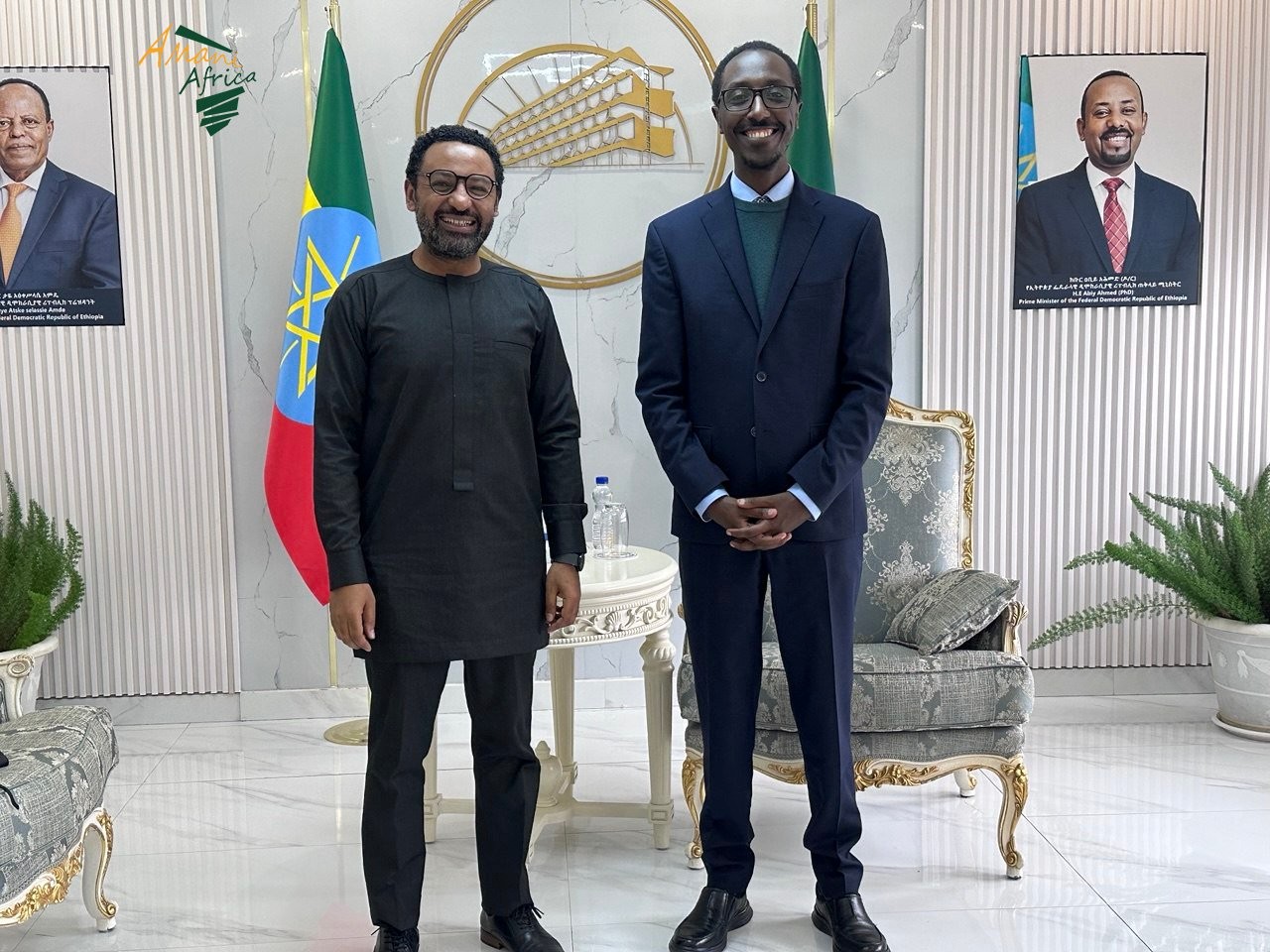
- Engagement with Ethiopia’s Minister of Foreign Affairs | 7 August 2026
Amani Africa was received by H.E. Dr Gedion Timothewos, Minister of Foreign Affairs of Ethiopia. The exchange covered Amani Africa’s work and areas for closer collaboration, including AU reform, Dr Gedion’s role as President of COP32 and nurturing a dynamic multilateral policy ecosystem that reinforces Addis Ababa’s role as a premier diplomatic hub.
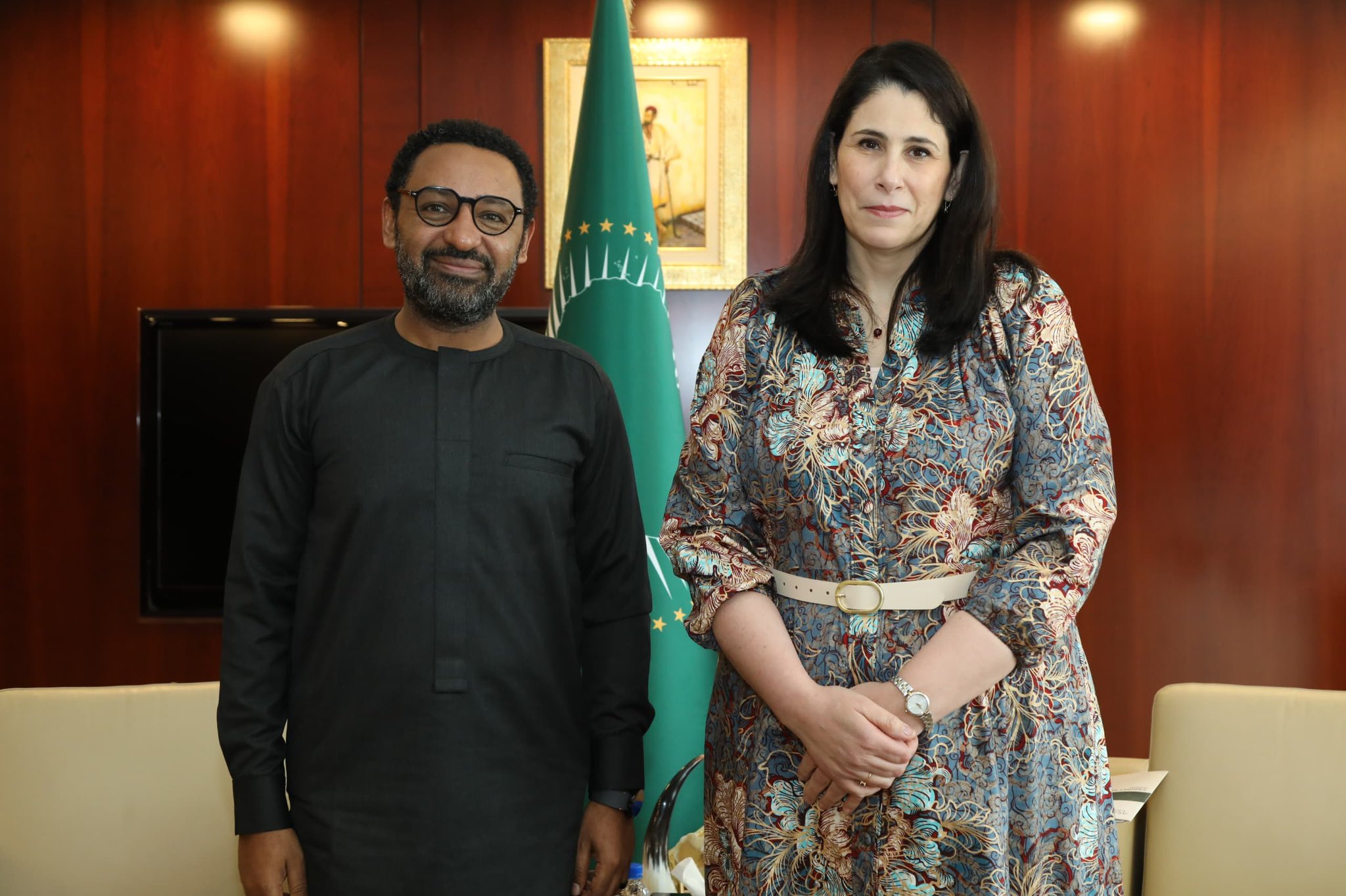
- Exchange on AU institutional revitalisation and reform with the Deputy Chairperson of the AU Commission | 7 August 2026
A team of Amani Africa led by the organisation’s Founding Director met H.E. Amb. Selma Malika Haddadi, Deputy Chairperson of the AU Commission. The meeting involved substantive exchange on the AU’s institutional revitalisation and reform. The discussion covered peace, security and governance priorities and identified the AU Reform Agenda, including financing of the Union, as an area for continued engagement.
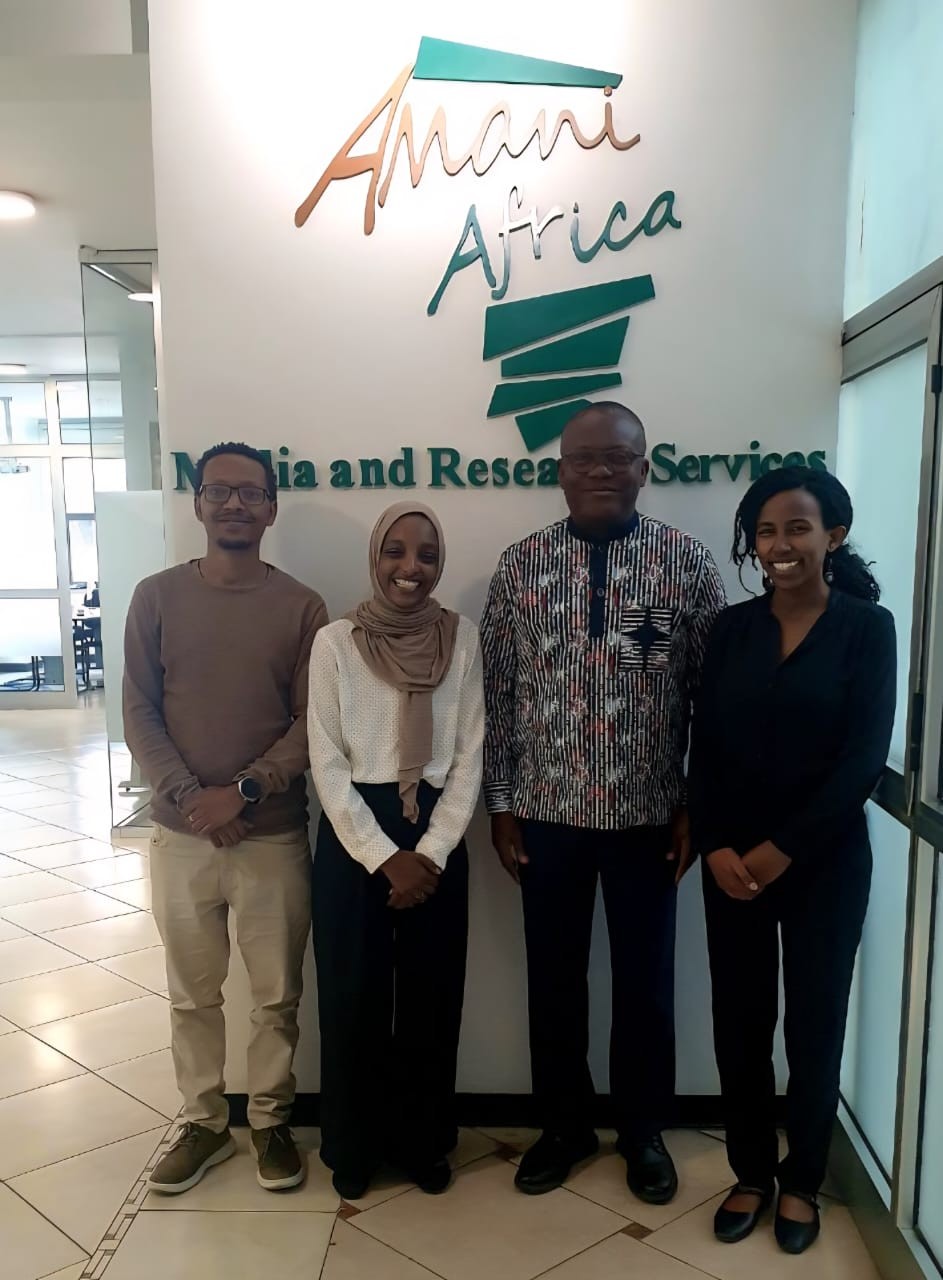
- Engagement with Desire Assogbavi of the Open Society Foundations (OSF) | 27 August 2026
Amani Africa welcomed Desire Assogbavi, Advocacy Advisor for Africa, and Huda Ibrahim, Advocacy Advisor for the United States, from the OSF. In addition to on-going processes for institutional collaboration between OSF and Amani Africa, discussions explored challenges and opportunities for strengthening AU leadership in governance, conflict prevention and resolution, as well as upcoming collaboration around the AU Summit.
II. Media appearances and references
Amani Africa’s analysis continued to inform public reporting on African peace and security developments.
- AFP / Addis Standard | 1 August 2026
In reporting on uncertainty surrounding AUSSOM following the U.S. decision not to support continuation of UNSOS beyond December 2026, Amani Africa’s Founding Director, Dr. Solomon Dersso, was quoted as warning that there was little prospect of sustaining the mission if U.S. support for UNSOS ends.
- Somali Guardian | 10 August 2026
A Somali Guardian report on the withdrawal of Ethiopian troops from Burhakaba cited Amani Africa’s analysis featured in an Ideas Indaba article that analysed the Kampala Summit, including its assessment of the gap between AUSSOM’s requirements and available financing and logistics and the need to plan for a worst-case scenario.
- Addis Standard |11 August 2026
Addis Standard cited Amani Africa’s assessment that the Kampala Summit exposed a widening gap between AUSSOM’s operational requirements and the financing and logistical support available to the mission.
OTHER ACTIVITIES
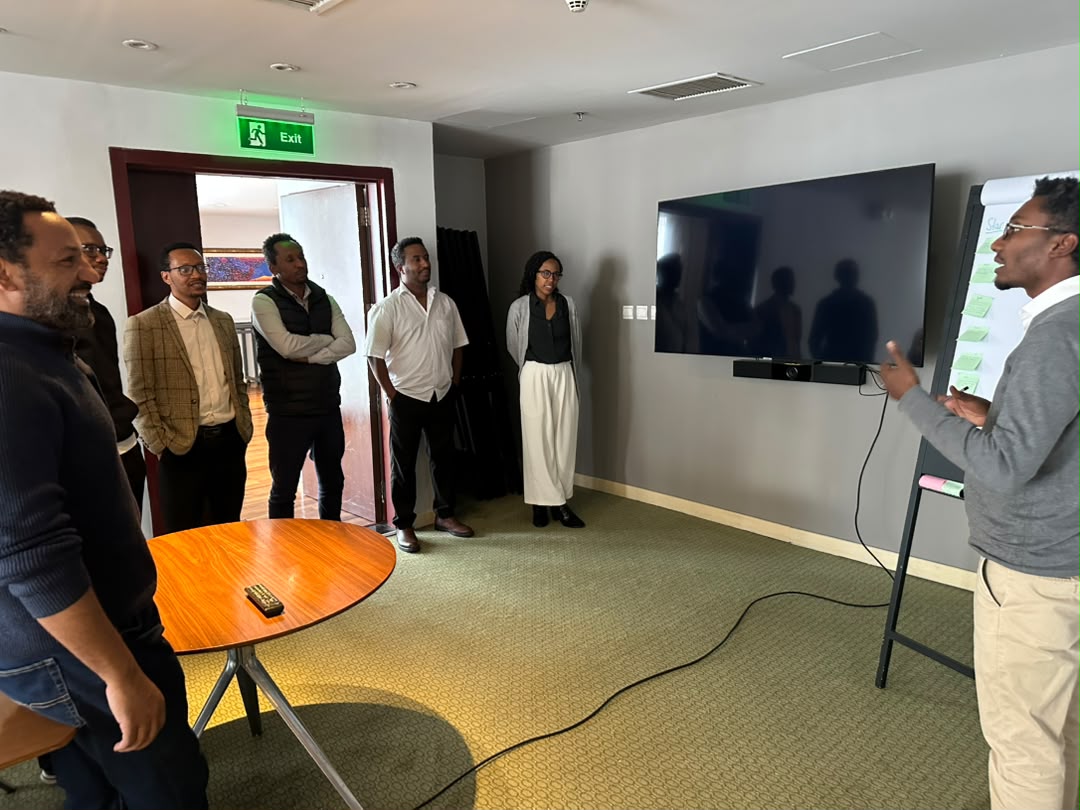
- Team Retreat | 10 August 2026
The Amani Africa team held a retreat to collectively assess and learn from work undertaken since the beginning of the year. It also created space to reflect on team welfare, the balance between increasing demand for Amani Africa’s work and available staffing and resources, and how to consolidate growth while maintaining focus on the organisation’s core areas of work.