
Beyond the Flag-Off: Building a Sustainable Maritime Security Architecture in the Gulf of Guinea
Date | 4 June 2026
Tefesehet Hailu, Senior Researcher, Amani Africa
On 1 June 2026, leaders and naval representatives from six Gulf of Guinea states gathered in Lagos, Nigeria, for the ceremonial flag-off of the Combined Maritime Task Force (CMTF), marking a historic milestone in Africa’s efforts to develop a standing, ready-to-deploy maritime security capability. The six Gulf of Guinea countries that pioneered the task force are Côte d’Ivoire, The Gambia, Ghana, Liberia, Nigeria, and Sierra Leone.
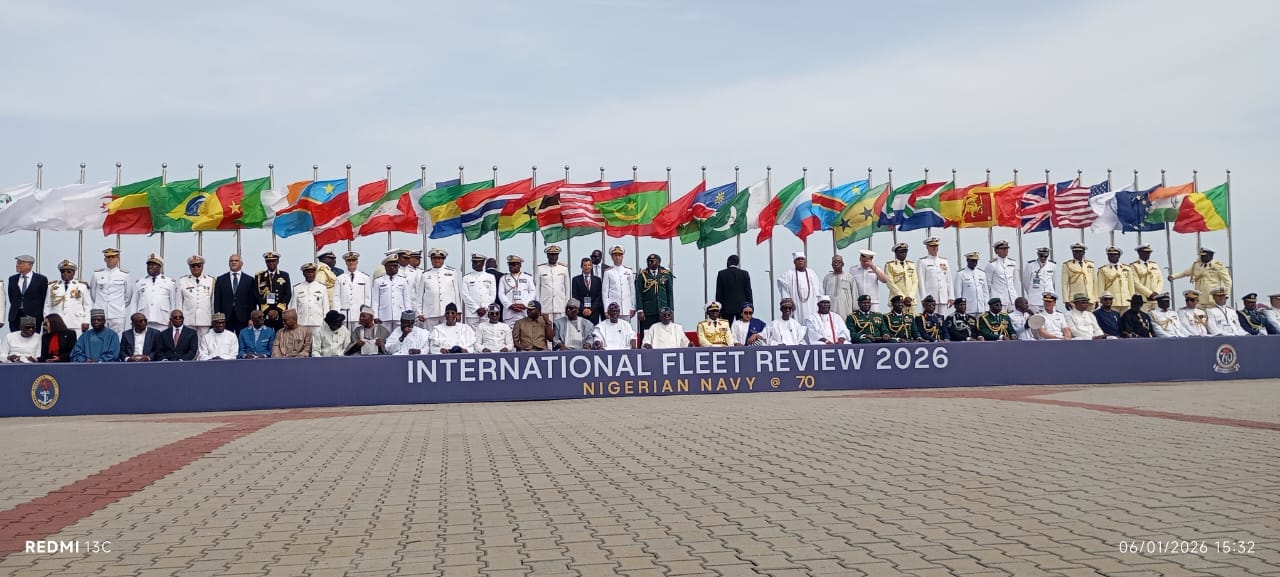
Coming only weeks after the African Union (AU) Peace and Security Council (PSC) considered the operationalisation of the CMTF at its 1346th session on 15 May 2026, the ceremony represented the most tangible manifestation yet of a process that began with the PSC’s call for a maritime task force in 2021. The flag-off not only signalled the transition of the CMTF from a conceptual framework into an operational mechanism, but also reflected growing continental recognition that maritime security has become an indispensable pillar of Africa’s peace, security, trade, and development agenda. The ceremony further underscored Nigeria’s leadership role in advancing regional maritime security and aligned with broader efforts under President Bola Ahmed Tinubu’s Renewed Hope Agenda to strengthen maritime governance and security cooperation across the Gulf of Guinea.
A central focus of the PSC’s deliberations was the assessment of progress toward operationalising the CMTF as Africa’s first standing and ready-to-deploy maritime force. The Council welcomed a series of developments that have steadily transformed the initiative from a political aspiration into an emerging operational reality. These included the adoption of the Concept of Operations (CONOPS) by ten Gulf of Guinea countries, the endorsement by the ECOWAS Authority of Heads of State and Government of Nigeria’s offer to host the headquarters, and Nigeria’s commitment to provide key operational assets, including three ships, one helicopter, eight vehicles, and temporary headquarters facilities in Lagos.
The subsequent flag-off ceremony on 1 June provided visible evidence that the CMTF has entered a new phase of development. While largely symbolic, the ceremony demonstrated that participating states are increasingly prepared to move beyond declarations of intent toward practical implementation. Viewed within the broader trajectory of PSC engagement on maritime security, the ceremony represents the culmination of a gradual institutional evolution: from the Council’s initial call for a Maritime Task Force during its 1012th session in 2021, through the formal endorsement of the CMTF in 2025, to the operational readiness milestones recorded in 2026. The challenge now will be ensuring that the momentum generated by the flag-off translates into sustained operational capability, regular deployments, and measurable improvements in maritime security outcomes.
Although piracy incidents in the Gulf of Guinea have declined significantly in recent years, the PSC correctly recognised that the region’s maritime security challenges have become increasingly diverse and complex. The reduction in piracy should not obscure the persistence of other forms of maritime criminality that continue to undermine regional stability and economic development. Illegal, unreported and unregulated (IUU) fishing, oil theft, trafficking in narcotics and arms, maritime-linked organised crime, and environmental crimes have emerged as some of the most significant threats confronting the region.
Particularly noteworthy is the growing recognition of the linkages between maritime insecurity and broader regional instability. Criminal networks increasingly operate across maritime and terrestrial domains, connecting illicit economies in the Gulf of Guinea with conflict dynamics in the Sahel. The southward expansion of violent extremist groups into northern areas of coastal states such as Benin, Togo, Ghana and Côte d’Ivoire has further blurred traditional distinctions between maritime and inland security threats. This evolving threat landscape reinforces the rationale for the CMTF not merely as a counter-piracy mechanism, but as a broader instrument to address transnational maritime threats that increasingly intersect with regional peace and security challenges.
The PSC’s discussions also reflected a growing appreciation that maritime security is not solely a security concern but a strategic development imperative. The Gulf of Guinea remains one of Africa’s most important maritime regions, facilitating the overwhelming majority of international trade for West and Central African coastal states while serving as a critical source of energy exports and marine resources. The Council’s emphasis on the relationship between maritime security, the Blue Economy, the African Continental Free Trade Area (AfCFTA), the 2050 Africa’s Integrated Maritime Strategy (2050 AIMS), and the Lomé Charter illustrates a more integrated understanding of maritime governance within continental development priorities.
Beyond its regional significance, the CMTF may also represent an important test case for strengthening the maritime dimension of the African Standby Force (ASF). As the AU continues to seek practical mechanisms for enhancing operational readiness, interoperability, and rapid deployment capabilities, the CMTF could provide valuable lessons for future maritime operations under the African Peace and Security Architecture. In this regard, the initiative’s success or failure will have implications that extend far beyond the Gulf of Guinea.
Despite the positive developments celebrated during the Lagos flag-off ceremony, questions surrounding sustainability remain largely unresolved. The communiqué reiterated the need for predictable financing, equitable burden-sharing, and collective ownership, yet stopped short of identifying concrete funding arrangements or operational cost-sharing mechanisms. This omission is particularly significant given that inadequate resources and inconsistent political commitment were identified within the CMTF’s own CONOPS as key factors limiting the effectiveness of existing maritime security arrangements under the Yaoundé Architecture.
The heavy reliance on Nigeria’s political leadership, naval assets, and logistical support demonstrates commendable regional leadership while also highlighting a structural vulnerability. Unless broader contributions are secured from participating states, there is a risk that the CMTF could become overly dependent on a single state’s capabilities. The true measure of success following the flag-off ceremony will therefore not be the symbolism of the launch itself, but rather whether participating states translate their political commitments into sustainable financial contributions, force-generation commitments, and operational participation. Without such collective ownership, the CMTF risks replicating many of the same institutional and resource constraints that have historically limited regional maritime security initiatives.
In a nutshell, the flag-off of the CMTF in Lagos on 1 June 2026 represents a landmark achievement for African-led maritime security cooperation. It also demonstrates the growing political commitment among Gulf of Guinea states to address maritime insecurity collectively. Yet the ceremony should be viewed as the beginning rather than the culmination of the process. The ultimate test of the CMTF will lie not in its establishment but in its sustainability, operational effectiveness, and ability to generate measurable security outcomes. Success will require predictable financing, equitable burden-sharing, robust coordination with the Yaoundé Architecture, harmonised legal frameworks, and continued political support from AU member states. If these challenges are addressed, the CMTF has the potential not only to strengthen security in the Gulf of Guinea but also to serve as a model for future AU-led maritime operational mechanisms and contribute to the development of the maritime dimension of the African Standby Force. If not, the Task Force risks becoming another ambitious institutional initiative that struggles to move beyond symbolic significance.
The content of this article does not represent the views of Amani Africa and reflect only the personal views of the authors who contribute to ‘Ideas Indaba’