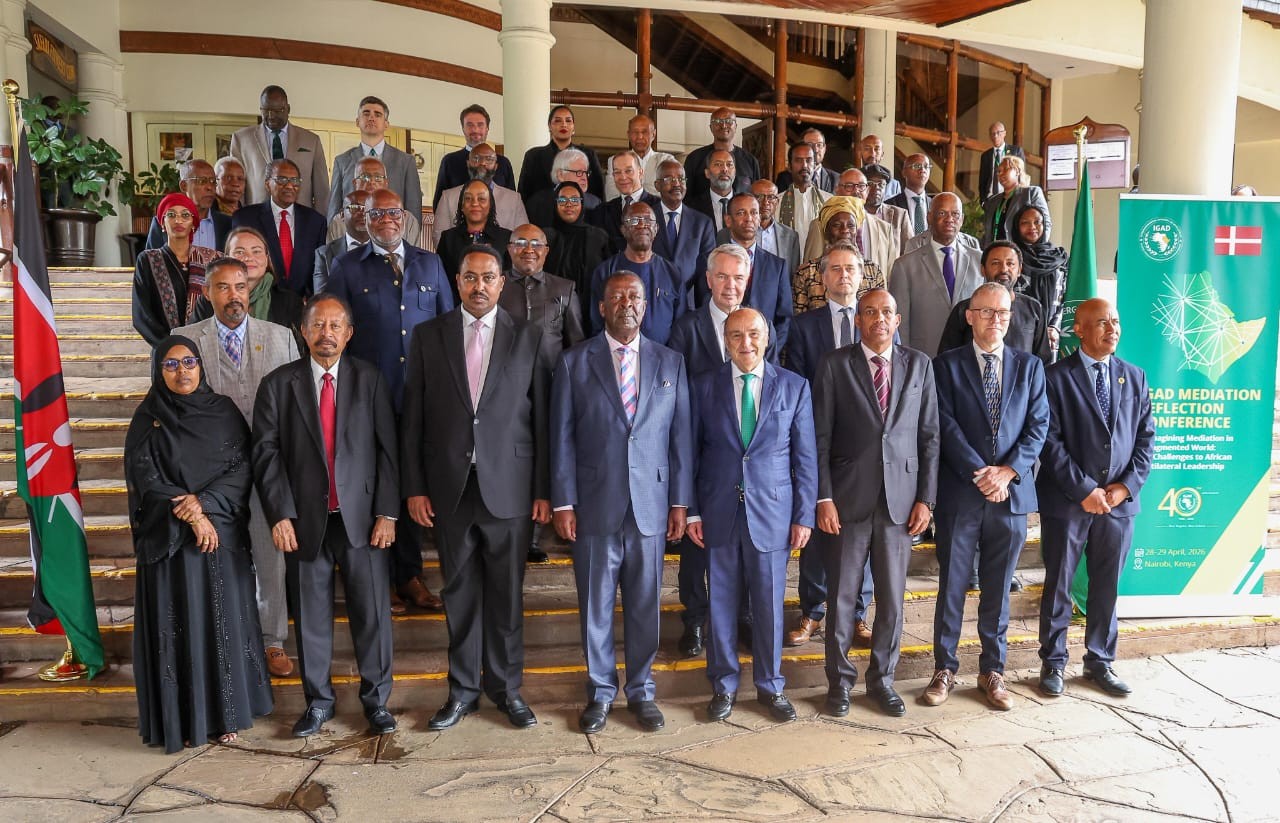

IGAD mediation conference warns risk of ‘nations’ or ‘parts of nations’ becoming objects of acquisition as ‘peace’ gets commercialized
Date | 28 April 2026
Speaking about the challenge that the shifting global dynamics poses to mediation, Kenya’s Prime Cabinet Secretary and Secretary for Foreign and Diaspora Affairs, Musalia Mudavadi, warned that ‘Peace has been privatized. Perhaps even commercialized’. ‘Because it is about transactions,’ he explained. And ‘[i]t is no longer (about) humanity. It is no longer about lives.’
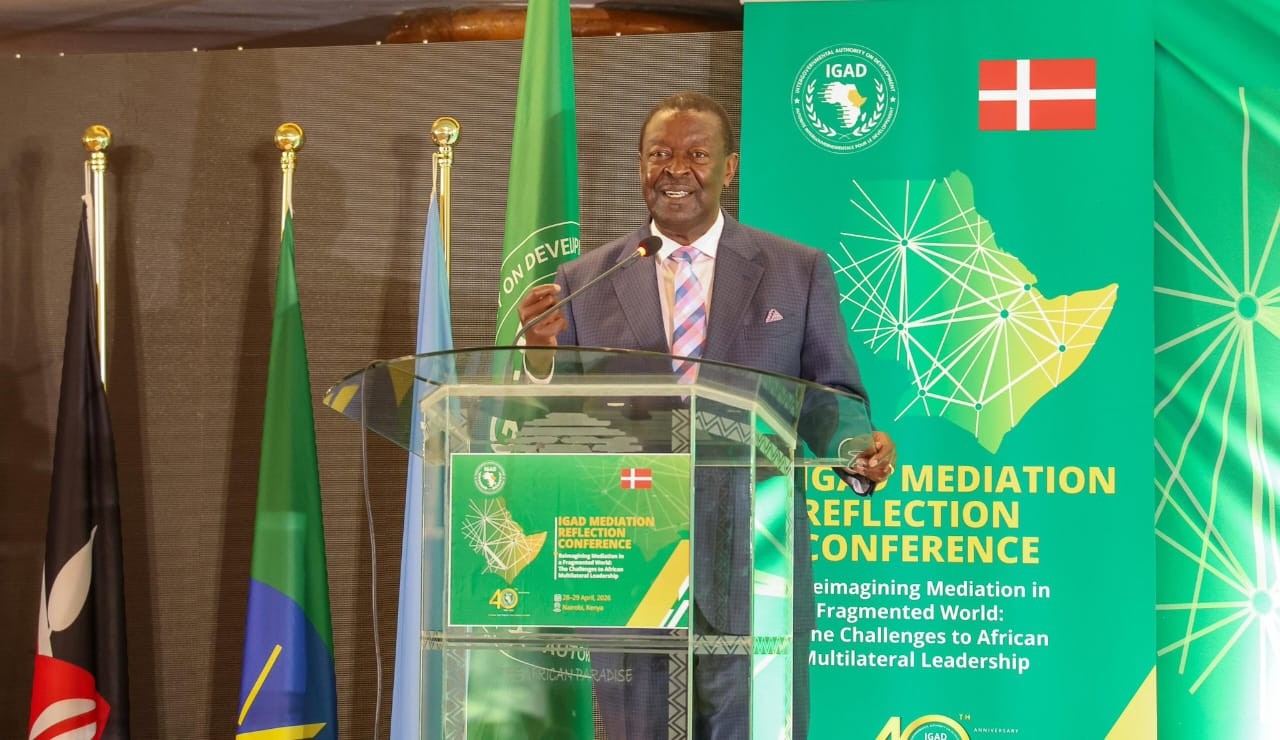
Kenya’s chief diplomat said this in his opening address at the Inter-Governmental Authority on Development (IGAD) conference underway in Nairobi Kenya, under the theme ‘Reimagining Mediation in a Fragmented World: The Challenge to African Multilateral Leadership’, a mediation reflection conference being held on 27 and 28 April 2026 as part of the 40 years anniversary of the regional body.
The conference that brought together seasoned mediators, mediation experts and researchers from the IGAD region, other parts of Africa and the world came at a time when, as the Executive Secretary of IGAD and host of the conference, Dr Workneh Gebeyehu pointed out in his address, Africa, specifically the Horn of Africa’ stands at a critical moment, the same as the world, characterised by the emergence of a system of conflict’.
Mudavadi made the point about commercialization of peace while expounding on his core argument that ‘the mediation landscape’ faces the ‘dual challenge of protracted and mutating conflicts’ and ‘rapidly shifting global dynamics’. In this shifting global dynamics, he posed a blunt question, asking ‘when you go to mediation, are you going there as a business negotiator? Are you going there as an arbitrator of transactions? or are you going there genuinely as mediator to see peace in the countries facing conflict?
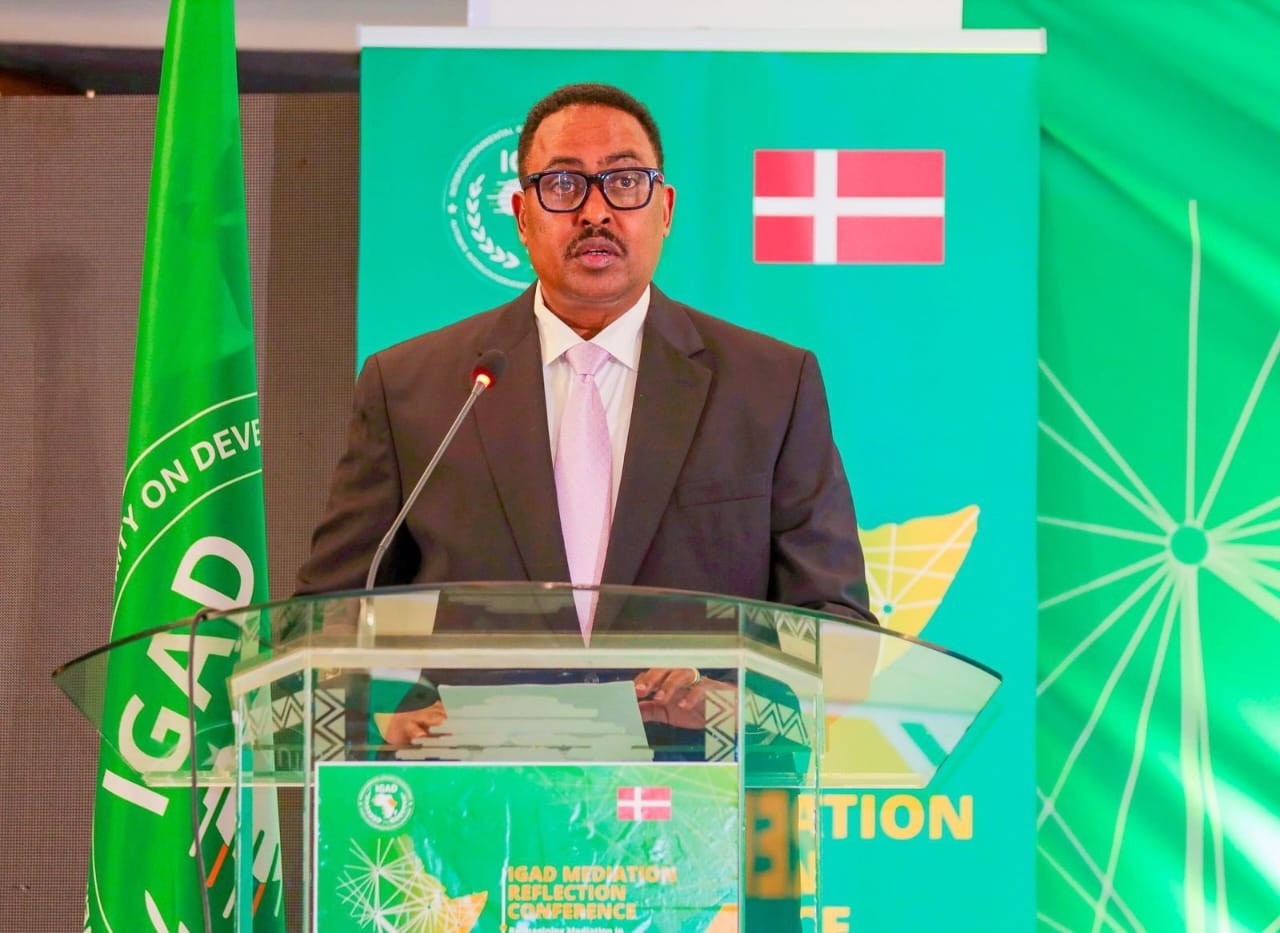
Kenya’s Prime Cabinet Secretary was not alone in drawing attention to the challenge posed by transactional approaches. IGAD’s chief underscored the need for confronting ‘a growing tension between principled mediation and transactional deal making.’ According to Dr Gebeyehu, ‘the central dilemma of our time’ is: ‘How do we end the violence quickly without undermining sustainable peace?’
Experts noted that mediation was never free from transaction. Indeed, experts admitted that ending the fighting, which is what transactional peace deals focus on, is necessary. However, as Martin Grifith, Former UN Undersecretary General for Humanitarian Affairs and Emergency Relief Coordinator, pointed out, a truce or even ceasefire alone will not be enough to bring about sustainable peace.
Abdul Mohamed, a leading expert who played leading role in conceptualizing the conference as senior advisor to the IGAD Executive Secretary, agreed with Grifith that, without peace agreement on the substantive or underlying issues, such truce or ceasefire faces collapse.
IGAD’s chief echoed this point in his framing address when he said ‘too often’ mediation ‘risks becoming a crisis management rather than a conflict resolution (instrument).’
It is not simply the fact that transactional deal making stops at securing truce or ceasefire and does not concern itself with the underlying issues that makes it concerning when compared to what Dr Gebeyehu called ‘principled mediation’. It is the fact that it centres deal making or business negotiation rather than the issues that precipitated the conflicts.
For Kenya’s Prime Cabinet Secretary, this has a bigger danger. That danger has to do with the question he asked of whether ‘we are facing a new definition of sovereignty.’ Rather than just ordinary deal making or transaction, he said ‘we are now seeing in conversations discussions that talk of possible acquisition of nations or part of nations, a completely new dynamic is taking place.’
In some of the most pressing conflicts in Africa such as Sudan, this carries very alarming dangers. Thus, the Special Representative of the Chairperson of the AU Commission, Ambassador Mohamed Belaiche was emphatic in affirming the centrality of the principles relating to the unity, sovereignty and territorial integrity of Sudan. These principles, he argued, ‘serve as a legal and moral safeguard against the…imposition of fete accompli.’ Thus, he insisted that ‘any serious political process must begin with a clear rejection of any infringement upon the unity of Sudan.’
In a remark he made while moderating the morning sessions, Solomon Dersso, Amani Africa’s Founding Director, noted that if the emerging trend is terrifying to the world, it must be more terrifying for us in Africa both because of our vulnerability and Africa’s own bitter experience with earlier processes of ‘acquisition of nations’. He stated that the grave dangers the emerging dynamics carry should remove any sense of complacency we in Africa may have to fend off against the grave dangers of transactionalism.