
Informal Consultation with Member States in Political Transition
Date | 26 February 2026
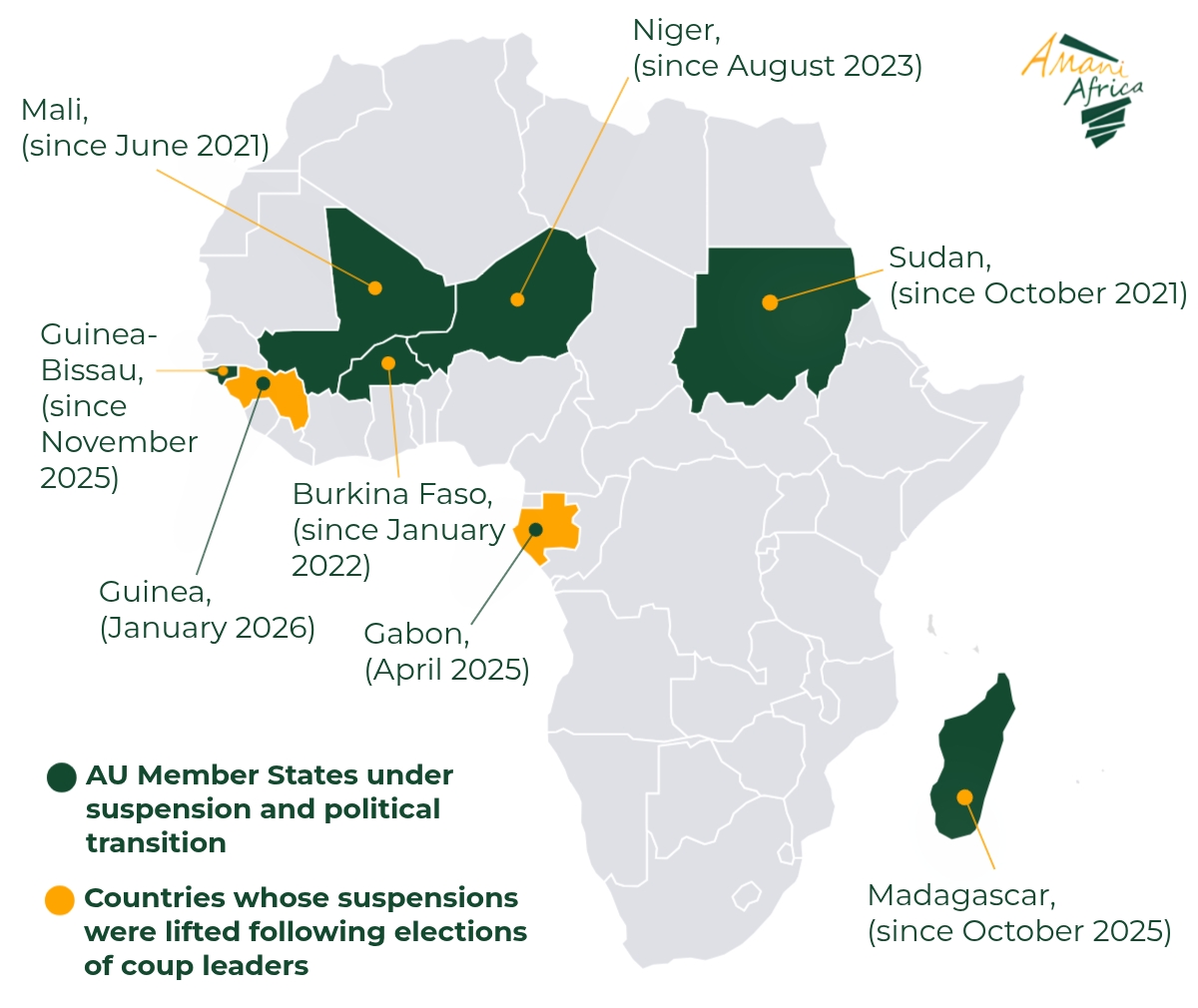
Tomorrow (27 February), the African Union (AU) Peace and Security Council (PSC) will hold an informal consultation with countries in political transition—namely Burkina Faso, Guinea-Bissau, Madagascar, Mali, Niger and Sudan.
This meeting will be the latest in the PSC’s series of informal consultations, introduced into its working methods in April 2023 following the 14th Retreat on Working Methods in November 2022. Grounded in Article 8(11) of the PSC Protocol, the mechanism enables direct engagement with representatives of Member States suspended from AU activities due to unconstitutional changes of government (UCG). Tomorrow’s session is expected to take stock of progress and outstanding challenges since the late 2025 consultation, in light of evolving regional dynamics.
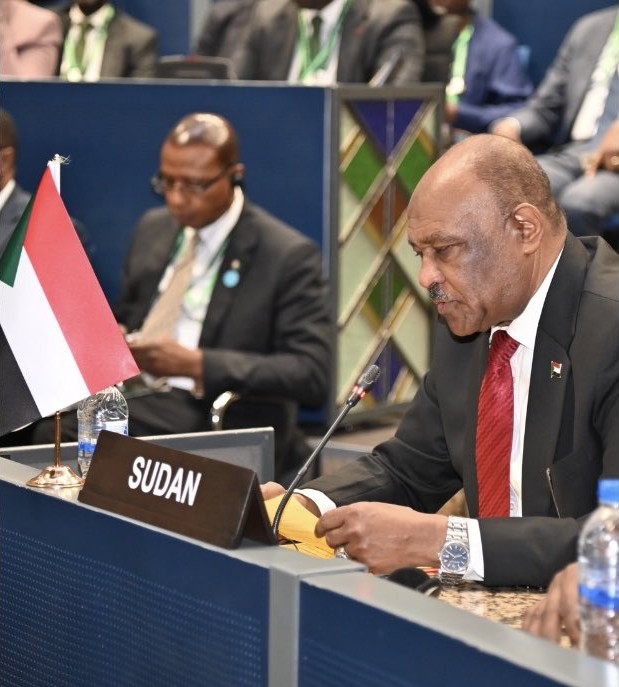
The PSC scheduled an informal consultation on Sudan early in the month, with Sudan ahead of the PSC ministerial session held on 12 February 2026 on the situation in Sudan. While there is no public record of whether the PSC held such an informal consultation, the Foreign Minister of Sudan was present and made a statement at the opening segment of the 1330th meeting of the PSC dedicated to the situations in Sudan and Somalia.
Two notable developments are notable in relation to countries in transition. First, military coups in Guinea-Bissau and Madagascar have kept the number of states under suspension unchanged despite the lifting of the suspension of Gabon. Second was the lifting of Guinea’s suspension from the AU, notwithstanding concerns regarding compliance with Article 25(4) of the African Charter on Democracy, Elections and Governance (ACDEG), which renders perpetrators of UCG ineligible to contest elections organised to restore constitutional order. At its 1325th meeting on 22 January 2026, the PSC determined that the political transition in Guinea had culminated in ‘the successful organisation of the presidential election on 28 December 2025’ and consequently lifted the suspension. Yet, this step did not change the number of states under suspension in 2026 from the number in 2024.
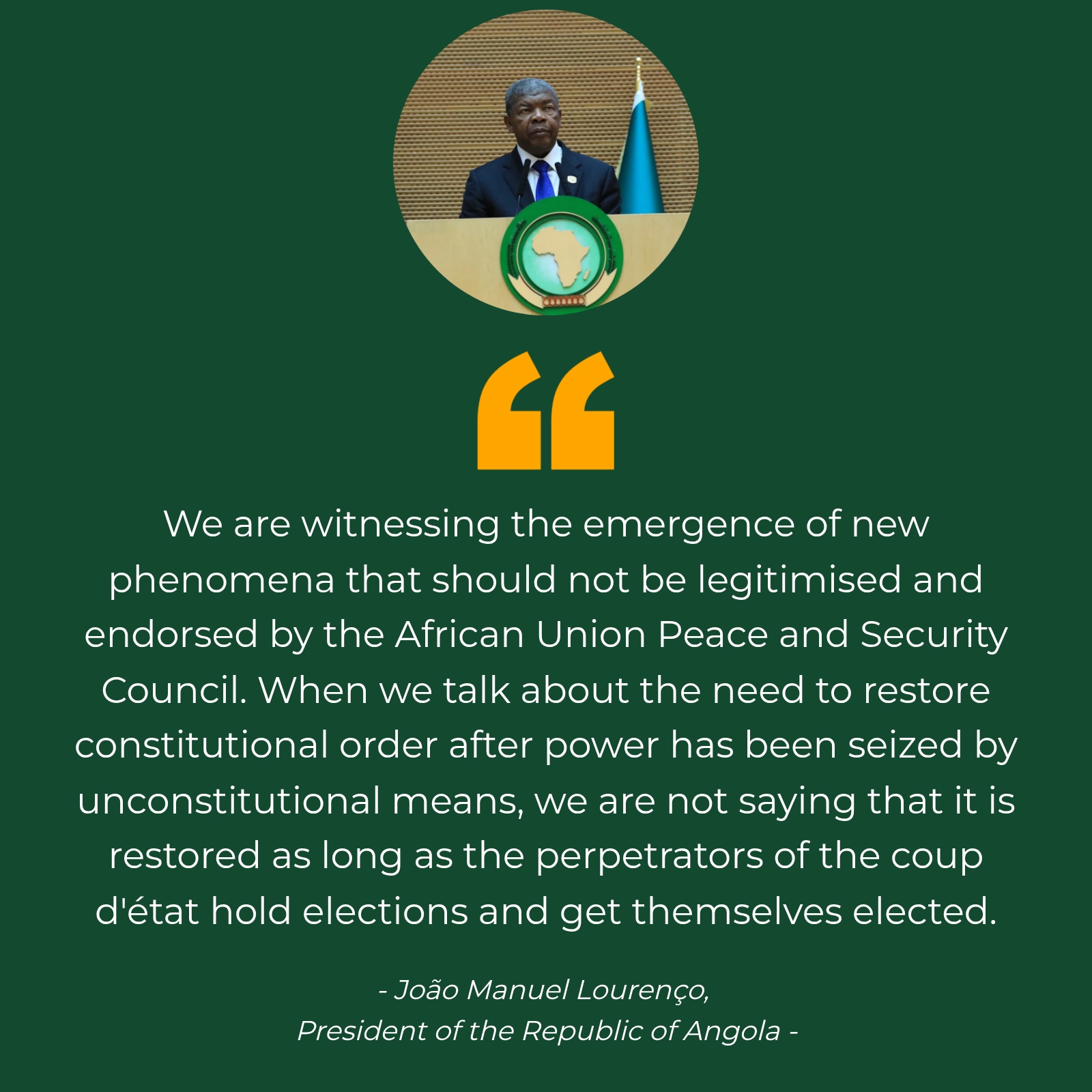
What was problematic with respect to the decision to lift suspension of Gabon and Guinea, thereby endorsing the legitimisation of coup makers through election, was not simply PSC’s lack of consideration of Article 25(4) of ACDEG. It was rather the PSC’s repeated inability to explicitly state that the provision of the AU norm on non-eligibility of those who participated in unconstitutional changes of government for elections organised for restoring constitutional order remains part of the AU anti-coup norm, and it stands by that provision. This issue took the spotlight during the 39th Ordinary Session of the AU Assembly when the Chairperson of the AU, Angola’s President Jõao Manuel Lourenço, during the opening session of the Assembly in his address, pointed out.
While informal consultations have now become regularized as a format of PSC meeting, it remains far from clear that their potential and value is adequately explored. One issue with the informal consultations is how to use them beyond just being a platform for the exchange of information. The critical test for the value of the informal exchange is whether it facilitates improved understanding and relationship between the AU and the countries in transition, and how the insights gleaned from the consultations help to improve and advance a more effective AU policy engagement in the countries in transition.
What additionally limits the value of the informal consultation in its current design is the fact that it does not afford tailored discussion on the specificities of each country’s situation. The transitional dynamics of the different countries are unique to each and deserve dedicated attention for advancing a more effective policy reflective of and responsive to the needs of each. Best practice from the UN Security Council suggests that, unless it is for thematic issues, country situations are dealt with individually, even in informal meetings. In this respect, the inclusion in the program of work for February 2026 of an informal consultation dedicated to Sudan sets a good example in taking the use of informal consultations to the next level.
Another challenge, not unrelated to the above, witnessed during 2025 was the lack of participation on the part of representatives of some of the member states to engage in some of the informal consultations. For example, it was the lack of confirmation of participation by the representatives of some of the member states that led to the cancellation of the planned informal consultation in November 2025. Tomorrow’s informal consultation provides an opportunity for taking stock of what worked and how to improve this engagement for enhancing effective policy engagement of the AU in support of both implementation of reform processes for transition and efforts towards achieving peace in Sudan and containing the terrorist menace in Burkina Faso, Mali and Niger.
During tomorrow’s informal consultation, representatives of the affected countries are expected to provide an update on the transitional process of each of their respective countries.
As noted in the analysis in the Insight for the December 2025 informal consultations, a central challenge in relation to the AES is how the AU and ECOWAS can integrate the restoration of constitutional order into a broader stabilisation and state authority expansion strategy, supported by a jointly developed and deployed security mechanism. These concerns resonate with warnings issued at the UN Security Council meeting last November, where ECOWAS Commission President Omar Alieu Touray described terrorism as an ‘existential threat’ to West Africa, while President Julius Maada Bio, Sierra Leone’s President, Chair of ECOWAS and UNSC President for November, outlined the need for engaging directly with Sahel states, rebuilding trust, and supporting nationally owned transitional processes. Stating that the time is ‘for bold and coordinated action,’ he proposed an ECOWAS-AU-UN compact for peace and resilience in the Sahel as an instrument for addressing the grave situation facing the Sahel and viewing the AES not as an adversary but as a partner that can complement ECOWAS and AU. The informal consultation may serve as an opportunity to discuss with AES states for taking these outlines forward.
In relation to Madagascar, tomorrow’s informal consultation will present an opportunity to hear from the representative of Madagascar on the progress made in the development of a transitional roadmap and the inclusivity of the process for elaborating the roadmap. Madagascar had earlier launched a National Consultation on 10 December 2025 to advance constitutional reform toward a Fifth Republic through a six-month, inclusive, nationwide process. It may additionally consider how the AU, working in close coordination with SADC, in accordance with the communiqué of its 1313th meeting on 20 November, can enhance its engagement for ensuring that the reforms necessary for preventing the recurrence of coups in Madagascar are crafted and implemented as part of the transitional process. The consultation may thus additionally consider how the AU, working in close coordination with SADC, in accordance with the communiqué of its 1313th meeting on 20 November, can enhance its engagement for ensuring that the reforms necessary for preventing the recurrence of coups in Madagascar are crafted and implemented as part of the transitional process.
With respect to Guinea-Bissau, the consultation is expected to assess the extent to which steps taken by the military junta towards creating inclusive political conditions towards the development of a transitional roadmap for the restoration of constitutional order. It is expected that the representative of Guinea-Bissau will provide an update on the steps taken. These may include the formation of a transition government, the allocation of three ministerial posts each to the African Party for the Independence of Guinea and Cape Verde and the political group led by Fernando Dias Da Costa (the leading candidate in the November election), the appointment of 10 representatives from the two blocs to the National Transition Council, the release of political prisoner and the withdrawal of the request for the departure of the ECOWAS Stabilization Support Mission. However, it is worth noting that opposition leaders decline participation. Subsequently, the transitional authorities announced that legislative and presidential elections would be held on 6 December 2026, with Horta Inta-a asserting that ‘all the conditions for organising free, fair and transparent elections have been met.’ Given that the transitional charter issued in early December barred him from contesting the polls, the PSC members may use the opportunity of the informal consultation to applaud this step as a measure that ensures compliance with Article 24(5) of the ACDEG and urge its compliance.
On Sudan, there has been no major development since the PSC meeting of 12 February as far as the transitional process is concerned. Tomorrow’s informal consultation, however, will afford the representative of Sudan to reflect on the outcome of the PSC ministerial session on Sudan held early in the month.
Similar to prior consultations, tomorrow’s session is not anticipated to produce an outcome document.