
Briefing on the Situation in South Sudan
Date | 25 August 2026
Tomorrow (26 August), the African Union (AU) Peace and Security Council (PSC) will convene its 1364th session to receive briefings from the AU High-Level Ad Hoc Committee for South Sudan (C5) and the AU High Representative for the Horn of Africa and the Red Sea on the situation in South Sudan.
Following opening remarks by Mohamed Khaled, Permanent Representative of Algeria to the AU and Chairperson of the PSC for August, Bankole Adeoye, AU Commissioner for Political Affairs, Peace and Security (PAPS), is expected to deliver a statement. The Representative of South Africa as the chair of C5 and the AU High Representative for the Horn of Africa and the Red Sea, Jakaya Kikwete, are expected to brief the Council.
The meeting comes less than four months before the country’s first general elections, scheduled for 22 December 2026, and at a moment when political mistrust, armed confrontation and humanitarian distress are placing the transition under enormous strain. The PSC last considered South Sudan on 30 April, at its 1343rd session, when it adopted the report of its 23–25 April field mission. During that session, the PSC urged the Revitalised Transitional Government of National Unity (RTGoNU) to ensure that any amendment to the Revitalised Agreement on the Resolution of the Conflict in South Sudan (R-ARCSS) follows the due process stipulated in the Agreement. It also called for sustained engagement to secure the release of First Vice-President Riek Machar and other political detainees and enable meaningful dialogue. On the elections, it reiterated the call for ensuring all necessary preparations and establishment of conducive conditions for the organisation of the elections. In this context, the PSC requested the Chairperson of the AU Commission to expedite the deployment of a multidimensional technical needs-assessment team.
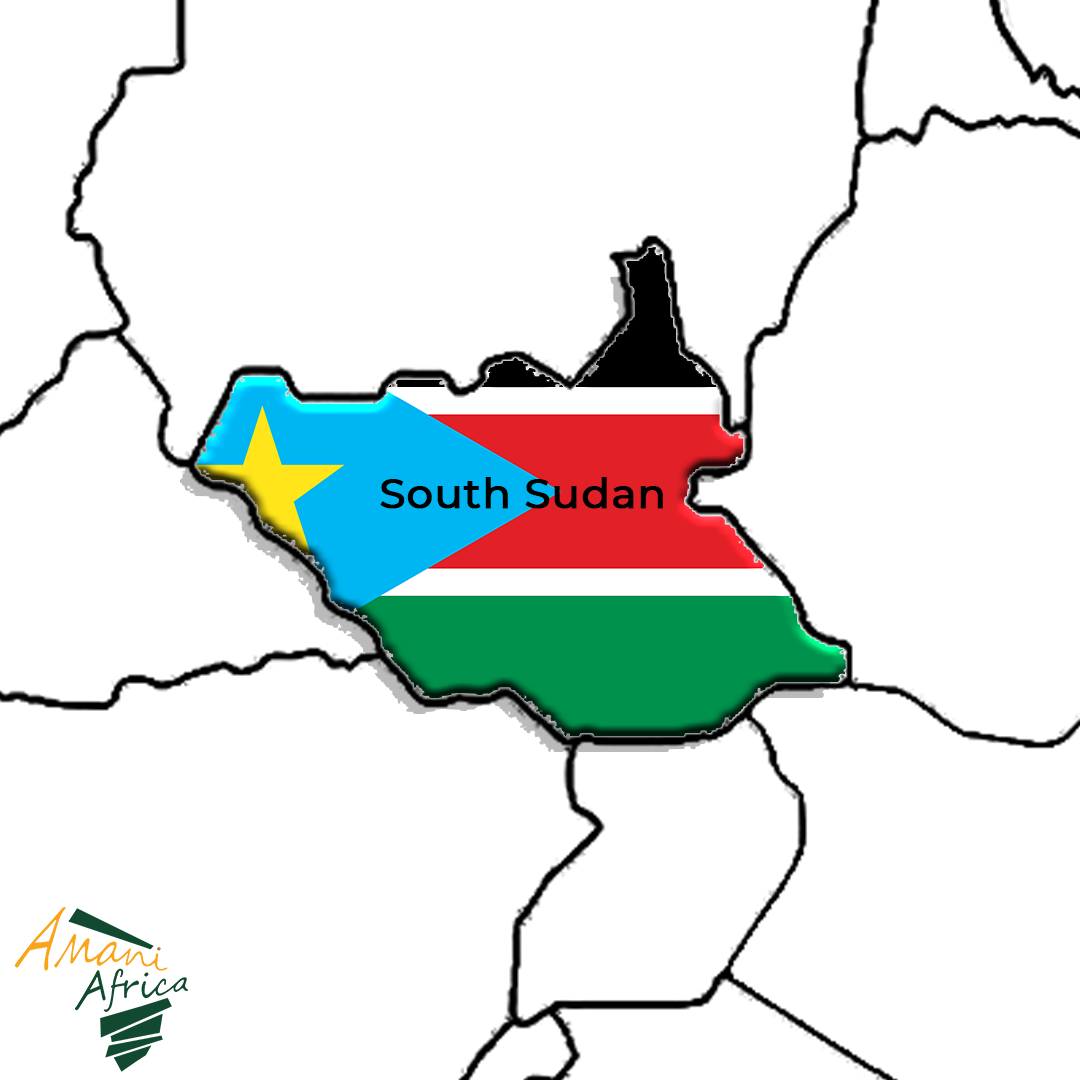
At tomorrow’s meeting, the PSC is expected to hear from the C5 and the High Representative on their respective diplomatic engagements since the Council’s April session. Their briefings are expected to highlight progress and challenges in implementing the R-ARCSS, as well as developments on the ground, including the political, security and humanitarian conditions and their implications for the December elections. The briefers are also expected to assess South Sudan’s level of electoral preparedness.
In terms of diplomatic engagement, the C5 is likely to brief about its 6-7 July visit to Juba to consult stakeholders on the R-ARCSS and electoral preparedness. South Africa, which chairs the C5, expressed optimism about an inclusive national dialogue while emphasising the need to improve security. The High Representative, Jakaya Kikwete, is expected to report on his 21 May engagement in Dar es Salaam with the SPLM/A-IO and several opposition and holdout groups. During his second visit to Juba, from 17 to 23 June, he met President Salva Kiir, other South Sudanese stakeholders, regional ambassadors and international partners involved in the peace process.
These diplomatic engagements have taken place against a deteriorating political, security and humanitarian backdrop. The latest report of the UN Secretary-General describes an increasingly volatile situation marked by armed clashes, a contested ceasefire, worsening humanitarian conditions and shrinking civic space. At the UN Security Council briefing of 6 August, the Interim Chairperson of the Reconstituted Joint Monitoring and Evaluation Commission (RJMEC) similarly warned that the diminishing inclusivity of the RTGoNU, repeated violations of the Permanent Ceasefire and disruption of the activities of the Agreement implementation institutions and mechanisms have eroded trust among the parties and impeded implementation, particularly of the governance and security provisions.
Unilateral measures have further eroded trust. On 1 July, parliament ratified amendments to Articles 1.2.5 and 1.2.14 of the R-ARCSS, delinking the permanent constitution-making and national census processes from the December elections. The process drew criticism for failing to follow the procedure prescribed by the Agreement. The SPLM/A-IO, for instance, strongly objected that the amendments had been introduced unilaterally and undermined the power-sharing arrangements established under the Agreement. A proposed amendment to Article 8.3 that would have removed the supremacy of the R-ARCSS was, however, dropped following sustained international advocacy. Unilateral removals by President Salva Kiir have also continued, contrary to the spirit of the Revitalised Agreement. Government reshuffles in late April and June affected senior portfolios. In May, President Kiir removed 57 SPLM/A-IO legislators before parliament considered the amendments; on 3 July, he replaced two National Elections Commission (NEC) members nominated by Machar. Meanwhile, Machar, who has been detained since March 2025, remains on trial despite repeated calls for his release and that of other political detainees. In addition, AU and other regional diplomatic envoys have not been granted access to Machar.
On the security front, clashes have continued between the South Sudan People’s Defence Forces (SSPDF) and the SPLM/A-IO and its allies, as well as with some holdout groups. Violence involving intercommunal actors has also persisted. The Greater Upper Nile region, particularly Jonglei State, remains the major flashpoint for fighting between the SSPDF and the SPLM/A-IO. Meanwhile, intercommunal violence, cattle-related attacks and conflict involving pastoralist communities have affected parts of Greater Equatoria and Greater Bahr el Ghazal, resulting in significant civilian casualties and displacement.
The humanitarian situation also remains bleak. An estimated 7.8 million people—56 per cent of the population—were projected to face crisis or worse levels of acute food insecurity between April and July, with conflict-affected counties such as Nasir, Ulang, Nyirol and Akobo at risk of famine. Multiple public health emergencies, including the ongoing Cholera outbreak, persist, while conflict, attacks against aid workers and administrative impediments restrict relief operations. Thirty-six humanitarian workers have reportedly been killed this year alone. Yet only 35 per cent of the USD 1.46 billion required under the 2026 Humanitarian Needs and Response Plan has been secured.
It is in this context that the NEC announced elections for 22 December across all ten states and three administrative areas. Some preparations are under way: the Political Parties Council announced the registration of 39 parties, while the SPLM launched an inter-party dialogue and nominated President Kiir as its sole presidential candidate. The government considers the remaining difficulties ‘manageable’ and appears determined to proceed, with voter registration expected to begin soon. Some domestic actors also oppose another postponement, while the February 2026 C5 Plus Summit emphasised that there should be no further extension of the transition. The rejection of an open-ended transition is understandable. It does not, however, settle whether credible and peaceful elections can be held in December. RJMEC has stated that critical prerequisites for the conduct of credible, peaceful and inclusive elections remain uncertain. Similarly, the Special Representative of the UN Secretary-General and Head of UNMISS has identified unresolved concerns over political trust, civic and political space, security arrangements, financing, constituency boundaries and institutional preparedness. During the PSC field mission in April, the Troika, European Union, IGAD Partners Forum, civil society, faith-based organisations and research institutions also warned that a unilateral electoral process could return the country to full-scale war. The choice is therefore not simply between elections and another extension. The main test is not whether an election takes place on 22 December, but whether the process provides a credible path out of transition without becoming the route back to war.
Coming at a critical juncture for South Sudan, tomorrow’s briefing offers the PSC an important opportunity to take concrete measures to prevent the country from descending into full-scale civil war. In this regard, the PSC may consider the following measures.
First, the PSC should objectively assess South Sudan’s level of electoral preparedness, determine whether conditions conducive to credible elections exist, and pronounce itself on the basis of that assessment. This assessment can build on the findings of the AU Pre-Election and Needs Assessment Mission to South Sudan, led by former Nigerian Foreign Minister Geoffrey Onyeama. The mission arrived in Juba yesterday to engage stakeholders on preparations for, and challenges facing, the forthcoming elections. Its deployment follows the decision of the PSC’s 1219th session, which requested the AU Commission to deploy election observers four months before the elections and to brief the PSC both before and after the mission’s deployment.
Second, while the appointment of High Representative Kikwete is a positive step, it will not yield the expected results without strong political backing, sustained follow-up and adequate technical support. His engagement should also be coordinated with the C5, IGAD, RJMEC, UNMISS and neighbouring states through a unified diplomatic framework with agreed priorities and a clear division of labour. Strengthening the AU Mission in South Sudan and drawing systematically on the field presence of UNMISS would improve AU’s access to timely political, security and electoral information. The PSC should also lend political support to the continuation of the mandate of UNMISS during this sensitive period.
Third, the PSC should maintain close and regular oversight by convening at least once every two months until the risks associated with the electoral process have been sufficiently mitigated. These sessions should be informed by comprehensive reports from the Chairperson of the AU Commission to facilitate substantive consideration of the situation. South Sudan remains one of the situations in which the PSC could exercise meaningful diplomatic leverage. Using it now, before the situation spirals out of control, would be far less costly than responding after violence has escalated.
The expected outcome of tomorrow’s session is a communiqué. The PSC is expected to reaffirm that the R-ARCSS remains the most viable framework for achieving sustainable peace, stability, unity and democratisation in South Sudan. In this regard, it may urge the parties to uphold the integrity of the Agreement and work towards a peaceful and democratic conclusion of the transitional period. While taking note of the preparations underway for the December elections, the PSC may emphasise the importance of ensuring that the elections are conducted in an orderly, peaceful, inclusive and credible manner and do not become a trigger for renewed violence. In this context, it may reiterate the need for inclusive political dialogue among South Sudanese stakeholders. The PSC may welcome the deployment of the AU Pre-Election and Needs Assessment Mission to South Sudan, led by former Nigerian Foreign Minister Geoffrey Onyeama. In line with the decision of its 1219th session, it may request the AU Commission to brief the Council on the mission’s findings regarding the state of electoral preparedness. Furthermore, the PSC may decide to convene at least once every two months until the risks of renewed violence associated with the electoral process have been adequately addressed. It may request the Chairperson of the AU Commission to submit, ahead of these sessions, detailed reports on developments in South Sudan, the AU’s diplomatic activities and recommendations for further action. The Council may further request the AU Commission to provide the High Representative with the technical, financial and institutional support necessary for the effective discharge of his mandate.