

Date | 14 January 2026
During 2025, in one of its most impactful engagements, Amani Africa’s work on climate change was critical to advancing a coherent African voice across different policy spaces. Informed by its recognition of the strategic significance of climate change policy-making globally for Africa, as a part of the world that least contributed to climate change but is most affected by the impacts of climate change, Amani Africa’s work focused both on overcoming fragmentation in the African Union’s engagement and charting a coherent African voice.
Amani Africa’s work in this respect involved the production of analysis, taking an active part in policy convenings, delivering presentations to AU policy organs and working closely with policy makers. Our analytical work was carried out through the specific editions of Amani Africa’s flagship publication, Insights on the Peace and Security Council (here and here) and more comprehensively in the presentation Amani Africa delivered to the Peace and Security Council of the AU (here).
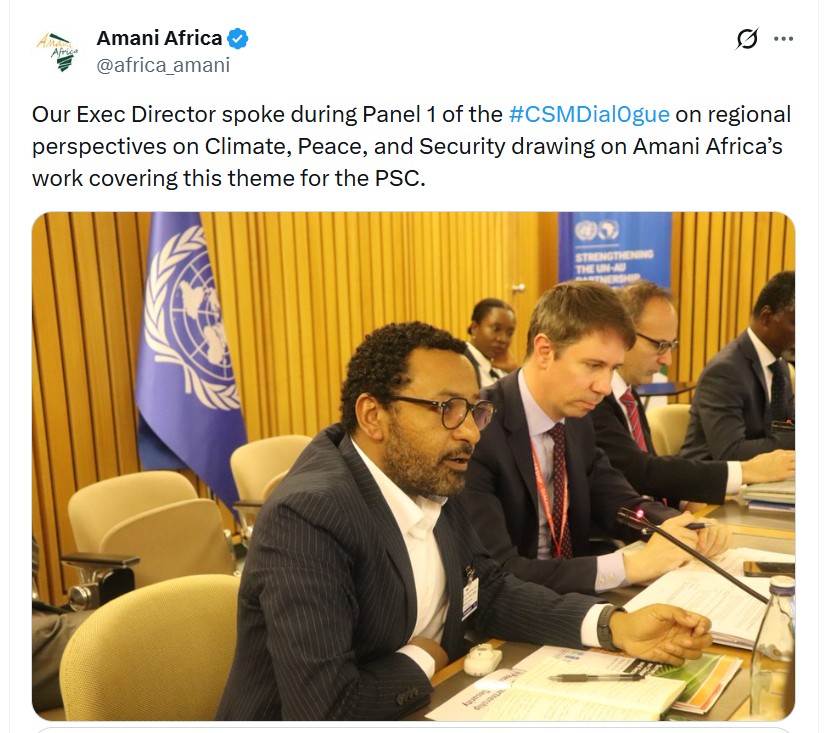
There were key policy events in which we profiled our work and thinking towards advancing a coherent African voice in climate change policy-making through participation and presentations. The first was the UN Climate and Security Mechanism regional meeting held in Addis Ababa, Ethiopia, on 23 June 3035 at the UNECA.
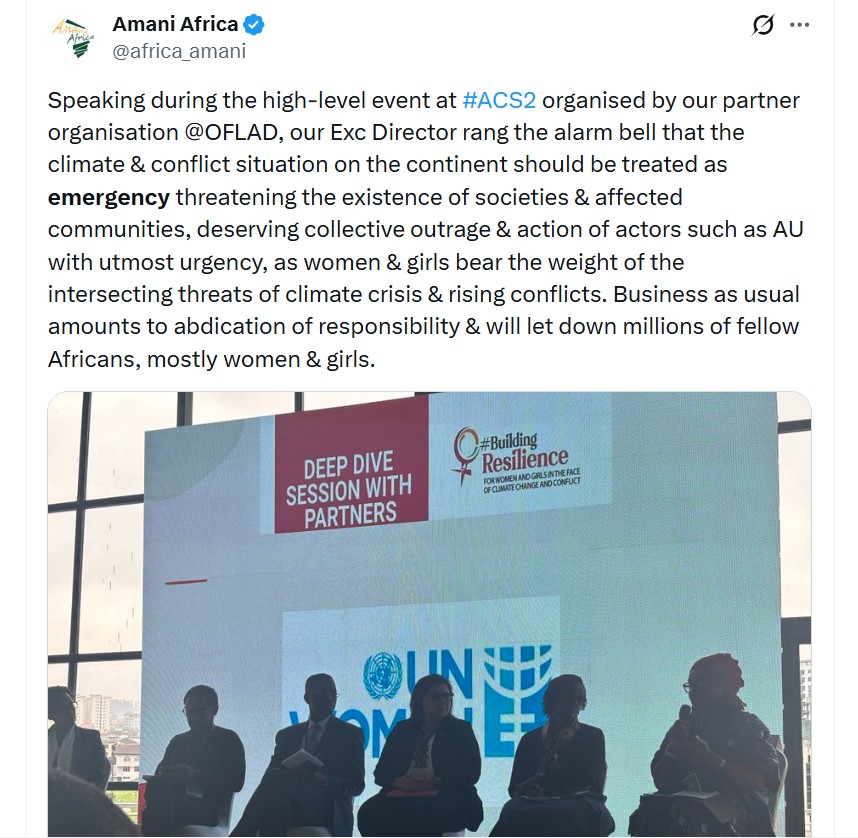
Our work also featured in three high-level side events held during the Africa Climate Summit held on 8-10 September 2025 in Addis Ababa, Ethiopia.
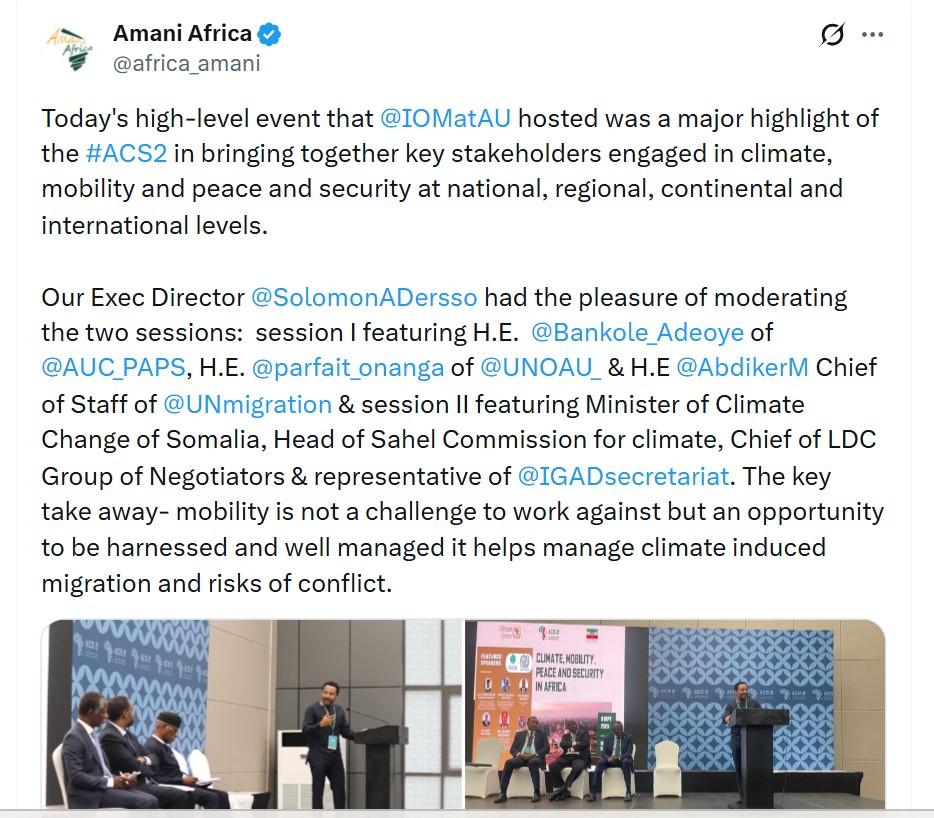
The key occasion for presenting a policy briefing to the AU policy organ was the session of the Peace and Security Council held on 17 September 2025, dedicated to climate change, peace and security.
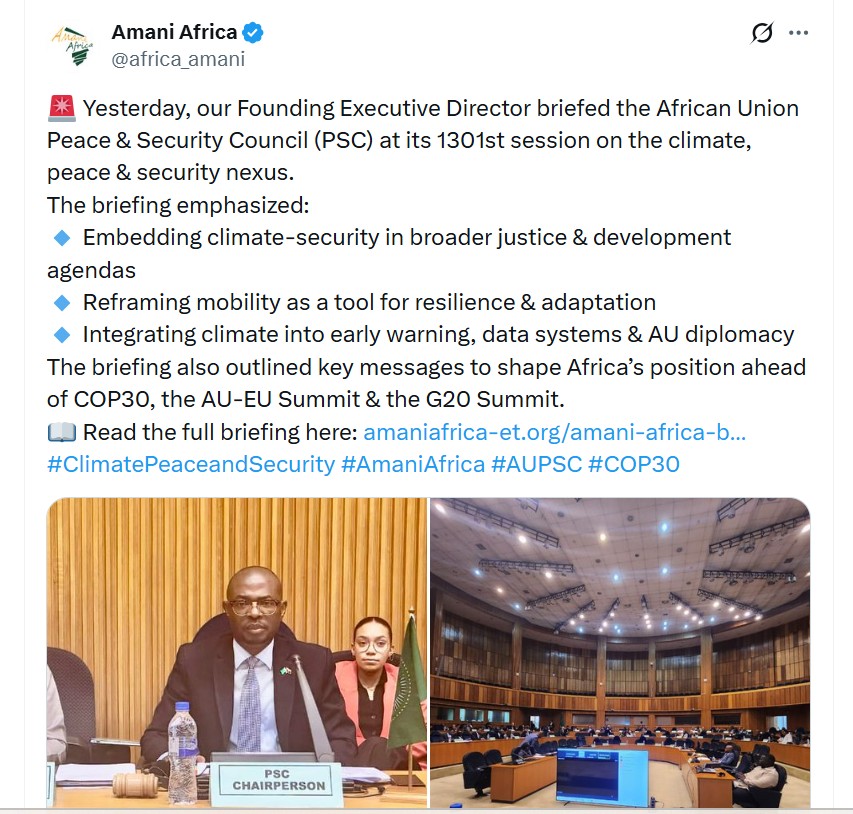
Of particular significance was also our engagement and work with policymakers. This was critical to embed the key policy messages of our work in policy outcomes. Underscoring the need for not separating the peace and security implications of climate change from the climate change policy process with its focus on justice and development, the policy issues raised in our work including the principle of common but differentiated responsibility, the trade impacts of unilateral climate action such as the common border adjustment mechanism, climate finance and just energy transition found their way in the policy outcomes of the PSC’s 1301st session and the AU-EU summit declaration. Our approach to addressing the peace and security implications of climate change as part of and not in isolation from the wider climate change policy process, with its focus on development and justice, has proved useful to building common ground between states with divergent positions on the climate peace and security nexus.
Our technical engagement with policy makers on the negotiation on the AU-EU summit declaration contributed to both leaving out the reference to the selective language of ‘rules based international order’ in the AU draft. When it was brought back after the EU rewrote the AU draft, our engagement was critical to its removal and its replacement with the use of the inclusive formulation of ‘based on international law and the principles and purposes of the UN Charter.’