
Consideration of the Report of the Commission on the MNJTF Mandate
Date | 14 December 2025
Tomorrow (15 December), the African Union (AU) Peace and Security Council (PSC) will convene its 1318th session to consider the report of the Commission on the MNJTF mandate.
Following opening remarks by Ennio Maes, Permanent Representative of Côte d’Ivoire to the AU, Chairperson of the PSC for December, Bankole Adeoye, AU Commissioner for Political Affairs, Peace and Security (PAPS), is expected to make a statement introducing the Chairperson’s report. Statements are also expected from Mamman Nuhu, the Executive Secretary of the Lake Chad Basin Commission (LCBC) and Major General Saidu Tanko Audu, Multinational Joint Task Force (MNJTF) Commander.
The PSC last renewed MNJTF’s mandate at its 1254th session on 13 January 2025 for a further twelve months, to expire on 1 February 2026. The meeting also requested ‘the LCBC to renew the Memorandum of Understating (MoU) and Support Implementation Agreement (SIA) between AU, LCBC and MNJTF TCCs, which will guide the provision of AU additional support to the MNJTF, for a period of one year, effective 1 February 2025.’ The Council last considered the MNJTF following this mandate renewal at its 1282nd session, held on 10 June 2025, which provided an ‘Update on the activities of the MNJTF and consideration of the Regional Strategy for Stabilisation, Recovery, and Resilience (RS-SRR).’ On that occasion, it requested the AU Commission to enhance its support to, and collaboration with, the LCBC in implementing the revised five-year RS-SRR, noting that ‘despite the sustained efforts being deployed by the LCBC and MNJTF, Boko Haram remains an existential threat to peace and security in the Lake Chad Basin (LCB) and the wider region.’ That threat remains pronounced, as the MNJTF has yet to generate a decisive shift in the situation on the ground. Meanwhile, emerging developments that undermine the MNJTF, combined with persistent climate, security and governance fragilities, are pushing the force toward a critical inflection point. Tomorrow’s session is therefore likely to revisit these priorities, with particular attention to the evolving security dynamics and the region’s dire humanitarian situation, which may argue for the continued operation of the MNJTF.
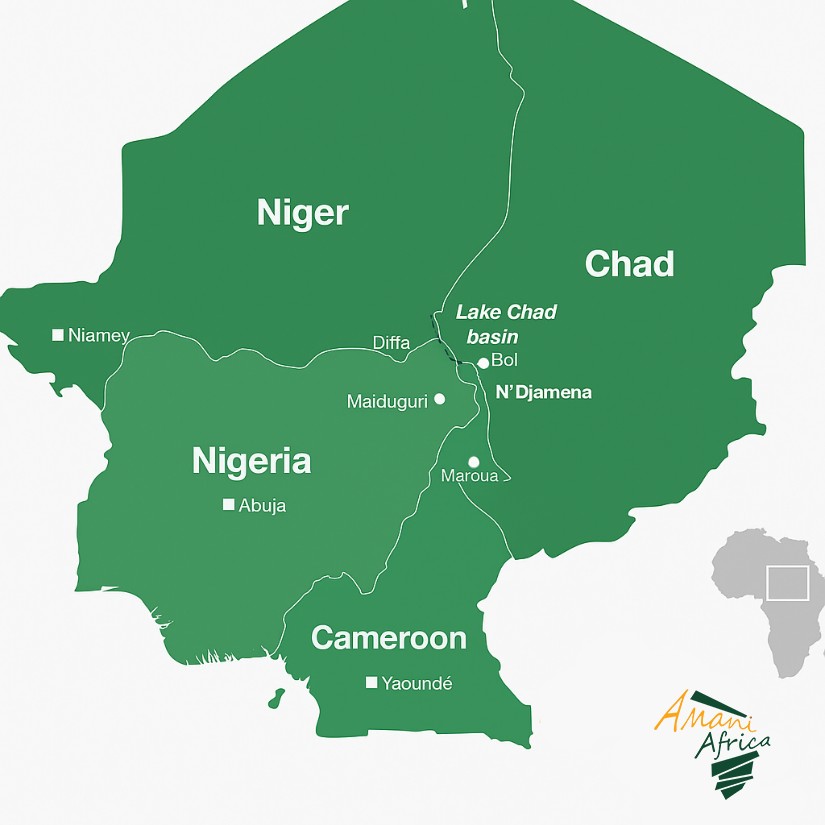
The LCB, encompassing Cameroon, Chad, Niger and Nigeria, remains a region of complex security, humanitarian and governance challenges. In addition to the impact of climate change and underlying historical and socio-political governance factors, these challenges are largely driven by the activities of Boko Haram and its factions, including the Islamic State West Africa Province (ISWAP) and Jama’atu Ahlis Sunna Lidda’awati wal-Jihad (JAS).
In terms of the activities of armed violent groups, the reporting period has been marked by an intensifying pattern of insurgent attacks, an issue expected to feature prominently in tomorrow’s session. According to the Africa Centre for Strategic Studies, militant Islamist-related fatalities in the LCB region rose 7 per cent over the past year to 3,982, representing 18 per cent of the continental total, while civilian targeting increased by 32 per cent to 880, the highest since 2016. Nigeria recorded an 18 per cent rise in fatalities, with Borno state alone accounting for 74 per cent of regional deaths; Cameroon registered 467 deaths with a 45 per cent decline, whereas Chad more than doubled to 242. This escalation is accompanied by notable tactical advancements; ISWAP reportedly overran 15 Nigerian military bases, introduced night vision and deployed armed and surveillance drones. Since June, JAS has attacked positions at Baga, Goldavi near Talakatchi, and Kirawa, with night assaults aided by night vision and modified commercial drones, and with reports citing rocket-propelled grenades, armed drones and improvised explosive devices (IEDs). Meanwhile, Insurgent infighting has also resurged. From 5 to 8 November 2025, JAS attacked ISWAP across Lake Chad islands and river routes for control of extortion revenues, arms and fuel smuggling corridors through Niger, Chad, and Cameroon.
The other issue expected to feature during tomorrow’s session concerns the operational challenges facing MNJTF. Despite ongoing support from the AU and partners, the MNJTF continues to face capability gaps that undermine the effectiveness of its counterterrorism operations, such as a lack of appropriate counter-IED equipment. IEDs, particularly those placed along main supply routes, accounted for approximately 60% of MNJTF casualties in 2024. The unavailability of sophisticated IED detectors has delayed troop movements and placed both civilian convoys and military convoys at risk. The absence of a dedicated attack aircraft has also left the force reliant on TCC’s national air forces, delaying approvals and undermining the force’s ability to mount coordinated air-ground operations. Considering that terrorist forces have continued to use surveillance drones to monitor MNJTF movements and started using drone attacks, the Force’s lack of anti-drone technology or jamming systems reduces its operational advantage and leaves it vulnerable to both terrorist forces intelligence and drone attacks. In this respect, the PSC may reiterate from its last session its call on the AU Commission and international partners to mobilise support required to address these deficits through availing assets, including modern drone detection and jamming equipment, combat and reconnaissance drones, combat boats, armoured vehicles, and demining equipment.’
As highlighted in respect to the PSC’s 1254th session, another major challenge for the MNJTF is the continued presence of terrorist groups on the islands of Lake Chad. As reported back then, the 4th LCB Governors’ Forum identified as a major challenge the need ‘to clear remnants of Boko Haram fighters from their bases on the Tumbuns (islands on the fringes of the Lake Chad) from which they continue to launch attacks on the surrounding areas and beyond.’ The Tumbuns serve as logistics hub, secure havens and staging grounds for terrorist groups. Their occupation of these islands also facilitates their generation of funds through illegal fishing and farming activities. In this respect, the 5th LCB Governors’ Forum held late in January 2025 called for ensuring that ‘member states effectively occupy the Lake Chad islands as a means of strengthening transboundary security, with a focus on securing and controlling waterways.’
Another issue for tomorrow’s session is the follow-up on PSC’s decision on ensuring the participation of Niger in the MNJTF. Although the initial interruption of Niger’s participation in MNJTF following the June 2023 coup was restored owing to engagement from Nigeria, in March 2025, Niger announced its withdrawal from MNJTF. A major factor for Niger’s severance of ties with MNJTF appears to be the withdrawal of support for Niger. The Communique of the LCB 5th Governors Forum for the Regional Cooperation on Stabilisation, Peacebuilding and Sustainable Development, thus ‘noted with concern the suspension of donor support for Niger’s National Window of the Regional Stabilisation Facility (RSF), which could negatively impact progress across the region.’ Niger’s withdrawal from the MNJTF has created a security void in its Area of Operations in Sector 4 (Diffa), complicating cross-border coordination and patrols along key stretches of the Lake Chad frontier. In this regard, the Council may wish to seek an update on efforts to restore the support to Niger and facilitate its return to MNJTF, recalling its 1282nd meeting at which it took note ‘with deep concern of the withdrawal of the Republic of Niger from TCCs and its impact on the operations of the MNJTF.’
The other issue that the PSC is expected to discuss during tomorrow’s session is the regional stabilization strategy. The RS-SRR, endorsed by the PSC during the 816th session held on 5 December 2018 and entered its second phase in 2024, complements the MNJTF’s military efforts by addressing the structural drivers of conflict through addressing broader governance, humanitarian and development challenges. The strategy, implemented across eight targeted territories in the four LCBC states, has facilitated community reconstruction, market reactivation, and the reintegration of former combatants. Following the revision of the RS-SRR for 2025 – 2030 at the 5th steering committee meeting on 20 September 2024, with updated Territorial Action Plans (TAPs) and a Community-based Reconciliation and Reintegration Policy to enhance its effectiveness, the 70th Ordinary Session of the LCBC Council of Ministers held in Niamey, Republic of Niger, on 27 February 2025, adopted the revised strategy. Subsequently, during its 1282nd session, the PSC endorsed and validated the revised RS-SRR as adopted by the 70th Ordinary Session of the Council of Ministers of the LCBC. The revised strategy seeks to shift focus from stabilisation efforts to sustained stability and put greater emphasis on socio-economic development on the basis of the security, humanitarian and development nexus approach. The LCBC Council of Ministers also directed the Executive Secretariat to revise the Territorial Action Plans (TAPs) and develop a Regional Transitional Justice Policy. Tomorrow’s session will thus provide an opportunity for the PSC to assess progress on the implementation of the strategy.
Another issue expected to feature in tomorrow’s meeting is the humanitarian situation, which has remained dire over the reporting period. Insecurity, attacks and violence continue to affect millions. Recurrent flooding is devastating the region, exacerbating existing humanitarian challenges and forcing counterterrorism assets to be diverted to relief operations. MNJTF canoes and army drones were deployed to support evacuations. The United Nations Office for the Coordination of Humanitarian Affairs (OCHA) reports that in the first half of 2025, 487 security incidents were recorded, causing 415 deaths. By June 2025, IDPs still numbered 2.9 million, reflecting only a 6 per cent decrease. Around 330,000 refugees have been registered, marking a 23 per cent rise since January 2025. Nigeria remains the epicentre of the crisis, hosting 2.1 million IDPs due to persistent insecurity in the northeast, followed by Cameroon, where over 476,000 people have fled violence in the Far North. An estimated 220,000 children are severely malnourished, with more than 87 per cent of them in Nigeria. As of June 2025, violence and attacks had forced the closure of 1,827 schools across the LCB, 80 per cent of which are in Chad, the most severely affected country. As of September, humanitarian actors had received US$618 million, just 19 per cent of the total funding required. The Council may therefore call for an urgent and coordinated scale-up of humanitarian access and funding, prioritising the protection of civilians, support for severely malnourished children and the reopening and safeguarding of schools, while urging member states and partners to close the 2025 funding gap and align relief with longer-term resilience in the LCB as part of the stabilisation strategy.
The expected outcome of the session is a communiqué. The PSC may commend the MNJTF for its efforts to degrade terrorist groups and stabilise affected areas in the LCB, while noting with concern that Boko Haram and its splinter groups remain an existential threat to the region. Given the persistent threat posed by terrorist groups in the region and the need to preserve existing gains, the PSC may extend the MNJTF’s mandate for another 12 months. It may also call for the AU, LCBC and MNJTF TCCs MoU and SIA to be extended for an additional year. The Council may also reaffirm its continued support for the Force and the need for predictable and sustainable resources for its operations. Taking forward its call from its last session on the need for provision of additional modern technological capabilities, including drone and anti-drone and jamming technology, the PSC may call for the LCBC working together with the AU Commission to develop a realistic plan on the mobilisation of such capabilities. It may also call for restoring the support given to Niger in its capacity as MNJTF TCC in order to facilitate its return to the MNJTF and remove the void created due to its withdrawal. The PSC may further highlight the need to deepen cooperation between the MNJTF and Regional Economic Communities (RECs), particularly the Economic Community of West African States (ECOWAS), in order to ensure more coherent cross-border responses commensurate with the transnational nature of the threat. In addition, considering that the Council held its last field mission to the region in July 2017, whose report was considered at the PSC’s 721st meeting in September 2017, the Council may seek to follow up on its 1207th decision to conduct a solidarity field mission to the LCB.