
Consultation of PSC with the AGA-APSA Platform/Human Rights Subcommittee
Consultation of PSC with the AGA-APSA Platform/Human Rights Subcommittee
Date | 7 August 2025
Tomorrow (8 August), the African Union (AU) Peace and Security Council (PSC) will convene its 1295th Session for the consultation between the African Governance Architecture-African Peace and Security Architecture (AGA-APSA) Platform and the PRC Sub-Committee on Human Rights, Democracy and Governance (HRDG).
The session is expected to start with an opening statement by Mohamed Khaled, Permanent Representative of Algeria to the AU and Chairperson of the Peace and Security Council of the AU for August 2025 and the introductory remarks by H.E. Ambassador Bankole Adeoye, AU Commissioner for Political Affairs, Peace and Security. Presentations are also expected from Ambassador Willy Nyamitwe, Permanent Representative of the Republic of Burundi, and the Ag. Chairperson of the PRC Sub Committee on Human Rights, Democracy and Governance (HRDG) and Wilson Almeida Adao, Chairperson of the African Committee of Experts on Rights and Welfare of the Child (ACERWC) and Chairperson of the AGA Platform.
The PSC last convened such a consultation during its 1167th session in August 2023, marking the first time it brought together both the AGA-APSA Platform and the PRC Sub-Committee on HRDG in a joint session. Previously, the PSC had engaged with these two bodies separately, holding its inaugural consultation with the AGA-APSA Platform at its 1098th session in August 2022, and a separate meeting with the PRC Sub-Committee during its 1095th session in the same month. Both sessions underscored the importance of these engagements and recommended that joint consultations be held annually. This collaborative approach is not only supported by previous PSC decisions but is also grounded in the PSC Protocol, which mandates the Council to promote democratic governance, the rule of law, and the protection of human rights across the continent. The joint consultation seeks to deepen coordination among PSC Members, the PRC Sub-Committee on HRDG, and the AGA-APSA Platform, fostering a more coherent and impactful response to governance-related peace and security challenges in Africa.

The consultation is expected to deliberate on the engagement of the PRC sub-committee on pressing governance and human rights issues related to peace and security challenges in tomorrow’s session. This is expected to put the spotlight on governance challenges faced on the continent. Beyond the unconstitutional changes of government, the challenges identified include a lack of transparency and accountability, weak institutions, corruption, repression of expressions of dissent, a lack of inclusivity, and increasing disaffection of the majority youthful population with failure of governments to deliver services, as well as human rights violations. Exacerbated by the spread of jihadist violence and growing public disillusionment with civilian leadership, as well as the extension of term limits, inconsistent responses of AGA Platform institutions, including the PSC, have exacerbated the situation. A case in point is the lack of enforcement of Article 25(4) of ACDEG that bars perpetrators of unconstitutional changes of government from participating in elections in two recent cases of Chad and Gabon. This trend undermines the AU’s democratic norms, making it critical for the consultations to meaningfully address the root causes of instability and safeguard the continent’s hard-won peace, security, and democratic governance gains.
The consultation is also expected to focus on the widespread and interconnected conflicts across the continent, with Sudan, the Democratic Republic of the Congo (DRC), South Sudan, and the Sahel serving as key examples of protracted regional conflict systems that are increasingly affected by external meddling, geopolitical rivalry, and the scramble for natural resources. This affords the PRC Sub-committee and the PSC to interrogate the ways in which the changing global geopolitical context is increasingly exacerbating governance challenges and conflict dynamics on the continent and how the AU can leverage AU instruments for mitigating these trends. Discussions will likely examine the persistent challenges in effectively implementing post-conflict reconstruction and development (PCRD) strategies in countries emerging from violence. The session is also anticipated to address recurrent election-related violence, emphasising the urgent need for stronger preventive and governance measures.
Beyond the foregoing, the discussions are expected to also focus on prioritizing the design of joint, coordinated initiatives by leveraging the PSC’s authority, utilizing the AGA platform coordination role, and engaging the PRC Sub-Committee on HRDG oversight function to directly address the root causes of instability, namely, weak democratic institutions, lack of accountability, and governance-related grievances. These initiatives are vital not only for reinforcing AU norms such as the ACDEG but also for enhancing early warning systems, bolstering preventive diplomacy, and grounding post-conflict recovery efforts in democratic consolidation and the rule of law.

Among the key decisions adopted by the PSC in its previous session was a call for a joint consultative meeting between the AU Commission, the African Governance Platform (AGP), and the AGA-APSA Secretariat to identify concrete, action-oriented initiatives that go beyond periodic experience-sharing. These included conducting joint promotional visits by the PSC, the PRC Sub-Committee, and the AGP to advocate for the ratification and implementation of AU shared values instruments. However, no such joint promotional visits have taken place to date. Another component of the decision emphasised the need to involve the PSC in the planning and implementation of AGA Flagship Initiatives and to establish robust follow-up mechanisms to ensure that decisions from joint sessions lead to tangible outcomes. While the PSC has held separate consultations with some AU organs that are members of the AGA-APSA Platform, such as the African Commission on Human and Peoples’ Rights (ACHPR), African Union Economic Social and Cultural Council (ECOSOCC), and African Peer Review Mechanism (APRM), there is currently no clear framework or evidence to assess the extent of the PSC’s involvement in AGA Flagship Initiatives.
In line with the previous decision, tomorrow’s session is expected to prioritise the development of coordinated action plans that facilitate the joint implementation of shared mandates and strengthen synergy between the AU’s governance and peace and security pillars. In this regard, a key development expected to inform the discussions is the ongoing formulation of the Joint AGA-APSA Roadmap. This strategic document aims to serve as a guiding framework for enhancing operational synergy between the governance and peace and security pillars of the AU. Its development responds directly to the PSC’s repeated calls for more structured, outcome-driven engagement between the two architectures. It seeks to move beyond ad hoc collaboration towards a more institutionalised and programmatic partnership. Once finalised, the Joint Roadmap is expected to provide a common results framework that will facilitate alignment of interventions, monitor implementation of joint decisions, and promote a proactive, preventive approach to addressing the root causes of conflict on the continent.
The outcome of the session is expected to be a Communiqué. The PSC is expected to reaffirm its commitment to holding annual joint consultations with the AGA-APSA Platform and the PRC Sub-Committee on Human Rights, Democracy and Governance (HRDG). The Council may also underscore the importance of institutional synergy between governance and peace and security actors in addressing structural drivers of conflict. Concerning governance-related root causes of instability, the PSC may commend ongoing joint efforts to tackle democratic deficits and call for the more consistent application of AU norms, particularly those relating to unconstitutional changes of government, to strengthen their deterrent effect. Regarding the Joint AGA-APSA Roadmap, the PSC is expected to encourage its timely finalisation and adoption as a guiding framework for coordinated action. In the same vein, the Council may reiterate its previous request for the AU Commission to expedite the operationalisation of the African Governance Facility, emphasising its importance for supporting Member States and AGA activities, especially in preventive governance. The PSC may also restate its earlier decision to conduct joint promotional visits, together with the AGP and the PRC Sub-Committee, to advocate for the ratification and implementation of AU shared values instruments. In an effort to enhance the PSC’s role in AGA Flagship Initiatives, the Council is likely to stress the need to develop a precise mechanism for its involvement in the planning, implementation, and monitoring of these initiatives. It may also call for the establishment of a regular reporting channel or periodic briefing mechanism to keep the PSC updated on progress. Furthermore, the PSC may emphasise the need to strengthen collaboration between governance and peace and security actors in early warning and preventive diplomacy, including the conduct of joint assessments and missions to countries facing elevated risks of instability. Similarly, it may highlight the importance of integrating governance dimensions into post-conflict reconstruction and development (PCRD) processes, recommending that governance assessments be considered when mandating AU support to countries emerging from conflict. Lastly, the PSC may request the establishment of a joint follow-up mechanism or working group to monitor the implementation of decisions emanating from this and previous joint consultations, and to report periodically to both the PSC and the PRC Sub-Committee on HRDG.

Assessment of the role of ad hoc governance, peace and security mechanisms in supporting the PSC’s mandate
Assessment of the role of ad hoc governance, peace and security mechanisms in supporting the PSC’s mandate
Date | 5 August 2025
Tomorrow (6 August), the African Union (AU) Peace and Security Council (PSC) will convene its 1294th session to assess the role of ad hoc governance, peace, and security mechanisms in supporting the PSC’s mandate.
The session will commence with opening remarks by Mohamed Khaled, Permanent Representative of Algeria to the AU and Chairperson of the PSC for August 2025, followed by introductory remarks from Bankole Adeoye, AU Commissioner for Political Affairs, Peace and Security (PAPS). Solomon Dersso, Founding Director of Amani Africa Media and Research Services, will also deliver a presentation.
Following the establishment of the PSC and the structures for the implementation of its conflict prevention, management and resolution decisions, the AU has been enterprising in the tools/instruments that it has innovatively designed and implemented for peacemaking and mediation. The most notable of these innovations was the use of ad hoc governance and peace and security mechanisms instituted in support of the mandate of the PSC. As elaborated in The African Union Peace and Security Council Handbook: Guide on the Council’s Procedure, Practice and Traditions, the use of these mechanisms is built on the provisions of the PSC Protocol.
Article 6(c) of the Protocol Relating to the Establishment of the Peace and Security Council of the African Union PSC mandates the Council to engage in ‘peacemaking, including the use of good offices, mediation, conciliation, and enquiry’. To effectively implement these mandates, the Protocol further authorises the PSC to establish subsidiary bodies as needed. In particular, Article 8(5) provides that the PSC may create such bodies, including ad hoc committees, as it deems necessary to undertake specific tasks such as mediation, conciliation, or fact-finding enquiries.
These high-level peacemaking and mediation tools that the AU instituted as instruments for the management and resolution of crisis and conflict consist, mainly, not exclusively, of:
- ad hoc committees for mediation consisting of leaders of a group of states (Art. 8(5) of the PSC Protocol) and
- High-level panels.
These ad hoc governance, peace and security mechanisms are often established by the PSC under the authority vested in it by its Protocol, but they are also at times instituted by the AU’s supreme authority, the AU Assembly.
While Article 8(5) of the PSC Protocol envisages the use of ad hoc committees, it did not spell out the level at which such a committee would be established and the form such a committee would take. One of the innovations of the PSC was to constitute the ad hoc committee as an instrument of peacemaking from sitting heads of state and government. For the first time, the PSC established an ad hoc committee at the level of heads of state and government in respect to the conflict in Côte d’Ivoire in January 2011. It was during its 259th session that the PSC decided to establish such a committee, called at the time a high-level panel, for the resolution of the (post-election) crisis in Côte d’Ivoire. The committee was made up of President Mohammed Ould Abdel Aziz of Mauritania, President Jacob Zuma of South Africa, Blaise Campaore of Burkina Faso, Jakaya Kikwete of Tanzania and Idriss Deby Itno of Chad. Since then, the PSC and the AU Assembly have established ad hoc committees in relation to conflict situations in Libya, South Sudan, the AU Summit Troika on Western Sahara and Sudan.
The make-up of these ad hoc committees, from representatives of the five regions of the continent, sought both to ensure ownership of the peace process by all parts of the continent and to enlist the support and engagement of the wider membership of the AU. The fact that the body is also made up of leaders of AU member states that are not necessarily members of the PSC helps create separation of powers for healthy checks and balances. The fact that the ad hoc committees relied on sitting Heads of State and Government also signifies that the situation warrants the attention of the highest authority of AU member states and is indicative of AU’s diplomatic acumen to use the leverage of current leaders from across the continent in the search for a resolution of the situation. As the use of this mechanism for a post-election crisis in Côte d’Ivoire illustrates, these ad hoc committees are deployed not only for peace and security but also for governance crises.
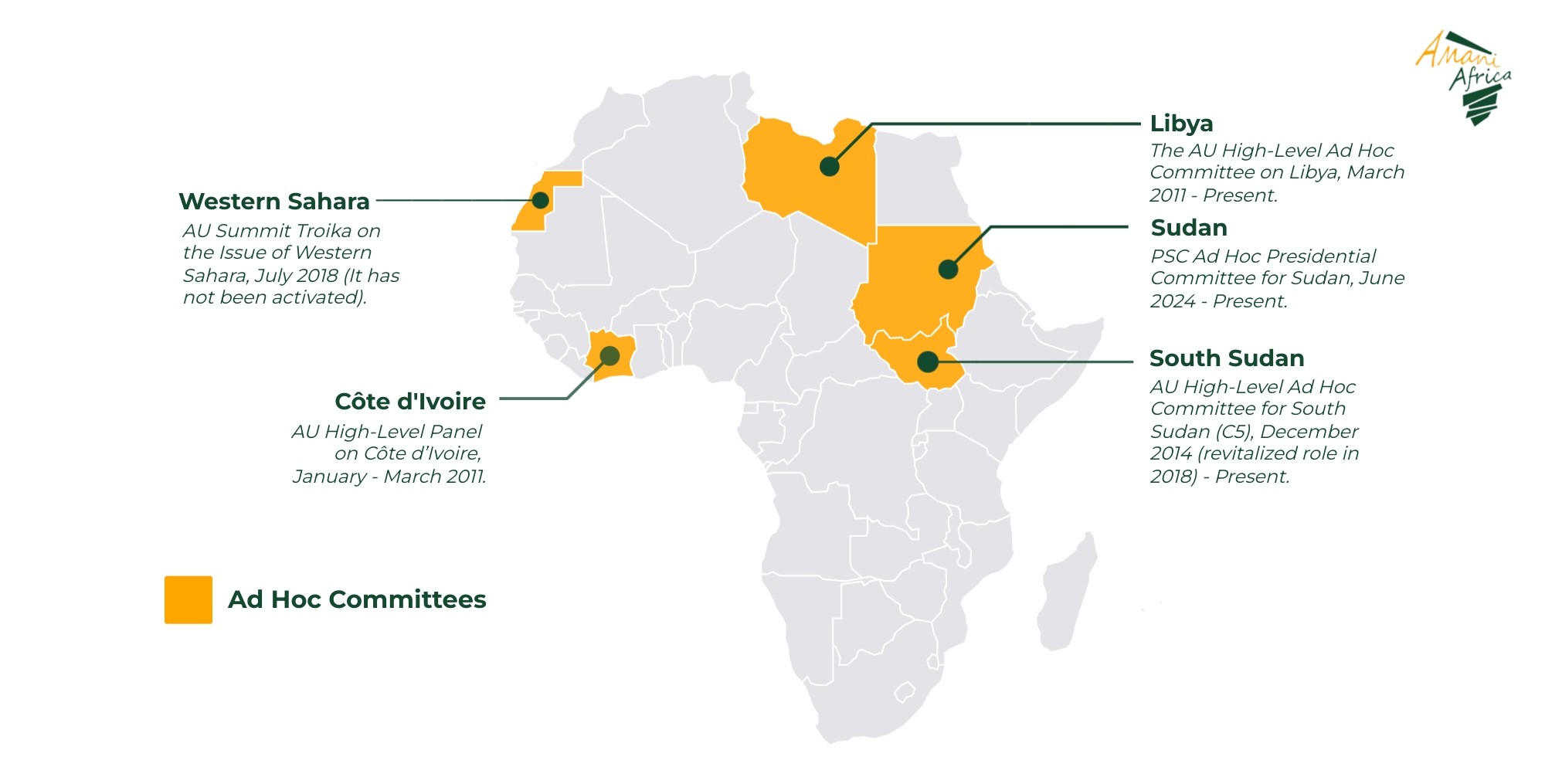
The second group of ad hoc mechanisms for governance, peace, and security deployed by the PSC, which is a complete innovation of the PSC, concerns the high-level panels. The first instance in which the PSC exercised this power was in July 2008, during its 142nd session, when it requested the AU Commission to establish a High-Level Panel on Darfur. Since then, several ad hoc mechanisms have been constituted (see map below for the list of AU ad hoc committees and high-level panels). While most of these mechanisms are initiated by the Council itself, there are also instances where the Chairperson of the AU Commission initiated the mechanisms, with the PSC’s endorsement. The High-Level Panel on Egypt and the mediation process in Ethiopia are examples of such cases. It is, however, worth noting that prior to its use in Sudan, such a high-level panel was constituted by the AU Assembly Chairperson, President John Kufuor of Ghana, in 2008 under the leadership of Kofi Annan for mediating the post-election violence in Kenya.

As the precedent-setting experience of the AU High-level Panel on Darfur and that later transitioned into the AU High-level Implementation Panel on Sudan shows, one of the notable aspects of the peace and security entrepreneurship of the AU in deploying these mechanisms was the use of former heads of state and government. This not only resonates with Africa’s diplomatic and political tradition that cherishes the wisdom of elders but also represents a recognition of the importance of the experience and peer level access that former leaders possess, thereby making them positioned to navigate complex political issues by leveraging their standing and political insights into the dilemmas and concerns that inform the actions of leaders.
It was the effective utilisation of these ad hoc mechanisms during the first decade and a half of the existence of the AU and its PSC that effectively established the role of the AU as the lead peace and security and governance management actor on the continent. Indeed, the experience from these ad hoc governance and peace and security mechanisms offers useful insights into how to re-assert the leadership role of the AU and reposition the African Peace and Security Architecture for a changing global and continental governance and peace and security context. This is particularly critical considering the prevailing context that characterises the time when tomorrow’s session is taking place. One of the features of this period is the decline in AU’s peace and security and governance management role. The combination of the slow pace of response of the AU and the lack of robust political support for its peace and security initiatives as well as the emergence of increasingly assertive states vying for individual mediation role means that increasingly the space for peace and security initiative on African situations such as the Democratic Republic of Congo (DRC)-Rwanda and Ethiopia-Somalia tensions and the conflict in Sudan is being taken by non-African states such as Qatar/US, Turkey and Saudi Arabia/US.
In this regard, tomorrow’s session offers a timely opportunity for introspection—to reflect on past and current mediation experiences, particularly those involving ad hoc committees and high-level panels, and their role in advancing PSC’s mandate. What key insights and lessons can the PSC draw from these experiences? The session also takes place against the backdrop of ongoing efforts to review the African Peace and Security Architecture (APSA), including the establishment of a high-level panel by the AU Champion for Institutional Reform, President William Ruto of Kenya. This reflection, therefore, could provide valuable input into the review process.
The analysis of the experience of the ad hoc mechanisms shows that while they have formed part of the AU’s innovative major governance crises and conflict management and resolution tools over the past 15 years, their success has varied. Notably, the AU High-Level Panel on Darfur (AUPD), chaired by former South African President Thabo Mbeki, delivered a landmark analysis that reframed the conflict in Darfur as a manifestation of a broader crisis of governance in Sudan and provided the AU with a clear roadmap on how best the structural issues of peace, justice, reconciliation and healing could be addressed in Darfur. Building on this, the AU High-Level Implementation Panel (AUHIP) was established to implement the AUPD’s recommendations and subsequently to mediate post-secession negotiations between Sudan and South Sudan. By actively seeking and enlisting the support of the region, the PSC, the UNSC and the Troika of the US, UK and Norway, through a clear definition of the issues based on a deductive approach and anchored on a highly professional and technically endowed supporting structure as well as exemplary diplomatic leadership willing and able to dedicate sustained engagement and attention, the AUHIP set the template for successful mediation that registered notable successes including midwifing the peaceful secession of South Sudan and the building of a relatively peaceful post-secession outcome between Sudan and South Sudan. The AUHIP, leveraging the PSC and the UNSC, played a decisive role in averting full-scale war between the two countries following the Heglig crisis in April 2012 and, with the support of IGAD and Ethiopia, brokered eight historic Cooperation Agreements in September 2012 addressing critical post-secession issues. Widely hailed as a ‘wide-ranging, detailed, and historic set of treaties,’ these agreements covered nearly every key aspect of Sudan–South Sudan relations. Equally, if not more successful, experience was the Kofi Annan-led Panel of Eminent Persons that mediated the post-election violence in Kenya.
Meanwhile, other ad hoc mechanisms, such as the PSC ad hoc Presidential Committee for Sudan, have as yet made no headway. Despite being established over a year ago, the ad hoc Presidential Committee has yet to convene its inaugural meeting, even as the conflict escalates and the country edges closer to de facto fragmentation. While the high-level committee on Libya did not succeed in its effort to avert Libya’s descent into state fragmentation and violent conflict, the High-Level Ad Hoc Committee’ (C5) on South Sudan was one of the catalysts for breaking deadlocks between the parties to the Revitalised Agreement for the Resolution of the Conflict in South Sudan (R-ARCSS) that threatened at various points the transitional process in South Sudan.
The analysis of the various ad hoc committees reveals that there are certain factors that are critical for successful AU-led peacemaking and mediation diplomacy. The first of these concerns the composition of the members of the mechanisms and the quality of leadership of the mechanisms. The composition of the mechanism should involve those who not only hold high-level positions—such as former or current heads of state or government—to provide the necessary political and diplomatic weight but also have the tenacity and temperament for providing the process befitting the nature of the crisis or conflict situation. The second lesson is the need for a solid mediation strategy and process that ensures sustained engagement, as illustrated by the AUHIP as opposed to the improvisation-heavy and touch-and-go approach that seems to be the current characteristic of the AU High-level Panel on Sudan. The third lesson highlighted in the Lessons Learned Report from the AU-Led Peace Process for the Tigray Region, Ethiopia, is the need for appointing personalities that have the full confidence of the parties. With Olusegun Obasanjo, who was appointed in August 2021 as the High-Representative of the AU Commission Chairperson charged with facilitating the resolution of the conflict in Tigray, facing charged of bias by one of the parties, it was the decision by the AU to appoint a panel of mediators with the addition of two additional mediators that created the balance that won the full confidence of the parties who agreed to be convened under its facilitation. The other lesson for the success of ad hoc mechanisms from AUHIP to the Ad hoc Committee of 5 on South Sudan to the AU High-Level Panel on the Ethiopian Peace Process is the imperative for strong coordination with and mobilisation of support from key regional and international actors. Not any less significant is the quality of the support structure, including qualified technical experts and adequate financial resources, that is put in place for facilitating the effective functioning of the ad hoc mechanism. The African Union Panel on Darfur (AUPD) benefited from the contributions of nine prominent experts, while the African Union High-Level Implementation Panel (AUHIP) drew on a wide range of technical expertise from across the globe, including specialists in oil, economics, law, border demarcation, and other relevant areas. This expert input was further complemented by support from AU staff. AUHIP is not unique in this. The panel of mediators led by Kofi Annan that was enlisted to mediate the post-election violence in Kenya in 2008 by the then Chairperson of the AU Assembly, Ghana’s President John Kufuor, similarly enjoyed a robust support structure. Some of the current mechanisms, such as the AU High-level Panel on Sudan, do not seem to be as endowed with such robust structures as the AUHIP or the Kofi Annan-led AU mediation on the post-election crisis in Kenya. In terms of mobilisation of requisite financial support, the AU’s partnership with the African Development Bank (AfDB), which availed funding for the Ethiopia mediation process, offers a useful example of leveraging the contribution of various entities in supporting AU ad hoc mechanisms.
The expected outcome is a communiqué. The PSC is expected to underscore the vital role of ad hoc governance, peace, and security mechanisms in fulfilling its mandate on conflict prevention, management, and resolution. It may reaffirm the importance of the ongoing APSA review as a necessary step for the AU to adapt to evolving regional and global dynamics. While welcoming the ongoing efforts in this regard, the PSC may use the opportunity to highlight the need to revitalise the AU’s preventive diplomacy and mediation efforts, and to re-establish diplomacy as the primary instrument for achieving peace and security on the continent. In this context, the PSC may stress the importance of enhancing the use of ad hoc mechanisms as part of the APSA review process, drawing on insights and lessons learned from successful past experiences in deploying these mechanisms across Africa. Emphasising the need for a robust support system to ensure the effective functioning of these mechanisms, the PSC may also call for the strengthening of the AU’s conflict prevention, management, and resolution structures, particularly the Mediation and Dialogue Division, the Continental Early Warning System and the Panel of the Wise.
Briefing on the situation in Sudan
Briefing on the situation in Sudan
Date | 3 August 2025
Tomorrow (4 August), the African Union (AU) Peace and Security Council (AUPSC) will hold its first session of the month to consider the situation in Sudan.
The session will commence with an opening remark by Mohamed Khaled, Permanent Representative of the People’s Democratic Republic of Algeria to the AU and Chairperson of the Peace and Security Council (PSC) for August 2025. This is followed by introductory statement from Bankole Adeoye, AU Commissioner for Political Affairs, Peace and Security. A representative of the Intergovernmental Authority on Development (IGAD) is also expected to make a statement. It is also envisaged that the PSC receives a statement on the humanitarian situation, including access to humanitarian assistance and food insecurity, from Haneed Nuru, Director of the World Food Programme African Union Global Office. Since Sudan is suspended following the October 2021 coup that laid the foundation for the eruption of the conflict in April 2023, it would not accordingly be invited to make a statement during the session.
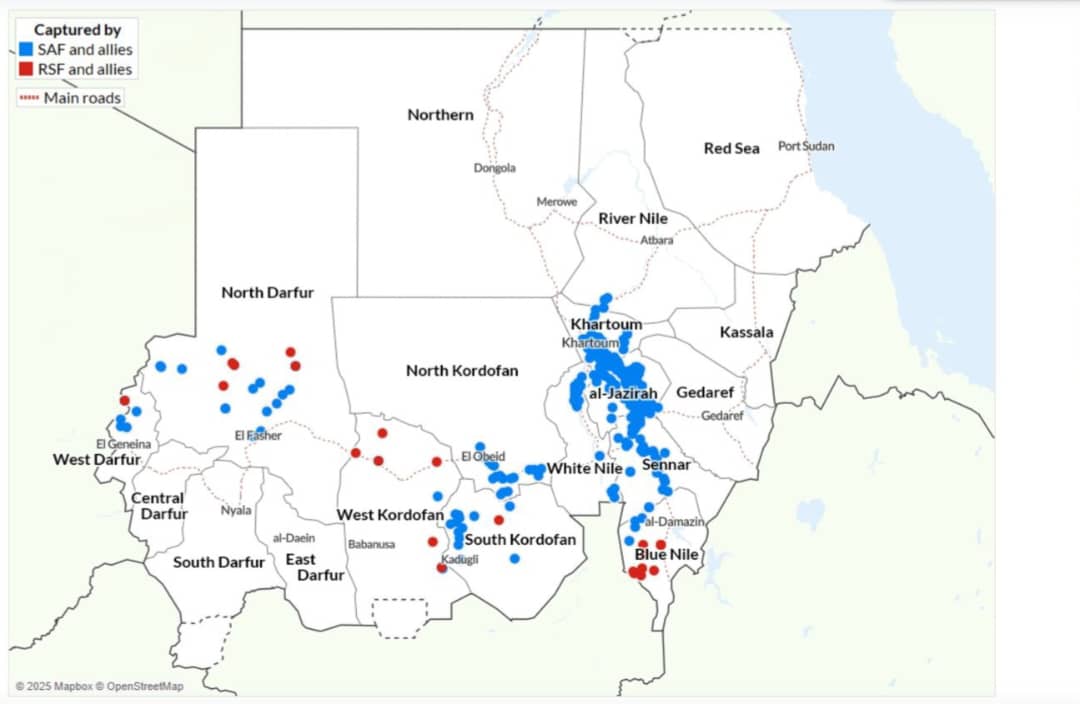
There have been major developments since the PSC’s last substantive session in February 2025. The frontlines of the fighting and the territorial control of the major parties to the war – the Sudan Armed Forces (SAF) and the Rapid Support Forces (RSF) have substantially shifted. At the end of March, the SAF succeeded in wresting control of Khartoum from RSF. On its part, the RSF expanded its offensive in May to the East by launching long-range drone attacks that targeted various cities, including Port Sudan. These attacks targeted key civilian and military infrastructure, including the international airport, a military airbase, fuel depots, and power stations.
Despite shifts in the battlefield dynamics, the warring parties remain entrenched in their positions and appear determined to pursue a military solution. As each tries to consolidate its respective areas of control and inflict loss on the other, the focus of the terrain of fighting has shifted. As a result, the fighting now appears to be shifting southward into Kordofan and eastward in Darfur. The ongoing fighting in Kordofan has reportedly resulted in the massive displacement of people and the collapse of essential services. As the RSF shifted its focus to consolidate its control in Darfur, it intensified its siege and attacks on North Darfur’s capital, El Fasher, through shelling, drone strikes, and ground operations, exacerbating the already dire humanitarian and hunger conditions in the besieged city and its environs. In July, the United Nations called on the warring parties to agree to a humanitarian pause in the besieged city. While the Sudanese Armed Forces (SAF) reportedly accepted the proposal, the Rapid Support Forces (RSF) rejected it. Indicating further expansion of the war front, in June, the RSF claimed control of the tri-border area of Egypt, Libya, and Sudan, both to expand the supply line through Libya and extend the fighting into the Nile Valley and Northern State.
With the war showing no sign of abating, the dire humanitarian situation continues to deteriorate, as the statement from the WFP representative would make clear. Indiscriminate attacks against civilians continue. The RSF long-range drone attacks targeted not only military targets but also civilian infrastructures, including the 10 May 2025 bombing that attacked the central prison in El Obeid, reportedly resulting in the death of 29 prisoners and injuring dozens more. In an incident attributed to the SAF, the bombing on 21 June on the Al-Mujlad hospital in West Kordofan reportedly resulted in the killing of more than 40 people, including six children and five healthcare workers. Sudan remains the world’s largest humanitarian crisis, with over 30 million people in need of assistance.
As they both deepen their effort to consolidate their respective territorial control, they are also seeking to translate territorial control into political influence. SAF has regained control over parts of the east and centre of the country, including the capital, Khartoum. Meanwhile, RSF is working to consolidate its hold in the west and south, particularly in Darfur and South Kordofan. In May, General Abdel Fattah al-Burhan, head of Sudan’s Transitional Sovereignty Council, appointed Kamal Idris as the new prime minister. Idris subsequently dissolved the existing government in June and is currently consulting on the formation of a new cabinet. On 26 July, the RSF-led coalition, known as the Tasis Alliance, also announced the formation of a parallel government, with RSF commander Mohamed Hamdan Dagalo appointing Mohamed Hassan al-Ta’ishi as prime minister.
The emergence of rival governments in the respective territorial spheres of influence of the two rival warring parties has raised renewed fears of Sudan’s potential fragmentation, drawing comparisons to the situation in Libya. It is against this backdrop that tomorrow’s session is scheduled. The UN Security Council is also set to hold closed consultations on the situation in Sudan on the same day.
Tomorrow’s session comes less than a week after the PSC issued a statement. The statement, issued on 29 July, was issued in direct response to and with exclusive focus on the 26 July 2025 announcement by the Rapid Support Forces (RSF) of the establishment of a parallel civilian administration, referred to as the Sudan Founding Alliance (Tasis) in areas under its control. This is not the first time the PSC has issued a statement condemning the RSF’s initiative for establishing a parallel government. Condemning the announcement on the establishment of such a parallel government by the RSF, in an earlier statement issued on 11 March, the PSC warned that ‘such action carries a huge risk of partitioning of the country.’ While both statements explicitly stated that the PSC does not recognise the parallel government, reaffirmed the unity and territorial integrity of Sudan and urged all AU member states and the international community not to recognise any parallel government, the 11 March statement additionally reaffirmed the AU’s ‘unwavering commitment to continue to collaborate with all Sudanese stakeholders towards finding viable and durable solutions towards silencing the guns permanently in Sudan’ on the basis of the AU roadmap (emphasis added). By contrast, in a clear departure from this ‘commitment to continue to collaborate with all Sudanese stakeholders’, the 29 July statement asserted that the ‘African Union only recognises the Transitional Sovereign Council and the recently formed civilian transitional government.’ The ‘civilian transitional government’ that this statement makes reference to is the appointment by Chairman of the Transitional Sovereign Council, General Abdel Fattah Al Burhan, Sudan Armed Forces (SAF) chief, of Kamil al-Tayeb Idris as a civilian Prime Minister. The PSC’s recognition of the so-called ‘civilian transitional government’ follows the statement of 30 May 2025 by the AU Commission Chairperson, who described the appointment of the prime minister ‘as a step towards inclusive governance’.
There are fears that this shift in the policy position of the PSC and the AUC may resuscitate the agenda of lifting the suspension of Sudan from the AU. However, there is no inclusive political process and national dialogue involving diverse political and social forces of Sudan, nor is there any transitional roadmap developed through such a political process and national dialogue. With the war raging on with no end in sight, neither national constitution-making nor general national elections are on the horizon. As the recent experience in Gabon illustrates, even with such processes and a roadmap, the constitutional order is not considered to have been restored before the convening of general national elections. As such, any lifting of the suspension of Sudan at this point could not happen without breaking the AU norm on unconstitutional change of government.
Despite the worsening security and humanitarian situation in the Sudan, ongoing mediation efforts aimed at reaching a diplomatic resolution have made limited progress, with little prospect of securing a ceasefire. The involvement of multiple actors in these initiatives has further complicated the peace process. In May, the United Nations, African Union, and the League of Arab States held a tripartite meeting in Baghdad, Iraq, aimed at promoting greater synergy in their engagement on the Sudan file. They apparently intend to include IGAD in future meetings under this format. In June, the European Union convened a consultative meeting in Brussels on enhancing coordination of peace initiatives and efforts for Sudan, bringing together several key actors involved in the peace process. The next meeting is expected to take place in Addis Ababa.
In the meantime, the United States appears to be shifting its focus to Sudan, building on its recent success in mediating between the Democratic Republic of Congo and Rwanda. It had planned to host a meeting of the Quad—comprising Egypt, Saudi Arabia, and the United Arab Emirates—in Washington, D.C., on 30 July, with the aim of advancing the Sudan peace talks. However, the meeting was reportedly postponed due to disagreements over the anticipated outcome. Similarly, an earlier conference on Sudan convened by the United Kingdom in London in April failed to produce results, also due to disagreements over the terms of a joint declaration.
The ongoing conflict in Sudan has been further complicated by the involvement of external actors and the use of modern warfare technologies, including unmanned aerial vehicles. Despite the existing UN arms embargo, the flow of weapons into the country has continued unabated, fueling the violence and having a devastating impact on civilians. The conflict has also had far-reaching consequences for the broader region.
All seven of Sudan’s neighbouring countries have been affected to varying degrees. In particular, the situation in Abyei—a disputed border area between Sudan and South Sudan—has significantly worsened. The conflict has exacerbated intercommunal tensions, increased displacement, and undermined ongoing peace efforts. The spillover effect has also been evident in the presence of RSF elements across borders and a sharp increase in cross-border movements, including refugees and returnees. Recent fighting in the tri-border area of Sudan, Libya, and Egypt involving SAF, RSF, and armed groups affiliated with the Libyan National Army—led by General Khalifa Haftar—has raised concern that it could spark another regional tension.
The expected outcome of the session is a communiqué. The PSC is expected to express its grave concern over the continuation of fighting in Sudan without any sign of a major breakthrough for peace. It may reiterate its earlier calls on the imperative for ending the fighting in Sudan, calling for a ceasefire and cessation of hostilities. It may also condemn the indiscriminate attacks targeting civilians, including the incidents that led to civilian deaths in El Obeid and West Darfur, and state that those responsible for violations against civilians will be held accountable. The PSC may also call for an end to hostilities in Kordofan and the lifting of the siege that the RSF imposed on El Fasher, worsening the dire humanitarian and hunger crises in the city and its environs. It may also reiterate the imperative for unhindered and safe humanitarian access to ameliorate the humanitarian catastrophe and urge the parties to ensure civilian protection. It is expected that the PSC will restate its position expressed in the 11 March 2025 and 29 July 2025 statements, rejecting and condemning the establishment of parallel governments by the RSF and calling on all AU member states and the international community not to recognise the establishment of the parallel government announced by the RSF on 26 July 2025. While the PSC may not return to its 11 March 2025 statement in which it expressed AU’s commitment to continue to collaborate with all Sudanese stakeholders, it may make it clear that its recognition of the Transitional Sovereign Council in pursuit of safeguarding the territorial integrity of Sudan does not dispense with the need for a political process for the establishment of an all-inclusive transitional government and for finding diplomatic resolution of the current conflict. It may, in this regard, reaffirm its commitment to the May 2023 AU roadmap for the resolution of the conflict in Sudan and that there can be no military solution to the conflict in Sudan. The PSC may also affirm the need for an all-inclusive political process and national dialogue for developing a transitional roadmap, covering constitution-making and holding of general national elections, in order to achieve restoration of constitutional order, for which bringing the war to an end is essential. On the peace process, the PSC is expected to call for the integration of all initiatives for peace in Sudan into a single process. It may also call for the AU to assert a leading role in facilitating such a single peace process for Sudan.
The Imperative for and Outline of a New Paradigm for Africa's International Relations in a Fundamentally Changing Global Order
The Imperative for and Outline of a New Paradigm for Africa's International Relations in a Fundamentally Changing Global Order
Date | 31 July 2025
INTRODUCTION
The global order is going through a historic transformation. There is a profound shift in the structure of the power relations between states. While the state system remains the basis of the global order, the role and power of the state have hugely diminished. Of particular significance is the fact that the old order is in the process of giving way to an emerging order characterised increasingly by multipolarity. Major power rivalry and geopolitical tension are on the rise. Unilateral action and protectionism are gaining momentum. The United Nations (UN) faces an existential crisis. International law is under enormous assault. All of these pose a direct and serious risk to Africa.
This policy brief presents a brief assessment of the current state of Africa’s engagement with major powers and its readiness for advancing its interests in view of the deep shifts in the global context. Based on such assessment and having regard to the efforts of other parts of the world for repositioning themselves, the brief outlines the kind of major strategic shifts that Africa needs to adopt promptly for repositioning itself for the new international order and to ameliorate the perils the state of the world poses to Africa.
Provisional Programme of Work of the Peace and Security Council for August 2025
Provisional Programme of Work of the Peace and Security Council for August 2025
Date | August 2025
In August, the Republic of Algeria will assume the chairship of the African Union (AU) Peace and Security Council (PSC). The Provisional Programme of Work (PPoW) for the month outlines eight substantive sessions covering nine agenda items and a field mission to South Sudan. All sessions are scheduled to take place at the ambassadorial level. Only two of the nine agenda items will focus on country-specific situations, while the other seven will address thematic issues and PSC’s meetings with relevant bodies.
The first session of the month, scheduled for 4 August, is set to consider the evolving situation in Sudan. This session follows a sequence of high-level engagements by the PSC, the most recent being its 1292nd meeting on 29 July 2025, which came in direct response to the 26 July 2025 announcement by the Rapid Support Forces (RSF) of the establishment of a parallel civilian administration, referred as the Sudan Founding Alliance (Tasis) in areas under its control. The PSC, during this emergency ‘meeting’ held via email exchange, strongly condemned and rejected the formation of this so-called ‘parallel government,’ affirming the AU’s unwavering commitment to the sovereignty, unity, and territorial integrity of Sudan. The Council emphasised that the AU recognises ‘only the Transitional Sovereignty Council and the recently formed civilian transitional government’ until a consensual arrangement is reached that aligns with the aspirations of the Sudanese people. These pronouncements came just months after the Council’s 1261st Summit-level session held on 14 February 2025, on the margins of the 38th AU Summit, which had attracted the participation of high-level figures including AU Commission Chairperson Moussa Faki Mahamat, IGAD Chair Djibouti (represented by its Foreign Minister), UN Secretary-General António Guterres, and a representative from the League of Arab States. Despite the elevated diplomatic engagement at the February summit, the meeting failed to produce substantive decisions. Its outcome communiqué simply reiterated prior calls, such as a humanitarian truce, that both the Sudanese Armed Forces (SAF) and RSF disregarded. Since February, the conflict in Sudan has evolved further. The RSF’s consolidation of control in parts of the west and south, alongside its establishment of a competing political authority, has intensified fears of territorial fragmentation of Sudan along the lines of what is playing out in Libya. Meanwhile, the SAF has maintained its dominance in the north and east, bolstering its presence in strategic areas, while trying to consolidate the diplomatic edge it has over the RSF in regional and international forums.
Despite the persistence of the fragmentation of the diplomatic space and lack of effective diplomatic engagement in recent months, efforts are underway for reinvigorating diplomacy. Egypt has increased bilateral engagements focused on containing instability along the Sudan-Libya-Egypt border, triggered by incidents involving the RSF. On the international front, before its postponement the U.S. was set to convene a peace talk that set to start on 29 July in Washington with Saudi Arabia, the United Arab Emirates, and Egypt to revive the ‘Quad’ initiative, emphasising dialogue over military action. Simultaneously, the U.N. is preparing mediation efforts led by envoy Ramtane Lamamra, coordinating with the AU in Addis Ababa and focusing on talks for civilian protection, aiming to bring the Sudanese parties into proximity negotiations as soon as possible. It is therefore expected that the PSC will discuss these recent developments and follow up on its previous decisions, such as investigations into human rights violations, a plan for civilian protection, and identifying external actors involved in supplying arms and financial support, fueling the fire of the war in Sudan.
On 6 August, the second substantive session will assess the role of ad hoc governance, peace, and security mechanisms in supporting the PSC’s mandate. This will be the first time that PSC will be assessing the effectiveness of ad hoc mechanisms in the implementation of its mandates. The Protocol Relating to the Establishment of the PSC authorises the PSC to establish subsidiary bodies as needed. Specifically, Article 8(5) empowers the PSC to create such bodies, including ad hoc committees, as it deems necessary to undertake tasks such as mediation, conciliation, or fact-finding enquiries. In operational practice, the PSC exercises this mandate through formal communiqués and AU Assembly decisions, which authorise or request the establishment of these mechanisms in the form of ad hoc committees or high-level panels. The session is expected to reflect on how such mechanisms contribute to conflict prevention, mediation, and post-conflict reconstruction. Against the backdrop of increasingly complex crises across the continent, the session provides a timely opportunity to assess the lessons learned from the operation of such mechanisms in reviewing the African Peace and Security Architecture, for making it fit for the evolving and complex security situation and geopolitical context of the continent. The Council is anticipated to examine how these bodies support early warning, strategic mediation, and inclusive dialogue, while also identifying the challenges facing them and ways of adapting them to the fundamentally changing realities of Africa and the world.
On 8 August, the PSC will convene its session dedicated to consultations with the AGA-APSA Platform and the PRC Sub-Committee on Human Rights. During the 1098th session in August 2022, an inaugural consultation was held between the PSC and the AGA-APSA Platform, which decided to institutionalise and regularise this engagement as an annual event. A similar decision was taken at the 1095th session of the PSC, which was held for consultation with the PRC Sub-Committee on Human Rights, Democracy and Governance, affirming that these joint engagements should also be held annually. In August 2023, during its 1167th session, the PSC brought together both mechanisms, the AGA-APSA Platform and the PRC Sub-Committee, for a joint consultation, recognising their shared mandate in promoting governance, democratisation, and constitutionalism. Although these consultations were intended to be held annually, no session took place in 2024. The upcoming consultation is expected to reinvigorate and deepen collaboration among PSC members, the PRC Sub-Committee, and the AGA-APSA Platform. It will build on past engagements, evaluate progress in fulfilling joint commitments, and explore innovative approaches to strengthen coordination in promoting the AU’s shared values.
Between its scheduled sessions, the PSC will conduct a field mission to South Sudan from 10 to 12 August. The visit comes against the backdrop of the escalating political and security crisis that threatens to unravel the hard-won gains of the Revitalised Agreement on the Resolution of the Conflict in South Sudan (R-ARCSS). During its 1283rd session, the PSC voiced deep concern over the deteriorating situation, warning of the risk of a full-scale war due to serious ceasefire violations, the detention of political figures, and a growing erosion of trust among the signatories to the agreement. The field mission will provide the PSC with an opportunity to directly assess the situation on the ground, engage with key stakeholders, including the Revitalised Transitional Government of National Unity (RTGoNU), civil society actors, and regional partners and reinforce its calls for an immediate cessation of hostilities, the unconditional release of political detainees, and the full implementation of the R-ARCSS.
On 13 August, the PSC will convene the only open session of the month to discuss the theme ‘Education in Conflict Situations.’ The last time the Council considered this particular theme was in August 2024 during its 1229th meeting, in which it decided to ‘regularise the Open Session as an annual event of the Council.’ It is expected to build on and follow up on its previous commitments which included, but not limited to, the need for establishing a quality control mechanism to monitor and evaluate inclusive education initiatives to ensure effectiveness and accountability; the need for improving data collection and evidence-based policymaking, to effectively address the unique challenges facing education in conflict situations; and the proposal of mainstreaming inclusive education as an integral component of post-conflict reconstruction and development (PCRD) in countries emerging from conflict situations. The session is also expected to advance its discussions from the recent PSC sessions held in July 2025 on the humanitarian situation in Africa and rehabilitation and reintegration of children formerly associated with armed conflicts, as these naturally extend to education. This meeting also comes just a few months before the AU Education Summit 2025 – a conference aimed at rallying the AU member states, schools and educators from the African continent behind the AU strategic objective that seeks to address the educational challenges the African continent faces.
On 15 August, the PSC will convene to consider two agenda items, beginning with a discussion on the Terms of Reference (ToRs) for the PSC Sub-Committee on Counter-Terrorism. Although the Sub-Committee has long been part of the PSC’s structure, it has never been operationalised since its establishment. During its 1182nd meeting in October 2023, the PSC underscored the importance of fully activating and operationalising the Sub-Committee. In preparation for the Ambassadorial-level session, the Committee of Experts is scheduled to meet tomorrow (1 August) to deliberate on the ToRs.
The second part of the session will be dedicated to the consideration and adoption of the PSC Field Mission Report on South Sudan. Building on the objectives of the field visit and the key findings outlined in the report, the Council is expected to reflect on the current state of the escalating political and security situation. The session will provide an opportunity to assess the impact of recent developments and guide the PSC’s next steps in supporting the implementation of the Revitalised Agreement on the Resolution of the Conflict in South Sudan (R-ARCSS), as well as to address and resolve the ongoing violence in South Sudan.
On 25 August, the PSC will hold its second annual consultative meeting with the Southern African Development Community (SADC) Organ on Politics, Defence and Security. This meeting, scheduled to take place virtually, builds on the commitment made during the inaugural session held on 30 August 2024 in Gaborone, Botswana, where both parties agreed to institutionalise annual consultations alternating between Addis Ababa and Gaborone. Rooted in Article 16 of the PSC Protocol and the 2008 Memorandum of Understanding between the AU Commission and RECs/RMs, the meeting reflects efforts to strengthen coordination and collaboration in promoting peace and security in the region. The consultative session is expected to assess progress made since the inaugural meeting, particularly in light of developments in eastern DRC and in terms of enhancing joint efforts in resource mobilisation for peace operations.
On 27 August, the PSC will convene for a briefing on the early warning system and its role in mapping risks and threats across Africa. The session will feature contributions from key AU institutions, including the African Peer Review Mechanism (APRM), the Committee of Intelligence and Security Services of Africa (CISSA), the AU Mechanism for Police Cooperation (AFRIPOL), and the AU Counterterrorism Centre (AUCTC). This session is expected to provide a comprehensive analysis of political, security, and socio-economic dynamics shaping existing and emerging conflict and security challenges on the continent, building on the AU’s commitment to preventive diplomacy and conflict prevention as outlined in the PSC Protocol and the African Peace and Security Architecture (APSA). The session follows related PSC engagements, including most recently the 1247th session held on 27 November 2024, where CISSA, AUCTC, and AFRIPOL briefed the PSC on the Continental Early Warning and Security Outlook. During that session, the PSC emphasized the need for enhanced collaboration and information sharing among Member States and international partners to counter the exploitation of digital platforms by terrorist and extremist groups and tasked the AUCTC, CISSA, AFRIPOL, and other specialized AU agencies to collaborate with Member States toward establishing a joint Cybersecurity Task Force to prevent the use of information and communication technologies (ICTs) and emerging technologies for radicalization, recruitment, training, and funding by terrorist groups. Furthermore, the 1251st PSC session on 17 December 2024 underscored the need for greater visibility and prominence of CEWS within the proposed restructuring of the Political Affairs, Peace and Security (PAPS) Department, signalling a push for institutional reforms to enhance CEWS’s operational efficiency. Additionally, the 4th Joint Consultative Meeting between the PSC and APRM on 7–8 April 2025 highlighted the importance of leveraging APRM’s governance-focused peer review reports to enhance early warning strategies, building on prior pronouncements which emphasised closer coordination between APRM and PSC to address structural vulnerabilities and governance deficits that fuel conflicts. The upcoming session offers an opportunity to explore how early warning analysis would be holistic by going beyond the recent intelligence and security-focused analysis from CISSA, AFRIPOL, and AUCTC and including APRM’s governance-centred and CEWS all-encompassing analyses. Discussions may also address challenges such as Member States’ denialism of early warning reports, as noted in previous sessions, and the need for enhanced coordination with Regional Economic Communities (RECs) to tackle transnational threats like terrorism, cybercrime, and human trafficking.
The last meeting of the Council will be held on 29 August, which will be a briefing by the African Members to the UN Security Council. Algeria, Sierra Leone and Somalia, serving as non-permanent members for the 2024 – 2025 term are expected to brief the UNSC on several critical peace and security issues on the continent which is expected to include the security situation in eastern DRC, Sudan’s ongoing civil war and humanitarian crisis, South Sudan’s political and security developments, push for UNSC reform and African representation, regional Counter-terrorism in West Africa and the Sahel and cooperation with regional organizations. This meeting comes after the PSC recently adopted the ‘Manual on the Modalities for Enhancing Coordination Between the PSC and the African Members of the United Nations Security Council (A3)’ at its 1289th meeting of 24 July 2025. From the manual, it highlights that, to bolster A3’s influence and impact in the UNSC, the A3 shall consult with relevant stakeholders, including the Non-Aligned Movement and all strategic partners of the AU, on peace and security issues of interest to Africa. In this context, the A3 is tasked with mobilising greater political support in championing the African positions and interests on peace and security issues on the agenda of the UNSC. This being in alignment with the language and commitments from the Conclusions of the 11th Oran Process held in December 2024 in which, it was agreed that there is an imperative to have a synchronization of the meetings of the PSC and those of the UNSC on matters relating to peace, security and stability in Africa, which come under the joint mandate of the two Councils, to ensure proper guidance to the A3 Plus. In addition, it was underscored that there is a need for ensuring a continued push for the A3 to take effective pen-holders or co-pen-holding on African files on the UNSC Agenda. Therefore, the meeting is expected to provide updates on modalities for strengthening coordination between the PSC and A3 based on the experience of the current A3 members and recent trends in the UNSC. The session may also further explore operationalising the manual’s provisions, strategising around UNSC reform efforts, and advancing Africa’s broader multilateral objectives.
CGTN: "Amani Africa Director Spoke to CGTN on the Qatar led talks between DRC and M23"
Amani Africa Director Spoke to CGTN on the Qatar led talks between DRC and M23July 29, 2025
Monthly Digest on The African Union Peace And Security Council - June 2025
Monthly Digest on The African Union Peace And Security Council - June 2025
Date | June 2025
In June, Tanzania chaired the African Union (AU) Peace and Security Council (PSC). The PSC initially planned to convene six substantive agenda items. However, after the revision of the program of work (PoW), it held five sessions with six agenda items. Four of the agenda items were on thematic issues, while two focused on country-specific situations. All five sessions were held at the ambassadorial level.
The Imperative of a Unified AU Health Architecture: A New Era of Collaboration
The Imperative of a Unified AU Health Architecture: A New Era of Collaboration
Date | 24 July 2025
Ibraheem Bukunle Sanusi 1
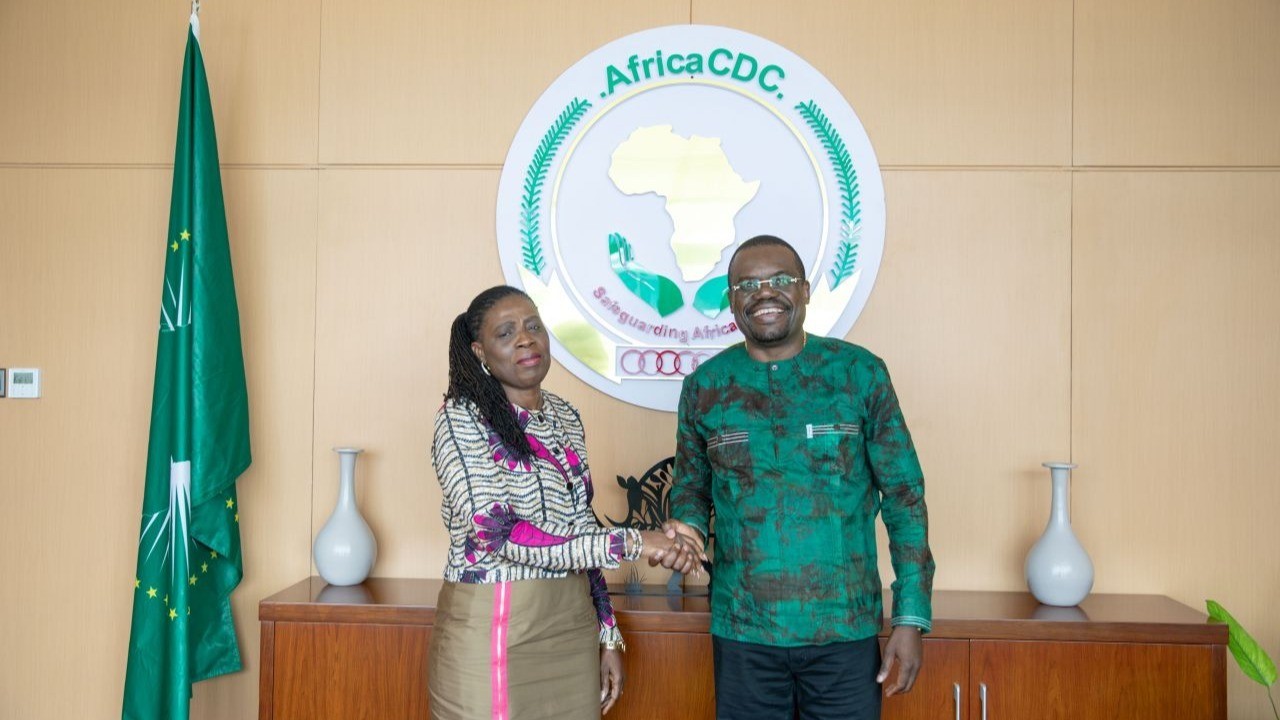
A pivotal meeting recently took place at the Africa CDC headquarters in Addis Ababa, Ethiopia. Her Excellency Ambassador Amma Twum-Amoah, the new African Union (AU) Commissioner for Health, Humanitarian Affairs and Social Development, held fruitful discussions with Africa CDC Director General H.E. Dr. Jean Kaseya. Their deliberations, focused on pressing health and humanitarian issues confronting the continent, culminated in a significant agreement: the establishment of a joint coordination team. This team, comprising experts from the AU Commission and Africa CDC, along with representatives from the Africa Medicines Agency (AMA), AUDA-NEPAD, Africa Humanitarian Agency (AfHA), and AfCFTA, is mandated to ensure policy coherence, enhance productivity and efficiency, and forge common positions in implementing health policies across Africa.
This initiative is a welcome and crucial step. It signals a deeper commitment to coordination and collaboration among Africa’s continental health, development, and integration institutions. This article argues that this agreement should be a powerful impetus to explore and ultimately establish a comprehensive African Health Architecture.
A Global Turning Point in Health Governance
We stand at an inflexion point in global health governance. The global health landscape is shifting amid ideological realignments and financial strains occasioned by geopolitical rifts. Official Development Assistance (ODA) for health in Africa has plummeted by 70% from 2021 to 2025, as donor countries redirect funds toward domestic priorities and even military spending in the wake of geopolitical crises. After a peak during COVID-19, global aid fell 7.1% in 2024, the first drop in years, with the U.S. slashing USAID programs by over 50% and others like the UK and Netherlands following suit. The decline “stems largely from shifting global economic conditions, evolving political priorities, and rising geopolitical tensions”. In short, the era of abundant donor support is waning.
As noted in the article Global Health and the “Second Independence of Africa”, global power dynamics around health are changing. During the COVID-19 pandemic, wealthy nations competed aggressively for vaccines and supplies, eroding faith in multilateral mechanisms. Health has emerged as a battleground in today’s geopolitical struggle, reminiscent of past contests for influence in Africa. As powerful countries pursue their own interests, Africa’s health needs too often take a backseat, leading to fragmented responses and a troubling lack of international cooperation during crises. The inequitable vaccine access in the pandemic and the exclusion of Africa CDC from the initial governance of the World Bank’s Pandemic Fund are stark reminders of Africa’s marginalisation. All of these points point to a simple truth: now is a critical moment for Africa to step forward with a cohesive vision and assert its health priorities on the global stage. African leadership and domestic commitment to health have never been more needed. As one expert noted, ultimate responsibility for Africa’s health security rests with African governments investing in health and citizens holding them accountable. The African Union (AU) must seize this moment to unite its institutions, voices and resources for health.
Pressure on Africa’s Health Systems and the Cost of Fragmentation
The changing global health governance dynamics have put Africa’s health systems under immense pressure. As clearly articulated in the “Africa’s Health Financing in a New Era” concept note, the financing crisis alone is staggering, with ODA collapsing, vital programs for pandemic preparedness, maternal health, and disease control at risk. This comes as Africa faces a surge in public health threats: outbreaks on the continent jumped 41% from 2022 to 2024, including Ebola, cholera, Marburg and more, all colliding with climate disasters and conflicts. Yet more than 20 years after pledging to spend 15% of budgets on health (the Abuja Declaration), only 3 African countries meet that target, while most languish below even 10%. The result is chronically fragile health systems now strained to the breaking point.
Current global health governance has often failed to alleviate these strains and, in some cases, exacerbated them. Donor-driven initiatives have saved lives but have also fostered dependency and duplication. When donors abruptly cut funds, decades of health gains can unravel. For example, SpeakUp Africa argued that neglected tropical diseases (NTDs), which afflict over 580 million Africans, saw major progress through partnerships, yet sudden bilateral funding cuts recently exposed the fragility of those gains. African countries were left scrambling for emergency funds to fill the gap, an alarming situation that underlines the risk of relying solely on external charity. As one advocate put it, African nations must not remain in “a position of vulnerability” dependent on donors’ whims. In the realm of non-communicable diseases (NCDs), the story is similar. Chronic conditions like heart disease, diabetes and cancer now account for 37% of all deaths in sub-Saharan Africa (up from 24% in 2000), a “hidden epidemic” that threatens to overwhelm health services. Yet global health financing has historically prioritised infectious diseases, meaning efforts to combat NCDs remain fragmented and under-resourced. Without a unified strategy, African institutions struggle to address cross-cutting issues like NCD prevention, mental health, and lifestyle diseases that don’t fit neatly under any single donor-funded program.
Compounding these challenges is the fragmentation among AU’s own health institutions. The African Union has no shortage of organs and agencies devoted to health or have health as part of their mandates: the AUC Department of Health, Humanitarian Affairs and Social Development (AUC-HHS) sets policies; the Africa Centres for Disease Control and Prevention (Africa CDC) leads on epidemics and broader health topics; the new African Medicines Agency (AMA) will regulate drugs and vaccines; AUDA-NEPAD drives developmental projects and agenda; the AU’s IBAR and PANVAC focus on animal health and vaccines (crucial for zoonoses and food security); and more. Each plays a vital role, but too often they operate in silos or with overlapping mandates. Coordination is ad hoc at best, and critical issues risk falling through the cracks. For instance, Africa CDC has launched initiatives for local vaccine production (like the Partnerships for African Vaccine Manufacturing, now called Platform for Harmonised African Health Manufacturing – PHAHM) while the AMA is tasked with harmonising regulatory standards. Yet without structured collaboration, these efforts may stall. Likewise, “One Health” threats, diseases that leap from animals to humans, cannot be tackled by the Africa CDC or AU-IBAR alone. Recognising this, the AU in 2022 had established an Interagency One Health Coordination Group bringing together Africa CDC, AU-IBAR, the AUC, and others to jointly address zoonotic disease control. This was a positive step, but it underscores the point: when institutions are fragmented, Africa’s response to health challenges is fragmented. In areas from boosting pharmaceutical manufacturing to combating NCDs and NTDs, Africa’s myriad health actors need to move in unison, or risk working at cross purposes.
An AU Health Architecture: A Vision for Coordination and Cooperation
Central to addressing fragmentation is to foster cooperation. There is a need for continental health institutions and related organs with key health-related mandates to work more coherently under an African Union Health Architecture. This would not be a new brick-and-mortar institution, but rather a platform and framework that ties together all AU health-related bodies under a common vision for health security and development. In essence, it would serve as a continental coordination mechanism, similar to the successful African Peace and Security Architecture (APSA) in the security realm or the African Governance Architecture (AGA) in the governance realm. The AGA, for example, functions as a dialogue and coordination framework among various AU-recognised institutions working on governance. We can do the same for health: create a structured forum for the AUC-HHS, Africa CDC, AMA, AUDA-NEPAD, IBAR, PANVAC, and others to share information, align strategies, and speak with one voice.
What would an AU Health Architecture actually do? First, it would institutionalise regular information sharing among these bodies. An architecture’s platform (perhaps an “AU Health Platform”) could convene quarterly coordination meetings, similar to the Senior Officials Meeting under APSA, joint task forces on specific issues, and a unified data hub. Imagine the Africa CDC and AMA jointly monitoring the rollout of a new vaccine with surveillance data feeding directly into regulatory decisions, and AUDA-NEPAD and AfCFTA representatives planning how to scale up manufacturing and distribution. Such synergy is only possible with a formal mechanism for cross-agency communication.
Second, a health architecture would enable joint advocacy and policymaking. Too often, Africa’s health priorities are fragmented when presented on the global stage. A unified AU Health Architecture can coordinate a continental voice in global health forums. Instead of Africa CDC, health ministers, and other agencies each making separate appeals, the AU can assert a single, loud position on issues like pandemic preparedness, financing, or intellectual property for medicines. We saw the power of unity during the TRIPS waiver negotiations at the WTO, with African states that spoke together on vaccine patent waivers having far greater influence. An AU Health Architecture can make this the norm, preparing common African positions for the World Health Assembly, G20 health discussions, and beyond. As African leaders have emphasised in the New Public Health Order (NPHO) initiative, Africa must secure “equitable and fair representation” in global health decision-making. Speaking as one through a coordinated platform is the best way to ensure Africa’s voice is heard and its interests defended. This is also a key pillar of the AU reforms agenda.
Third, an AU Health Architecture will directly address fragmentation on health priorities. It can set overarching continental targets, for example, reducing NCD mortality or eliminating specific NTDs and align the efforts of various organs behind those goals. This means less duplication and more coherence: one AU health agenda that leverages the strengths of each institution. The AU already has high-level strategies (the Africa Health Strategy 2016–2030, the Catalytic Framework to end AIDS, TB and Malaria, etc.), but implementation often falters without coordination. The architecture could establish thematic working groups (on NCDs, NTDs, maternal health, etc.), drawing experts from all relevant agencies. This platform would also help bridge human and animal health agencies in a One Health approach, ensuring that human health, veterinary services, and environmental experts jointly tackle issues like antimicrobial resistance or zoonotic outbreaks. Already, there is a proof of concept: with the AU’s One Health interagency group (co-hosted by Africa CDC and IBAR), which recently launched the One Health strategy for zoonotic diseases. An AU Health Architecture would take such collaboration continent-wide, so that whether it’s Ebola or Ebola in animals (like swine fever), the response is synchronised across sectors.
Finally, the architecture will serve as a platform for coordinating health product manufacturing with regulatory and trade considerations. Africa is making bold moves to produce its own vaccines, medicines, and diagnostics, a crucial step toward health security and self-reliance. But success requires aligning multiple pieces: manufacturers need a favourable trade environment and swift regulatory approvals, and countries need assurances of quality and market access. The African Medicines Agency and the AfCFTA cannot work in isolation; they must work hand-in-hand. Under the AfCFTA agreement, fragmented regulatory systems will be harmonised, and intra-African trade in pharmaceuticals is set to grow. The member states are already leading in this regard with the recently established MoU on Regulatory Reliance Mechanism, agreed to by the eight Maturity Level 3 (ML3) regulatory agencies in Africa. At the continental level, a health architecture would operationalise this by linking AMA’s regulatory harmonisation with the AfCFTA Secretariat’s trade facilitation, guided by input from Africa CDC on public health needs. In practical terms, this could mean creating an African Medicines & Vaccines Forum under the architecture, where AMA, Africa CDC, AUDA-NEPAD (which also has pharmaceutical manufacturing under its mandate), and AfCFTA representatives jointly plan how to boost local production and remove trade barriers. The benefits would be immense: with 61% of Africa’s pharmaceutical needs currently imported and only 3% of medicines traded within Africa, a coordinated approach can change that equation. During a high-level AU side event at the UN, leaders from Africa CDC, AUDA-NEPAD, and AfCFTA together underscored the need to invest in research, strengthen regulatory bodies, and enhance local production for health security. The AU Health Architecture provides the home for turning those commitments into action, aligning investments, regulations, and industrial strategy so that African-produced health products can travel seamlessly across African borders.
Amplifying Africa’s Voice and Sustaining Political Commitment
A consolidated AU Health Architecture would not only streamline internal coordination, but it would amplify Africa’s external voice and help sustain high-level political commitment to health. One of the great lessons of recent years is that Africa can no longer afford to be a passive recipient in global health. Our continent must set its own agenda. With a unified health architecture, the AU can articulate a bold, cohesive vision for health and back it up with collective weight. Consider Agenda 2063, the continent’s development blueprint. Its first aspiration envisions “a high standard of living, quality of life and well-being for all citizens,” including “healthy and well-nourished citizens”. Health is central to Africa’s long-term prosperity. By creating a central health coordination platform, the AU would demonstrate to citizens and the world that it is serious about achieving those goals. A health architecture can regularly track progress toward health targets in Agenda 2063 and the Sustainable Development Goals, holding leaders accountable if commitments waver.
Importantly, an AU Health Architecture would help keep health security at the top of the political agenda even when there isn’t a scary epidemic making headlines. It can do so by instituting accountability mechanisms, for instance, annual “State of Africa’s Health” reports delivered to the AU Assembly, or a scorecard on each country’s fulfilment of pledges (like domestic health financing or immunisation coverage). Just as the AU’s Peace and Security Council meets routinely to address conflicts, a standing health coordination platform would ensure that health doesn’t slip into neglect between crises. This sustained focus is critical to, for example, finally realising the Abuja promise of 15% budget allocation to health. Peer pressure is a powerful tool: if finance and health ministers know that their performance will be reviewed in a continental forum, they have greater incentive to prioritise health in national budgets. An architecture could also facilitate joint resource mobilisation, presenting a united front to development partners for funding strategic priorities, rather than fragmenting donor engagement across many small initiatives. Development partners have long urged “country ownership”; through a health architecture, African nations collectively can take ownership, setting priorities and asking partners to align behind Africa’s plan and priorities, not the other way around.
Crucially, the architecture would bolster Africa’s position in global health governance. When negotiating the new Pandemic Accord or reforming the International Health Regulations, an organised African bloc can shape the outcome, for instance, pressing for equitable benefit-sharing of vaccines and data. African nations want and deserve a seat at the table in shaping global health initiatives. By coordinating continentally, Africa can approach these negotiations not as 55 separate voices but as one powerful voice representing 1.3 billion people. We have already seen the beginnings of this: the Lusaka Agenda (adopted in December 2023 by African and global health stakeholders) called out imbalances in global health and stressed alignment with national plans. An AU Health Architecture would embody that principle of alignment and give Africa the platform to assert its rights in global forums, whether it’s advocating for pandemic financing mechanisms that include African institutions, or championing issues often neglected globally (like NTDs or climate-health links).
Finally, the benefits extend to Africa’s broader integration projects like the AfCFTA and the free movement of people agenda. As the continent breaks down borders for trade and travel, public health cooperation must tighten. With freer movement of persons and goods, these initiatives will certainly impact public health across the continent, as Africa CDC itself noted. A health architecture can work closely with those implementing the Free Movement Protocol to harmonise health regulations, for example, standardising vaccination certificates or collaborating on cross-border disease surveillance so that viruses do not hitchhike along with increased human mobility. It can also inform the AfCFTA on health-related trade measures (ensuring, say, that essential medicines and health equipment enjoy low tariffs and smooth customs procedures across Africa). In doing so, the architecture would help unlock the synergies between economic integration and health security, a link that requires increasing emphasis. Healthy populations are more mobile and economically productive; conversely, integrated markets can support stronger health systems (through pooled procurement, larger markets for local manufacturers, and so on). By embedding health in Africa’s grand integration schemes, the AU Health Architecture would contribute to the vision of Agenda 2063’s “Africa We Want” – an Africa of free movement, one voice, and self-reliant, robust health systems supporting our development.
Learning from the African Governance Architecture: Feasibility and Accountability
Skeptics might ask: will creating an AU Health Architecture add another layer of complexity to an already crowded AU institutional landscape? It’s a valid concern, Africa’s health ecosystem is vast, and coordination is never easy. However, the solution to complexity is not to shy away from it, but to manage it through smart design. Here, the AU can draw inspiration from its own experience. In 2011, faced with numerous bodies dealing with democracy and human rights, the AU established the African Governance Architecture (AGA) as a coordination mechanism for dialogue among stakeholders. This platform did not replace or duplicate the mandates of those bodies; instead, it provided a structured forum for them to collaborate, align their activities, and monitor progress on shared goals. The AGA (and its associated African Governance Platform) clarified roles and created a one-stop framework for governance issues. Crucially, it also introduced accountability mechanisms, for example, an annual, now biennial, high-level dialogue and routine reviews of how AU members uphold governance commitments. The result has been greater coherence in AU actions on governance and human rights, even if challenges remain.
The proposed AU Health Architecture can emulate this model. Defined roles and responsibilities would be a cornerstone: each organ’s comparative advantage should be codified (e.g., Africa CDC as lead on health emergencies and surveillance, AMA as lead on regulatory harmonisation, HHS Department on policy development and health diplomacy, AUDA-NEPAD on program implementation and resource mobilisation, IBAR on animal health, etc.), so that they complement rather than compete with each other. A coordination platform, perhaps the “AU Health Platform”, would meet regularly (as an example, heads of these agencies could convene once or twice a year on the margins of the AU Summits, with working-level coordination more frequently) to ensure everyone is steering toward common objectives. This platform could also include regional representation (from the RECs or Regional Health Organisations) to connect the continental strategy with regional and national implementation. By formalising these interactions, the architecture would move us from the current patchwork of informal cooperation to a predictable, structured collaboration.
Accountability must be the other pillar. Here, lessons from both AGA and the African Peace and Security Architecture (APSA) are instructive. APSA, through the Peace and Security Council and its early warning system, set up clear procedures for conflict prevention and response. A health architecture could strengthen the existing Specialised Technical Committee on Health in this regard. The STC would track countries’ compliance with agreed health commitments (for instance, reporting on how many have met the Abuja 15% target or how preparedness scores are improving). It could also provide a mechanism to rapidly escalate health concerns, such as an emerging pandemic threat, to the highest political level, ensuring AU heads of state take swift, coordinated action. Far from adding bureaucracy, such structures streamline decision-making by cutting through institutional silos. They make the sum greater than the parts.
It’s also worth noting that creating an AU Health Architecture does not necessarily mean setting up a large new institution with heavy costs. Much can be achieved with political will, a clear mandate from the AU Assembly, and a small coordinating secretariat (potentially housed within the AUC or Africa CDC). In fact, the AU Assembly could simply repurpose an existing mechanism, for example, expanding the mandate of the Specialised Technical Committee on Health to function as the political oversight of the Health Architecture, supported by a technical secretariat that coordinates across agencies. The key is to embed the architecture in the AU’s structures so it has teeth: decision-making authority, reporting lines, and the blessing of heads of state. Once that is in place, the various health agencies will naturally orient their work to align with the collective framework. Yes, there will be growing pains such as turf wars and resource questions, but these can be managed by clearly demonstrating that everyone stands to gain. Each institution will be more effective in its mandate when supported by others: Africa CDC gains a broader reach through community networks; AMA gains political backing to enforce standards; AUDA-NEPAD gains technical input for its projects; member states get one coherent guidance instead of multiple voices.
From personal experience, the African Governance Architecture took time to mature, but it showed that complex challenges demand coordinated solutions. Health is no different. By learning from AGA’s experience, setting a unifying vision, creating dialogue platforms, and instituting peer accountability, the AU Health Architecture can be both feasible and transformational. As the saying goes, if you want to go fast, go alone; if you want to go far, go together. Africa cannot afford isolated, short-term fixes for its health challenges. We need to go far and fast together.
Seizing the Moment for Africa’s Health Security
In conclusion, there is no better time to establish an African Union Health Architecture. We are at a pivotal juncture with traditional pillars of global health support wavering, even as the continent faces rising health demands from all sides. Yet within this challenge lies an opportunity to reimagine Africa’s health governance on its own terms. By strengthening coordination and cooperation among our health institutions, we strengthen Africa’s ability to withstand shocks, whether from pandemics or funding cuts. By speaking with one voice, we ensure African priorities like local manufacturing, NCDs, NTDs, and One Health are no longer neglected on the world stage. By aligning health with our broader agendas of economic integration and self-reliance, we move closer to the Africa envisaged in Agenda 2063: prosperous, united, and taking charge of its destiny.
Yes, building an AU Health Architecture will require leadership, political will, diligence, and perhaps a shift in mindset among our leaders and institutions. But the alternative is to continue muddling through fragmentation and that is a recipe for stagnation and vulnerability. Our continent has experienced enough of that already. The COVID-19 crisis has already sparked the vision of a New Public Health Order for Africa, emphasising better coordination, increased domestic financing, and expanded manufacturing. The proposed Health Architecture is the vehicle to drive that vision forward. It would hard-wire collaboration into the AU system and help sustain the momentum for health development long after the headlines fade.
African countries often say, “African solutions to African problems.” This is our chance to apply that credo to health. Let us not wait for the next pandemic or the next donor conference to get our act together. The AU, in partnership with development partners and global health actors, should move now to design and implement a unifying health architecture. It is an investment in our collective security and well-being that will pay dividends for generations. With unity of purpose and structure, Africa can turn this global inflexion point into a launch pad from a continent often spoken about in global health, to a continent that speaks for itself and leads. The health of 1.3 billion Africans, and indeed global health security, will be the better for it.
1 Ibraheem Sanusi is the Sector Coordinator for Health and Social Development at the GIZ Office to the African Union, where he leads the implementation of strategic programmes aimed at strengthening the institutional and technical capacities of continental health bodies, including the Africa CDC, the African Pharmaceutical Technology Foundation, and the African Medicines Agency. He coordinates GIZ’s support to the African Union’s health agenda across areas such as pandemic preparedness, One Health, pharmaceutical regulation, and digital health governance.
The content of this article does not represent the views of Amani Africa and reflect only the personal views of the authors who contribute to ‘Ideas Indaba’