
The 18 September UNSC Straw Poll for the selection of Antonio Guterres’s successor opens the race wide as an African’s chance as a consensus candidate grows
The 18 September UNSC Straw Poll for the selection of Antonio Guterres’s successor opens the race wide as an African’s chance as a consensus candidate grows
Date | 20 September 2026
Solomon Ayele Dersso, PhD, Founding Director, Amani Africa
As the time for the end of the term of Antonio Guterres, the outgoing Secretary-General of the UN, fast approaches, the process for the selection of his successor grinds on at a rather slow pace. On 18 September, the UN Security Council (UNSC) held the third straw poll on the current list of candidates.
The outcome of the poll suggests that none of the current candidates won the requisite level of confidence of the UNSC. However, the poll was significant from the perspective of clarifying some questions about the standing and prospects of the current list of candidates in the selection process and the trajectory of the selection process.
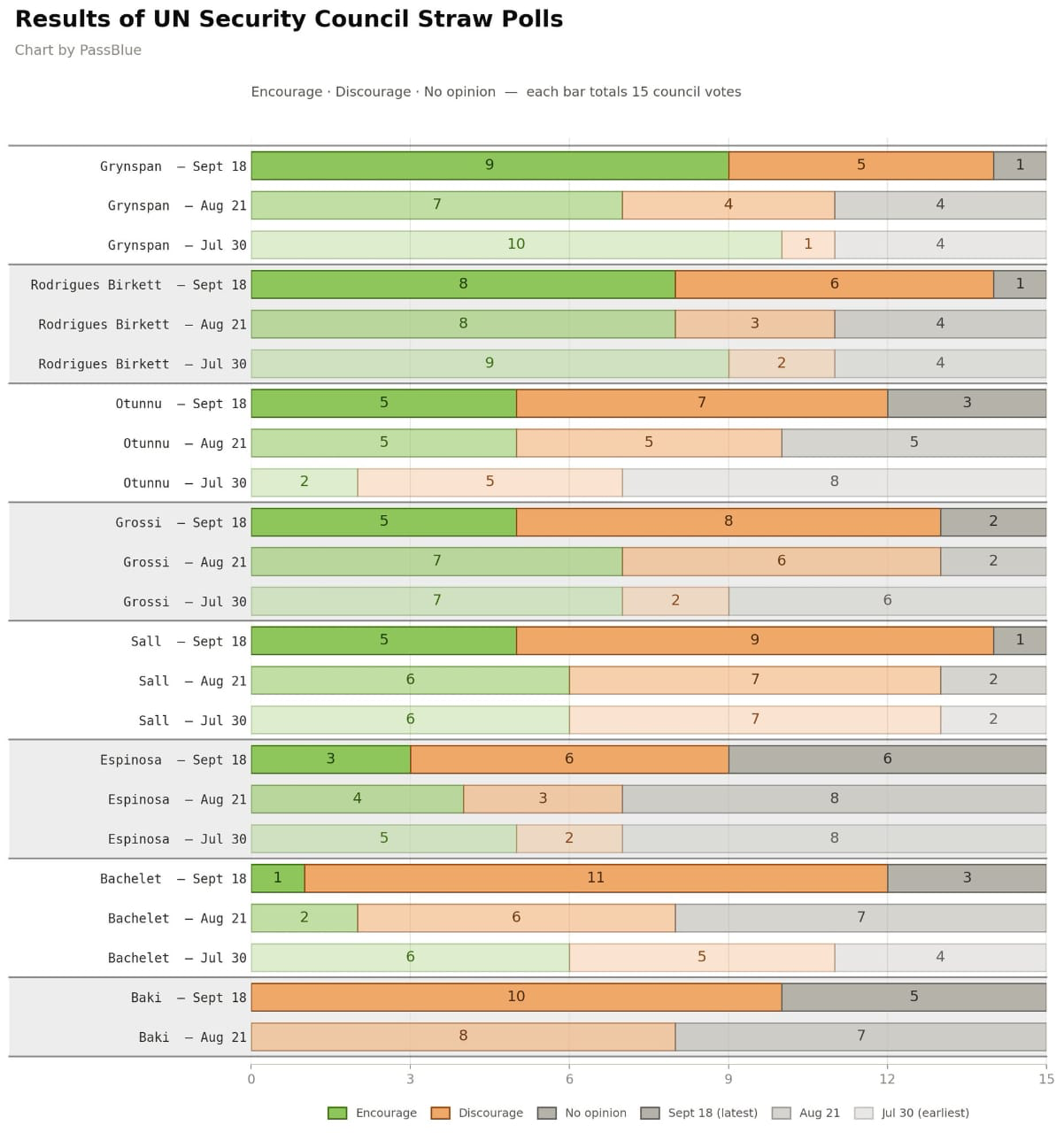
The result of the 18 September poll, assembled by various sources, put Rebeca Grynspan, former Costa Rican Vice President, back at the top of the ranking. She is the only candidate who gained votes in this round of the poll. She added two votes on top of the seven votes she secured during the second straw poll held on 21 August. However, despite putting her in the lead position, Grynspan’s gain does not represent a full recovery of the loss she suffered during the second poll. After starting off with the only double-digit encourage vote since the first straw poll of 30 July, she lost three votes, while the number of UNSC members that cast the ‘no opinion’ vote on her during the first and second straw polls remained the same at 4. During the third poll, Grysnpan turned two of the ‘no opinion’ votes from the earlier rounds into encourage votes. This suggests that she did not regain the votes she lost during the earlier round.
Unless she suffers a loss during the upcoming poll from the number of encourage votes she received, the fact that Grynspan is in the lead position with nine votes means that she has the required number of UNSC votes to be recommended to the UN General Assembly (UNGA) provided that she receives no discourage vote from any of the five permanent members of the UNSC. Indeed, at this point she is the only candidate who meets the nine-vote threshold of the UNSC and remains the only one to have achieved this twice during the three straw polls the UNSC held so far. If she turns the one ‘no opinion’ vote she received during the 18 September poll or succeeds in reversing any number of the ‘discourage’ votes, she could secure double-digit positive votes.
While this makes her the strongest of the candidates, it does not make her a definitive front-runner. As Pass Blue reported, quoting sources, ‘two of Grynspan’s five discourage votes could have come from China and Russia.’
Carolyn Rodrigus Brikett, Guyana’s Permanent Representative to the UN and former Foreign Minister, who polled first during the second poll, went back to second place during the 18 September poll. Unlike Gryspan, Brikett did not manage to change any of the four ‘no opinion’ votes she got during the first and second straw polls into any encouraging vote. However, Brikett, who outperformed all the candidates by huge margins during the UNGA Town Hall, retained the number of votes that put her in the lead position during the 21 August UNSC poll. This accounts for the fact that she remains to be among the top two of the candidates currently in the race. As things stand, the eight votes she received during the 18 September poll as in the 21 August poll, means that she is short of one vote for meeting the UNSC threshold of nine encourage votes required to have any chance of progress in the UNSC selection process. Given that there is still one ‘no opinion’ vote she received during the third poll, she could meet this threshold if she succeeds in turning this vote into ‘encourage’ or reversing any number of the ‘discourage’ votes she received.
In an intriguing turn of events, the candidate that polled third from the 18 September poll is Olara Otunnu, former Ugandan foreign minister and member of the UN Security Council, one of the two African candidates who are the latest of the two late entrants into the race. Otunnu’s ascendance to third place is owing to the fact that he retained the number five ‘encourage votes’ that he had from the previous round. While retaining the votes from the previous poll served Brikett to remain one of the top two candidates, it became an asset that helped Otunnu ascend in the ranking of candidates.
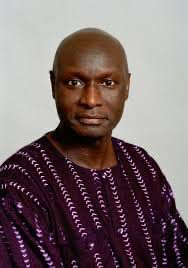
What is interesting about Otunnu’s rise in the ranking of candidates from the third poll is that he has become the candidate who now has for the first time a shot at the position of the Secretary-General. There are three necessary conditions that would open a pathway for this African candidate to become the next Secretary-General of the UN. The first condition is the receipt by the two front-runners of a ‘discourage’ vote from any of the Permanent Members of the UNSC. My hope is that either receives no such ‘discourage’ vote or a new woman candidate that secures stronger support of the UNSC including no ‘discourage’ vote from the Permanent Members of the UNSC for the historic appointment of the first woman Secretary-General to materialise. The second condition is the absence of any new entrant to the race that would command a higher level of confidence of the members of the UNSC than any of the current candidates. Third, Otunnu himself should not receive any ‘discourage’ vote from any of the UNSC Permanent Members.
In the event of all these three conditions materialising, Otunnu may come out to be a consensus candidate to win the race and become the next Secretary-General. That it produced this possibility is one of the few interesting aspects that makes the 18 September poll remarkable and Otunnu’s improved fortune intriguing. Needless to say, for this possibility to become viable Otunnu needs to turn the current three ‘no opinion’ votes on him into ‘encourage’ votes and succeeds in reversing additional one or more ‘discourage’ votes to meet the UNSC threshold of having nine positive votes to pass to the next stage.
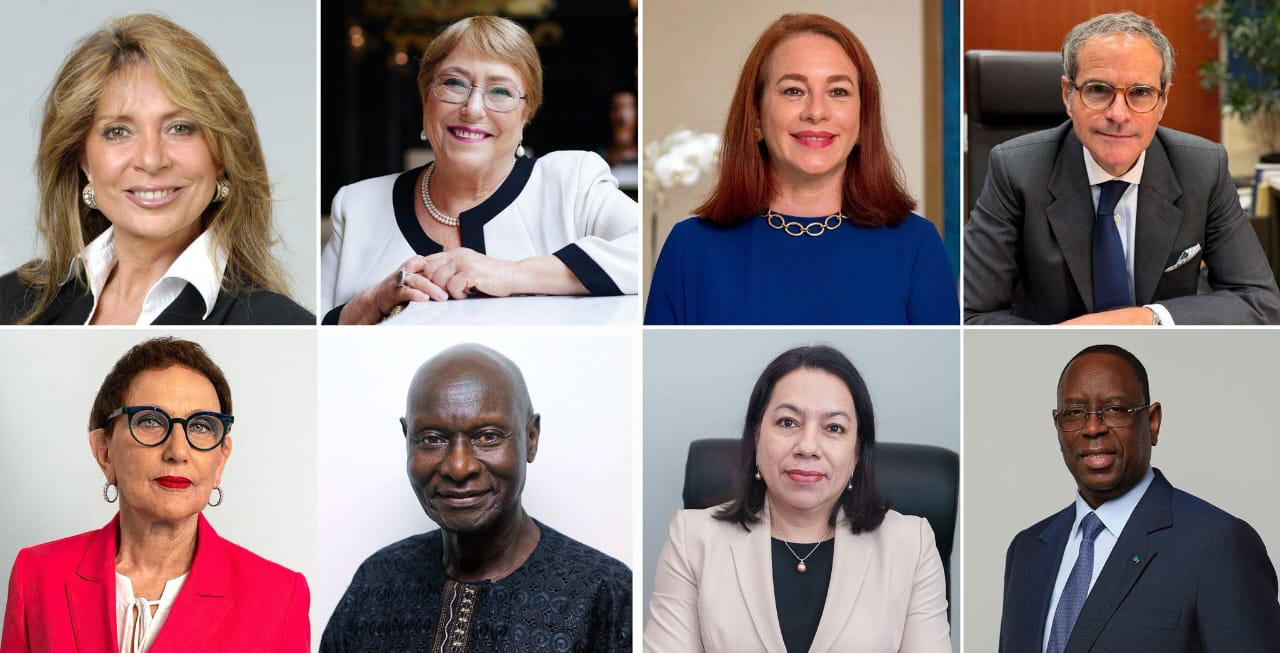
It will not be completely off mark to suggest, from the 18 September poll, that the rest of the candidates find themselves at various levels of looking to the exit from the race. All these remaining candidates, namely Rafael Grossi, the Argentinean and current Director-General of the International Atomic Energy Agency, Macky Sall, Senegal’s former President, Maria Fernanda Espinosa, the Ecuadorian former UNGA President, Michelle Bachelet, former two-time President of Chile, and Ivonne A-Baki, the last entrant to the race and a former Ecuadorian minister, suffered a loss in the number of ‘encourage’ votes they received from their previous performance. Grossi, who held the third position during the previous rounds, lost two encourage votes from the seven he had during the last two polls. Sall lost one ‘encourage vote’ from the six he garnered during the last two polls. Espinosa lost as much as Sall, but she lost two votes from the second and third polls. While Bachelet too lost one vote during the 18 September poll, she lost a total of five votes since the six votes she secured during the first poll on 30 July. With no ‘encourage vote, Baki, once again, polled last since her entrance to the race.
One of the most notable statistics of the 18 September poll is the fact that all the candidates received more ‘discourage’ vote than the previous polls. As the foregoing analysis shows, it is the combination of the receipt of more ‘discourage’ votes than the previous poll and the retention or loss of ‘encourage’ votes that stands to decide those who continue to have a prospect of success from those whose chances have hugely diminished. For some like Baki and Bachelet, all the indications are that 18 September marked the end of their race. Despite faring better, Sall and Grossi, who have nine and eight discourage votes respectively after receiving two more ‘discourage’ votes in addition to the loss in their ‘encourage’ votes, are at the end of the race too.
It is the fact that all of these candidates who lost ‘encourage’ votes, along with receiving further ‘discourage’ votes, that makes the 18 September poll a turning point in terms of paving the way for the entrance of new candidates into the race. In terms of the standing of the current eight candidates, the upshot of the foregoing analysis on the 18 September poll is that only three of them have prospect of success, albeit to varying degrees. In that sense and depending on the level of support that new entrant/s garner from the UNSC, the 18 September poll has left the race for selecting Guterres’s successor wide open.

African Union’s 2011 peacemaking in Libya: Lessons for the Review of the African Peace and Security Architecture
African Union’s 2011 peacemaking in Libya: Lessons for the Review of the African Peace and Security Architecture
Date | 14 September 2026
Dawit Toga, Visiting Sr. Research Fellow, African Leadership Centre, King’s College London
The wave of popular uprisings that swept across most of North Africa in early 2011 marked a major turning point in the political trajectory of the region. Apart from its immediate impact of bringing down governments, it carried huge repercussions for peace and security in Africa and the African Union’s governance and security architectures.
After the popular uprisings of Tunisia and Egypt, Libya, under Muammar Gaddafi’s four-decade rule, became the next domino to crumble. What began as peaceful protests in Benghazi on 15 February 2011 rapidly escalated into an armed rebellion, catalysed by the National Transitional Council (NTC) and subsequently enabled by NATO’s military intervention under UN Security Council Resolution 1973. By October 2011, Gaddafi’s capture and extrajudicial execution marked the regime’s effective overthrow in less than eight months.
More than a decade later, the continent continues to grapple with both the conflict in Libya and its transnational fallout: arms proliferation across the Sahel has exacerbated conflicts and enabled terrorist networks, while the resultant instability of the wider region has generated heightened levels of refugees, asylum seekers and migrant flows across the Mediterranean. The Libyan case thus represents not merely a historical episode but an ongoing regional crisis whose reverberations continue to shape African security governance.
Despite the fact that the AU’s peacemaking initiative had a limited temporal scope, the trials and tribulations of that mediation effort in Libya offer useful insights and lessons on the factors that shape the deployment and relative success of the African Peace and Security Architecture (APSA) mechanisms as well as on the AU’s role in the aftermath of such initiatives. Clearly, that episode of AU’s mediation requires a much bigger examination and this short article seeks to contribute to that by discussing the fundamental questions of the policy challenges that the Libyan crisis posed to the APSA, the policy approach that the AU took on the crisis and the peacemaking instrument that the AU deployed in pursuit of the policy approach it adopted and the various institutional and geopolitical factors that eventually derailed AU’s peace efforts.
Overview of AU’s Mediation Efforts in Libya
The AU’s engagement unfolded amid rapidly changing events and competing international initiatives. Initially, it started as and looked like the popular uprisings sweeping through North Africa, with escalating incidents of violent confrontations. On 23 February 2011, the AU Peace and Security Council (PSC) convened its 261st session, expressing deep concern and strongly condemning ‘the indiscriminate and excessive use of force and lethal weapons against peaceful protesters’, while urging restraint and the need for preservation of the territorial integrity and unity of Libya.
Unlike the popular protests in Tunisia and Egypt, the protests and the push for ending Muammar Gaddafi’s decades of rule did not remain peaceful for long. It quickly descended into armed insurrection, thereby crossing into the realm of armed conflict. This prompted the PSC to convene another and this time around, a landmark session on 10 March 2011. It outlined a policy approach for diplomatic resolution with four pillars: cessation of hostilities, access to humanitarian assistance, protection of foreign nationals, particularly those of African origin and adoption and implementation of political reforms. To lead the diplomatic process, the PSC established the AU Ad Hoc High-level Committee on Libya mandated to ‘facilitate an inclusive dialogue among the Libyan parties.’
While many in the UN, EU and Arab League expressed the view that there was imminent danger of commission of serious atrocities in Libya and moved for intervention, the AU neither shared those views nor called for intervention in Libya. Most members of the PSC were not convinced that there was substantial evidence to support the fear of mass atrocities in Libya, despite Gaddafi’s rhetorical posturing. As such, the PSC opted for dialogue and peacemaking as the avenue for the resolution of the conflict in Libya.
The critical turning point came with UN Security Council Resolution 1973 of 17 March 2011 that purported to enforce the responsibility to protect (R2P). The resolution, passed with support from the three AU members under heavy Western pressure, authorised ‘all necessary measures’ to protect civilians, established a no-fly zone, and mandated coalitions of the willing to enforce the no-fly zone, paving the way for NATO intervention that commenced on 19 March.
This decision came in clear collusion with the AU approach. The resolution, adopted just a week after the AU PSC meeting, effectively marginalised diplomatic efforts and established a framework prioritszing military intervention over the political dialogue for which the AU put in place a mechanism.
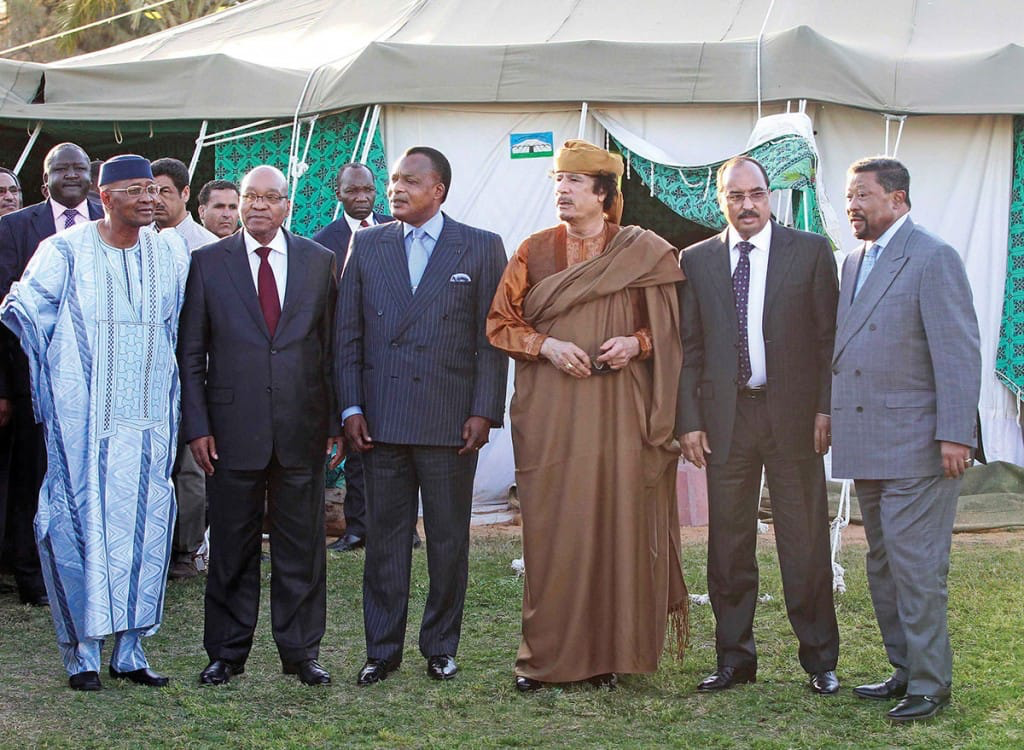
Despite the military campaign, the AU continued pursuing its mediation track. On April 10, a delegation from the Ad Hoc High-Level Committee visited Tripoli for discussions with Gaddafi and travelled to Benghazi for discussions with the NTC. However, the NTC, emboldened by military intervention and international support, flatly rejected the roadmap, insisting Gaddafi and his family must relinquish power without negotiation.
In late June, Gaddafi formally accepted the roadmap, including a commitment not to be part of the negotiation for the formation of a new government nor of the resulting government and communicated this to the Malabo summit, following President Zuma’s May visit to Tripoli. However, the NTC’s position had hardened, and rebels, now enjoying military advantages, saw no reason to compromise. The AU’s belated success in having its roadmap accepted by Gaddafi proved largely irrelevant.
Coordination between UN and AU was limited, if not virtually nonexistent. The first joint meeting occurred four months into the crisis, in May 2011. The AU’s warnings about long-term consequences proved prescient: military intervention would not resolve underlying political issues, would exacerbate humanitarian situations, generate regional instability, and complicate post-conflict reconstruction. These warnings were largely ignored by the P3 (USA, France, and UK), whose priorities quickly shifted from protection of civilians to regime change. This shift closed any possibility for settling the conflict through mediation and political dialogue.
Challenges and Limitations
Four key factors critically constrained the AU’s effectiveness: lack of AU-UN alignment, rejection of a mediated solution by one of the parties, the crowding out of negotiated settlement in favor of a military outcome by major powers, and institutional capacity constraints.
Lack of AU-UN policy alignment and fragmented African position in AU and UN: Despite the fact that three African states were present when Resolution 1973 was adopted and all of them voted for it was a turning point that highlighted a major weakling in the chain of coordination between African actors for the kind of policy coherence and coordination sought to be instituted as envisaged in the Protocol to the AU Constitutive Act on the Establishment of the PSCT. This fallout triggered the establishment of the annual PSC High-level Seminar and the establishment of the A3 mechanism.
The crowding out of negotiated settlement in favor of military outcome: NATO’s military intervention fundamentally altered the political dynamics. Most importantly, the shift in the position of NATO leaders from protection of civilians to regime change through military action meant that the alternative pathway advanced by the AU had little prospect of success. The no-fly zone and air support decisively tilted the military balance, emboldening rebels and hardening negotiating positions.
Rejection of mediation by one of the parties to the conflict: While the organisation successfully secured Qaddafi’s endorsement of the roadmap, it failed to obtain a reciprocal commitment from the NTC. NATO also pressured the NTC not to cooperate with AU mediation. The rebels, benefiting from international military support and diplomatic recognition, had little incentive to engage with an initiative that would not guarantee seizure of power by the NTC on its own.
Institutional Capacity Constraints: The AU’s mediation capacity primarily relies on deploying Special Envoys and High-Level Committees. The Libya approach lacked continuity, expertise, and institutional support. The High-Level Committee’s efforts were intermittent and lacked sustained engagement necessary to build trust and develop viable negotiation strategies. Absence of professional mediation support meant the Committee lacked analytical and operational resources to develop comprehensive strategies, manage complex negotiations, and coordinate effectively. However, even with stronger capacity, it was unlikely that the AU would have succeeded given the alignment of interests between opposition forces and those charging the military intervention in Libya.
Lessons for AU peace efforts from Libya
The Libyan crisis offers critical lessons for AU peace diplomacy, providing insights that can inform ongoing efforts for strengthening the APSA.
Imperative of early and coordinated action with the UN: Regional and global actors must coordinate from the very beginning of a crisis. The absence of early consultation between UN and AU carries significant responsibility for failure to adopt a consensual approach. UN Security Council’s adoption of Resolution 1973 without adequate consultation reflected a coordination breakdown with profound consequences.
Safeguard peace processes from external intervention: The Libya experience shows that AU peace efforts stand little chance of success where external military intervention crowds out the space for peacemaking. Similarly, AU initiatives cannot succeed without the support of international actors, particularly the UN Security Council and major powers. The AU must develop strategies for mobilising international support, building alliances with supportive actors, and ensuring regional perspectives are incorporated into international decision-making.
Securing mandate from all parties: Mediation cannot succeed without buy-in from all conflict parties. The AU must develop strategies to engage non-state armed groups and opposition movements, not just incumbent governments. This requires developing relationships with opposition groups, understanding their interests, building trust through consistent engagement, and developing protocols and procedures for engagement consistent with normative frameworks but responsive to conflict realities. The AU must also develop strategies for managing asymmetric relationships, ensuring all parties have meaningful roles in conflict resolution processes.
African ownership and coherence: Despite its eventual failure, the AU’s effort demonstrated the value of African-led conflict resolution. The principle that solutions must be political. African actors often have a deeper understanding of political dynamics, stronger relationships with conflict parties, and greater legitimacy with local populations. However, for ownership to guarantee success, coherence among African actors and between the PSC and the A3 is a prerequisite.
Implications for APSA Review
The AU’s mediation in Libya was a failure in outcome, but not in effort, principle, or learning. The AU activated its mechanisms, deployed leaders, and articulated a vision of peaceful political transition. The failure was rooted in factors beyond the AU’s control: rebels’ refusal to negotiate, NATO intervention, and the UNSC’s decision to pursue a military rather than diplomatic solution. Even after a decade and a half, the Libyan case remains urgently relevant.
The enduring relevance of Libya for the APSA lies in its illumination of broader challenges facing regional security governance: tensions between normative ambition and institutional and political reality, continental leadership and international engagement, and normative principles and political realities that continue to characterise contemporary conflicts across Africa. The AU’s ability to navigate these tensions, building on the lessons of Libya, will be critical to its effectiveness in fulfilling its mandate for peace and security on the continent.
Commemoration of the 2026 Africa Amnesty Month
Commemoration of the 2026 Africa Amnesty Month
Date | 13 September 2026
Tomorrow (14 September) and on 15 September, the African Union (AU) Peace and Security Council (PSC) will convene in Algiers, Algeria, to commemorate the 2026 Africa Amnesty Month.
The session will commence with welcoming remarks from a representative of the Government of Algeria as the host, followed by a statement from Hervé Djokpe, Permanent Representative of Benin to the AU and Chairperson of the PSC for September. Bankole Adeoye, AU Commissioner for Political Affairs, Peace, and Security (PAPS), will then make a statement. Representatives of NARC and RECSA as well as the UN will also address the session.
The PSC has held annual sessions to mark Amnesty Month since 2017, following the decision of the 29th Ordinary Session of the AU Assembly in July 2017. That decision declared September of each year, until 2020, as ‘Africa Amnesty Month’ for the surrender and collection of illegally owned weapons/arms. The 14th Extraordinary Session of the Assembly on Silencing the Guns, held in December 2020, extended the initiative to 2030, aligning it with the decision to extend the deadline for Silencing the Guns to 2030.
The Amnesty Month was launched to encourage non-state actors illegally possessing weapons to surrender them voluntarily and confidentially to designated government authorities, without facing disclosure, humiliation, arrest, or prosecution. The Assembly decision also urges Member States, RECs/RMs and civil society to publicise Amnesty Month each September and mobilise citizens behind the effort to silence the guns.
In recent years, the PSC initiated the practice of commemorating Amnesty Month on a rotational basis in the various regions of the continent. Since this practice started, it has held the commemoration in Lomé, Togo (2022), Maputo, Mozambique (2023), Bangui, Central African Republic (2024) and Kampala, Uganda (2025). This year’s commemoration will take place in Algiers, Algeria, under the theme ‘Advancing the Silencing the Guns Initiative and Strengthening Sustainable Peace through Shared Experiences on SALW Control and De-mining Action.’ Key activities will include awareness-raising campaigns, exhibitions on mine action and demonstrations of the destruction of illicit small arms, anti-personnel mines and improvised explosive devices recovered through law enforcement and border-security operations.
While the commemoration of the Africa Amnesty Month is largely symbolic, it serves the purpose of mobilising attention to the threat posed by the circulation and use of small arms and light weapons (SALW) outside of the control of legitimate state authority. The proliferation of SALWs is identified as a major driver of conflicts and insecurity in the AU Roadmap on Practical Steps for STG. It also serves as an occasion for reviewing the implementation of the STG and the challenges that remain, more so given that 2025 marks the halfway point for achieving the STG in 2030.
Across Africa, the proliferation of small arms and light weapons (SALW) continues to threaten peace and security. A 2019 study conducted by the AU Commission and the Small Arms Survey revealed that civilian actors on the continent, including private individuals, registered entities such as private security companies and non-state armed groups, collectively possess more than 40 million small arms, representing nearly 80 per cent of the total stockpile on the continent. In contrast, armed forces and law enforcement agencies account for less than 11 million small arms. Of the estimated 40 million civilian-held firearms, only 5,841,200 are officially registered, while 16,043,800 remain unregistered, with the status of the remainder uncertain.
These weapons are among the primary drivers of violence, frequently used by illegal armed groups and terrorists to initiate and sustain conflicts. According to the Report of the Chairperson of the AU Commission on counterterrorism submitted to the PSC’s 1182nd session, SALW remain the weapon of choice for terrorist groups, accounting for more than 70% of attacks and over 75% of recorded deaths in 2023. The 2019 mapping study on illicit small arms flows in Africa highlights two main sources of illicit weapons on the continent: the diversion of licit arms to unauthorised users, and weapons already illicitly circulating within Africa. The large-scale diversion of national stockpiles amid the crises in Libya, Mali, and CAR has not only intensified conflicts in those countries and beyond but also provided significant material supply for terrorist groups.
On anti-personnel mines, Africa has been at the forefront of the global effort to ban them. In June 1995, the 62nd Ordinary Session of the OAU Council of Ministers adopted Resolution CM/Res 1593 on the ‘UN Convention on Certain Conventional Weapons and Problems Posed by the Proliferation of Anti-Personnel Mines in Africa,’ which, inter alia, called for a total ban on anti-personnel landmines and the universalisation of relevant legally binding instruments. This was followed by the adoption of the Common African Position on Anti-Personnel Mines during the Second Continental Conference of African Experts in September 2004.
Despite significant efforts and progress over the years, the continent continues to face serious challenges in mine action. A concerning trend is the re-emergence of landmines in countries previously declared mine-free, including Nigeria, Guinea-Bissau, and Mauritania. Mozambique, which was declared mine-free in 2015, also faces renewed threats due to the use of improvised mines by insurgents in the Cabo Delgado province. Ethiopia also reported massive antipersonnel landmine contamination in 2023, with over 100 km² affected, while Angola, Chad, Eritrea, and Mauritania reported contamination levels ranging from 20 to 99 km². Reports also indicate that IEDs have become the weapon of choice for terrorist groups across the continent, particularly in regions affected by conflicts involving terrorist groups such as the Sahel, the Great Lakes, and the Horn of Africa.
The PSC, in its 1072nd and 1146th sessions, expressed ‘serious concern’ over the use of anti-personnel mines and IEDs and called for compliance with international treaties banning their use. On illicit arms circulation, PSC’s 832nd meeting of March 2019 placed primary responsibility for combating illicit arms circulation on Member States; however, limited capacity and porous borders continue to undermine effective control. Strengthening stockpile management, record-keeping, and tracing mechanisms will be essential to reducing diversion of illicit arms to non-state actors; at the same time, the AU Commission should build stronger political commitment to embed these measures within national frameworks. State reporting, however, remains inconsistent. However, the Council tried to address this at its 1105th meeting in September 2022, when it directed the Commission to develop a standardised reporting and monitoring template and conduct five-yearly surveys on illicit weapon collection. A progress report on the latter will be imperative.
Africa Amnesty Month cannot contribute to the STG agenda if pursued in the business-as-usual fashion as it has been done since its adoption in 2017. For it to be effective and meaningful, it also has to serve as an occasion for facilitating concrete action in curbing the flow and use of such weapons in specific conflict situations. This can be achieved practically through an independent report on the sources and channels of supply of arms and weapons to conflict parties, such as that requested by the communiqué of the 1218th session of the PSC on Sudan. In the absence of effective follow-up on such decisions, the commemoration of the Amnesty Month will remain part of the declaratory engagements disconnected from and lacking tangible relevance in respect to any of the conflict settings on the continent.
The expected outcome is a report which will be adopted through a communiqué. Council may urge Member States to ensure the safe destruction of all collected illegal weapons in line with the national, continental and international instruments, as well as reiterate the need to have sustained reporting on the programmes and activities undertaken during the AAM to the AU Commission. It may also encourage Member States that have not yet done so to sign and ratify the relevant continental and international instruments to regulate the international trade in weapons, as well as to ratify the Arms Trade Treaty. It may express concern over the continued threat posed by anti-personnel landmines and ERW, including the increasing use of improvised explosive devices by terrorist groups and their use in some recent conflicts. In this regard, the PSC may reiterate its call for the finalisation and submission of the draft AU Counter-IED Strategy for its consideration. On collaboration, the PSC may reiterate the need for the AU Commission to work with the RECs/RMs to support the implementation of DDR programmes in Member States. It may urge Member States to further enhance cooperation and collaboration, including by sharing information and intelligence, strengthening border management, and conducting joint operations to combat illicit trade/trafficking in SALW. The PSC may also request that the focus of the Amnesty Month go beyond SALW and cover the supply and use of new weapons such as drones, as well as explore ways and mechanisms to address the root causes driving the demand for small arms and weapons.
High-Level Ministerial Seminar on Women, Peace and Security
High-Level Ministerial Seminar on Women, Peace and Security
Date | 8 September 2026
Tomorrow (9 September), the African Union (AU) Peace and Security Council (PSC) will convene the Ministerial High-Level Seminar on Women, Peace and Security (WPS), also known as the Swakopmund process, in Cotonou, Benin.
Corinne Amori Brunet, Minister of Foreign Affairs of the Republic of Benin and PSC Chairperson for September, is expected to deliver opening remarks, followed by Liberata Mulamula, Special Envoy of the Chairperson of the AU Commission on WPS, and Mrs Doris Mpoumou, Special Representative of UN Women to the AU and United Nations Economic Commission for Africa (UNECA). Speciosa Naigaga Wandira Kazibwe, former Vice President of the Republic of Uganda, is also expected to make a statement.
The Council’s inaugural meeting, held in Swakopmund on 23 March 2024, institutionalised the Seminar as a biennial, rotational platform for PSC engagement with WPS actors and formally named it the ‘Swakopmund Process’. Its fourteen action points sought to translate long-standing commitments into operational requirements, including gender parity in AU-led and co-led mediation; a Policy Framework on Women Quotas in Formal Peace Processes with a statutory minimum of 30 per cent participation; annual reporting to the PSC; rapid-response and monitoring arrangements; costed NAPs; and WPS financing. The second edition is expected to focus on participation, prevention and protection under the theme ‘Operationalizing the Women, Peace and Security Agenda: Quotas, Accountability, and the African Union Convention on Ending Violence Against Women and Girls (AU-CEVAWG)’. It is therefore the first substantive opportunity to test whether Swakopmund is evolving into an accountability process rather than another recurring political forum.
It is anticipated that tomorrow’s session will follow up on the implementation status of the outcomes of the inaugural high-level seminar. In this respect, the AU PAPS 2024 Annual Digest records that the Gender, Peace and Security Programme and Mediation and Dialogue Division ‘followed up with consultations to develop the draft outline’ of the quota policy framework. The PAPS WPS overview similarly confirms that ‘the AU Commission is in the process of developing the policy’ on gender parity in AU-led and co-led mediation.
As with other AU normative and policy commitments, one of the major challenges to the WPS agenda is the policy-to-implementation gap. In the case of the WPS, this gap is further accentuated by entrenched institutional and societal attitudes and practices as well as the recent global backsliding in gender equality. As documented extensively in Amani Africa’s work, the AU’s WPS agenda has made notable institutional achievements with the establishment of various mechanisms and processes, including the Office of the AU Special Envoy on WPS, FemWise-Africa, and the Continental Results Framework (CRF). Yet the core deficit is increasingly one of implementation and translation of these institutional advancements into operational outcomes, such as in the representation and participation of women across all peace processes. The Research Report reviewing the 15-year implementation of the AU PSC’s WPS agenda pointed out that ‘significant gaps persist between commitments and practice’. The Windhoek+25 Declaration renewed attention to delivery during the 25th anniversary of UNSCR 1325, stressing that WPS commitments should ‘translate into tangible results’ and called for women’s leadership across conflict prevention, peacemaking and peacebuilding.
In terms of participation, the implementation gap is most evident in women’s limited access to formal peace processes. UN Women’s 2025 WPS facts and figures show that women represented only 7 per cent of negotiators and 14 per cent of mediators globally in 2024. Globally, of 36 peace agreements reached that year, only 11, or 31 per cent, included at least one provision referring to women, girls, gender or sexual violence, suggesting that assessing participation should extend beyond numerical representation to whether gender-related priorities are reflected in negotiated outcomes. More directly relevant to Africa, at the AU–Member States WPS coordination meeting, the AU acknowledged that women remain ‘dramatically underrepresented in formal peace processes’, comprising less than 20 per cent of negotiators in African mediation efforts despite FemWise-Africa having trained more than 500 women mediators. This is not unique to peacemaking and peace agreements. It also applies to peace operations. The challenge is therefore to translate available expertise into systematic appointment, meaningful participation and influence in Track I and other formal processes.
The participation pillar needs to translate the 2024 quota and parity commitments into enforceable obligations. The 1242nd meeting of 31 October 2024 affirmed implementation of the Swakopmund conclusions and requested exploration of ‘dedicated funding’ for gender components of peace and security, including from the Peace Fund, while the 1268th meeting of 21 March 2025 called for ‘clear and realistic roadmaps’, adequate and sustained funding, and ‘clear indicators and robust monitoring and evaluation mechanisms’.
The UN Secretary-General’s Common Pledge for Women’s Full, Equal and Meaningful Participation in Peace Processes adds political momentum, and in October 2025 the AU reaffirmed its support, urging actors to ‘turn its promises into practice’. Cotonou could set deadlines for the quota and parity frameworks, assign institutional responsibility and require sex-disaggregated participation data for every AU-led or co-led peace process.
Participation also needs to connect formal negotiations with local peacebuilding. Related UNDP work (here, here, here and here) illustrates the importance of linking formal participation to community mediation, early warning and response, local peace infrastructures and women-led prevention. This aligns with Cotonou’s expected emphasis on elevating community-level women peacebuilders and strengthening their influence on national, regional and continental processes.
In terms of prevention, the meeting is expected to broaden the discussion from women’s presence at negotiation tables to their role before crises escalate. The July 2025 Cotonou coordination meeting recognised that the ‘evolving nature of conflict presents new dimensions’ to WPS implementation, including weaponisation of social media against women leaders and climate impacts on vulnerable communities. The PSC’s 1334th meeting in March 2026 further brought artificial intelligence and technology-facilitated violence into the WPS agenda, calling for digital threats to be addressed in a ‘gender-responsive and preventive manner’ and for women-led technological solutions to support early warning, conflict prevention and peacebuilding. Prevention under Swakopmund should therefore encompass women’s participation in early warning, preventive diplomacy and community mediation, alongside responses to structural, digital and gender-based threats.
This prevention agenda is closely linked to protection, where the normative environment has changed most visibly since the inaugural seminar. The adoption of AU-CEVAWG in 2025, together with the May 2026 AU roadmap for its signature, ratification, domestication and implementation, provides a stronger legal framework that can support operationalisation of Swakopmund’s rapid-response and monitoring commitments. The roadmap describes AU-CEVAWG as ‘Africa’s first legally binding instrument dedicated exclusively to eliminating all forms of violence against women and girls’, while the Convention itself requires preventive and protective measures addressing the causes and consequences of such violence, complementing the Maputo Protocol on Women’s Rights. The roadmap further connects the two pillars by emphasising prevention through transformation of harmful social norms and protection through ‘survivor-centered support and multi-sectoral referral systems’.
Financing and localisation are central to prevention. The outcome of the 6th High-Level Africa Forum on WPS in Tunis recorded 37 African NAPs and six Regional Action Plans by late 2025, while identifying ‘funding unpredictability, austerity pressures, and shrinking resources’ as implementation obstacles. Swakopmund required NAPs to be costed and budgeted, and the February 2026 Assembly decision Assembly/AU/Dec.978(XXXIX) appealed for ‘predictable and sustainable financing’ and encouraged Member States to ‘institutionalise gender-responsive budgeting and allocate dedicated national resources’ for National and Regional Action Plans. A 2024 UN Women evaluation found that, of 30 African countries with UNSCR 1325 NAPs, only 15 had costed budgets for their activities. The AU’s February 2026 high-level discussion on financing gender commitments likewise stressed ‘concrete budgetary allocations, measurable targets, and transparent accountability mechanisms’. Predictable financing is essential because underfunded local implementation weakens early-warning, mediation and resilience capacities.
Accountability cuts across all three pillars. A June 2025 workshop to reinvigorate CRF monitoring identified ‘critical gaps’ and called for simplified reporting, harmonised timelines, consistent feedback and stronger use of CRF findings in policy and budgeting. The 1309th meeting in October 2025 subsequently requested a mechanism for complementary civil-society shadow reporting under the CRF. Amani Africa’s aforementioned Special Research Report notes that ‘grassroots women’s organisations hold unique insights into WPS implementation’ and that reporting has remained irregular and insufficiently evidence-based. The CRF briefings to the PSC could therefore be used together to track implementation of the gender-parity policy. A Swakopmund scorecard could consolidate these and civil-society inputs, recording commitments across participation, prevention and protection as implemented, delayed or outstanding and giving the biennial process an institutional memory.
The expected outcome of tomorrow’s meeting is a communiqué. The Council may call for measures to address identified implementation gaps, particularly those relating to women’s participation quotas and accountability mechanisms. The PSC may also provide guidance for further development of the Policy Framework on Women’s Quotas in Formal Peace Processes, with a view to ensuring its practical and enforceable application in AU-led and co-led processes. It may also encourage the strengthening of localisation and creating pathways for community-level women peacebuilders to influence national, regional and continental peace processes. On prevention, the PSC may underscore the need for women’s participation in early warning, preventive diplomacy and community mediation alongside responses to structural, digital and gender-based threats. It may also call for strengthened monitoring through the CRF and annual FemWise-Africa reporting. It may echo the AU Assembly in calling on Member States and RECs/RMs to allocate dedicated financing for NAPs and Regional Action Plans. The PSC may further call for concrete measures to integrate the prevention of and protection from violence against women and girls across AU-led and co-led peace and security operations, with AU-CEVAWG serving as an important legal framework complementing the Maputo Protocol. The PSC may welcome the roadmap for the signature, ratification, domestication and implementation of the Convention and may call on Member States to sign, ratify, domesticate and implement the Convention.
Monthly Digest on The African Union Peace And Security Council - July 2026
Monthly Digest on The African Union Peace And Security Council - July 2026
Date | July 2026
In July, under the chairship of the Republic of Uganda, the African Union (AU) Peace and Security Council (PSC) had a scheduled Provisional Programme of Work (PPoW) consisting of four substantive sessions, alongside an informal consultation on the ‘Proposed AU Model on Trigger Mechanism for Early Warning and Early Action,’ and an engagement with the AU Commission Chairperson. Following the revision of the PPoW, four substantive sessions were held, covering five substantive agenda items as well as another added informal session on ‘Funding Support for Somalia/AUSSOM Logistics Package.’ Of the five substantive agenda items, two focused on country-specific issues, while the rest addressed thematic issues. Except for one session, ‘Countering Terrorism and Violent Extremism in Africa,’ which was held at the ministerial level, all the others were held at the level of permanent representatives.
Protection of Child Soldiers in Africa (UNSCR 1612 (2005))
Protection of Child Soldiers in Africa (UNSCR 1612 (2005))
Date | 1 September 2026
Tomorrow (2 September), the African Union (AU) Peace and Security Council (PSC) is expected to convene its 1368th meeting to discuss the theme, ‘Protection of Child Soldiers in Africa (UNSCR 1612 (2005)).’
Following opening remarks by Hervé Djokpe, Permanent Representative of Benin to the AU and Chairperson of the PSC for September, Bankole Adeoye, Commissioner for Political Affairs, Peace and Security (PAPS), is expected to make a statement. Jainaba Jagne, AU Special Envoy for Children Affected by Armed Conflict (CAAC), is also expected to make a statement, followed by Robert Doya Nanima, Special Rapporteur on Children and Armed Conflict. In addition, the session is also likely to get statements from the Special Representative of the UN Secretary-General for Children and Armed Conflict, a representative of the UN Children’s Fund (UNICEF) to the AU and a representative from the African Platform on Children affected by Armed Conflicts (AP CAAC) – as Co-Chair. A Save the Children representative may also be present.
It is worth recalling that UN Security Council Resolution 1612, adopted in 2005, established the Monitoring and Reporting Mechanism on children and armed conflict, creating a systematic framework for documenting the six grave violations against children in conflict zones, which include killing and maiming, recruitment and use as child soldiers, sexual violence, attacks on schools and hospitals, abduction and denial of humanitarian access.
The UN Secretary-General’s 2026 annual report on children and armed conflict, released in June and covering January–December 2025, which also marked the 30th anniversary of the mandate, verified 38,558 grave violations against 24,174 children, including 3,176 subjected to multiple violations. For the first time in three decades of UN monitoring, state and government forces were responsible for more grave violations than non-state armed groups, a significant shift from the pattern that has traditionally shaped PSC discussions on the issue. Among African situations, the DRC (4,114 violations), Nigeria (2,560) and Somalia (2,195) recorded the highest verified totals, ranking among the five worst-affected situations globally. Recruitment and use of children remained a major concern, continuing a trend identified in the 2025 report, which recorded 7,402 verified cases worldwide. In a February 2026 Joint Statement by the AU, EU and UN on the International Day against the Use of Child Soldiers, it was highlighted that one in five children worldwide lives in conflict-affected settings. The statement went further and called on all parties in conflict situations to ‘comply fully with international law, to immediately and unconditionally release all children from their ranks, and to ensure that children associated with parties to conflict are treated first and foremost as victims.’
The PSC, on its part, has a long track record of engaging with the issue of child soldiers, having taken it up in substantive discussions and decisions across several sessions. Notably, at its 420th session, held on 18 February 2014, the Council decided, among other things, to hold a session each year dedicated to issues affecting children on the continent. This engagement has since intensified, with the PSC now holding even two sessions annually on the theme. This will be the second session this year under the theme of child protection in Conflict Situations, following the Council’s 1357th meeting in August 2026, which focused on ‘Education in Conflict Situations in Africa.’
From the meeting, the PSC tasked the AU Commission, in coordination with the ACERWC, ‘to organise an advocacy meeting with Member States that have not yet signed or ratified relevant international and continental instruments [including the ACERWC] and the Protocol on the Involvement of Children in Armed Conflict… and to report back to the PSC.’ In the same vein, the PSC went further and tasked the AU Commission, ‘based on documented sources and proven evidence, to develop and maintain a concise, disaggregated continental monitoring framework tracking attacks on schools, closures, military use, safe reopening, enrolment, retention, learning outcomes, and inclusion metrics.’ It is worth recalling that the same meeting considered the implementation matrix as part of the PSC working documents developed following the 1296th PSC meeting, which aims to translate Council decisions into 18 time-bound actions with designated lead institutions. This implementation matrix model should extend to the PSC’s entire body of work on children and armed conflict. Many past decisions on the theme remain hard to track precisely because they were never anchored to a time-bound implementation tool. Retroactively applying the matrix, even in condensed form, would let the Council audit what has actually been delivered against decades of commitments, rather than simply ‘recalling’ prior sessions without clarity on follow-through. This would also ease the resourcing and coordination gaps flagged periodically, make duplication easier to spot, and give the Council a concrete basis for review each time it revisits the theme.
In addition, its 1314th meeting held in November 2025 on ‘Children Affected by Armed Conflicts’ tasked the Chairperson of the AU Commission to ‘commission a comprehensive study on the nexus between armed conflicts and violations against children.’ Relatedly, the 1262nd PSC meeting held in February 2025 on the ‘Fight Against the Use of Child Soldiers in Africa’ tasked the ACERWC to expedite finalisation of the comprehensive study on child soldiers in Africa. Earlier this year, ACERWC initiated and commissioned the Terms of Reference for the conduct of the study. The study will aim to examine the nature, scale, patterns and drivers of the recruitment and use of children by armed forces and armed groups in West and Central Africa, including the DRC, Chad, Nigeria, Niger, Central African Republic, Burkina Faso and Mali. In North, East and Southern Africa, it will include Sudan, Libya, Somalia, Ethiopia, South Sudan, and Mozambique. The study will assess the political, socio-economic, security, governance and community-level factors driving emerging risks, and to evaluate the adequacy, effectiveness and alignment of existing legal, policy, institutional, prevention, accountability, rehabilitation and reintegration responses with the African Children’s Charter and relevant regional and international standards. It will also seek to identify key gaps and good practices and put forward actionable recommendations to strengthen coordinated, multidisciplinary, and child-centred responses among States Parties, AU organs, RECs, National Human Rights Institutions, civil society organisations, communities and other relevant stakeholders.
This upcoming PSC meeting will therefore provide an opportunity to follow up on the implementation of these decisions and provide a platform for the Council to reflect on the conclusions of the Banjul Process, which took place in December 2023. During this ministerial, high-level session, participants agreed on the imperative to ‘develop a Continental Child Justice Framework addressing both punitive measures and, as well as the recourse and restitution elements for child survivors.’
The expected outcome of the session is a communiqué. The PSC is expected to condemn all attacks against children and their abduction and recruitment by armed groups and to strictly comply with International Humanitarian Law and International Human Rights Law. Taking note of her appointment in February 2026, Council is also likely to emphasise the imperative of providing the office of Jainaba Jagne, the AU Special Envoy on CAAC, with the necessary financial, human and technical resources to enable her to discharge her mandate effectively. It may also reiterate its previous calls on Member States who have not yet done so to sign, ratify and domesticate the African Charter on the Rights and Welfare of the Child and other international instruments, such as the Safe Schools Declaration and the Optional Protocol to the Convention on the Rights of the Child with regard to the inclusion of children in armed conflicts. It may also encourage Member States to integrate mental health and psychosocial support (MHPSS), school feeding, water and sanitation (WASH), and child protection referral pathways into education responses. The PSC may also reiterate the need for Member States, RECs/RMs, and the AU Commission to mainstream child protection in early warning mechanisms and conflict prevention, conflict resolution, peacemaking and peace-building processes, as well as in post-conflict reconstruction and development.
Briefing on the Situation in the Central African Republic
Briefing on the Situation in the Central African Republic
Date | 31 August 2026
Tomorrow (1 September), the African Union (AU) Peace and Security Council (PSC) will receive a briefing on the situation in the Central African Republic (CAR).
Following opening remarks by Hervé Djokpe, Permanent Representative of Benin to the AU and Chairperson of the PSC for September, Bankole Adeoye, AU Commissioner for Political Affairs, Peace and Security (PAPS), is expected to deliver a statement. Alice Nzomukunda, the Special Representative of the Chairperson of the Commission for CAR, may brief the Council. Representatives of CAR and the Economic Community of the Central African States (ECCAS), as well as the UN Secretary-General’s Special Representative to the AU and Head of the UN Office to the AU (UNOAU), are also expected to deliver statements.
The PSC last discussed the situation in CAR during its 1338th session on 9 April, following the conclusion of the combined presidential, legislative, and local elections organised on 28 December 2025 and the inauguration in March of Faustin Archange Touadéra, who was re-elected as President. In its communiqué adopted following the meeting, the PSC welcomed progress in the country’s political trajectory and commended the AU Commission for its support to the electoral process.
Since then, Touadéra reappointed Félix Moloua as prime minister in May, who subsequently formed a new 33-member government comprising six women and several individuals associated with armed groups that have recently joined the peace process. These include Retour, Réclamation et Réhabilitation (3R) and l’Unité pour la paix en Centrafrique (UPC), which ceased hostilities in April 2025 and joined the 2019 Political Agreement for Peace and Reconciliation in the Central African Republic (APPR-RCA).
The implementation of the APPR-RCA, particularly the Disarmament, Demobilisation, Reintegration and Repatriation (DDRR) programme, is also making progress following the decision of 3R and UPC to rejoin the peace process. The United Nations Multidimensional Integrated Stabilisation Mission in the Central African Republic (CAR) is supporting the DDRR programme as part of its mandated tasks. According to the latest Secretary-General’s report on the country, more than 1000 former combatants affiliated with these groups, as well as members of other armed groups and factions, have been disarmed and demobilised since July 2025. The DDRR programme is believed to have contributed to an overall improvement in the security situation in the CAR.
However, the security situation remains fragile in parts of the country, particularly in the north-west, centre and east. Armed group activity, cross-border security dynamics, criminality, and persistent tensions between herders and farmers continue to threaten civilian lives and undermine stability. The situation is compounded by the limited presence and capacity of state security institutions, which leave communities vulnerable to attacks, intimidation and other forms of violence.
Residual UPC combatants have also reportedly continued to obstruct freedom of movement, hindering humanitarian access and disrupting civilian livelihoods. Their presence has contributed to tensions between pastoralist and farming communities.
In addition, armed groups that remain outside the peace process continue to pose significant threats in western and central parts of the country. These groups have reportedly targeted the CAR security forces, attacked or intimidated displaced civilians, and disrupted local election campaigns. The continued activities of these groups therefore remain a significant obstacle to the consolidation of peace, the extension of state authority and the creation of a secure environment for the country’s political and electoral processes.
The Azande Ani Kpi Gbe (AAKG), a predominantly ethnic Azande militia accused of committing serious human rights violations against minority communities, remains a major security concern in the south-east. At the same time, combatants belonging to the Lord’s Resistance Army (LRA), the Ugandan armed group that has operated in the Central African Republic for years, have reportedly renewed their military activities in the region. Their resurgence is particularly concerning given the LRA’s longstanding record of attacks against civilians, abductions and other abuses.
In the north-east, the spillover effects of the conflict in neighbouring Sudan remain a major concern. The conflict has increased insecurity along the border and contributed to the movement of armed elements, weapons and displaced populations into the Central African Republic. There have also been reports of clashes between local self-defence groups and Sudanese armed elements associated with the Rapid Support Forces (RSF).
Despite these persistent security risks, there appears to be an assumption that the CAR has entered a post-conflict phase, with overall improvements in its security situation and the completion of national electoral processes. This development has also prompted discussions in New York on the reconfiguration of MINUSCA, including a possible adjustment of its footprint to adopt a more agile posture. These discussions are also taking place against the backdrop of a major liquidity crisis facing the UN.
At the Security Council, the US has particularly argued that MINUSCA should accelerate its efforts to cease activities that are no longer considered necessary and, where possible, transfer responsibilities to the CAR authorities or other stakeholders. Security Council resolution 2800 of 13 November 2025, which most recently renewed the mission’s mandate for another year, also requested the Secretary-General to submit a report by 15 September on the opportunity and feasibility of an eventual handover of tasks to the CAR government or the UN Country Team (UNCT). In this context, the mission has already begun implementing several measures, including handing over certain static security responsibilities to national authorities, closing several facilities—including one of its main sites in Bangui—and redeploying troops and assets to areas experiencing insecurity.
While recognising that the mission needs to adjust to developments on the ground, the host country has cautioned against implementing drastic measures driven solely by budgetary considerations at a time when the CAR continues to face persistent security risks, including the spillover effects of the war in Sudan. In this connection, its Permanent Representative in New York has invited Council members to visit the country to better understand the progress made and the challenges that remain, ahead of MINUSCA’s mandate renewal in November.
At its last meeting, the PSC expressed similar concerns over the financial challenges facing MINUSCA, which have led to reductions in civilian and military personnel, limited air rotations, deferred maintenance, reduced long-distance patrols, and the closure of some military bases. The PSC also warned that these constraints could create pockets of vulnerability and a real risk of a security vacuum. That is why it supported MINUSCA’s continued presence, given the mission’s important role in supporting the CAR’s stabilisation and peacebuilding efforts and called on the Security Council to renew MINUSCA’s mandate.
The PSC particularly directed the AU Commission to undertake a comprehensive study on the potential impact of a MINUSCA drawdown and propose concrete recommendations on the way forward. As the AU is one of the guarantors of the APPR-RCA, the PSC underscored the need to prevent any resumption of hostilities and develop a strategy for AU-led stabilisation support. The Commission’s report and recommendations are likely to inform the PSC’s deliberations tomorrow. The meeting also takes place ahead of the Secretary-General’s report, due by 15 September, which is expected to inform the Security Council’s decisions on MINUSCA’s potential drawdown and reconfiguration in the context of the mission’s upcoming mandate renewal in November. The outcome of the PSC meeting is expected to feed into the UN Security Council’s October discussions on the situation in the CAR and MINUSCA’s activities. It is also likely to help shape the common position of the three African members of the Security Council during these discussions and the mandate renewal negotiations.
The expected outcome of the session is a communiqué. The PSC may welcome the progress made in the political and peace processes in the Central African Republic, including the formation of a new government incorporating representatives associated with armed groups that have rejoined the peace process, and commend the progress achieved in the implementation of the APPR-RCA, particularly the DDRR programme. It may commend MINUSCA for its continued support to the peace process and DDRR efforts, while encouraging the CAR authorities and all relevant stakeholders to sustain the momentum towards the full implementation of the APPR-RCA. The PSC may also express concern over the continued fragility of the security situation in parts of the country and call for strengthened efforts to address these threats, protect civilians and facilitate humanitarian access. Against the backdrop of discussions on the possible reconfiguration and drawdown of MINUSCA, the PSC may underscore that any adjustment of the mission’s presence should be conditions-based, carefully sequenced and informed by developments on the ground, rather than driven primarily by financial considerations, to avoid creating security vacuums and undermining the gains made in the peace process. It may reiterate its support for MINUSCA’s continued presence and call on the UN Security Council to ensure that any transition is accompanied by adequate measures to strengthen the capacity of national institutions and preserve the protection of civilians.
Provisional Programme of Work of the PSC for the Month of September 2026
Provisional Programme of Work of the PSC for the Month of September 2026
Date | 31 August 2026
In September, the Republic of Benin will assume the role of Chair of the African Union (AU) Peace and Security Council (PSC) for the month. The month’s Provisional Programme of Work (PPoW) envisages five substantive sessions alongside other activities including a High-Level Seminar on Women, Peace and Security, Commemoration of Africa Amnesty Month and the International Day of Peace, as well as the 81st session of the UN General Assembly. Of the five substantive sessions, only one will focus on a country-specific situation, while the remaining will address thematic issues. Four of the sessions will be held at the ambassadorial level, while one will take place at the summit level. It is also worth noting that the High-level Seminar on Women, Peace and Security will take place at the Ministerial level. In addition to the substantive sessions, the PSC subsidiary body – the Committee of Experts (CoE) – is also expected to meet during the month.
The first session of the month is scheduled for 1 September and will focus on ‘Review of the Situation in the Central African Republic.’ This will be the second time the PSC will convene to consider the situation in the country since the country held its presidential, parliamentary and local elections in December 2025, which saw the re-election of President Faustin-Archange Touadéra. The last time the Council met to discuss the situation in the CAR was in April 2026, at its 1338th meeting. Building on that session, the central point of discussion at this upcoming session is likely to be a follow-up on the Council’s decision directing the AU Commission to ‘undertake a comprehensive study on the impact of the drawdown and possible withdrawal of MINUSCA and to propose concrete recommendations on the way forward.’ This further saw the AU Commission being tasked to ‘develop a strategy on strengthening the role of the Guarantors of the PAPR-CAR, towards an AU-led stabilisation support for CAR and to report to the PSC within two months’ of the communiqué’s adoption. Although not held within that exact timeframe, an update in this regard is imperative. The session also comes ahead of the UN Secretary-General’s report on MINUSCA, due by 15 September. The report is expected to inform the UN Security Council’s consideration of the potential drawdown and reconfiguration of the mission in the context of the upcoming mandate renewal in November. The session therefore provides the PSC with an opportunity to pronounce itself on the matter and thereby inform the common position of the three African members of the Security Council during the discussions and mandate-renewal negotiations.
On the following day, 2 September, the PSC will convene a session on the theme ‘Protection of Child Soldiers in Africa (UNSCR 1612 (2005)).’ It is worth recalling that UN Security Council Resolution 1612, adopted in 2005, established the Monitoring and Reporting Mechanism on children and armed conflict, creating a systematic framework for documenting six grave violations against children in conflict zones, which include killing and maiming, recruitment and use as child soldiers, sexual violence, attacks on schools and hospitals, abduction, and denial of humanitarian access. The 1262nd PSC meeting held in February 2025 tasked the ACERWC to expedite finalisation of the comprehensive study on child soldiers in Africa. This upcoming PSC meeting will be an opportunity to receive an update in that regard, especially given that ACERWC, earlier this year, initiated and commissioned the terms of reference for the study. In its 1314th meeting held in November 2025 on ‘Children Affected by Armed Conflicts,’ the Council tasked the Chairperson of the AU Commission to ‘commission a comprehensive study on the nexus between armed conflicts and violations against children…’ In addition, recently on 1 August 2026 at its 1357th meeting, the PSC tasked the AU Commission, in coordination with the ACERWC ‘to organise an advocacy meeting with Member States that have not yet signed or ratified relevant international and continental instruments [including the ACERWC] and the Protocol on the Involvement of Children in Armed Conflict, with a view to securing their endorsement, full commitment, and implementation, and to report back to the PSC.’ The session will therefore offer an opportunity to take stock of trends and challenges affecting the protection of child soldiers, while allowing the PSC to follow up on the implementation of its previous decisions.
On 9 and 10 September, the PSC will be in Cotonou, Benin for the ‘High-Level Ministerial Seminar on Women, Peace and Security.’ It is worth recalling that it was during the inaugural meeting in March 2024 that they agreed to institutionalise the High-Level Ministerial Seminar to be formally called the ‘Swakopmund Process,’ to be held biennially on a rotational basis as a platform for the PSC to engage with local, national, regional and continental actors on women, peace and security matters. This year’s commemoration comes against the backdrop of significant momentum in the Women, Peace and Security agenda, most notably the Windhoek+25 Declaration, adopted in Namibia in October 2025 ahead of UN WPS Week marking the 25th anniversary of UNSCR 1325. This year’s session, therefore, offers a natural moment to carry forward the momentum generated by the Windhoek+25 Declaration and the wider 1325 anniversary commemorations into concrete, accountable follow-through.
Following this, on 14 and 15 September, the PSC will commemorate the Africa Amnesty Month in Algiers, Algeria. It is worth recalling that Decision [Assembly/AU/Dec.645 (XXIX)] adopted at the 29th Ordinary Session of the Assembly in July 2017 declared the month of September of each year, until 2020, as ‘Africa Amnesty Month’ for the surrender and collection of illicit small arms and light weapons. A subsequent decision was adopted by the Assembly of the Union, at its 14th Extraordinary Session of the Assembly of the Union on Silencing the Guns held on 6 December 2020, in which it extended the annual commemoration of Africa Amnesty Month until 2030. This engagement will therefore build on the 2025 AAM’s commemoration held in Uganda, under the theme of ‘Safer Communities Through Voluntary Disarmament.’
In the same week, on 17 September, an Ambassadorial-level meeting will be convened to prepare for the Heads of State Summit in New York, which will take place the following week during UN General Assembly week.
The following day, on 18 September, the only open session of the month will be convened, focusing on the ‘Nexus Between Climate Change, Peace and Security in Africa.’ The climate, peace and security agenda has been a standing agenda item on the PSC’s programme since its 585th session in March 2016, when the Council committed to annual deliberations on the nexus between climate change and security. This engagement has since intensified, with the PSC now holding at least two sessions annually on the theme. This will be the second session this year, following its 1344th meeting held in May 2026, which focused on the ‘Impact of climate change on crises in the Sahel and Lake Chad.’ From the session, the AUC Chairperson was tasked to undertake a comprehensive mapping of the impact of climate change in the Lake Chad Basin and the Sahel region. In addition, it directed the AU Commission, in close collaboration with ECOWAS, ECCAS, and the Lake Chad Basin Commission, to develop a comprehensive matrix of practical recommendations to address the multifaceted impact of climate change in the Lake Chad Basin and Sahel region. This upcoming meeting will also give an opportunity to get an update on the implementation of some of the decisions from the 1331st meeting held in February 2026. These included tasking the AU Commission to ‘expedite the operationalisation of the African Humanitarian Agency and the Continental Civil Capacity Mechanism for preparations towards and response to disasters, in particular climate disasters.’ In addition, the PSC called for the finalisation of the study on the assessment of climate-related security risks and the implementation of the PSC Matrix of threats to peace and security on the continent, adopted in August 2025.
On 21 September, the PSC will commemorate the International Day of Peace. The International Day of Peace is observed annually on 21 September, a date established by the UN General Assembly in 1981 and later fixed permanently in 2001 through resolution 55/282. Dedicated to strengthening the ideals of peace both between nations and among peoples, the day is marked by a 24-hour period of global ceasefire and non-violence. This year’s theme will be ‘Invest in Peace – For Everyone, Everywhere, Every Day.’
Following that, on 23 September, the PSC will convene a summit-level meeting. The meeting will be convened in New York, on the margins of the 81st UN General Assembly, under the theme ‘Good Neighbourliness and Regional Responses to Security and Terrorism Challenges in Africa.’ The upcoming PSC session will bring together Heads of State and Government leaders and high-level representatives, including President Évariste Ndayishimiye of Burundi in his capacity as Chairperson of the AU Assembly, to evaluate the AU’s approach to managing inter-state relations and regional security cooperation, reflecting on how good neighbourliness principles can be strengthened to address the escalating terrorism and violent extremism challenges facing the continent, particularly across the Sahel, Lake Chad Basin, the Horn of Africa and the Great Lakes region. The session is expected to address key issues, including strategies for de-escalating inter-state tensions, such as those between the DRC and Rwanda, and ways to enhance synergies between the AU, RECs/RMs, and international partners in confronting the expanding operational reach of terrorist groups. It is also expected that discussions will focus on addressing the root causes that allow terrorism and regional insecurity to fester, including weak governance, unconstitutional changes of government, and the illicit economies (arms, mining, trafficking) that sustain armed groups.
In addition to the substantive sessions, the Committee of Experts (CoE) will meet two times during the month. On 3 September, they will meet to prepare for the Joint PSC–UNSC and PSC–EU PSC Meetings. On the following day, 4 September, they will also meet for ‘Information on the Commemoration of Africa Amnesty Month in Algiers, Algeria, and the High-Level Ministerial Seminar on Women, Peace and Security (Swakopmund Process), in Cotonou, Benin.’
The PPoW footnote also provides for monthly exchanges between the PSC and UNSC Chairs.