
Updated 'Insights on the PSC' on the consideration of the Concept of Operations for the post-ATMIS mission
Updated 'Insights on the PSC' on the consideration of the Concept of Operations for the post-ATMIS mission
Date | 31 July 2024
Tomorrow (1 August), the African Union (AU) Peace and Security Council (PSC) will convene its session to consider the Concept of Operations (CONOPs) of AU-Led Mission in Somalia post-African Union Transition Mission in Somalia (ATMIS). It is envisaged that ATMIS will be replaced by the AU Stabilisation and Support Mission in Somalia (AUSSOM). This session was originally scheduled for 25 July and was postponed twice.
Following an opening remark by Tebelelo Alfred Boang, Permanent Representative of Botswana to the AU and Chairperson of the PSC for the month of July 2024, Bankole Adeoye, AU Commissioner for Political Affairs, Peace and Security (PAPS), is expected to make a statement. The PSC may also receive briefings from the Special Representative of the AU Commission Chairperson for Somalia and Head of ATMIS, Mohamed El-Amine Souef, potentially with a focus on the state ATMIS and its drawdown, and PAPS Conflict Management Directorate who worked on the development of the CONOPs.
The last time the PSC held a meeting on post-ATMIS security arrangements for Somalia at its 1217th session, it chose the option of deploying an AU-led mission among the options presented by the AU assessment report. As a follow-up to that decision, the PSC requested the AU Commission, in consultation with ATMIS, the FGS, and all relevant stakeholders, to submit a Concept of Operations (CONOPs). The CONOPs intends to outline the new post-ATMIS security arrangements, including its mandate, configuration, benchmarks, duration, and transition timelines from the existing mission to the new one. The PSC’s request was also acknowledged by UNSC Resolution 2741, which in addition to the request from the PSC, called for clear milestones and progress indicators, as well as a comprehensive exit strategy for the new mission.
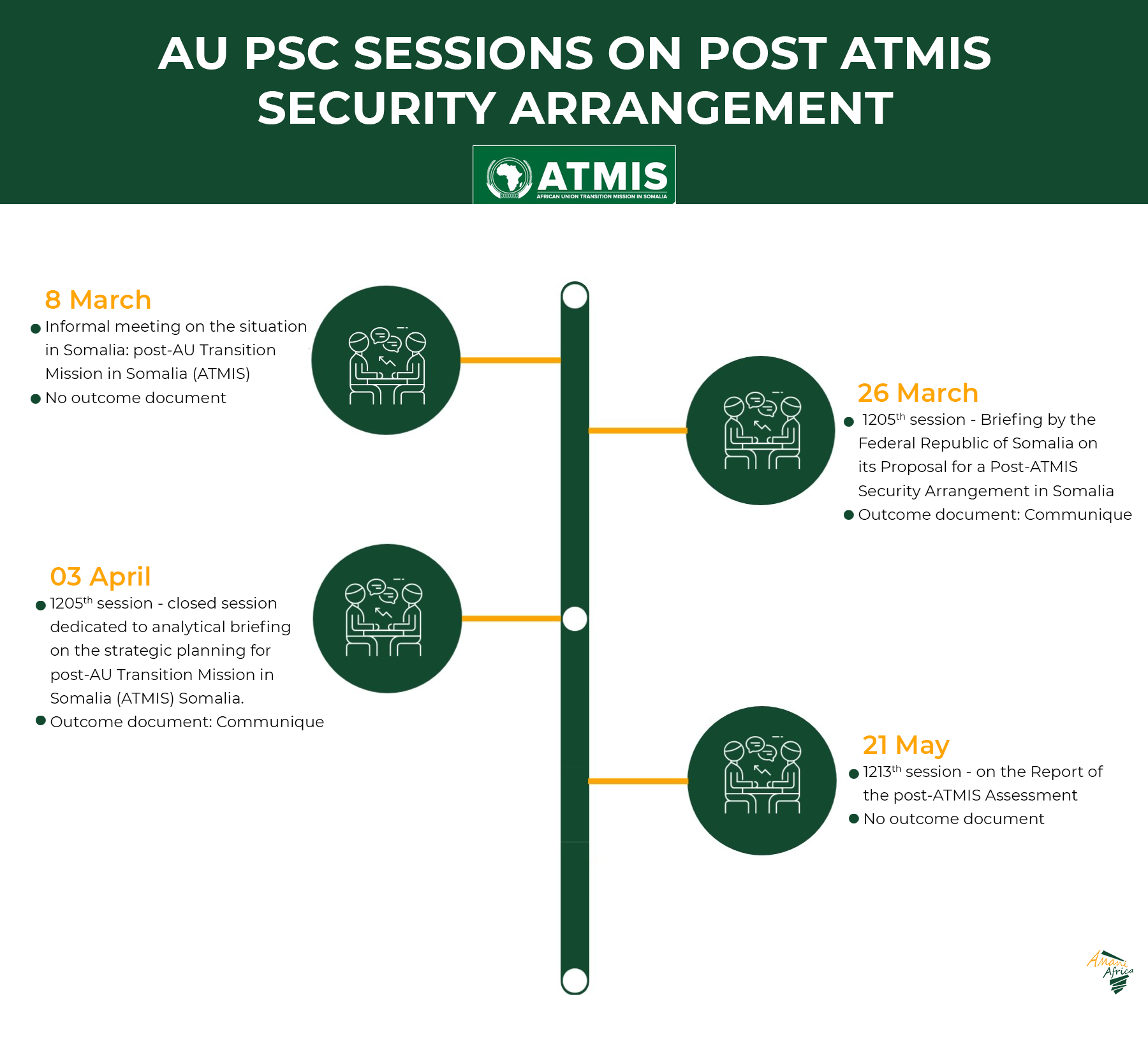
In light of these requests, the session tomorrow is expected to provide the Council with an update on its request for the development and submission of the CONOPs. As such the focus of tomorrow’s session will be based on the informal session held in July and thus predominantly focus on the work done by the AU Commission in producing CONOPs based on the requests from both the PSC and UNSC. To develop the new CONOPS, it is reported that nine members from the AU Commission held a four-day consultation in Mogadishu with the Federal Government of Somali (FGS) and key partners between 14-17 July. The consultations included discussion among the senior leadership team of ATMIS officials, the FGS, representatives of ATMIS Troop-Contributing Countries (TCCs) and international partners who consist of members from the Core Security Partner Groups (CSPG). Based on the press release of the engagements in Mogadishu, the consultations covered key elements of the CONOPs and were used for informing the development of the CONOPs.
The CONOPs has 17 major parts: principles; assessment of the situation in Somalia; key assumptions; mandate; political directive; strategic end state; operational end state; exit strategy; major risks; component-specific tasks; mission composition and structure; mission phases; command, control and coordination mechanism; strategic management and control; operational and administrative processes; key performance benchmarks; and Mission support. Among the principles is AU leadership, which in an earlier version of the draft CONOPs envisaged the central role AU would play in the strategic management and oversight of the new mission. Under this, the initial draft of the CONOPs envisaged a comprehensive approach to PSOs focusing on the provision of support to security, stabilisation, and state-building processes through a multidimensional AU PSO deployment with civilian, police, and military components.
While FGS is against a multidimensional mandate that also attributes political mandate to the mission, indeed, reducing the mission’s role to only fighting and a military component leads to fragmentation and disconnect between military and other stabilisation and political processes key to the success of the mission. Such fragmentation exposes mission personnel to grave peril and undermines the effectiveness of the mission. PSC’s reflections on opposition to the multidimensionality of the mission thus require careful consideration. This can be informed by the PSC’s 1217th session decision that the mission needs to have must be given a strong political mandate, with scope, size, posture, composition, and duration. It is also worth mentioning that the PSC’s 1217 session additionally ‘emphasised the importance of peace-building and the post-conflict reconstruction and development component to Somalia and in the mandate of the new post-ATMIS mission.’
Much of the components of the CONOPs reflect continuity. As with ATMIS, the exit strategy for the post-ATMIS mission is premised on the effective implementation of the Somalia Stabilisation and Development Plan (SSDP). More specifically, it is predicated on the achievement by Somalia Security Forces (SSF) of a level of capability for taking over security responsibility from the AU mission, the erosion of Al Shabaab’s capacity to a point where it no longer poses serious threats, and most notably the consolidation of national political cohesion and settlement and the expansion of state authority through enhanced legitimate local governance structures that deliver public services. All of these considerations depend on the capacity of first and foremost the FGS and generally the wider Somalia political and social forces to shoulder effectively their part of the responsibility much better than they have done in recent years.
In terms of composition, it is envisaged that the post-ATMIS mission will be made up of 11,911 personnel, comprising 85 civilians, 11,146 military and 680 police personnel, deployed in 4 Sectors. One of the issues for tomorrow’s session in terms of the composition of the mission is whether it will be constituted from existing troops or will be constituted with new troops and troop-contributing countries (TCCs). The FGS is advancing a position that the mission has to be new and not a re-hatting of ATMIS. It is to be recalled that the PSC hinted that the new mission may need to build on ATMIS when it stated in the communiqué of its 1217th session that there is a need for harmonisation of the exit of ATMIS ‘with the follow-on mission, including the harmonisation of TCCs, to ensure that there is no security gap between 31 December 2024 and 1 January 2025.’ This can be realistically achieved if the nucleus of the follow-up mission is constituted by retaining ATMIS troops.
The implementation of the mission envisages three phases and pre and post-mission phases. The pre-mission phase is the transitional phase involving the completion of ATMIS phases and the parallel preparation of the reorganisation of the areas of operations and troop deployments. As such it runs for the duration of the last two phases of ATMIS, namely Phase III and Phase IV which is envisaged to conclude on 31 December 2024. In this context, the PSC may benefit from a discussion of the current progress of the ATMIS drawdown as it will influence the final composition of a new post-ATMIS Arrangement. With regards to the amalgamation of the four phases of ATMIS drawdown and the formation of new missions, the PSC’s outcome document highlighted the need for careful coordination between the exit of ATMIS and the follow-on mission that will replace it.
The other three phases are envisaged to be implemented from 01 January 2025 to 31 December 2026, 01 January 2027 to 31 December 2028 and 01 January 2029 to 31 December 2029. Accordingly, the post-ATMIS mission is expected to run for a period of four years. Then, there is a post-mission phase involving the liquidation of the mission.
Of particular strategic significance for tomorrow’s session, in addition to the details of the CONOPS, is the financing of the post-ATMIS mission. Considering the financing shortfalls that frustrated the effective functioning of ATMIS, the importance of finding predictable and sustainable funding for the mission cannot be overemphasised. It is to be recalled that in the communique of its 1217th session, the PSC requested ‘that a dedicated funding mechanism, through UN assessed contributions in accordance with UN Security Council Resolution 2719 (2023) …be established to guarantee the financial stability of the mission.’ The adoption of a CONOPs that has the support of all stakeholders, including the host country and members of the UNSC, will be crucial, if not a sufficient condition, for AUSSOM to be a test case for the application of 2719. In this regard, the earlier the preparatory processes are thoroughly carried out, the higher the chances for facilitating the processes for the adoption of a UN Security Council Resolution authorising UN-assessed contributions for the mission within the framework of Resolution 2719. Considering that this process may not be completed by 1 January 2025 and that the funding from UN assessed contribution may not exceed 75%, it would be of interest for PSC members to reflect on the mobilisation of funds both for the period until the finalisation of the adoption of UNSC resolution authorising UN assessed contributions (provided that no major UNSC member opposes it) and for meeting the balance beyond the 75 per cent.
The expected outcome of the session is a communiqué. The PSC is expected to welcome the preparation and presentation of the CONOPS as per the Council’s request. The PSC may condemn the recent attacks in the Lower Shabelle region as well as the attacks on ATMIS and Somali Security Forces over the past month. On the phased drawdown of ATMIS, the PSC may also welcome the efforts by ATMIS and FGS in handing over crucial forward operating bases (FOBS) to the Somali Security Forces. However, the PSC may reiterate the need for ATMIS and the FGS to follow the revised timeline set for the third phase drawdown. The PSC may endorse the CONOPs subject to amendments and request the submission of the CONOPs to the UNSC ahead of 2 August 2024. It may press on the FGS the need for it to shoulder its part of the responsibility by ensuring the generation of forces with adequate capacities and at a number for the success of the Mission in supporting SSF and in SSF ultimately taking over full security responsibilities. Regarding sustainable funding for the post-ATMIS mission, the PSC may reiterate its previous request for the AU Commission and UN Secretariat to develop options for funding for the new mission within the framework of UN Res 2719.

Provisional Program of Work of the PSC for the Month of August 2024
Provisional Program of Work of the PSC for the Month of August 2024
Date | August 2024
Botswana, elected back to the PSC in February 2024 after eight years, will be chairing the African Union (AU) Peace and Security Council (PSC) for the month of August 2024. The PSC’s Provisional Program of Work includes four substantive sessions. One will focus on country-specific situations while two of the sessions will address thematic issues. The remaining will be a consultative meeting. All of the planned sessions are expected to be held physically unless a virtual meeting is specifically called for.
On 6 August, the PSC will convene its first substantive session focusing on the theme Constitutionalism, Democracy and Governance. This meeting is to be convened in line with the 791st PSC meeting held on 22 August 2018 in which the PSC in a press statement it adopted, agreed to dedicate an annual session to review the status of implementation of the African Charter on Democracy, Elections and Governance (ACDEG). However, there has been increasing PSC engagement in the course of the past few years on this subject mostly prompted by the resurgence of unconstitutional changes of government on the continent. The various sessions of the PSC on this subject such as its 1061st and 1098th meetings highlighted that the concern with democracy and constitutional rule is not confined to the resurgence of military coups. It also relates to the democratic governance deficit, the tampering of constitutional term limits and the rising disenchantment of the public with elections that are flawed and unable to lead to democratic change. The session set for 6 August serves as a platform for the PSC to take stock of developments regarding the state of constitutionalism, democracy and governance during the past years since its last meeting on the theme, trends in terms of both encouraging developments and persisting challenges and what the AU is able to and should be doing. It is also to be recalled that the Report of the PSC presented at the thirty-seventh ordinary session of the Assembly urged member states that have ratified the ACDEG Charter to submit their reports for review by the African Governance Platform (AGP) for relevant gains to be derived in the consolidation of governance in the Continent. In this vein, Togo recently became the first to submit the initial State Parties Report under ACDEG, followed by Rwanda. Notably, since 2007, 38 member states have ratified the ACDEG.
On 15 August, the PSC will convene its second substantive session which will be committed to the situation in Sudan. It is to be recalled that during the 1218th PSC meeting held at the Heads of State and Government level on 21 June 2024, the PSC called for a ceasefire in the country, which would only be realised through direct negotiations between the Rapid Support Forces (RSF) and Sudanese Armed Forces (SAF) leaders. The PSC tasked the AU Commission Chairperson to urgently set up a PSC Ad–hoc Presidential Committee comprising one Head of State and Government from each region of the Continent led by Yoweri Kaguta Museveni, President of Uganda and PSC Chairperson for June 2024 – to facilitate face–to–face engagements between the leaders of the SAF and RSF, at the shortest possible time. Building on this, from 10 to 15 July 2024, an AU/IGAD-facilitated preparatory meeting for Inter-Sudanese Political Dialogue was convened at the AU Commission. The meeting sought to engage on key issues related to the convening of an inclusive political dialogue process that would facilitate a comprehensive interaction to end the ongoing devastating conflict in Sudan and institute a consensual transitional constitutional order. It is worth noting that the meeting was boycotted by a significant portion of Sudanese civilian and political forces, hence prompting the AU High-Level Panel to make this meeting one in a series of preparatory meetings instead of the initial plan of making this the preparatory meeting. The UN Secretary-General’s Personal Envoy also held indirect talks between the warring parties focusing on humanitarian issues in Geneva. Djibouti, in its capacity as Chairperson of IGAD, also hosted a meeting of the various special envoys of Sudan – in which the AU participated through the Special Representative of the Chairperson of the AU Commission. The session envisaged for 15 August will serve not only to follow up on the actions taken to implement the various PSC decisions including those adopted at its 1218th session but also to get a briefing on these various diplomatic engagements and on the state of the conflict situation in Sudan.
On the same day, the sanctions sub-committee is expected to present its inaugural session report to the Council and also the PSC is expected to consider and adopt the draft program of work for September 2024, via emails.
On 19 August, there will be consultations between the PSC/AU Panel of the Wise and RECs/RMs Panel of Elders. The 1204th session of the Council held on 13 March 2024 stressed the importance of the Pan-African Network of the Wise (PanWise) as a foundational framework for collaborative engagements between the Panel of the Wise, RECs/RMs and other key stakeholders. The PSC Protocol states in Article 16 that the Regional Mechanisms are part of the overall security architecture of the Union, the Chairperson of the Commission is tasked with working closely with Regional Mechanisms to ensure effective partnership as well as harmonising and coordinating the activities of the Regional Mechanisms in line with the objectives and principles of the AU. Furthermore, the Modalities for the Functioning of the Panel of the Wise stipulate that the AU and RECs shall, where appropriate and within the framework of their conflict prevention strategies, establish structures similar to the Panel of the Wise, as provided for by Article 11 of the PSC Protocol. The proposed consultation for 19 August therefore contributes towards pursuing the objectives of (i) intensifying their efforts towards the prevention of conflicts through, among other things, fostering policies aimed at promoting democratic principles and practices, good governance, the rule of law and the protection of human rights and fundamental freedoms, respect for the sanctity of human life and international humanitarian law; and, (ii) the spirit of working together and drawing on each other’s expertise to contribute to the implementation of regional and continental instruments relevant to the promotion and maintenance of peace, security and stability in Africa.
On 21 August, the PSC is expected to convene an open session on inclusive education in conflict situations. The meeting is also being held in pursuit of the AU theme for 2024 which is ‘Educate an African fit for the 21st Century: Building resilient education systems for increased access to inclusive, lifelong, quality and relevant learning in Africa’ within the framework of the 20th anniversary of the PSC. The AU theme of the year was adopted during the thirty-sixth Ordinary Session of the Assembly of the Union [Assembly/AU/Dec.864(XXXVI)] held on 18 and 19 February 2023. PSC’s session on inclusive education in conflict situations is expected to draw on existing engagements of the PSC on the subject. Part of the recommendations on the concept note of the 1206th PSC meeting on prevention of the ideology of hate, genocide and hate crimes in Africa, held on 4 April 2024, provided that ‘the education systems should be inclusive in their policies and reflect the ethnic, racial and cultural diversity of each member state. The education policies by member states should aim at producing citizens free from ethnic, regional, national and religious prejudices and who are committed to protecting human rights. Furthermore, the education sector should contribute to national reconciliation by creating a culture of peace, emphasising positive values, and promoting the universal values of justice and tolerance, among others. The teaching of peace, reconciliation, tolerance, justice, and democratic values should be promoted.’ It is also to be recalled that the Banjul Conclusions adopted at the Ministerial and High-Level open session on the Promotion and Protection of the Rights and Welfare of Children in Situations of Conflict in Africa, held on 4 and 5 December 2023 in Banjul, The Gambia, highlighted the imperative of member states to ensure sensitisation on the rights of children in the communities and endorse, domesticate and implement the Safe Schools Declaration to ensure continuity of education in conflicts.
The last week of August will commence with the capacity building of the PSC Sub-committee on Sanctions, which is expected to take place from 26 to 28 August. In the same week, from 28 to 31 August, there will be the inaugural consultative meeting between the PSC and the SADC Organ and Members of the SADC to be held in Gaborone, Botswana. This is the second such consultative meeting to be held by the PSC since the consultative meeting it held in April 2024 with the Economic Community of West African States (ECOWAS) Mediation and Security Council.
In addition to the substantive sessions and activities of the PSC, the program of work encompasses the meetings of the PSC subsidiary bodies. The Military Staff Committee (MSC) is scheduled to convene on 8 August for a timely brainstorming session on the African Standby Force (ASF) Concept, in view of the contemporary/changing security dynamics on the continent. The Committee of Experts (CoE) on the other hand is scheduled to convene on 13 August for preparations for the 18th Annual Joint Consultative Meeting between the UNSC and AUPSC, and also preparation for the inaugural consultative meeting between the PSC and SADC Organ and members of SADC. Finally, as envisaged in the footnote of the program, the PSC will also consider the situation in Somalia and post-ATMIS on a date to be communicated.
Consideration of Mid-year report of the Chairperson of the Commission on elections in Africa: January to June 2024
Consideration of Mid-year report of the Chairperson of the Commission on elections in Africa: January to June 2024
Date | 24 July 2024
Tomorrow (25 July), the African Union (AU) Peace and Security Council (PSC) will convene its 1224th session to consider the mid-year report of the Chairperson of the AU Commission on elections in Africa, covering the period between January and June 2024.
Following the opening statement of the Chairperson of the PSC for the month, Miguel Cesar Domingos Bembe, Permanent Representative of Angola to the AU, Bankole Adeoye, the Commissioner for Political Affairs, Peace and Security (PAPS), is expected to present the report. Statements are also expected from the representatives of Member States that organised elections during the reporting period and from the representatives of the Regional Economic Communities/Regional Mechanisms (RECs/RMs) that observed the elections. Despite not deploying election observation to Chad due to violation of relevant PSC decisions and AU norms on non-eligibility of members of the Transitional Military Council (TMC) in elections, it appears that Chad is invited, along with Madagascar, Mauritania, Senegal, South Africa, Togo and The Union of Comoros, to make a statement on the presidential election held on 6 May 2024.
The Chairperson’s mid-year report on elections in Africa is in line with the PSC’s decision at its 424th session of March 2014 to receive regular briefings on national elections in Africa. The last time the Chairperson presented the half-year report was during PSC’s 1194th session held on 24 January 2024, covering elections held between July and December 2023. As with the previous report, tomorrow’s briefing on the Chairperson’s report will provide an update on the electoral process and the conduct of the elections held during the reporting period, while also providing a snapshot of elections planned for the second half of 2024. The report is also expected to highlight emerging governance trends during the period under review, as well as positive practices and areas of concern.
During the first half of 2024, seven Member States organised presidential and parliamentary elections, namely The Union of Comoros, Senegal, Togo, Chad, South Africa (where the AU Commission also deployed a pre-election assessment mission in April), Madagascar, and Mauritania. The AU Commission deployed Election Observation Missions (EOMs) in the elections in all these countries, except the Presidential elections in Chad.
The Presidential and gubernatorial elections of the Union of the Comoros held on 14 January, in which the incumbent was declared to have won the presidential election by 57.2 per cent, saw varying levels of turnout for the two elections held on the same day. The elections were marred by political tension and protests over allegations of irregularities.
On 24 March, Senegal held presidential elections following a turbulent electoral season. Deadly protests erupted following Macky Sall’s decision to postpone the originally scheduled 25 February 2024 election. The Constitutional Council rejected both the law passed by parliament delaying the election until December and the 2 June proposed election date by the National Dialogue Commission. Consequently, Sall’s government was compelled to set a new election date before his term expired on 2 April. The vigilance of the Senegalese youth-led mass movement gave the Constitutional Council the conducive context for it to play its critical role in safeguarding Senegal’s democratic process. Bassirou Diomay Faye from the opposition PASTEF party emerged victorious with 54 per cent of the vote.
On 29 April, Togo convened legislative elections alongside its inaugural regional elections, with a voter turnout of 61.76 per cent, following the adoption of a controversial constitutional amendment that changed the country’s system of government from presidential to a parliamentary system. The ruling party amassed 108 out of the 113 contested seats. The opposition criticised the constitutional reform as an ‘institutional coup’, claiming that this would pave the way for the incumbent President Faure Gnassingbé’s prolonged rule if his party maintained an assembly majority, effectively circumventing previous term limits.
The other election held during the period under review is the presidential election in Chad held on 6 May. The Constitutional Council declared Mahamat Idriss Déby Itno, who led the TMC that unconstitutionally seized power following the death of his father Idriss Déby Itno, the winner with 61 percent of the votes.
Déby’s candidacy and eventual victory in the election clearly disregarded the AU’s anti-coup norms and the decision of the PSC on 14 May 2021, which expressly demanded that the chairman and members of the TMC do not take part in the election at the end of the transition. Amani Africa’s ‘Ideas Indaba’ published on 9 April warned that ‘If the PSC is unable to enforce the rule on non-eligibility concerning Chad, it would be the end of any future application of this rule as well. And most immediately, this would also mean that the AU would have no standing to apply this rule for stopping any of the military leaders in the six other countries (Burkina Faso, Gabon, Guinea, Mali, Niger, and Sudan) from becoming candidates for elections.’ The invitation of Chad to make a statement during this session without the PSC reaffirming its decision on non-eligibility for election may constitute another instance of the PSC enabling disregard of its own decisions and the applicable AU norms it is meant to safeguard.
On 29 May, South Africa held general elections to elect Members of the National Assembly and Provincial legislators. The election was notably competitive, with the ruling African National Congress (ANC) receiving only 40.18 per cent of the votes, losing its parliamentary majority for the first time since the end of apartheid in 1994. This unprecedented outcome forced the ANC to strike a deal with the opposition Democratic Alliance (DA), which came in second with 22 per cent, and other parties to form a ‘national unity’ government.
Madagascar also convened legislative elections on 29 May. Contrary to last year’s presidential election, which was marred by low voter turnout and boycotts, political actors showed interest in the legislative elections, fielding 473 candidates for the 163 parliamentary seats. The ruling party secured 51.53 per cent of the vote. Mauritania also held its presidential election on 29 June, in which the incumbent President, Mohamed Cheikh El Ghazouani, who is also the current chairperson of the AU, was re-elected with 56 per cent of the vote.
The report is expected to preview ten elections scheduled to take place between July and December 2024: Rwanda, Algeria, Tunisia, Mozambique, Botswana, Guinea Bissau, Namibia, Ghana, South Sudan, and Mauritius. On 15 July, Rwandans elected their President, with President Paul Kagame re-elected to a fourth term in office in a landslide victory, securing a provisional result of 99 per cent of the vote.
In Algeria, President Abdelmadjid TEBBOUNE will be seeking a second term in the upcoming election slated for 7 September. Tunisia will hold its presidential election on 6 October, while in Mozambique, general elections are slated for 9 October, with the ruling party FRELIMO represented by regional governor Daniel Chapo, succeeding President Filipe Nyusi. Botswana’s general election is also set to take place no later than 29 October. The legislative elections in Guinea-Bissau are scheduled for 24 November, a year after President Umaro Sissoco Embaló dissolved the opposition-dominated parliament in December 2023. On 27 November, Namibia will hold presidential and legislative elections, while Ghanaians will elect their new president on 7 December, with President Nana Akufo-Addo stepping down as he completes his second term. Mauritian legislative elections are also expected to take place before the end of this year.
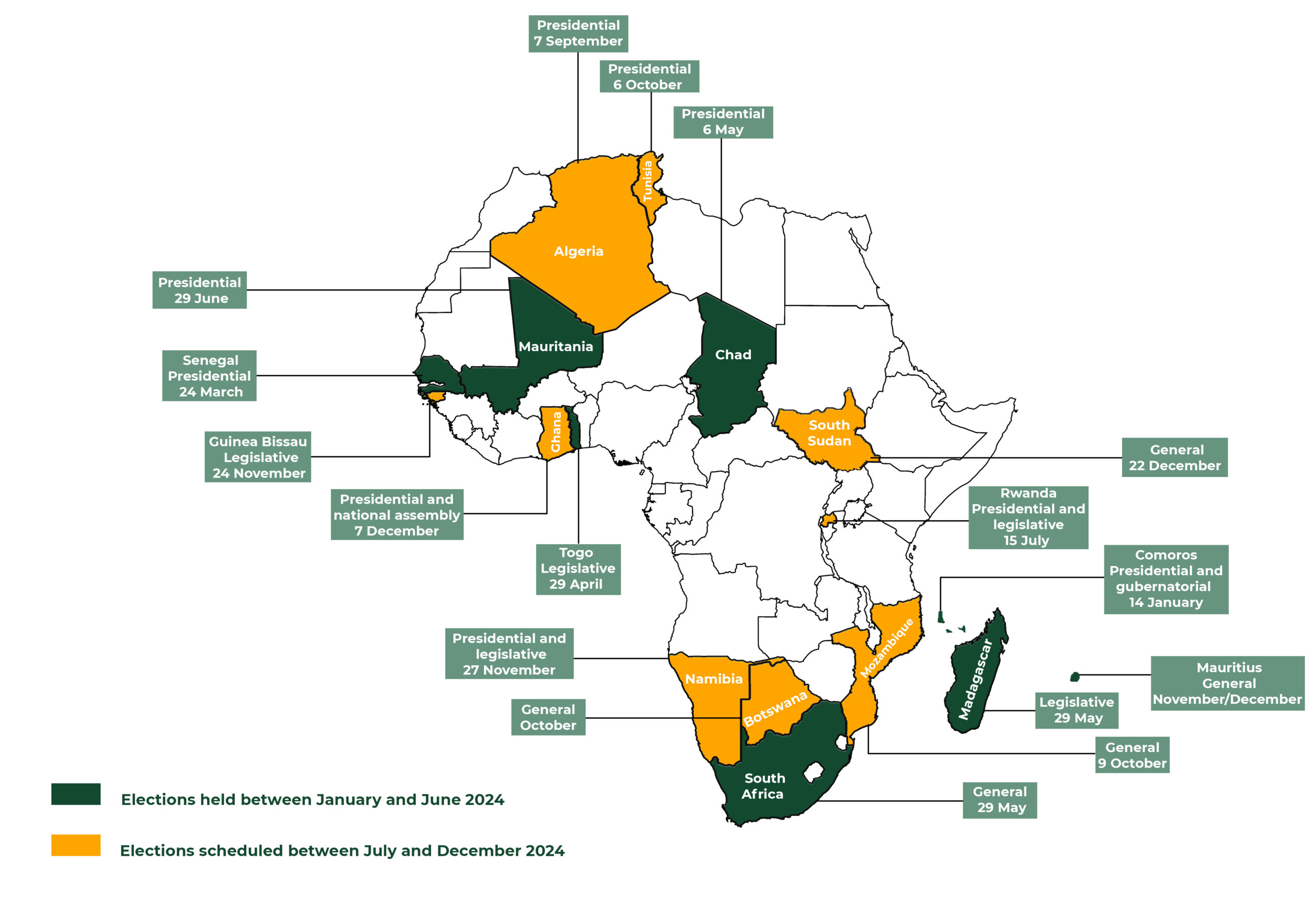
South Sudan’s general elections—scheduled for 22 December, which will be the first since its independence in 2011—are perhaps the most consequential, warranting closer attention from the PSC. Considering the high stakes of these elections to the peace and stability of South Sudan as well as the wider region, the PSC may explore different preventive measures to ensure that the elections do not re-ignite armed confrontations between different factions. It is worth recalling that during its 1219th session, the PSC made important decisions in relation to accompanying South Sudan throughout the electoral season.
The other aspect of the report is expected to provide an overview of the governance trends. On a positive note, the report is likely to highlight that the majority of the elections during the period under review were conducted relatively calmly. Notably, some of the Member States, such as Senegal and South Africa, were able to consolidate the conduct of free and fair elections, with Senegal avoiding the threat of democratic backsliding.
On the other hand, the report is likely to point out the prolonged political transitions in Member States that experienced unconstitutional changes of government as a major issue of concern for the continent’s governance landscape covering not only countries affected by coups but also others such as South Sudan and Libya.
The expected outcome is a communiqué. The PSC may commend Member States for holding their periodic elections in a relatively calm environment and for the consolidation of democracy in some of the countries. The PSC may also take the opportunity to express its dissatisfaction with the participation of the leader of the Transitional Military Council (TMC) of Chad in the 6 May Presidential election in defiance of the PSC’s decision on the non-eligibility of members of the TMC and the AU norm as enshrined in the African Charter on Elections, Democracy and Governance. It may also call on AU member states to expand the civic and political space both to address voter apathy, particularly on the part of young people of voting age and the growing disenchantment with elections on the continent. In relation to countries under political transition, given the complexity of the issue, the PSC may go beyond reiterating the need to strictly adhere to their respective transition agreed timelines, and task the Commission to undertake a comprehensive study with practical strategies on how to expedite the return of constitutional order in these countries in line with relevant AU norms. On upcoming elections, while urging the Commission to continue its support to Member States to hold credible elections, it may particularly emphasise the need to deploy effective mechanisms in relation to the elections in South Sudan, in line with the decisions made at its 1219th session.
Discussion on United Nations Security Council Resolution 2719 (2023)
Discussion on United Nations Security Council Resolution 2719 (2023)
Date | 23 July 2024
Tomorrow (24 July), the African Union (AU) Peace and Security Council (PSC) will convene a retreat to discuss the United Nations Security Council (UNSC) Resolution 2719 (2023) on the financing of AU-led Peace Support Operations (PSOs).
Following an opening remark by Miguel César Domingos Bembe, Permanent Representative of Angola to the AU and Chairperson of the PSC for the month of July 2024, Bankole Adeoye, AU Commissioner for Political Affairs, Peace and Security (PAPS), is expected to make a presentation based on a report prepared by the AU Commission.
The PSC last considered the UNSC Resolution 2719 on 14 June 2024, during its 1215th session. This session addressed challenges that may hinder the effective implementation of the resolution and highlighted ambiguities within it. Although the meeting concluded without adopting any outcome document, it was decided that the PSC convenes a retreat on the subject at the end of July 2024. This retreat is being convened against this backdrop.
Besides planning for a retreat, at the 1215th session, the PSC also requested the AU Commission to prepare a document that includes the matrix for Resolution 2719, which outlines the sharing of responsibilities, a position paper on its implementation, guidelines for its operationalisation and recommendations. Therefore, tomorrow’s retreat is anticipated to be grounded on the document that will be presented by the AU Commission.
Using the document as a basis the discussions of the retreat are expected to explore and propose recommendations on the ambiguous areas of the resolution concerning the decision-making process, the notion of ‘case-by-case,’ ‘AU-led and under direct and effective AU command and control,’ the ‘75:25’ formula, and the extent of application of the UN Financial Rules and Regulations to AU PSOs as well as mission support.

Additionally, paragraph 2 of Resolution 2719 stipulates that AU-led PSOs, granted access to UN-assessed contributions by the UNSC, will remain under ‘the direct and effective command and control of the AU’. Considering the fragmentation in the use of deployment of ‘peace operations’ on the continent taking the form of regional operations, ad hoc operations, a coalition of the willing and bilateral deployments, this formulation aims at bringing deployment under the umbrella of AU’s multilateral and established normative frameworks that ensure coherence and compliance. The implication of the requirement of ‘direct and effective command and control’ requires more than a deployment on the basis of consultation with the PSC and under the AU peace operations policy frameworks. The implication of this is that such operations by arrangements other than the AU including peace support operations by Regional Economic Communities/Regional Mechanisms (RECs/RMs) will not have direct access to UN-assessed contributions within the framework of 2719.
This however does not necessarily imply there cannot be a situation in which operations initiated by RECs/RMs will not at all fall under Resolution 2719. In terms of precedent, there is no single case of a regional operation or ad hoc operation in which the AU exercised ‘direct command and control.’ The only example that can provide instructive lessons on this question of direct command and control is the hybrid UN and AU experience of mission in Sudan – the UN-AU Mission in Darfur (UNAMID). While UNAMID was a joint mission of the UN and the AU, the UN exercised direct command and control in coordination with the AU. UNAMID could be the model that can help develop an arrangement between the AU and RECs/RMs for meeting the requirements of operational paragraph 2 of Resolution 2719 that the AU-led peace support operation that can benefit from this resolution needs to be under ‘the direct and effective command and control of the AU.’
Concurrently, Paragraph 2 requires that the use of assessed contributions has to be ‘consistent with Article 17 of the Charter as well as the financial regulations and rules of the United Nations.’ Similarly, Paragraph 4 of the resolution mandates that these AU-led PSOs must adhere to the UN Financial Regulations and Rules. The UN Financial Regulations and Rules grant the UN Secretary-General authority over peacekeeping budgets, including setting objectives, outputs, activities, and resource allocations for budgets submitted to the General Assembly. This framework raises issues for AU PSO budgets in that it may necessitate adjustments in both budget preparations and reporting on the use of appropriated budget in order to ensure alignment between the demands of ensuring supplies that meet the tempo of AU-led PSOs on the one hand and the UN financial regulations and the decision-making processes of the 5th Committee of the UN General Assembly on the other hand. The UN Secretary-General also holds the authority to commit funds and make payments based on General Assembly appropriations, delegating this authority to mission heads in UN operations. However, this delegation system cannot extend the administration of UN Financial Regulations and Rules outside the UN.
There are however experiences to draw from. As pointed out in Amani Africa’s special research report on the financing of AU PSOs through UN-assessed contributions, the UN, under Resolutions 1863 (2009) and 2010 (2011), established a support package for supporting the AU Mission in Somalia (AMISOM) using UN assessed contributions. This is also one of the two models (the other being the hybrid model of UNAMID) for channelling the funds that were proposed in the UN Secretary-General’s May 2023 report to the UNSC. As observed in our Special Research Report, ‘[e]xplaining the reason for the choice of the two models, the Secretary-General’s report states that ‘both approaches would facilitate the application of United Nations Rules and Regulations, standards for financial oversight, accountability mechanisms and requirements for human rights due diligence and can be implemented under existing policies and procedures.’ It is worth noting that the AU Consensus Paper on Financing of AU PSOs adopted by the AU Assembly in February 2023 also provides the support package model as ‘the best starting points for discussing financing options.’
With regards to the financial burden-sharing aspect of the resolution, which directs for the use of up to 75% of UN-assessed contributions for eligible AU-led Peace Support Operations, two issues may arise. Various AU member states made it clear that the AU is not in a position to contribute the 25%. In keeping with not leaving the AU with the full burden of contributing the balance of the budget not covered by UN Assessed contributions, one is the aspect of the resolution, which states that the remaining 25% is expected to be jointly mobilised from the international community as extra-budgetary resources. The UNSC with its resolution commits to exploring ‘all viable options’ in the event of significant shortfalls in resource mobilisation. This commitment raises the question of whether ‘all viable options’ might include the use of assessed contributions beyond the 75% cap. Another matter that seeks clarity in this regard is what accounts as a ‘contribution’ according to what is stated under paragraph 9 of the resolution.
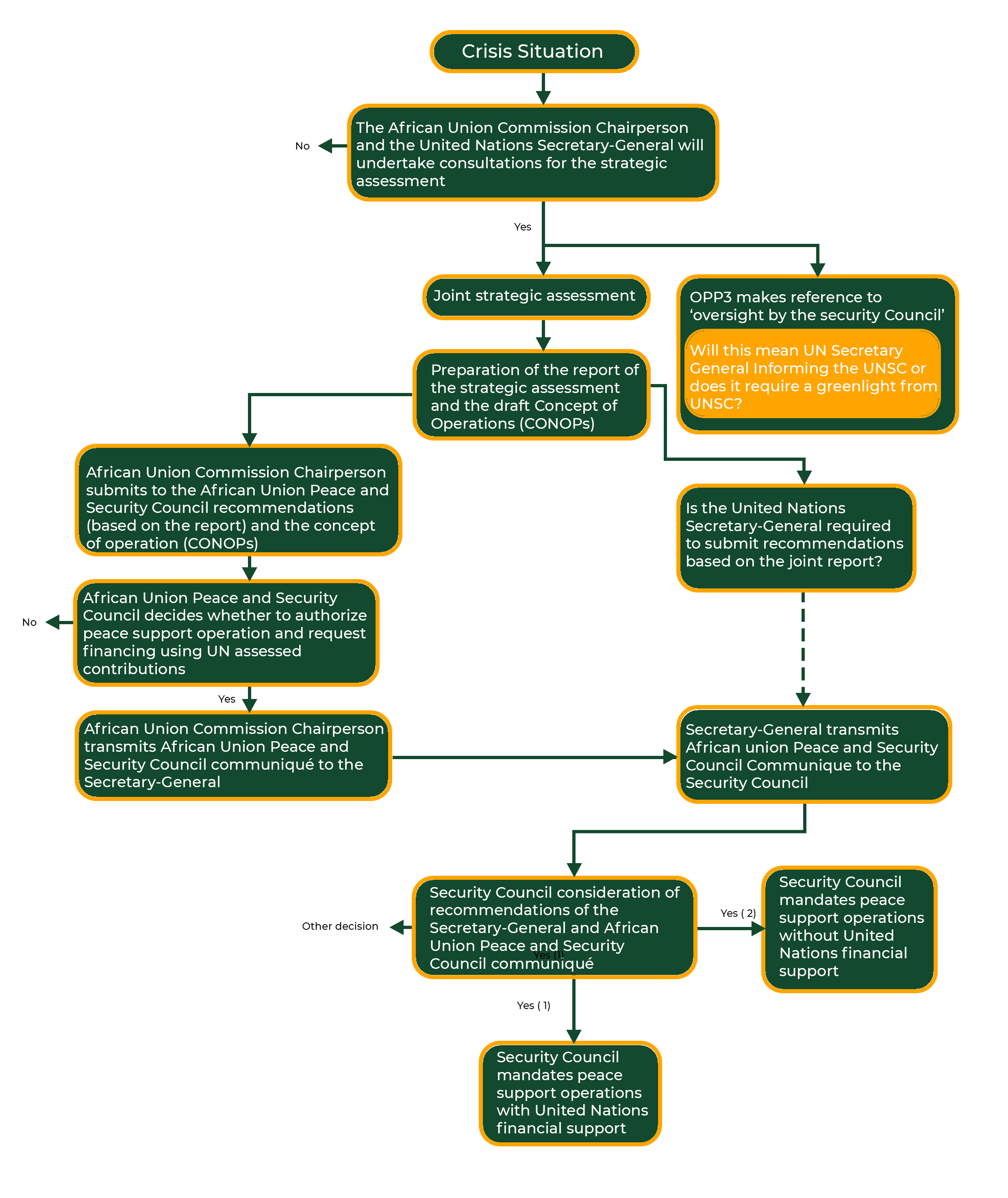
The other aspect of Resolution 2719 that is expected to receive attention is the decision-making process in the authorisation of AU-led PSOs that falls under Resolution 2719 envisaged in operational paragraph 3. This envisages a process that requires a workflow that covers a series of sequential activities: a) consultation by the Chairperson of the AU Commission and the Secretary-General of the UN for the conduct of a strategic assessment (of emerging and ongoing conflict situations) with a range of options for response, b) a joint strategic assessment guided, among others, by ‘regular joint review and reporting processes to ensure oversight by the Security Council of all authorised operations that access United Nations assessed contributions’, c) preparation of the report of the strategic assessment and the draft concept of operations (CONOPs), d) decision by the PSC on the report and the draft CONOPs, d) transmission of the PSC decision to the UNSC, and e) a consideration and decision by the UNSC. The key issues that the decision-making process envisaged under operational paragraph 3 include the kind of working arrangement that needs to be established between the AU and the UN and whether or not there is a need for engagement with and greenlight from the UNSC in starting the initial process of consultation between the AU Commission Chairperson and the UN Secretary-General as well as the mechanism for triggering the process.
Furthermore, the AUC report and briefing are expected to explore the conception of a ‘case-by-case’, as it can have different outcomes as to the response to the request of UN-assessed contributions by the AU. Some member states of the PSC are of the view that the fact that the assessed contribution is grunted on a case-by-case basis does not secure adequate, predictable, and sustainable financing of AU-led PSOs. This is because one of the outcomes for a case-by-case consideration of AU-led PSOs could be the rejection of the request by the UNSC. In these cases, the PSC will be required to answer questions like, what will be the contingency plan in scenarios where UN-assessed contributions fall short. It is therefore expected that the PSC will develop a position on the issue as to what should be adopted in examining different conflict cases.
As a follow-up to previous discussions, the PSC is also expected to continue deliberations on the identification of the test case for implementation of Resolution 2719. It is worth recalling in this respect that the 1217th session of the PSC that decided on the deployment of a post-ATMIS mission to Somalia in paragraph 17 stipulated the PSC’s request ‘that a dedicated funding mechanism, through UN-assessed contributions in accordance with UN Security Council Resolution 2719 (2023)…be established to guarantee the financial stability of the mission.’ Part of the issue in this context is how this decision of the PSC can be pursued in the implementation of the various aspects for authorisation for access to UN-assessed contributions under Resolution 2719.
With respect to mission support, Resolution 2719 provides that ‘the Security Council will decide on the most appropriate mission model, prioritising the establishment of a United Nations Support Office, which enables the use of the fiduciary processes and reporting of the United Nations system or as may be necessary through any other mission model.’ The experience from AMISOM/ATMIS shows that there is a need for aligning the strategic logistic frameworks of the AU and the UN. Particularly where AU-led operations require enforcement action, there is not only a robust logistical support framework that meets the demands of such kinetic operations and the tempo of such operations which may necessitate decentralisation and prepositioning of supplies. Part of the consideration in tomorrow’s PSC retreat is how to ensure the development of such a strategic logistics support framework and the kind of steps required to avoid some of the shortfalls that undermined the effectiveness of AMISOM including airlift capacity and availability of force enablers.
The expected outcome is a conclusions document of the retreat that will later be submitted to future PSC sessions on the matter. The PSC is expected to commend the AU Commission for developing the matrix of the UNSC Resolution 2719, the position paper and further. The PSC may also state that it looks forward to the conclusion of the development of the position paper. The Council may further call on member states and the AU Commission to utilise the upcoming 18th PSC-UNSC Annual Joint Consultative Meeting in October, to engage with stakeholders, including the A3, to forge a common understanding of the resolution.
Discussion on United Nations Security Council Resolution 2719 (2023)
Discussion on United Nations Security Council Resolution 2719 (2023)
Date | 23 July 2024
Tomorrow (24 July), the African Union (AU) Peace and Security Council (PSC) will convene a retreat to discuss the United Nations Security Council (UNSC) Resolution 2719 (2023) on the financing of AU-led Peace Support Operations (PSOs).
Following an opening remark by Miguel César Domingos Bembe, Permanent Representative of Angola to the AU and Chairperson of the PSC for the month of July 2024, Bankole Adeoye, AU Commissioner for Political Affairs, Peace and Security (PAPS), is expected to make a presentation based on a report prepared by the AU Commission.
The PSC last considered the UNSC Resolution 2719 on 14 June 2024, during its 1215th session. This session addressed challenges that may hinder the effective implementation of the resolution and highlighted ambiguities within it. Although the meeting concluded without adopting any outcome document, it was decided that the PSC convenes a retreat on the subject at the end of July 2024. This retreat is being convened against this backdrop.
Besides planning for a retreat, at the 1215th session, the PSC also requested the AU Commission to prepare a document that includes the matrix for Resolution 2719, which outlines the sharing of responsibilities, a position paper on its implementation, guidelines for its operationalisation and recommendations. Therefore, tomorrow’s retreat is anticipated to be grounded on the document that will be presented by the AU Commission.
Using the document as a basis the discussions of the retreat are expected to explore and propose recommendations on the ambiguous areas of the resolution concerning the decision-making process, the notion of ‘case-by-case,’ ‘AU-led and under direct and effective AU command and control,’ the ‘75:25’ formula, and the extent of application of the UN Financial Rules and Regulations to AU PSOs as well as mission support.
Additionally, paragraph 2 of Resolution 2719 stipulates that AU-led PSOs, granted access to UN-assessed contributions by the UNSC, will remain under ‘the direct and effective command and control of the AU’. Considering the fragmentation in the use of deployment of ‘peace operations’ on the continent taking the form of regional operations, ad hoc operations, a coalition of the willing and bilateral deployments, this formulation aims at bringing deployment under the umbrella of AU’s multilateral and established normative frameworks that ensure coherence and compliance. The implication of the requirement of ‘direct and effective command and control’ requires more than a deployment on the basis of consultation with the PSC and under the AU peace operations policy frameworks. The implication of this is that such operations by arrangements other than the AU including peace support operations by Regional Economic Communities/Regional Mechanisms (RECs/RMs) will not have direct access to UN-assessed contributions within the framework of 2719.
This however does not necessarily imply there cannot be a situation in which operations initiated by RECs/RMs will not at all fall under Resolution 2719. In terms of precedent, there is no single case of a regional operation or ad hoc operation in which the AU exercised ‘direct command and control.’ The only example that can provide instructive lessons on this question of direct command and control is the hybrid UN and AU experience of mission in Sudan – the UN-AU Mission in Darfur (UNAMID). While UNAMID was a joint mission of the UN and the AU, the UN exercised direct command and control in coordination with the AU. UNAMID could be the model that can help develop an arrangement between the AU and RECs/RMs for meeting the requirements of operational paragraph 2 of Resolution 2719 that the AU-led peace support operation that can benefit from this resolution needs to be under ‘the direct and effective command and control of the AU.’
Concurrently, Paragraph 2 requires that the use of assessed contributions has to be ‘consistent with Article 17 of the Charter as well as the financial regulations and rules of the United Nations.’ Similarly, Paragraph 4 of the resolution mandates that these AU-led PSOs must adhere to the UN Financial Regulations and Rules. The UN Financial Regulations and Rules grant the UN Secretary-General authority over peacekeeping budgets, including setting objectives, outputs, activities, and resource allocations for budgets submitted to the General Assembly. This framework raises issues for AU PSO budgets in that it may necessitate adjustments in both budget preparations and reporting on the use of appropriated budget in order to ensure alignment between the demands of ensuring supplies that meet the tempo of AU-led PSOs on the one hand and the UN financial regulations and the decision-making processes of the 5th Committee of the UN General Assembly on the other hand. The UN Secretary-General also holds the authority to commit funds and make payments based on General Assembly appropriations, delegating this authority to mission heads in UN operations. However, this delegation system cannot extend the administration of UN Financial Regulations and Rules outside the UN.
There are however experiences to draw from. As pointed out in Amani Africa’s special research report on the financing of AU PSOs through UN-assessed contributions, the UN, under Resolutions 1863 (2009) and 2010 (2011), established a support package for supporting the AU Mission in Somalia (AMISOM) using UN assessed contributions. This is also one of the two models (the other being the hybrid model of UNAMID) for channelling the funds that were proposed in the UN Secretary-General’s May 2023 report to the UNSC. As observed in our Special Research Report, ‘[e]xplaining the reason for the choice of the two models, the Secretary-General’s report states that ‘both approaches would facilitate the application of United Nations Rules and Regulations, standards for financial oversight, accountability mechanisms and requirements for human rights due diligence and can be implemented under existing policies and procedures.’ It is worth noting that the AU Consensus Paper on Financing of AU PSOs adopted by the AU Assembly in February 2023 also provides the support package model as ‘the best starting points for discussing financing options.’
With regards to the financial burden-sharing aspect of the resolution, which directs for the use of up to 75% of UN-assessed contributions for eligible AU-led Peace Support Operations, two issues may arise. Various AU member states made it clear that the AU is not in a position to contribute the 25%. In keeping with not leaving the AU with the full burden of contributing the balance of the budget not covered by UN Assessed contributions, one is the aspect of the resolution, which states that the remaining 25% is expected to be jointly mobilised from the international community as extra-budgetary resources. The UNSC with its resolution commits to exploring ‘all viable options’ in the event of significant shortfalls in resource mobilisation. This commitment raises the question of whether ‘all viable options’ might include the use of assessed contributions beyond the 75% cap. Another matter that seeks clarity in this regard is what accounts as a ‘contribution’ according to what is stated under paragraph 9 of the resolution.
The other aspect of Resolution 2719 that is expected to receive attention is the decision-making process in the authorisation of AU-led PSOs that falls under Resolution 2719 envisaged in operational paragraph 3. This envisages a process that requires a workflow that covers a series of sequential activities: a) consultation by the Chairperson of the AU Commission and the Secretary-General of the UN for the conduct of a strategic assessment (of emerging and ongoing conflict situations) with a range of options for response, b) a joint strategic assessment guided, among others, by ‘regular joint review and reporting processes to ensure oversight by the Security Council of all authorised operations that access United Nations assessed contributions’, c) preparation of the report of the strategic assessment and the draft concept of operations (CONOPs), d) decision by the PSC on the report and the draft CONOPs, d) transmission of the PSC decision to the UNSC, and e) a consideration and decision by the UNSC. The key issues that the decision-making process envisaged under operational paragraph 3 include the kind of working arrangement that needs to be established between the AU and the UN and whether or not there is a need for engagement with and greenlight from the UNSC in starting the initial process of consultation between the AU Commission Chairperson and the UN Secretary-General as well as the mechanism for triggering the process.
Furthermore, the AUC report and briefing are expected to explore the conception of a ‘case-by-case’, as it can have different outcomes as to the response to the request of UN-assessed contributions by the AU. Some member states of the PSC are of the view that the fact that the assessed contribution is grunted on a case-by-case basis does not secure adequate, predictable, and sustainable financing of AU-led PSOs. This is because one of the outcomes for a case-by-case consideration of AU-led PSOs could be the rejection of the request by the UNSC. In these cases, the PSC will be required to answer questions like, what will be the contingency plan in scenarios where UN-assessed contributions fall short. It is therefore expected that the PSC will develop a position on the issue as to what should be adopted in examining different conflict cases.
As a follow-up to previous discussions, the PSC is also expected to continue deliberations on the identification of the test case for implementation of Resolution 2719. It is worth recalling in this respect that the 1217th session of the PSC that decided on the deployment of a post-ATMIS mission to Somalia in paragraph 17 stipulated the PSC’s request ‘that a dedicated funding mechanism, through UN-assessed contributions in accordance with UN Security Council Resolution 2719 (2023)…be established to guarantee the financial stability of the mission.’ Part of the issue in this context is how this decision of the PSC can be pursued in the implementation of the various aspects for authorisation for access to UN-assessed contributions under Resolution 2719.
With respect to mission support, Resolution 2719 provides that ‘the Security Council will decide on the most appropriate mission model, prioritising the establishment of a United Nations Support Office, which enables the use of the fiduciary processes and reporting of the United Nations system or as may be necessary through any other mission model.’ The experience from AMISOM/ATMIS shows that there is a need for aligning the strategic logistic frameworks of the AU and the UN. Particularly where AU-led operations require enforcement action, there is not only a robust logistical support framework that meets the demands of such kinetic operations and the tempo of such operations which may necessitate decentralisation and prepositioning of supplies. Part of the consideration in tomorrow’s PSC retreat is how to ensure the development of such a strategic logistics support framework and the kind of steps required to avoid some of the shortfalls that undermined the effectiveness of AMISOM including airlift capacity and availability of force enablers.
The expected outcome is a conclusions document of the retreat that will later be submitted to future PSC sessions on the matter. The PSC is expected to commend the AU Commission for developing the matrix of the UNSC Resolution 2719, the position paper and further. The PSC may also state that it looks forward to the conclusion of the development of the position paper. The Council may further call on member states and the AU Commission to utilise the upcoming 18th PSC-UNSC Annual Joint Consultative Meeting in October, to engage with stakeholders, including the A3, to forge a common understanding of the resolution.