

With no viable collective plan emerging from the AU and Kampala summit, it falls on each AUSSOM TCC to plan for saving itself individually
Date | 7 August 2026
Zekarias Beshah, Senior Researcher, Amani Africa
Solomon Ayele Dersso, PhD, Founding Director, Amani Africa
With the African Union (AU) Support and Stabilisation Mission in Somalia (AUSSOM) facing a clear risk of operational incapacity when the UN Support Office in Somalia (UNSOS) ends in December 2026, Kampala hosted the second Extraordinary Summit of AUSSOM troop-contributing countries (TCCs) and the Federal Government of Somalia (FGS) on 31 July 2026.
The trigger for the untenability of AUSSOM’s continuation beyond December 2026 and the convening of the extraordinary summit was a letter of 1 July 2026 from the United States (US) Mission to the AU (USAU) notifying the AU Commission that the US will not support the continuation of the UN Support Office in Somalia (UNSOS) beyond the expiry of the current authorisation for AUSSOM on 31 December. Equally significantly, Washington also indicated that, although it would not object to renewal of AUSSOM’s mandate, it would not support a Security Council resolution that retained UNSOS or provided for UN logistical and operational support to the Mission.
Long before this US letter, it had been repeatedly argued that the AU and AUSSOM TCCs needed to begin considering alternatives before the Mission reached a breaking point (see here, here, and here). Yet these propositions, grounded in serious consideration of changing dynamics that necessitate the pursuit of such alternatives, were met with a largely ‘business as usual’ attitude that was not in tune with the prevailing changing realities. It was only in December 2025, during the PSC’s 1317th session, that the Council considered three options on the future of AUSSOM presented in a report of the AU Commission. Even then, follow-up was lacking. The PSC requested the AU Commission to ‘urgently convene’ a meeting of AUSSOM TCCs/PCCs at the level of Chiefs of Defence Forces to consider the three options and submit recommendations for the Council’s consideration.
The US letter came before PSC’s directives were acted on. The contents of the letter fundamentally change the equation for AUSSOM’s immediate future at the end of December 2026. AUSSOM may still have a mandate after December, but without the logistical architecture required to implement it.
As pointed out in an earlier Amani Africa article, while AUSSOM may continue to operate with major funding shortfalls, it cannot continue with its operations without UNSOS logistics support or without finding, within the short time left, an alternative logistics support arrangement fully replacing UNSOS. Indeed, a recent policy brief rightly pointed out that UNSOS is not simply an administrative or technical support office. It is a strategic enabler without which a mission such as AUSSOM cannot operate at scale in Somalia’s exceptionally difficult operational environment.
The summit was convened to articulate a collective plan for AUSSOM in view of the end of UNSOS by December 2026. The outcome of the summit called for a unified integrated mission support capability, mandated by the UN Security Council, to continue providing uninterrupted support to the mission for a period of 18 to 24 months with the aim of enabling the implementation of agreed milestones, strengthening the capacity of Somali security institutions and facilitating the orderly transfer of security responsibilities.
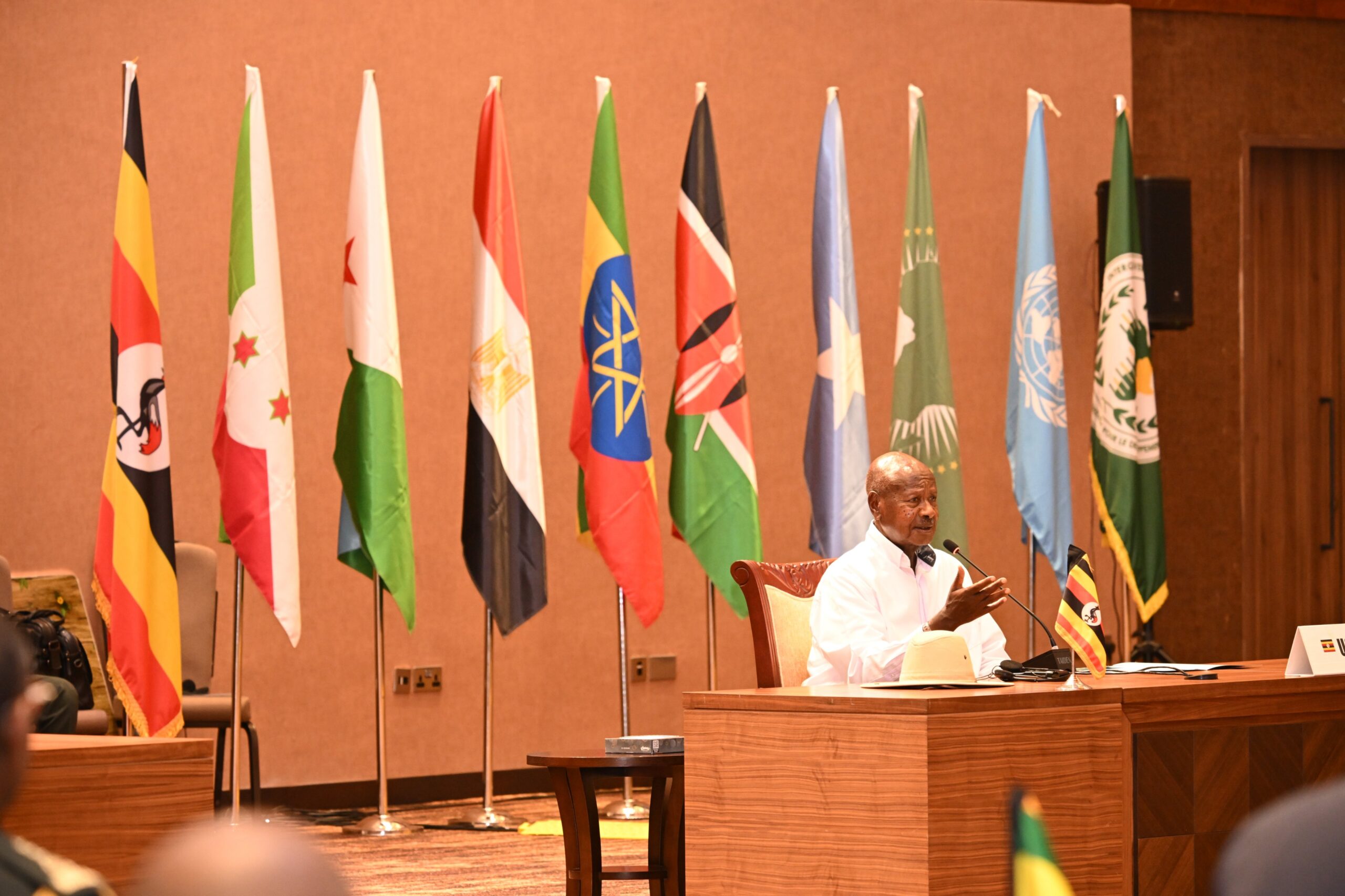
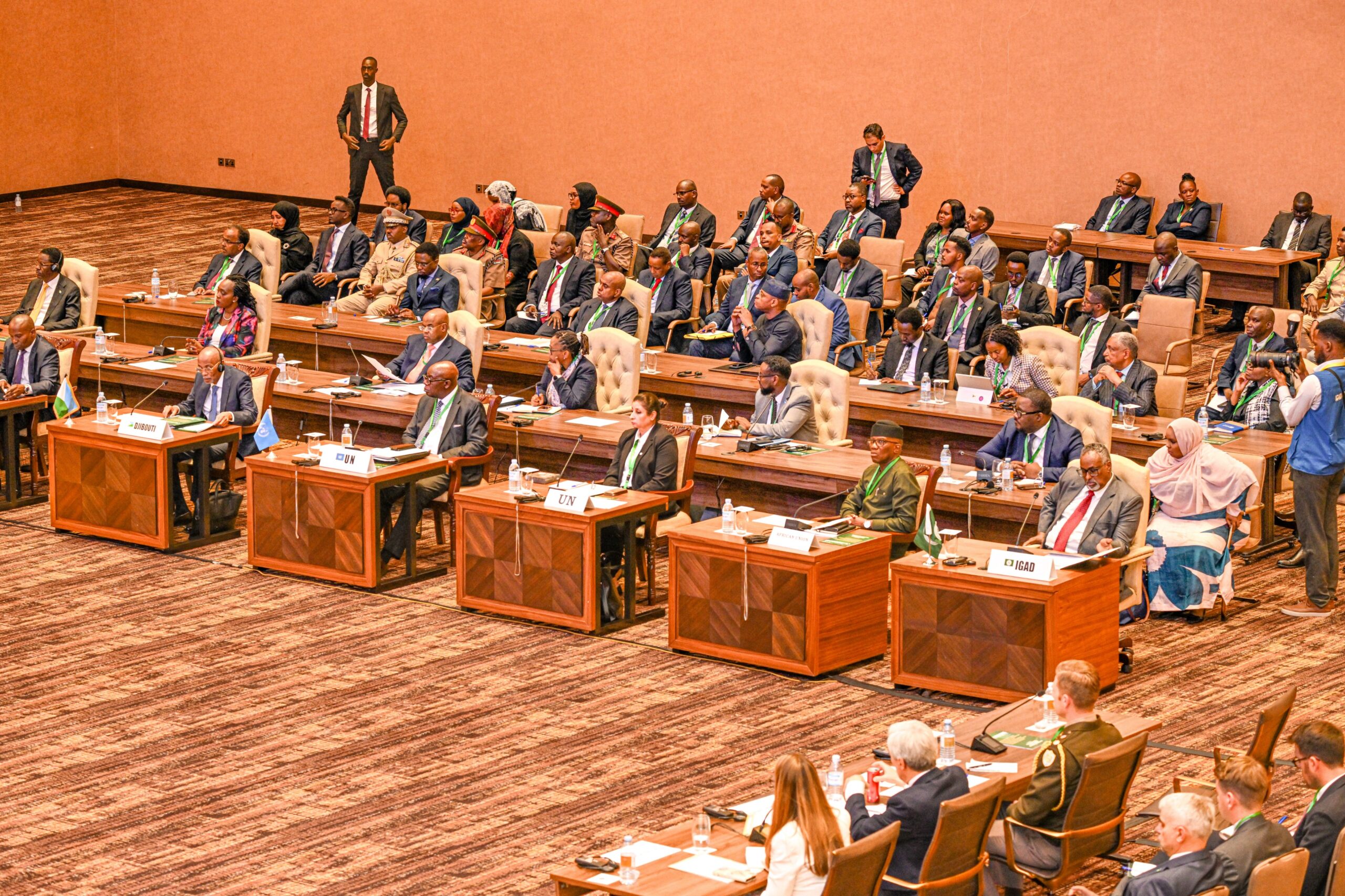
Extraordinary Summit of the AUSSOM TCCs, 31 July 2026, Kampala, Uganda (Source: @StateHouseUg)
Against this background, the Kampala Summit, in a clear indication that the TCCs have taken over decision-making on AUSSOM from the AU, mandated the foreign ministers of the TCCs, in coordination with the AU and the FGS, to form a Joint Task Force and engage in diplomatic outreach for predictable and sustainable financing. This includes the organisation of a donors’/partners’ conference intended to mobilise financial and political commitment.
On the option of a donors’ conference, it is to be recalled that an earlier effort for convening a donors’ conference failed to materialise. In its place, a High-Level Financing Event held in September 2025 on the sidelines of the UN General Assembly, which mobilised about USD 44 million, was not anything close to what the Mission required. TCCs have thus been forced to subsidise the AU mission. Efforts to mobilise substantial resources from non-traditional partners have repeatedly produced little.
There is little reason to assume, however, that another round of fundraising will fundamentally change the situation. International partners’ priorities have shifted. The political consensus that existed when the AU mission was first established two decades ago has also weakened considerably.
The feasibility of the 18-to-24-month transition period proposed by the TCCs would depend on obtaining precisely the financing and logistical support that are now least certain. This is the reality that the AU, the TCCs and Somalia increasingly need to confront. The central question is no longer simply how to preserve AUSSOM for two or three years. It is how to prevent the Mission’s financial and logistical crisis from producing a disorderly collapse with serious consequences for all the sacrifices paid with the lives and limbs of thousands of AU troops and investments made for stabilising Somalia.
It is very unlikely that an 18-to-24-month transition would secure the necessary financing and logistical support. The priority should then be to design an orderly transition—potentially within six to twelve months—during which AUSSOM would wind down and a new arrangement (such as bilateral deployment) for providing security support for Somalia would be put in place.
For AUSSOM, the lack of funding for troops nor the imminent end of UN logistics support did not come in a vacuum. In part, it is attributable to the politics of transition in Somalia that has stalled the progress towards the transfer of security responsibility to Somali forces.
Relations between the Federal Government and the Federal Member States have deteriorated sharply. Jubaland and Puntland have formally suspended cooperation with the Federal Government. Disagreements over constitutional amendments and the electoral process have further strained relations among Somali political actors. In June, these tensions reached a dangerous point when clashes erupted in Mogadishu between federal government forces and opposition-aligned forces (see here).
Since the first TCCs extraordinary summit of April 2025 held in Kampala, there has been a call for putting in place a process for addressing the political dimension of the transition in Somalia.
IGAD Deputy Executive Secretary Mohamed Abdi Ware captured the problem well in his remarks to the ministerial meeting preceding the Kampala Summit: ‘We must insist that Somalia assume responsibility for their sovereign territory in the shortest possible time.’ He also requested the TCCs Summit to secure an ‘iron-clad commitment’ from the Somali Government to pursue a political settlement. At the meeting of Chiefs of Defence Forces of TCCs on 29 July, Uganda reportedly called for Somalia to produce a roadmap for inclusive political dialogue. Somalia and Djibouti sought to defer discussion of the issue to the Summit level.
As in the first extraordinary summit of TCCs in April 2025, the aspect of the summit proposal on the political crisis in Somalia faced firm rejection from Somalia.
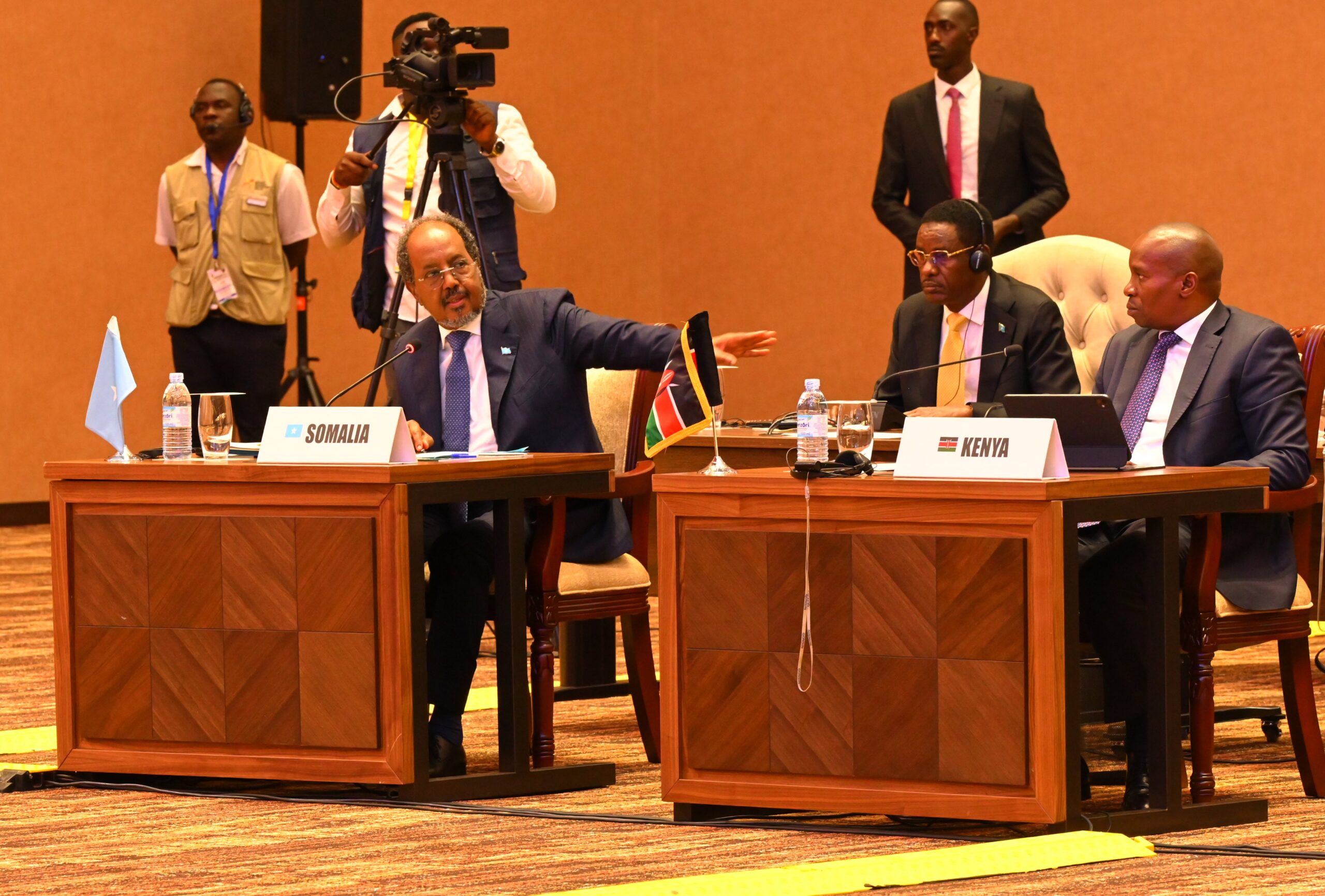
At the Summit, President Hassan Sheikh Mohamud, as he did in 2025, strongly and repeatedly objected to the inclusion of political matters in the communiqué, maintaining that Somali political questions are a sovereign matter that should be handled by Somalis themselves and that the Summit should remain focused on security and AUSSOM. The relevant provision was subsequently removed. As in 2025, the opportunity for mutual accountability and for a shared commitment was lost.
The problem with this is that it would be difficult for TCCs and the AU to convince the US or other partners to continue to enable the funding of AUSSOM. The removal of that clause from the Kampala summit outcome robbed the TCCs of a much-needed bargaining tool in their outreach for mobilising logistics support for AUSSOM beyond December 2026.
Under these circumstances, there is a possibility that even the shorter transition period suggested above may not be attained. As argued in an earlier article, a plan for the worst-case scenario of withdrawal of AUSSOM by December 2026 should be considered. However, the AU and the Kampala summit did not produce a collective plan for such a scenario. Under the circumstances, TCCs have no option but to put in place their own respective individual contingency plan.