
Update on the Situation in Madagascar
Update on the Situation in Madagascar
Date | 9 March 2026
Tomorrow (10 March), the African Union (AU) Peace and Security Council (PSC) will convene its 1335th session to receive an update on the situation in Madagascar. Although the agenda was initially framed as ‘Coordinated AU–SADC Support for Madagascar,’ its focus has since shifted, with SADC indicating that there has been no substantive coordination initiated between the two sides.
The session will commence with an opening statement by the Chairperson of the PSC for the month of March, Mahlaba Ali Mamba, Permanent Representative of the Kingdom of Eswatini to the AU, followed by a statement from Bankole Adeoye, Commissioner for Political Affairs, Peace and Security (PAPS). Mohamed Idris Farah, Special Envoy to the Republic of Madagascar, and a representative of the Republic of South Africa, in its capacity as Chair of the Southern African Development Community (SADC) Organ on politics, Defence and Security Cooperation, are also expected to deliver statements.
Tomorrow’s session marks the fourth meeting of the PSC to consider the situation in Madagascar in the context of the political crisis the country has faced since anti-government protests began in late September 2025, culminating in the military seizure of power on 14 October 2025. The PSC convened two emergency sessions within 48 hours in October, at its 1305th and 1306th meetings, as three weeks of protests took a dramatic turn when members of the elite Army Personnel Administration Centre (CAPSAT) unit of the military expressed support for the protesters and eventually assumed power. During its 1306th session held on 15 October 2025, it is recalled that the PSC suspended Madagascar from participation in all AU activities until constitutional order is restored in the country.
The PSC last considered the Situation in Madagascar on 20 November 2025 at its 1313th meeting. In its communiqué, the Council underscored the urgent need for ‘continued vigilance and monitoring of the evolution of the situation in Madagascar’ and explicitly mandated the ‘undertaking of a Field Mission in early 2026 to gather first-hand information on the realities on the ground.’ During its 1306th session, the PSC demanded ‘a swift and full return to constitutional order through a civilian-led transitional government, and the organisation, as soon as possible, of free, fair, credible and transparent elections’ and directed ‘the AU Commission, in close cooperation with SADC, to provide the requisite support to Madagascar to ensure a swift return to constitutional order.’ It should also be recalled that at its 1305th meeting, the PSC called on the Government of Madagascar to urgently organise an all-inclusive political dialogue as the only viable path towards consensual and sustainable solutions to the socio-economic and political challenges currently facing the country; stressing on the reactivation of the implementation of the 2011 Roadmap for Ending the Crisis in Madagascar, enacted into Malagasy law under Act Number 2011-014 of 13 December 2011. The Council went further and urged for coordinated support towards the restoration of peace and stability in Madagascar under the auspices of the AU and SADC, among other decisions.
Tomorrow’s session is particularly important in light of the divergence between the PSC and SADC regarding the characterisation of the October 2025 military seizure of power and the response adopted. While the PSC, at its 1306th session, decided to suspend Madagascar on the grounds of unconstitutional change of government, SADC opted instead to dispatch a fact-finding mission. Subsequently, the Extraordinary Summit of the SADC Heads of State and Government, held in December 2025, directed the Transitional Government of Madagascar to submit a dialogue-readiness report and a draft National Roadmap by 28 February 2026. The Summit further approved, by March 2026, the deployment of the SADC Panel of Elders, led by former President Joyce Banda of Malawi, and called for coordination with the AU and broader international partners to avoid fragmentation of efforts. In late January 2026, the Panel of Elders commenced its mission in Antananarivo to facilitate an inclusive dialogue.
In this context, tomorrow’s session is timely, as it provides an opportunity to reinforce the imperative of coordination and complementarity between the AU and the regional bloc, SADC, to ensure coherent political messaging and the coordinated mobilisation of the necessary technical and financial support, including through Africa Facility to Support Inclusive Transitions (AFSIT), for a consensual, inclusive, and time-bound transition process towards the swift restoration of constitutional order. Such a process should be consistent with AU norms, including Article 25(4) of the African Charter on Democracy, Elections and Governance (ACDEG). The session is also in line with Paragraph 5 of the PSC’s 1313th Communiqué and Paragraph 13 of the SADC Communiqué adopted during its December 2025 extraordinary summit, which both stress the imperative of ‘enhanced coordination, harmonisation and complementarity’. In addition, it offers an opportunity to receive updates on the respective diplomatic measures undertaken by the AU and SADC in accompanying Madagascar towards the restoration of constitutional order, as well as to discuss emerging challenges and ways forward in coordinating efforts.
One of the updates from the SADC side in this regard could be the engagement undertaken on 20 January by the SADC Executive Secretary, Elias M. Magosi, with the leadership of Madagascar and Seychelles on regional priorities, peace and development. The Executive Secretary paid a courtesy call on General Maminirina Eli Razafitombo, Acting Minister of Foreign Affairs and substantive Minister of National Defence of Madagascar. The visit took place ahead of his formal meeting with Colonel Randrianirina. Discussions focused on the ongoing transitional governance process, the importance of an inclusive national dialogue, and efforts to stabilise essential services, including water and energy infrastructure. Madagascar also reaffirmed its decision to step aside from the SADC Chairmanship due to the ‘exceptional national context,’ while reiterating its commitment to the Community’s values and principles.
During his meeting with Randrianirina, the Executive Secretary was briefed on progress in constitutional reforms and preparations for future democratic elections. The President confirmed that the report requested by the SADC Extraordinary Heads of State and Government Summit in December 2025 would be submitted by the end of February 2026. He further emphasised that electoral reform remains a priority. While Parliament ‘currently functions as a unicameral legislature, institutional reforms will be informed by the outcomes of the inclusive national dialogue process.’
Meanwhile, the military authorities have been consolidating power and launching diplomatic engagements. Following the swearing in of the military leader, Colonel Michael Randrianirina, as Madagascar’s new president in October 2025, and the appointment of Herintsalama Rajaonarivelo as the country’s prime minister, the commander of the CAPSAT unit pledged elections in 18 to 24 months after his swearing in. Since ‘assuming office,’ Randrianirina has embarked on a series of high-level diplomatic visits. His recent visit to France came directly on the heels of a visit to Moscow, where he secured military equipment and the dispatch of Russian instructors to train Malagasy forces, including in drone warfare. Despite the optics, Randrianirina has been quick to downplay any geopolitical friction. Before departing for Paris, he emphasised that his engagements with Russia and France are entirely independent of one another, framing them as part of a results-oriented foreign policy designed to secure tangible benefits for his citizens.
The two nations committed to a ‘renewed, balanced and forward-looking partnership anchored by a two-year roadmap that aligns with Madagascar’s transition timeline and focuses on several key areas: strengthening diplomatic channels and mutual respect through enhanced political relations, accelerating investment and infrastructure to support economic development, and continuing collaborative efforts to promote regional stability through security and defence cooperation. In this context, President Emmanuel Macron reinforced France’s support for a return to constitutional order, emphasising the importance of holding free and transparent elections within the established timeframe.
It is worth noting that Madagascar’s strategic position in the Indian Ocean and its vast reserves of nickel and cobalt have turned the island nation into a focal point for global powers. As China, India and Russia ramp up their local presence, maintaining influence has become a critical priority for French diplomacy. By adding Russia and France to a list of visits that already includes the UAE and South Africa, Antananarivo is signalling that it is no longer wedded to a single patron, but is instead seeking every available avenue for investment and support.
On the other hand, the ousted Malagasy President Andry Rajoelina met King Mswati III of Eswatini in February, a development that appeared to anger the Malagasy authorities. This prompted Madagascar’s military leader, Colonel Michael Randrianirina, to issue a statement expressing his ‘strongest condemnation’ of the visit, describing it as ‘politically unacceptable.’
The expected outcome of the session is a communiqué. The PSC is likely to emphasise the importance of ensuring enhanced coordination, harmonisation and complementarity of efforts between the AU, SADC, and the Indian Ocean Commission, as well as other relevant regional and international organisations, in order to facilitate a smooth political transition in Madagascar. The PSC is also likely to emphasise its previous decision on the need for continued vigilance and monitoring of the evolution of situation in Madagascar, and the need for undertaking a Field Mission, as soon as practicably possible, to gather first-hand information on the realities of the situation on ground, which is critically necessary in informing the next steps the Council may need to take in supporting the transition process. Council may also emphasise the need for the Government of Madagascar to holistically address the structural root causes of the multidimensional challenges facing the country, using a ‘whole of government- whole of society’ approach that brings on board all critical Malagasy stakeholders, including women and the youth. Finally, it may also encourage the Malagasy authorities to undertake trust and confidence-building measures to facilitate the conduct of the national dialogue in a conducive environment, to respect the timetable set transition with a view to returning to constitutional order and democratic governance; and to establish an inclusive, consensual and objective roadmap, with short and precise deadlines, relating to the transition and the return to constitutional order.

Update on the Situation in Madagascar
Update on the Situation in Madagascar
Date | 9 March 2026
Tomorrow (10 March), the African Union (AU) Peace and Security Council (PSC) will convene its 1335th session to receive an update on the situation in Madagascar. Although the agenda was initially framed as ‘Coordinated AU–SADC Support for Madagascar,’ its focus has since shifted, with SADC indicating that there has been no substantive coordination initiated between the two sides.
The session will commence with an opening statement by the Chairperson of the PSC for the month of March, Mahlaba Ali Mamba, Permanent Representative of the Kingdom of Eswatini to the AU, followed by a statement from Bankole Adeoye, Commissioner for Political Affairs, Peace and Security (PAPS). Mohamed Idris Farah, Special Envoy to the Republic of Madagascar, and a representative of the Republic of South Africa, in its capacity as Chair of the Southern African Development Community (SADC) Organ on politics, Defence and Security Cooperation, are also expected to deliver statements.
Tomorrow’s session marks the fourth meeting of the PSC to consider the situation in Madagascar in the context of the political crisis the country has faced since anti-government protests began in late September 2025, culminating in the military seizure of power on 14 October 2025. The PSC convened two emergency sessions within 48 hours in October, at its 1305th and 1306th meetings, as three weeks of protests took a dramatic turn when members of the elite Army Personnel Administration Centre (CAPSAT) unit of the military expressed support for the protesters and eventually assumed power. During its 1306th session held on 15 October 2025, it is recalled that the PSC suspended Madagascar from participation in all AU activities until constitutional order is restored in the country.
The PSC last considered the Situation in Madagascar on 20 November 2025 at its 1313th meeting. In its communiqué, the Council underscored the urgent need for ‘continued vigilance and monitoring of the evolution of the situation in Madagascar’ and explicitly mandated the ‘undertaking of a Field Mission in early 2026 to gather first-hand information on the realities on the ground.’ During its 1306th session, the PSC demanded ‘a swift and full return to constitutional order through a civilian-led transitional government, and the organisation, as soon as possible, of free, fair, credible and transparent elections’ and directed ‘the AU Commission, in close cooperation with SADC, to provide the requisite support to Madagascar to ensure a swift return to constitutional order.’ It should also be recalled that at its 1305th meeting, the PSC called on the Government of Madagascar to urgently organise an all-inclusive political dialogue as the only viable path towards consensual and sustainable solutions to the socio-economic and political challenges currently facing the country; stressing on the reactivation of the implementation of the 2011 Roadmap for Ending the Crisis in Madagascar, enacted into Malagasy law under Act Number 2011-014 of 13 December 2011. The Council went further and urged for coordinated support towards the restoration of peace and stability in Madagascar under the auspices of the AU and SADC, among other decisions.
Tomorrow’s session is particularly important in light of the divergence between the PSC and SADC regarding the characterisation of the October 2025 military seizure of power and the response adopted. While the PSC, at its 1306th session, decided to suspend Madagascar on the grounds of unconstitutional change of government, SADC opted instead to dispatch a fact-finding mission. Subsequently, the Extraordinary Summit of the SADC Heads of State and Government, held in December 2025, directed the Transitional Government of Madagascar to submit a dialogue-readiness report and a draft National Roadmap by 28 February 2026. The Summit further approved, by March 2026, the deployment of the SADC Panel of Elders, led by former President Joyce Banda of Malawi, and called for coordination with the AU and broader international partners to avoid fragmentation of efforts. In late January 2026, the Panel of Elders commenced its mission in Antananarivo to facilitate an inclusive dialogue.
In this context, tomorrow’s session is timely, as it provides an opportunity to reinforce the imperative of coordination and complementarity between the AU and the regional bloc, SADC, to ensure coherent political messaging and the coordinated mobilisation of the necessary technical and financial support, including through Africa Facility to Support Inclusive Transitions (AFSIT), for a consensual, inclusive, and time-bound transition process towards the swift restoration of constitutional order. Such a process should be consistent with AU norms, including Article 25(4) of the African Charter on Democracy, Elections and Governance (ACDEG). The session is also in line with Paragraph 5 of the PSC’s 1313th Communiqué and Paragraph 13 of the SADC Communiqué adopted during its December 2025 extraordinary summit, which both stress the imperative of ‘enhanced coordination, harmonisation and complementarity’. In addition, it offers an opportunity to receive updates on the respective diplomatic measures undertaken by the AU and SADC in accompanying Madagascar towards the restoration of constitutional order, as well as to discuss emerging challenges and ways forward in coordinating efforts.
One of the updates from the SADC side in this regard could be the engagement undertaken on 20 January by the SADC Executive Secretary, Elias M. Magosi, with the leadership of Madagascar and Seychelles on regional priorities, peace and development. The Executive Secretary paid a courtesy call on General Maminirina Eli Razafitombo, Acting Minister of Foreign Affairs and substantive Minister of National Defence of Madagascar. The visit took place ahead of his formal meeting with Colonel Randrianirina. Discussions focused on the ongoing transitional governance process, the importance of an inclusive national dialogue, and efforts to stabilise essential services, including water and energy infrastructure. Madagascar also reaffirmed its decision to step aside from the SADC Chairmanship due to the ‘exceptional national context,’ while reiterating its commitment to the Community’s values and principles.
During his meeting with Randrianirina, the Executive Secretary was briefed on progress in constitutional reforms and preparations for future democratic elections. The President confirmed that the report requested by the SADC Extraordinary Heads of State and Government Summit in December 2025 would be submitted by the end of February 2026. He further emphasised that electoral reform remains a priority. While Parliament ‘currently functions as a unicameral legislature, institutional reforms will be informed by the outcomes of the inclusive national dialogue process.’
Meanwhile, the military authorities have been consolidating power and launching diplomatic engagements. Following the swearing in of the military leader, Colonel Michael Randrianirina, as Madagascar’s new president in October 2025, and the appointment of Herintsalama Rajaonarivelo as the country’s prime minister, the commander of the CAPSAT unit pledged elections in 18 to 24 months after his swearing in. Since ‘assuming office,’ Randrianirina has embarked on a series of high-level diplomatic visits. His recent visit to France came directly on the heels of a visit to Moscow, where he secured military equipment and the dispatch of Russian instructors to train Malagasy forces, including in drone warfare. Despite the optics, Randrianirina has been quick to downplay any geopolitical friction. Before departing for Paris, he emphasised that his engagements with Russia and France are entirely independent of one another, framing them as part of a results-oriented foreign policy designed to secure tangible benefits for his citizens.
The two nations committed to a ‘renewed, balanced and forward-looking partnership anchored by a two-year roadmap that aligns with Madagascar’s transition timeline and focuses on several key areas: strengthening diplomatic channels and mutual respect through enhanced political relations, accelerating investment and infrastructure to support economic development, and continuing collaborative efforts to promote regional stability through security and defence cooperation. In this context, President Emmanuel Macron reinforced France’s support for a return to constitutional order, emphasising the importance of holding free and transparent elections within the established timeframe.
It is worth noting that Madagascar’s strategic position in the Indian Ocean and its vast reserves of nickel and cobalt have turned the island nation into a focal point for global powers. As China, India and Russia ramp up their local presence, maintaining influence has become a critical priority for French diplomacy. By adding Russia and France to a list of visits that already includes the UAE and South Africa, Antananarivo is signalling that it is no longer wedded to a single patron, but is instead seeking every available avenue for investment and support.
On the other hand, the ousted Malagasy President Andry Rajoelina met King Mswati III of Eswatini in February, a development that appeared to anger the Malagasy authorities. This prompted Madagascar’s military leader, Colonel Michael Randrianirina, to issue a statement expressing his ‘strongest condemnation’ of the visit, describing it as ‘politically unacceptable.’
The expected outcome of the session is a communiqué. The PSC is likely to emphasise the importance of ensuring enhanced coordination, harmonisation and complementarity of efforts between the AU, SADC, and the Indian Ocean Commission, as well as other relevant regional and international organisations, in order to facilitate a smooth political transition in Madagascar. The PSC is also likely to emphasise its previous decision on the need for continued vigilance and monitoring of the evolution of situation in Madagascar, and the need for undertaking a Field Mission, as soon as practicably possible, to gather first-hand information on the realities of the situation on ground, which is critically necessary in informing the next steps the Council may need to take in supporting the transition process. Council may also emphasise the need for the Government of Madagascar to holistically address the structural root causes of the multidimensional challenges facing the country, using a ‘whole of government- whole of society’ approach that brings on board all critical Malagasy stakeholders, including women and the youth. Finally, it may also encourage the Malagasy authorities to undertake trust and confidence-building measures to facilitate the conduct of the national dialogue in a conducive environment, to respect the timetable set transition with a view to returning to constitutional order and democratic governance; and to establish an inclusive, consensual and objective roadmap, with short and precise deadlines, relating to the transition and the return to constitutional order.
WOMEN, PEACE AND SECURITY: Women’s Leadership in Addressing Emerging Threats to Peace and Security: Artificial Intelligence and Technology-Facilitated Violence
WOMEN, PEACE AND SECURITY: Women’s Leadership in Addressing Emerging Threats to Peace and Security: Artificial Intelligence and Technology-Facilitated Violence
Date | 8 March 2026
Tomorrow (9 March), the African Union Peace and Security Council (PSC) will convene its 1334th open session on Women’s Leadership in Addressing Emerging Threats to Peace and Security: Artificial Intelligence and Technology-Facilitated Violence. The meeting will take place virtually and forms part of the Council’s continued engagement with the implementation of the Women, Peace and Security (WPS) agenda across Africa.
Following opening remarks by Almon Mahlaba Mamba, Permanent Representative of the Kingdom of Eswatini to the African Union and Chairperson of the PSC for March 2026, Bankole Adeoye, Commissioner for Political Affairs, Peace and Security, will deliver introductory remarks. Liberata Mulamula, Special Envoy of the Chairperson of the AU Commission on Women, Peace and Security (WPS), is also expected to make a presentation to the Council, followed by a statement from Justice Effie Ewuor, Co-Chair of FemWise-Africa, and a presentation by the Representative of UN Women. Additionally, statements are also expected from PSC Members, AU Member States, and Regional Economic Communities/Regional Mechanisms (RECs/RMs).
The 1334th session continues the PSC’s institutionalised engagement with the WPS agenda, formalised as a standing item at its 223rd meeting in March 2010. Since institutionalising the WPS agenda, the PSC has convened 28 dedicated sessions, with this 1334th meeting extending its thematic scope to women’s leadership against AI and technology-facilitated violence. While the Council has made evident progress through thematic expansions, encompassing women’s roles in preventing violent extremism, displacement/refugee protection, media accountability, economic integration, and WPS linkages to the African Continental Free Trade Area (AfCFTA), these advances remain ad hoc and inconsistent.
The session convenes amid a sharply deteriorating continental peace and security landscape, marked by protracted conflicts in Sudan, eastern DRC, the Sahel, and the Horn of Africa, where women’s leadership proves indispensable for tackling both AI-driven threats and technology-facilitated violence. Protracted conflicts in the Sahel, Great Lakes region, and Horn of Africa, exacerbated by Sudan’s war, renewed eastern DRC violence, and Somalia’s instability, continue fueling mass displacement, humanitarian crises, and civilian atrocities. Women and girls suffer disproportionately, facing conflict-related sexual violence (CRSV), early/forced marriage, economic exclusion, and barriers to peace processes. In many contexts, sexual violence serves as a deliberate war tactic, while shrinking civic space stifles activism; now, AI-amplified disinformation, cyber-harassment, and online gender-based violence compound these risks, demanding women-led strategies for digital resilience and accountability.
This backdrop renders tomorrow’s PSC session pivotal, as the rapid proliferation of digital technologies and AI is reshaping political communication, conflict dynamics, and social interactions across Africa. Artificial intelligence and emerging digital technologies are also expected to become a major driver of economic transformation on the continent, with projections indicating that they could add around $1.5 trillion to Africa’s GDP by 2030. While offering avenues for economic growth, innovation, and governance gains, including the emergence of women-led digital peacebuilding tools, these technological advancements are also generating new risks. In particular, they have enabled forms of technology-facilitated violence that disproportionately target women in public life, including peacebuilders, journalists, activists, and leaders.
Tomorrow’s session offers an opportunity for the PSC to rigorously assess how AI-driven threats and digital technology violence are intensifying conflict-related sexual violence (CRSV), eroding civic space, and systematically targeting women peacebuilders, journalists, activists, and leaders amid governance erosion and escalating crises on the continent. A 2024 UNU-Interpeace report on sub-Saharan Africa reveals AI-generated deep fakes and botnets fueling ethnic polarization and undermining peacekeeping efforts in the DRC, while a 2025 study across 11 countries documents devastating cases: Ethiopia’s Mayor endured deep fake pornography viewed 562,000 times (90% believed it is real), and Cameroon’s Brenda Biya faced coordinated harassment reaching 8.9 million via 92 identical posts evading moderation through ‘spamouflage.’ Binding Hook’s 2026 analysis escalates the urgency, showing generative AI’s low-cost scalability in gendered disinformation, exemplified by election deep fakes targeting women politicians in Ghana, Namibia, and Kenya that inflict reputational harm, psychological trauma, and civic exclusion by exploiting patriarchal norms. These platform-amplified attacks, where outrage boosts engagement 15-20%. In highlighting these challenges, the PSC may explore the gaps that exist in the legal and policy instruments, including the AU Continental Results Framework (CRF), such as missing tech-threat indicators and the need for digital impact assessments in PSOs and WPS-tech reports, and harmonised monitoring to safeguard women’s roles in peace processes.
Beyond the digital information environment, the Council may consider how AI-enabled technologies are also reshaping the conduct of warfare itself. Emerging battlefield technologies also highlight the growing intersection between AI and the changing nature of warfare on the continent. Recent analysis, including Amani Africa’s annual review on emerging weapons trends, points to the rapid proliferation of drones as a new ‘weapon of choice’ in several African conflicts. In contexts such as Sudan, their use has had devastating consequences for civilians, particularly in urban areas, with women and girls often bearing disproportionate impacts through civilian deaths, injury, displacement, loss of livelihoods, and heightened insecurity. These developments underscore the urgent need for stronger regulatory and accountability mechanisms governing AI-enabled and algorithm-assisted weapons systems to prevent further civilian harm and deepening gendered vulnerabilities in conflict settings.
The AU has forged a robust normative architecture to tackle AI-driven threats within the WPS agenda. Key instruments include the African Union Digital Transformation Strategy (2020–2030), which promotes inclusive digital ecosystems but lacks WPS-specific mandates; the African Union Convention on Cyber Security and Personal Data Protection (Malabo Convention), establishing data safeguards yet ratified by only 16 states as of 2026; and the PSC’s recent call for a continental AI-governance-peace advisory mechanism. Complementing these, WPS pillars draw strength from the Maputo Protocol (2003) and the landmark AU Convention on Ending Violence Against Women and Girls (2025), which explicitly criminalises ‘cyber violence’, encompassing deep fakes, doxing, and algorithmic harassment, while the Continental Results Framework (CRF) drives gender-disaggregated monitoring. Yet weak domestication, chronic underfunding, and missing tech-threat indicators hobble enforcement.
Against this backdrop, tomorrow’s 1334th session may be used by the PSC to strategically operationalise these frameworks amid AI’s profound disruption of conflict dynamics, governance, and gender equality. The PSC may probe tech-WPS intersections, such as disinformation undermining women mediators in Sudan/DRC, and champion targeted measures: embedding cyber violence indicators in CRF/NAPs; accelerating Malabo ratifications; empowering the AI advisory mechanism with women leaders; and mandating gender audits of peace operations’ digital protocols. This decisive pivot could convert aspirations into accountable action, fortifying women’s leadership in tech-resilient peace architectures.
The Council may also consider how to strengthen coherence between national and continental frameworks by encouraging the alignment of the growing number of National Action Plans (NAPs) on Women, Peace and Security, now adopted by more than 37 AU Member States, with emerging digital threat assessments and technology governance initiatives. Integrating considerations such as AI-driven risks, cyber harassment, and technology-enabled gender-based violence into these NAPs could support more comprehensive prevention strategies while enabling Member States and Regional Economic Communities/Regional Mechanisms to better anticipate the intersection between technological change and existing conflict drivers. In this context, the PSC may further emphasise the importance of promoting women’s participation in digital governance and technology policy spaces. As artificial intelligence and other emerging technologies increasingly shape governance and security systems, ensuring that women contribute to policy design and decision-making processes will be essential for preventing technological innovation from reinforcing existing gender inequalities and for advancing more inclusive, gender-responsive peacebuilding approaches.
The session also offers the PSC a critical opportunity to assess progress in women-led innovations addressing emerging AI-driven security risks, including AI-enabled early-warning systems and gender-responsive digital mediation platforms. While African women demonstrate strong potential in the technology ecosystem, accounting for 47% of STEM graduates globally, the highest share worldwide, their participation sharply declines in the technology workforce, where they constitute only 23–30% of professionals in the tech sector. Moreover, structural barriers continue to limit access to the digital ecosystem: only about 31–32% of women in Africa use the internet compared to 42–43% of men, significantly constraining women’s ability to develop digital and AI-related skills and to contribute to technological governance and innovation.
It is therefore expected that the Council may use the session to evaluate how initiatives such as women-focused AI training and entrepreneurship programmes, such as those supporting over 100 African women entrepreneurs trained in data science, machine learning, and AI innovation through UNESCO-supported initiatives, can be scaled to strengthen women’s leadership in digital peacebuilding. At the same time, the PSC could address persistent structural barriers, including women’s underrepresentation in technology policy spaces and limited access to investment for women-led tech ventures. Building on AU’s gender-parity commitments, the Council may prioritise targeted capacity-building in cybersecurity, AI governance, and digital peacebuilding, while encouraging Regional Economic Communities/Regional Mechanisms (RECs/RMs) to deploy women experts and establish women-led digital security task forces capable of developing scalable, Africa-rooted responses to AI-enabled threats.
Beyond the rapidly expanding digital domain, the session may also situate AI- and technology-facilitated violence within the broader spectrum of structural and emerging threats affecting women and girls across Africa. These include climate-related insecurity, violent extremism, protracted displacement, and deepening economic marginalisation, issues highlighted during the 2025 Cotonou Meeting on Women, Peace and Security as key drivers of gendered insecurity on the continent. Economic governance frameworks may also feature in this discussion, particularly where digital transformation intersects with gender inequality. For instance, while continental initiatives such as the AfCFTA Digital Trade Protocol aim to expand digital markets and cross-border trade, their largely gender-neutral design risks overlooking structural constraints that continue to limit women-owned MSMEs, including restricted access to finance, high transaction costs, and persistent digital connectivity gaps. In this regard, the session may provide an opportunity for the PSC to deliberate on how gender-responsive approaches can be more systematically mainstreamed across the tools of the AU peace and security architecture, including early warning mechanisms and regular Council briefings, while ensuring that responses to emerging technological threats are linked to broader socio-economic and governance reforms.
The expected outcome of tomorrow’s session is a communiqué. The Council may call for stronger measures to address the growing risks posed by artificial intelligence and technology-facilitated violence within the framework of the Women, Peace and Security agenda. In this regard, the PSC may urge Member States to integrate digital threats, including AI-driven disinformation, deep fakes, and online gender-based violence, into National Action Plans on WPS and to align these frameworks with continental instruments and emerging technology governance initiatives. The Council may also encourage accelerated ratification and domestication of the African Union Convention on Cyber Security and Personal Data Protection and call for the inclusion of indicators on technology-facilitated violence within the African Union Continental Results Framework on Women, Peace and Security to strengthen monitoring and accountability. The PSC may further underscore the importance of promoting women’s leadership in digital governance and AI policy processes, including through the expansion of women-led innovation and mediation networks such as FemWise-Africa, while encouraging Member States, Regional Economic Communities/Regional Mechanisms and the African Union Commission to invest in digital literacy, cybersecurity capacity-building and women-led technological solutions for early warning, conflict prevention and peacebuilding.
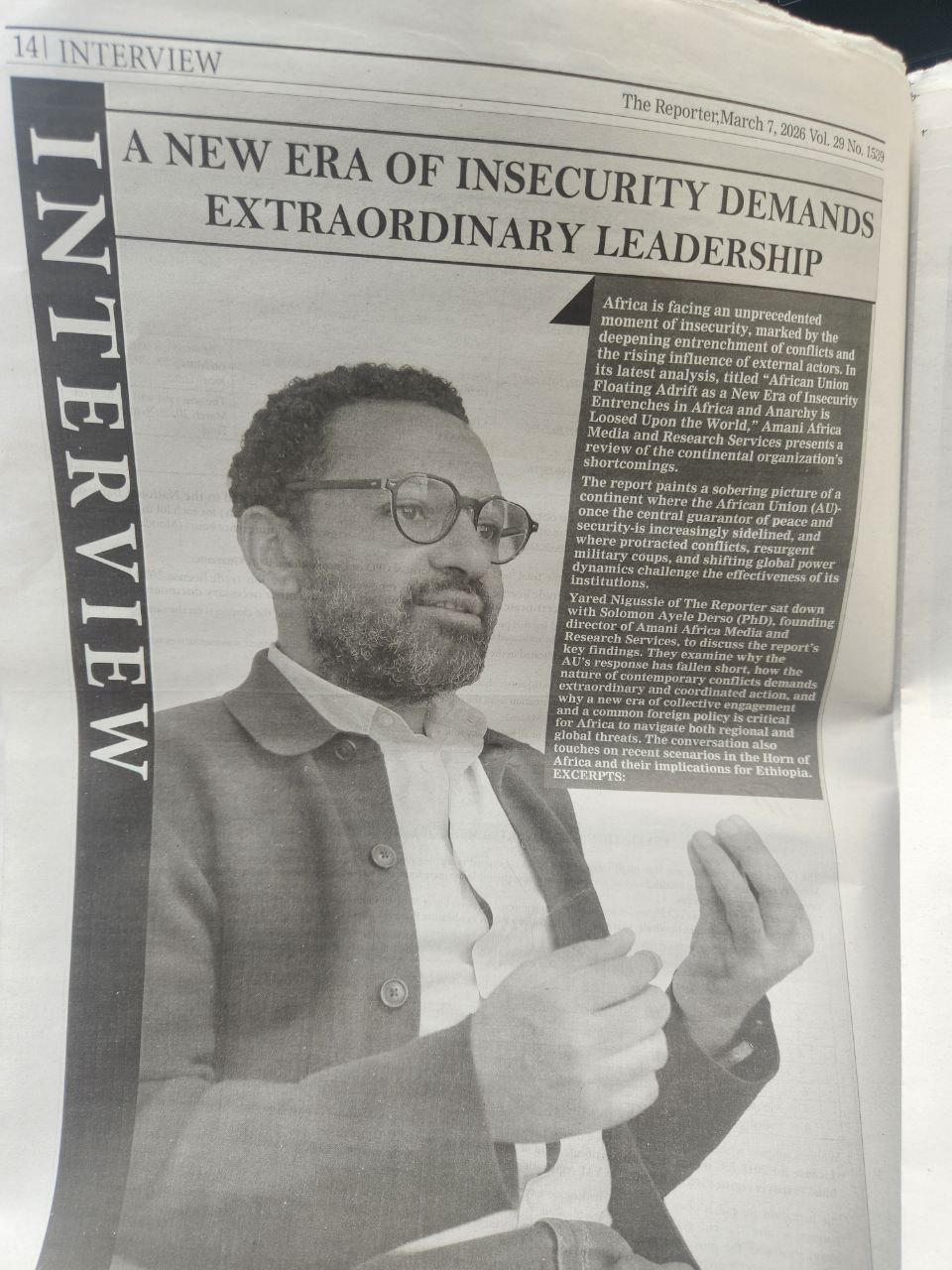
Recent developments and current state of the Inter-Governmental Negotiation (IGN) of the General Assembly
Recent developments and current state of the Inter-Governmental Negotiation (IGN) of the General Assembly
Date | 5 March 2026
Ambassador Tareq AlBanai,
Permanent Representative of the State of Kuwait to the United Nations in New York
Co-Chair of the IGN
The question before us is not new. For decades, Member States have recognized that the composition of the Security Council no longer fully reflects contemporary geopolitical realities or the expectations of the wider membership. Yet what has changed in recent years—and particularly during the current phase of the Intergovernmental Negotiations—is the emergence of more structured and concrete approaches to reform.
A particularly important turning point occurred during the 77th Session of the General Assembly, when the IGN process—under the co-chairmanship of Kuwait and Austria—introduced, for the first time, a structured discussion of reform models. This development marked a significant evolution in the process. For many years, the debate had largely remained at the level of principles: discussions about representation, legitimacy, and effectiveness. While these principles remain vital, the introduction of models shifted the conversation from the conceptual to the concrete.
This transformation has allowed Member States to engage with reform in a far more substantive manner. Instead of speaking in generalities, delegations have increasingly begun to articulate specific institutional designs and operational arrangements for a reformed Council. As a result, positions have become clearer, and the debate has gained the level of precision that any meaningful negotiation requires.
Across the IGN, we now have a set of concrete proposals on the table—from the G4, L.69, CARICOM, the Uniting for Consensus group, Liechtenstein and Mexico—that differ along clear fault lines. One is composition: some models call for expanding both permanent and non-permanent membership, while others reject new permanent seats and instead support the expansion of elected seats only, including longer-term, renewable seats to improve continuity. Another is the question of the veto: approaches range from extending the prerogatives of the P5 to any new permanent members, to non-extension and various forms of veto restraint and transparency, including stronger accountability and transparency around veto use.
These proposals collectively represent an important step forward. They demonstrate that Member States are increasingly willing to engage in structured thinking about the architecture of a reformed Council. At the same time, we look forward to the long-anticipated African model, which I was pleased to hear was endorsed by the C-10 Heads of State and Government last month.
The model will be a critical contribution to the ongoing discussion, given Africa’s longstanding and legitimate call for enhanced representation within the Security Council. In parallel, the broader political momentum for reform has also been reinforced by the Pact for the Future, which explicitly mandates the Co-Chairs of the Intergovernmental Negotiations to work toward the development of a consolidated model. This mandate reflects a growing recognition among Member States that the process must gradually move from the presentation of multiple proposals toward identifying areas of convergence.
However, we must also acknowledge the reality of the negotiations as they stand today. At this stage, we are not yet in a position where the wider membership can rally behind a single model. The fundamental division between those advocating for an expansion of the permanent category and those favoring an expansion limited to non-permanent seats remains deeply entrenched.
This polarization has been one of the central obstacles to progress in the reform debate. It is precisely within this context that the idea of fixed regional seats has emerged as a possible bridge between these two positions. The concept is relatively straightforward but potentially transformative. Under this approach, the Security Council would be expanded by approximately six to seven additional seats, allocated on a regional basis. These seats would be fixed to specific regions, ensuring that the major regional groupings of the United Nations receive more equitable representation within the Council. Importantly, these seats would not be permanently assigned to specific states. Instead, they would be elected through the General Assembly, ensuring that the selection process remains democratic and consistent with the broader membership’s role in shaping the Council. States occupying these seats would serve longer, renewable terms, and could be reelected up to two additional times. This structure would provide greater continuity and institutional memory within the Council while still preserving accountability to the wider membership.
In terms of privileges, these seats would carry the same prerogatives of the P5, including the veto. While this aspect of the proposal may generate debate, its purpose is to address the structural imbalance between different categories of membership while avoiding the creation of new permanently entrenched seats.
In many ways, this approach seeks to bring the Council closer to the principle of sovereign equality of states, which remains a foundational principle of the United Nations. While no reform model can perfectly realize this principle, fixed regional seats offer perhaps the closest approximation within the institutional framework of the Council.
To ensure both effectiveness and accountability, the model would also include a review clause, allowing Member States to periodically assess how the new structure is functioning and whether adjustments may be deemed necessary.
Finally, careful attention must be paid to the overall size of the Council. Any expansion should avoid creating a body that becomes too large to operate effectively. For this reason, this proposal envisions a Council of no more than approximately 22 members, balancing the need for broader representation with the imperative of maintaining operational efficiency.
In closing, the reform of the Security Council remains one of the most complex negotiations within the United Nations. Yet the developments we have witnessed in recent sessions—particularly the move toward structured models—suggest that the conversation is gradually entering a more mature and constructive phase. However, if we are to translate this momentum into real progress, we will need greater flexibility and a stronger willingness to explore bridging options. Too often, entrenched positions—held as absolutes rather than starting points for negotiation—have kept us locked in familiar debates instead of moving us toward workable compromise.
Our collective task now is to build on this momentum, identify areas of convergence, and continue working toward a reform that strengthens both the legitimacy and the effectiveness of the Security Council.