

The African Union’s Crisis of Consistency: A Test of Principled Leadership
The African Union’s Crisis of Consistency: A Test of Principled Leadership
Date | 4 March 2026
Dr Wafula Okumu, Executive Director, The Borders Institute
The recent military escalation in the Middle East, initiated by a joint US-Israeli strike on Iran and followed by Tehran’s regional retaliation, has presented the international community with a profound crisis. For the African Union (AU), however, this is more than a distant geopolitical tremor. First, as an instance of what the Solemn Declaration on the Common African and Defence Security Policy (CADSP) calls ‘international conflicts and crises with adverse effects on African regional security’, this constitutes what the Policy calls common external threats. Second, it is a direct and uncomfortable test of AU’s identity as a principled actor committed to speaking in defence of the UN Charter on the world stage. The AU’s bifurcated response through the statement from the Chairperson of the AU Commission—a vaguely worded initial statement on the invasion followed by a sharp condemnation of Iran’s reaction—has ignited a difficult but necessary debate: is the Union a consistent defender of international law, or is it succumbing to the very practice of ‘selective Charterism’ it has long criticized in others?
At stake is the AU’s most significant asset: its normative power. The Union’s mandate, enshrined in its Constitutive Act, is not merely to observe global events but to actively ‘promote peace, security, and stability on the continent’, ‘defend African common positions on issues of interest,’ and ‘establish necessary conditions which enable the continent to play its rightful role’ in global affairs. Global instability, whether in Eastern Europe or the Middle East, directly impacts African economies, maritime security, and food systems. These are conditions explicitly identified as ‘external threats’ by the CADSP. Silence is not a viable option. The question, therefore, is not whether the AU should speak, but whether it speaks with the disciplined legal consistency that its own history, recent experience, and principles demand.
An unsettling silence on the primary breach
The joint US-Israeli invasion of Iran, which reportedly included the assassination of its Supreme Leader, represents a grave challenge to the post-1945 international order. The foundational pillar of this order is Article 2(4) of the United Nations Charter, which unequivocally prohibits the threat or use of force against the territorial integrity or political independence of any state. This prohibition is the bedrock of peaceful coexistence.
The only clear exception to this rule, absent a UN Security Council authorisation, is the inherent right to self-defence under Article 51. However, this right is not a license for discretionary warfare. The threshold for its invocation, particularly in an anticipatory sense, is exceptionally high, requiring a demonstrably imminent armed attack. As Professor Marc Weller, Director of Chatham House’s International Law Programme, has affirmed, the doctrine of self-defence does not permit a ‘preventative war’ launched to neutralise a potential, long-term threat. It is a measure of last resort, constrained by the principles of necessity and proportionality.
The justifications offered for the invasion have yet to meet this stringent legal standard. Vague assertions of an ‘existential threat’ or a desire to ‘obliterate’ Iran’s military potential fall short of the evidence required to legitimise such a profound breach of another state’s sovereignty. This is the critical context in which the AU’s first statement, issued on February 28, 2026, must be judged. The statement expressed ‘deep concern,’ called for ‘restraint and urgent de-escalation,’ and urged all parties to act ‘in accordance with international law and the United Nations Charter.’
While well-intentioned, this language was critically deficient. It failed to name the initial act as a violation of Article 2(4). It failed to question whether the high bar of Article 51 had been met. By adopting a posture of neutrality between an aggressor and a victim of that aggression, the AU’s statement inadvertently weakened the very legal norms it purported to uphold. It created a false equivalence, treating the violation of sovereignty and the subsequent reaction as morally and legally indistinct parts of an ‘escalation.’
A tale of two statements: The glaring inconsistency
The AU’s reticence was thrown into stark relief by its second statement, issued shortly after Iran launched retaliatory missile and drone attacks against the territories of several Gulf states. Here, the language was anything but vague. The statement held that the AU Commission Chairperson, Mahmoud Ali Youssouf, ‘strongly condemns’ Iran’s actions, defining them as a ‘clear violation of sovereignty and territorial integrity’ and expressing ‘full solidarity with the governments and peoples of the affected states.’
This is where the charge of unjustifiable legal inconsistency becomes undeniable. The AU correctly identified Iran’s retaliation as a violation of sovereignty. Yet it failed to apply the same legal standard to the precedent-setting invasion that provoked it. This selective application of principle is precisely what Africa has long decried when powerful global actors have used international law as an à la carte menu to justify their interests.
The contradiction is made more acute when contrasted with the AU’s own robust defence of sovereignty within Africa. Just weeks prior, at its annual summit, the AU fiercely condemned Israel’s recognition of Somaliland, reaffirming its ‘unwavering support for the Federal Republic of Somalia’s sovereignty and territorial integrity.’ This principled stand was a powerful reaffirmation of the AU’s core tenets. How, then, can the Union so resolutely defend Somalia’s sovereignty from a diplomatic action while remaining circumspect about the violation of Iran’s sovereignty through military force?
This dissonance strikes at the heart of the AU Constitutive Act. Article 4 is unambiguous in its commitment to principles such as ‘sovereign equality,’ ‘respect of borders,’ the ‘prohibition of the use of force or threat to use force among Member States,’ and ‘non-interference by any Member State in the internal affairs of another.’ While these principles apply to intra-African relations, the AU’s moral and political authority depends on championing them universally. When the Union fails to do so, it not only undermines its credibility abroad but also risks eroding the normative consensus that underpins peace and security in Africa.
Reclaiming normative authority
This critique is not a call for the AU to take sides in a complex geopolitical conflict. It is a call for the Union to side with the law. During the recent AU summit, the AU Assembly agreed to a proposal on the elaboration of a common foreign policy to help the continent manage with principled consistency the challenges from the changing global context (see here). The only way the AU can stand a chance of becoming an effective foreign policy actor on the global stage is if its actions are firmly grounded in the rules of international law and in a consistent defence of the UN Charter. A more credible and influential AU position would not have been pro-Iran or anti-West; it would have been unequivocally pro-rule-of-law. Such a stance would involve three clear steps:
- Explicitly reaffirm Article 2(4): The starting point for any statement must be the clear and unambiguous reaffirmation of the prohibition on the use of force as the cornerstone of international law.
- Scrutinise claims of self-defence: The AU should publicly and consistently insist that any claim to self-defence under Article 51 be rigorously scrutinised against the high standards of necessity, proportionality, and imminence.
- Condemn all violations consistently: The AU must apply the same legal and moral standard to all breaches of sovereignty, regardless of the actor. Condemning Iran’s retaliation is legitimate, but it is legally and morally incoherent without a prior, and equally strong, condemnation of the initial invasion.
Africa’s voice on the global stage matters now more than ever. As the world fragments and great power competition intensifies, the principles of sovereignty, territorial integrity, and the non-use of force are the primary shields for less powerful states. The AU has a historic opportunity and a profound responsibility to be the world’s leading champion of these norms. To do so, it must avoid the trap of political expediency and embrace the disciplined legal consistency that is the true source of its authority. The choice is not whether to speak, but whether to speak with a clear, principled, and unwavering voice.
The African Union’s Crisis of Consistency: A Test of Principled Leadership
The African Union’s Crisis of Consistency: A Test of Principled Leadership
Date | 4 March 2026
Dr Wafula Okumu, Executive Director, The Borders Institute
The recent military escalation in the Middle East, initiated by a joint US-Israeli strike on Iran and followed by Tehran’s regional retaliation, has presented the international community with a profound crisis. For the African Union (AU), however, this is more than a distant geopolitical tremor. First, as an instance of what the Solemn Declaration on the Common African and Defence Security Policy (CADSP) calls ‘international conflicts and crises with adverse effects on African regional security’, this constitutes what the Policy calls common external threats. Second, it is a direct and uncomfortable test of AU’s identity as a principled actor committed to speaking in defence of the UN Charter on the world stage. The AU’s bifurcated response through the statement from the Chairperson of the AU Commission—a vaguely worded initial statement on the invasion followed by a sharp condemnation of Iran’s reaction—has ignited a difficult but necessary debate: is the Union a consistent defender of international law, or is it succumbing to the very practice of ‘selective Charterism’ it has long criticized in others?
At stake is the AU’s most significant asset: its normative power. The Union’s mandate, enshrined in its Constitutive Act, is not merely to observe global events but to actively ‘promote peace, security, and stability on the continent’, ‘defend African common positions on issues of interest,’ and ‘establish necessary conditions which enable the continent to play its rightful role’ in global affairs. Global instability, whether in Eastern Europe or the Middle East, directly impacts African economies, maritime security, and food systems. These are conditions explicitly identified as ‘external threats’ by the CADSP. Silence is not a viable option. The question, therefore, is not whether the AU should speak, but whether it speaks with the disciplined legal consistency that its own history, recent experience, and principles demand.
An unsettling silence on the primary breach
The joint US-Israeli invasion of Iran, which reportedly included the assassination of its Supreme Leader, represents a grave challenge to the post-1945 international order. The foundational pillar of this order is Article 2(4) of the United Nations Charter, which unequivocally prohibits the threat or use of force against the territorial integrity or political independence of any state. This prohibition is the bedrock of peaceful coexistence.
The only clear exception to this rule, absent a UN Security Council authorisation, is the inherent right to self-defence under Article 51. However, this right is not a license for discretionary warfare. The threshold for its invocation, particularly in an anticipatory sense, is exceptionally high, requiring a demonstrably imminent armed attack. As Professor Marc Weller, Director of Chatham House’s International Law Programme, has affirmed, the doctrine of self-defence does not permit a ‘preventative war’ launched to neutralise a potential, long-term threat. It is a measure of last resort, constrained by the principles of necessity and proportionality.
The justifications offered for the invasion have yet to meet this stringent legal standard. Vague assertions of an ‘existential threat’ or a desire to ‘obliterate’ Iran’s military potential fall short of the evidence required to legitimise such a profound breach of another state’s sovereignty. This is the critical context in which the AU’s first statement, issued on February 28, 2026, must be judged. The statement expressed ‘deep concern,’ called for ‘restraint and urgent de-escalation,’ and urged all parties to act ‘in accordance with international law and the United Nations Charter.’
While well-intentioned, this language was critically deficient. It failed to name the initial act as a violation of Article 2(4). It failed to question whether the high bar of Article 51 had been met. By adopting a posture of neutrality between an aggressor and a victim of that aggression, the AU’s statement inadvertently weakened the very legal norms it purported to uphold. It created a false equivalence, treating the violation of sovereignty and the subsequent reaction as morally and legally indistinct parts of an ‘escalation.’
A tale of two statements: The glaring inconsistency
The AU’s reticence was thrown into stark relief by its second statement, issued shortly after Iran launched retaliatory missile and drone attacks against the territories of several Gulf states. Here, the language was anything but vague. The statement held that the AU Commission Chairperson, Mahmoud Ali Youssouf, ‘strongly condemns’ Iran’s actions, defining them as a ‘clear violation of sovereignty and territorial integrity’ and expressing ‘full solidarity with the governments and peoples of the affected states.’
This is where the charge of unjustifiable legal inconsistency becomes undeniable. The AU correctly identified Iran’s retaliation as a violation of sovereignty. Yet it failed to apply the same legal standard to the precedent-setting invasion that provoked it. This selective application of principle is precisely what Africa has long decried when powerful global actors have used international law as an à la carte menu to justify their interests.
The contradiction is made more acute when contrasted with the AU’s own robust defence of sovereignty within Africa. Just weeks prior, at its annual summit, the AU fiercely condemned Israel’s recognition of Somaliland, reaffirming its ‘unwavering support for the Federal Republic of Somalia’s sovereignty and territorial integrity.’ This principled stand was a powerful reaffirmation of the AU’s core tenets. How, then, can the Union so resolutely defend Somalia’s sovereignty from a diplomatic action while remaining circumspect about the violation of Iran’s sovereignty through military force?
This dissonance strikes at the heart of the AU Constitutive Act. Article 4 is unambiguous in its commitment to principles such as ‘sovereign equality,’ ‘respect of borders,’ the ‘prohibition of the use of force or threat to use force among Member States,’ and ‘non-interference by any Member State in the internal affairs of another.’ While these principles apply to intra-African relations, the AU’s moral and political authority depends on championing them universally. When the Union fails to do so, it not only undermines its credibility abroad but also risks eroding the normative consensus that underpins peace and security in Africa.
Reclaiming normative authority
This critique is not a call for the AU to take sides in a complex geopolitical conflict. It is a call for the Union to side with the law. During the recent AU summit, the AU Assembly agreed to a proposal on the elaboration of a common foreign policy to help the continent manage with principled consistency the challenges from the changing global context (see here). The only way the AU can stand a chance of becoming an effective foreign policy actor on the global stage is if its actions are firmly grounded in the rules of international law and in a consistent defence of the UN Charter. A more credible and influential AU position would not have been pro-Iran or anti-West; it would have been unequivocally pro-rule-of-law. Such a stance would involve three clear steps:
- Explicitly reaffirm Article 2(4): The starting point for any statement must be the clear and unambiguous reaffirmation of the prohibition on the use of force as the cornerstone of international law.
- Scrutinise claims of self-defence: The AU should publicly and consistently insist that any claim to self-defence under Article 51 be rigorously scrutinised against the high standards of necessity, proportionality, and imminence.
- Condemn all violations consistently: The AU must apply the same legal and moral standard to all breaches of sovereignty, regardless of the actor. Condemning Iran’s retaliation is legitimate, but it is legally and morally incoherent without a prior, and equally strong, condemnation of the initial invasion.
Africa’s voice on the global stage matters now more than ever. As the world fragments and great power competition intensifies, the principles of sovereignty, territorial integrity, and the non-use of force are the primary shields for less powerful states. The AU has a historic opportunity and a profound responsibility to be the world’s leading champion of these norms. To do so, it must avoid the trap of political expediency and embrace the disciplined legal consistency that is the true source of its authority. The choice is not whether to speak, but whether to speak with a clear, principled, and unwavering voice.
KEYNOTE ADDRESS BY H.E. AMBASSADOR BANKOLE ADEOYE
H.E. AMBASSADOR BANKOLE ADEOYE
COMMISSIONER FOR POLITICAL AFFAIRS, PEACE AND SECURITY
KEYNOTE ADDRESS ON THE UNITED NATIONS SECURITY COUNCIL REFORM: 'SUSTAINING THE MOMENTUM FOR THE UN SECURITY COUNCIL REFORM AMIDST A DYNAMIC GLOBAL GEOPOLITICAL CONTEXT'
In terms of timing, today’s discussions are both propitious and challenging! We have a United Nations Security Council (UNSC) that must save itself from paralysis in the face of complex conflicts. Hence, the compelling need to expedite action in ongoing negotiations to reform it.
In this, the role of ‘We the Peoples of the United Nations’, that is Non-State Actors and citizens of the world, would be crucial. I would therefore like to commend Amani Africa for creating this platform which enables us to cross-fertilize ideas as practitioners in government and non-governmental spaces.
As the UN Secretary-General has repeatedly warned, including during the 80th Session of the General Assembly, the reform of the Security Council is no longer optional; it is urgent. The global order is changing faster than our institutions are adapting. Africa has been at the forefront of this reform movement.
Africa remains the only region that has articulated a unified institutional framework for the Security Council reform. For decades, our continent has insisted on a more representative Council, as articulated in the African Common Position, The Ezulwini Consensus and the Sirte Declaration which unveiled Africa’s demand for fair representation which is at least two permanent seats and five non-permanent seats for African States in a reformed Security Council. Africa’s position has not changed. This is not a mere aspiration but a prescription for justice.
On the Continent our ongoing focus is driven by the following approaches:
- Right to development;
- Building of strong and capable States;
- Peace and reconciliation as basis for viable African society;
- Primacy of politics, including a greater role for Women and Youth in governance;
- Peace enforcement not mere peacekeeping; and
- SMART partnerships (Inclusive of African Regional Actors).
Against this background, we seek in our common African position to be a strong united, resilient and influential global player and partner. On the global scene we hope to work with partners to:
- Promote global identity and representation in rich diversity;
- Global shared values;
- Global platforms for experience and good practice sharing; and
- Global peace and development as shared public goods.
It is important to recall that at the UN Summit of the Future, African leaders campaigned successfully to include Africa’s issues as a top priority (See here). The resulting Pact explicitly frames reforming the Council as a task of justice.
This support must translate into text-based negotiations. Text must translate into amendment, and amendment must translate into ratification. The intergovernmental negotiations process cannot remain an annual ritual of repetition.
These are not yet breakthroughs but they are not stagnation either. The momentum must be seized and turned into progress.
How do we sustain the momentum when global politics are so polarized?
We must be honest about the nature of this process. The Security Council Reform is not stalled because the arguments are weak. It is stalled because power is entrenched. The Charter amendment requires ratification by the Permanent Members, giving each of them decisive influence over the outcome. Support for the reform would seem to exist in principle while remaining limited in practice. Intermediate proposals that exclude veto equality or permanent status, continue to circulate in diplomatic discussions. Such proposals risk institutionalizing a hierarchy in which Africa is permanently represented but never equal. This is incompatible with the Common African Position.
Critical Questions we must answer:
- Is the current and apparent consensus that reforms are necessary real?
- Are reforms a matter of justice/global peace enhancement or mere procedure in a political chess game.
- Are the reforms a matter of when, how and to what effect, or a ritual of inconsequential efforts.
- Are we moving on the track of negotiated reform in the context of sober peace time or drifting towards reform on the back of devastating war like happened after WW2?
- Are We the People’s taken along, differently from 1945?
Recommendations:
To keep the Security Council Reform at the top of the global agenda, we must pursue at least four lines of efforts:
- Reinvigorate the Intergovernmental Negotiations (IGN) process with the AU Model:
The IGN process has produced areas of convergence that can serve as a foundation for text-based negotiations. The African Model on the UNSC Reform, our unified proposal of 2 permanent (with equal rights) and 5 non-permanent seats for Africa, has been endorsed by all 55 AU Member States. It was formally tabled in the UNGA’s negotiations. The Pact itself calls for such a consolidated model to guide talks. As negotiations continue, let us reiterate the moral logic that without Africa’s inclusion, there can be no truly legitimate Council. Africa’s unity under C10 negotiating leadership, remains key in maintaining coherence, and this leadership must continue. Our think tanks and other non-state actors would need to align and support.
- Expand the coalition of support:
Africa cannot do this alone. We must sustain outreach to key partners and regional groups. Africa’s position is one among several competing reform frameworks including the G4 proposal, the Uniting for Consensus model, incremental expansion models, and intermediate membership proposals. These competing visions divide support among UN Member States and slow convergence. Africa must therefore focus not only on defending principles but on building a winning coalition. This should include intra and intercontinental platforms for advocacy and sharing ideas like the one AMANI provides.
Leadership of the African Union Committee of Ten (C-10) Heads of State and Government in negotiations must be supported based on the African common position which necessarily includes no discussion at this time of who the two Members would be. We will cross the bridge when we get there.
- Leverage UN informal mechanisms.
While negotiations continue, we need to also keep an eye on low hanging fruits especially addressing Security Council Working Methods through membership of the Accountability, Coherence and Transparency (ACT) Group of Friends. This should contribute to the nature and quality of anticipated and substantive reform.
- Emphasize urgency and fairness.
In all our messages, we must highlight that reform is not a luxury but a necessity. We will remind colleagues that peace operations now often rely on African troops and that sustainable security solutions increasingly come from African initiatives. If the Council fails to evolve, it risks losing credibility in Africa and beyond. As the UN’s High-Level Advisory Panel warned, without meaningful reform, the Security Council risks irrelevance. Consequentially, the very survival of multilateralism and global peace would be unpredictably and dangerously compromised.
Geopolitical volatility makes reform harder, but also more compelling. If the multilateral system does not evolve, fragmentation will be deepened. Parallel coalitions and alternative governance structures will proliferate. Reform, therefore, is not only about justice for Africa. It is about preserving the relevance of the United Nations itself and global peace. Inclusive and constructive dialogue with a sense of urgency, is the way to go.
Update on the Situation in Guinea-Bissau
Update on the Situation in Guinea-Bissau
Date | 4 March 2026
Tomorrow (5 March), the African Union (AU) Peace and Security Council (PSC) will convene a session to receive an update on the situation in Guinea-Bissau.
The session will commence with an opening statement by the Chairperson of the PSC for the month of March, Mahlaba Ali Mamba, Permanent Representative of the Kingdom of Eswatini to the AU, followed by a statement from Bankole Adeoye, Commissioner for Political Affairs, Peace and Security (PAPS). The representative of the Republic of Sierra Leone, in its capacity as Chair of the Economic Community of West African States (ECOWAS), may also deliver statements.
The PSC last considered Guinea-Bissau at its 1315th session on 28 November 2025, following the 26 November military seizure of power that interrupted the 23 November electoral process – a process that had been characterised as free, transparent and peaceful by election observation missions, including from AU and ECOWAS. At that session, the PSC determined that the military takeover constituted an unconstitutional change of government and suspended Guinea-Bissau from participation in all AU activities. Both the PSC and ECOWAS adopted an aligned position: restoration of constitutional order required the completion of the interrupted electoral process.
In the same vein, the extraordinary session of the ECOWAS Mediation and Security Council at the level of Heads of State and Government, held on 27 November 2025, called on the coup leaders to respect the will of the people and allow the National Electoral Commission to proceed without delay with the declaration of election results. Recognising the need for swift, high-level engagement, it mandated the Chair of the ECOWAS Authority to lead a high-level mediation mission to Guinea-Bissau to engage the military authorities.
Similarly, the PSC urged the military authorities to respect the popular will, finalise the tabulation and proclamation of results, and accompany the process through to the inauguration and assumption of office of the duly elected winner. It also decided to establish an AU Monitoring Mechanism on Guinea-Bissau and to convene a Summit-level PSC meeting on the resurgence of unconstitutional changes of government in Africa.
Tomorrow’s session provides an opportunity to assess steps taken towards restoring constitutional order and progress in implementing the PSC’s earlier decisions. ECOWAS is expected to brief on its diplomatic engagements with the transitional authorities of Guinea-Bissau in this regard. The session may also serve to explore a more coordinated approach between the PSC and ECOWAS in engaging the military authorities and securing a swift return to constitutional order. This includes ensuring compliance with Article 25(4) of the African Charter on Democracy, Elections and Governance (ACDEG), which prohibits perpetrators of unconstitutional changes of government from contesting subsequent elections, as well as adherence to the same commitment undertaken in the transitional charter.
Initially, both the PSC and ECOWAS were unequivocal that restoration of the constitutional order meant concluding the November elections rather than pursuing negotiations or interim arrangements for transition. These calls went unheeded. The military authorities consolidated their position, swearing in coup leader General Horta N’Tam as interim president for a one-year period and scheduling presidential and legislative elections for 6 December 2026. Although the transitional charter bars N’Tam and his prime minister from contesting, questions remain as to whether this commitment will be upheld, particularly in light of recent transitions elsewhere on the continent and the AU’s uneven application of Article 25(4) of ACDEG. In cases such as Gabon and Guinea, the PSC lifted suspensions following elections conducted in apparent contravention of this provision.
As noted in a recent analysis featured in Amani Africa’s Ideas Indaba, the ECOWAS and, by extension, the AU did not follow through on their earlier decisions. Despite the firm and appropriate initial response from both ECOWAS and the PSC, neither was able to follow through on their initial demand nor on the warning from ECOWAS that it reserved the right to use all options ‘including sanctions on all entities deemed culpable of disrupting the electoral and democratic process.’ Thus, when the ECOWAS Authority of Heads of State and Government met in mid-December 2025, ECOWAS changed its approach from seeking the conclusion of the electoral process and safeguarding the will of the people of Guinea-Bissau to a short transition that will culminate in another election. Thus, despite reiterating its earlier decision and noting that the elections held on 23 November were free and fair, ECOWAS called for ‘institution of a short transition to be led by an inclusive government that reflects the political spectrum and society in Guinea-Bissau, with a mandate to undertake constitutional, legal, and political reforms and the organisation of credible, transparent and inclusive elections.’ Meanwhile, ECOWAS rejected the one-year transition timetable announced by the military authorities, calling for a shorter timeframe.
At its ordinary session of 14 December 2025, ECOWAS further requested its Chair to undertake another high-level mission to Guinea-Bissau and directed the immediate dispatch of a delegation from the Committee of Chiefs of Defence Staff to engage the military authorities. While intensifying diplomatic engagement, ECOWAS also reiterated its readiness to impose targeted sanctions on individuals or groups obstructing a return to constitutional order through an inclusive process. It called for the immediate release of political detainees and for their full participation in the country’s political processes.
Relations between the military authorities and ECOWAS appeared to deteriorate in December. The authorities requested the immediate withdrawal of the ECOWAS Stabilisation Support Mission and reportedly cancelled a planned visit by the ECOWAS Committee of Chiefs of Defence Staff. In January 2026, however, the military authorities appeared to take steps aimed at easing tensions. In late January, they announced measures including the release of some political leaders and improvements in the detention conditions of former Prime Minister and PAIGC leader Domingos Simões Pereira, who had been arrested following the coup. They also indicated plans to form a more inclusive transitional government by allocating three ministerial portfolios to the PAIGC and three to the political group led by Fernando Dias Da Costa, a candidate in the November presidential election. In addition, ten representatives from the two groups would be appointed to the National Transitional Council, the transition’s legislative body. It should be noted, however, that opposition leaders reportedly declined participation. The authorities also withdrew their earlier request for the departure of the ECOWAS Stabilisation Support Mission in Guinea-Bissau.
In its communiqué of 31 January 2026, ECOWAS welcomed the measures announced by the transitional authorities and urged all stakeholders to work collaboratively in support of a peaceful and credible transition leading to democratic elections. It further called for the full and effective release of Domingos Simões Pereira and for guarantees of the fundamental rights and freedoms of all citizens.
It appears that both the AU and ECOWAS have stepped back from their earlier firm position that restoration of constitutional order required completion of the interrupted electoral process. As argued in the recent Ideas Indaba analysis, a range of options remained available to the continental and regional bodies. ECOWAS, for example, could have drawn on its experience in upholding the outcome of the December 2010 elections in Côte d’Ivoire, including through the use of sanctions. Measures aimed at increasing the cost to the coup leaders—such as leveraging the West African Economic and Monetary Union, as it did in the Côte d’Ivoire case—were within its reach. Additionally, both ECOWAS and the AU could have initiated a process towards giving recognition of the outcome of the election results, as they did both in respect to Côte d’Ivoire and The Gambia in 2011 and 2017, respectively. Such steps would have slammed shut any route for the military leaders in Guinea-Bissau to entrench their illegal usurpation of power. As a show of their seriousness about their zero tolerance for coups, ECOWAS and the AU could also have launched an investigation into the circumstances leading to the interruption of the electoral process and the attempt to frustrate the will of the people of Guinea-Bissau.
With the military authorities entrenching themselves in political power, and given that both the AU and ECOWAS failed to act swiftly in following up on their decisions, the issue before the Council at tomorrow’s session will be, first, securing a shorter transition timeframe in place of the proposed one-year period. The second will be to ensure that the military authorities do not contest the planned elections, in compliance with Article 25(4) of ACDEG. Third, reinforcing coordination between the AU and ECOWAS in order to exercise greater leverage on the military authorities and secure the country’s swift return to constitutional order.
The expected outcome of the session is a communiqué. The PSC may welcome recent measures taken by Guinea-Bissau’s transitional authorities, including the release of opposition political figures, while echoing ECOWAS’s call for the ‘full’ and ‘effective’ release of Domingos Simões Pereira. It may urge the adoption of a shorter transition period led by an inclusive government and emphasise the need for a swift return to constitutional order through credible elections. In this regard, the PSC may reiterate its earlier request for the AU Commission to provide the necessary support to Guinea-Bissau to facilitate a return to constitutional order, including through national dialogue, institutional as well as constitutional, legal and political reforms, and the organisation of credible, transparent and inclusive elections. It may also reaffirm the obligation to adhere to Article 25(4) of ACDEG, underscoring that the military authorities should not participate in the upcoming elections. Finally, the PSC may follow up on its previous decisions regarding the establishment of a monitoring mechanism on Guinea-Bissau and the convening of a Summit-level meeting dedicated to the resurgence of unconstitutional changes of government.
Provisional Programme of Work of the Peace and Security Council for March 2026
Provisional Programme of Work of the Peace and Security Council for March 2026
Date | March 2026
The Kingdom of Eswatini will assume the Chairship of the African Union (AU) Peace and Security Council (PSC) for the month of March. The Provisional Programme of Work (PPoW) for the month envisages five substantive sessions. Of these, three will address country-specific situations, while the remaining two will focus on thematic issues. All sessions are scheduled to be held at an ambassadorial level. In addition to the substantive meetings, the PPoW provides for a capacity-building programme for the Committee of Experts (CoE) and an induction session for the newly elected members of the PSC.
On 5 March, the PSC is expected to hold its first substantive session of the month on the situation in Guinea-Bissau. The PSC last met on Guinea-Bissau during its 1315th session on 28 November 2025, at which the Council characterised the 26 November military takeover as an unconstitutional change of government and suspended Guinea-Bissau from AU activities. It stressed that restoring constitutional order required completion of the electoral process—not negotiations or interim arrangements—and called on the military to step aside, finalise the November 2025 election results, and allow the declared winner to assume office. These demands were not heeded. Instead, the military consolidated power, swearing in coup leader General Horta N’Tam as interim president for a one-year transition and scheduling presidential and legislative elections for 6 December 2026. Although the transitional charter bars N’Tam and his prime minister from contesting, it remains uncertain whether the authorities will honour both the charter and Article 25(4) of the ACDEG, which prohibits coup leaders from running for office, particularly in light of recent transitions elsewhere on the continent. The PSC may wish to consider the prohibition in the Guinea Bissau transitional charter as an opportunity to express its continuing support for Article 25(4) of ACDEG which it failed to do in relation to Gabon and Guinea. It also offers a platform to review progress toward restoring constitutional order and to follow up on decisions adopted at the 1315th session, including the establishment of an AU Monitoring Mechanism on Guinea-Bissau and the convening of a PSC meeting at Heads of State and Government level on the resurgence of unconstitutional changes of government in Africa.
On 9 March, the PSC will convene its annual open session on women, peace and security (WPS) in Africa. This session is in line with its decision at the 223rd meeting in March 2010 to dedicate one open session each year to this agenda. In October last year, the Council similarly held a session on WPS, marking 25 years of Resolution 1325 and the 15th anniversary of the PSC’s decision to institutionalise the agenda. As with previous meetings, the upcoming session is expected to take stock of progress and challenges in advancing the agenda on the continent and explore the way forward, particularly in closing implementation gaps.
On 10 March, the PSC will deliberate on coordinated AU–Southern African Development Community (SADC) support for Madagascar. This provides an opportunity for following up previous decisions of the PSC. In its communiqué adopted at its 1313th meeting of 20 November 2025, the Council underscored the urgent need for ‘continued vigilance and monitoring of the evolution of the situation in Madagascar’ and explicitly mandated the ‘undertaking of a Field Mission in early 2026 to gather first-hand information on the realities on the ground.’ A March 2026 session would therefore provide the necessary deliberative platform to determine the next steps on this commitment and also enable Council to assess progress made by the Transitional Authorities in implementing the recommendations set out in the 1305th and 1306th PSC meetings of 13 and 15 October respectively and to evaluate compliance with the call for a consensual, inclusive and time-bound Transition Roadmap aimed at the swift restoration of constitutional order.
The upcoming session is particularly important in light of the divergence between the PSC and SADC regarding the characterisation of the October 2025 military seizure of power and the response adopted. While the PSC, at its 1306th session, decided to suspend Madagascar on the grounds of unconstitutional change of government, SADC opted instead to dispatch a fact-finding mission. Subsequently, the Extraordinary Summit of the SADC Heads of State and Government, held in December 2025, directed the Transitional Government of Madagascar to submit a dialogue-readiness report and a draft National Roadmap by 28 February 2026. The Summit further approved the deployment, by March 2026, of the SADC Panel of Elders, led by former President Joyce Banda of Malawi, and called for coordination with the AU and the broader international partners to avoid fragmentation of efforts. In late January 2026, the Panel of Elders commenced its mission in Antananarivo to facilitate an inclusive dialogue. In addition, it will serve as a platform to ensure coherent political messaging and coordinated mobilisation of the necessary technical and financial support for securing a consensual, inclusive and time-bound transition process towards the swift restoration of constitutional order that is consistent with AU norms including Article 25(4) of ACDEG.
On 12 March, the PSC will receive a briefing from the Five-Member Panel of Facilitators on the Peace Process in eastern Democratic Republic of the Congo (DRC) regarding their recent activities. The session takes place amid concerns over renewed escalation and risks to the fragile peace process following reports of drone strikes in February that killed the M23 military spokesperson and others in eastern DRC. This session also came following the announcement by the United States of the imposition of sanctions on Rwanda military leaders, including the chief of defense forces for breach of the Washington peace deal. The AU through its mediator the President of Togo convened the High-Level Meeting on the Coherence and Consolidation of the Peace Process in the DRC and the Great Lakes Region, convened in Lomé, Togo, in mid-January with the Panel of Facilitators. The Panel subsequently held separate consultations in late January with President Félix Tshisekedi of the DRC and President Paul Kagame of Rwanda, as well as with Uganda’s President Yoweri Museveni in early February. On the margins of the 39th AU Summit, the Commissioner for Political Affairs, Peace and Security, Bankole Adeoye held consultations with the Facilitators. It is to be recalled that at its 1323rd session in December 2025, the PSC requested the Facilitators to propose urgent measures to de-escalate the situation in eastern DRC and report to the AU Mediator, who in turn presented the proposals to the February Ordinary Session of the AU Assembly. In their forthcoming briefing helps to follow up on the PSC’s earlier decision and to get the views of the Facilitators on how their role is organized, how best they can contribute towards creating conditions for implementation of the peace agreements signed in Washington DC and Doha and the support mechanism required for their effective facilitation of their mandate.
On 17 March, the PSC is scheduled to receive a briefing from the AU Panel of the Wise on its activities. The Panel, an important pillar of the African Peace and Security Architecture for preventive diplomacy, last briefed the Council in March last year. Although such briefings were envisaged to take place quarterly, as agreed at the PSC’s 665th session in March 2017, they have in practice become annual engagements. At its previous briefing, during the PSC’s 1264th session, the Council directed the AU Commission to strengthen the provision of frequent early warning analysis to the Panel and to undertake joint scenario-building exercises with experts, including members of the African Network of Think Tanks for Peace (NeTT4Peace). In the forthcoming session, the Panel is expected to provide updates on its activities since the last briefing, including its missions to South Sudan and Madagascar, as well as a consultative roundtable with eminent religious and traditional leaders from the Sahel and West Africa. The meeting will also provide an opportunity to reflect on ways to enhance the Panel’s preventive role.
In addition to the substantive sessions, the PSC’s Committee of Experts (CoE) is scheduled to meet on 19 March to prepare the induction programme for the newly elected PSC members, which will take place later in the month (28-31 March) in Mbabane, Eswatini. A capacity-building session for the CoE is also planned in Mbabane from 25 to 27 March. In the footnote, the PPoW indicates that a Ministerial and High-Level Session on the promotion and protection of the rights and welfare of children in situations of conflict in Africa (Banjul Process) may be held subject to confirmation.
Monthly Digest on The African Union Peace And Security Council - January 2026
Monthly Digest on The African Union Peace And Security Council - January 2026
Date | January 2026
In January, under the chairship of the Democratic Republic of Congo (DRC), the African Union (AU) Peace and Security Council (PSC) had a scheduled Provisional Programme of Work (PPoW) consisting of six substantive sessions. After the revision of the programme, five sessions were held. Out of the five, three focused on country-specific situations while the rest addressed thematic issues. Apart from one session held at the ministerial level, the rest were held at the level of ambassadors. There was also one open session during the month.
Africa at a Crossroads: Pan-Africanism, Global Disorder and Collective Security
Africa at a Crossroads: Pan-Africanism, Global Disorder and Collective Security
Date | 27 February 2026
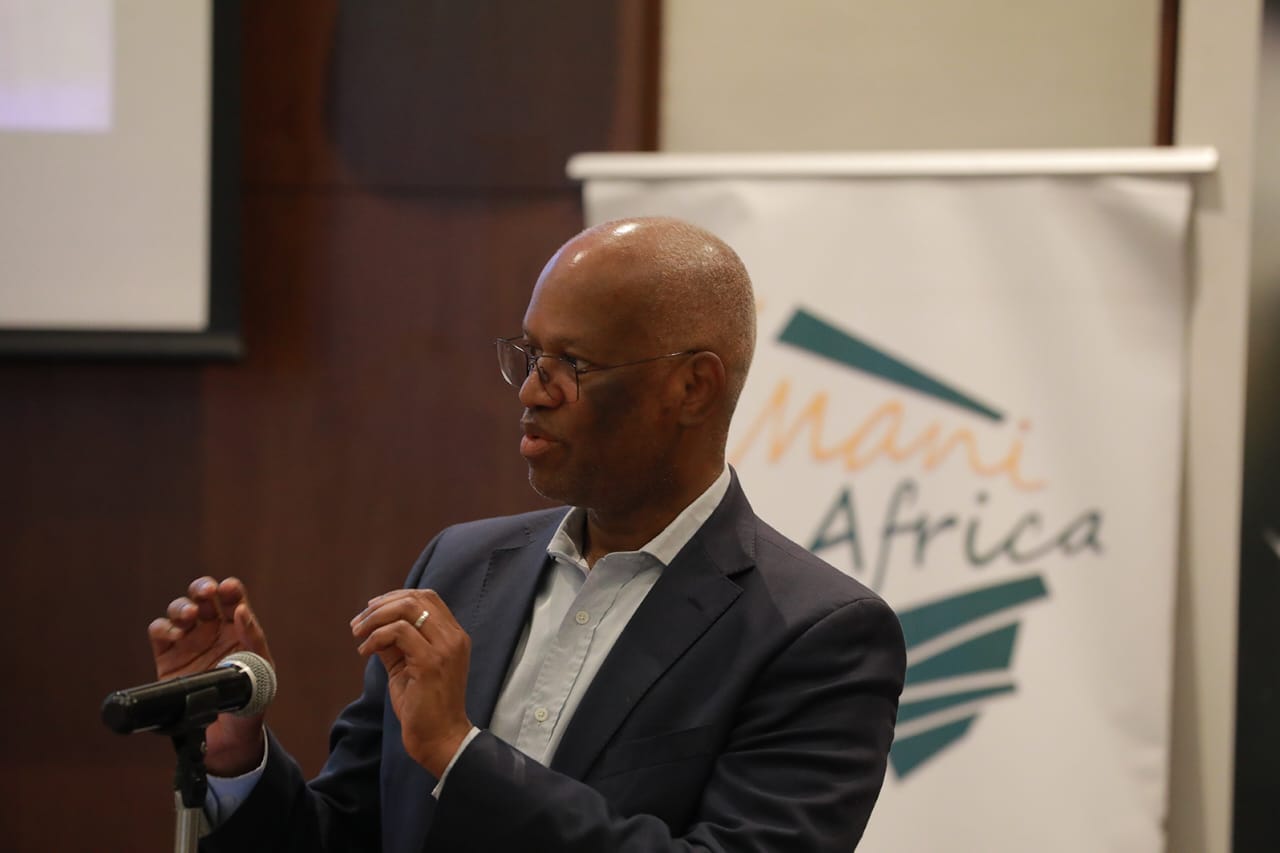
El-Ghassim Wane
Africa today faces not simply a difficult moment, but a structural turning point. The issue is not whether the world is becoming more unstable and messy — it clearly is. The real question is: What does a disorderly world mean for African security?
My core argument is straightforward: The erosion of the global order is transforming Pan-Africanism from a political aspiration into a security imperative.
Let me start with few remarks on the changing global environment and why this matters specifically for Africa.
Many of the trends now worrying the world are not new to Africans and to the Global South more broadly. For decades, stakeholders in the Global South warned about selective application of international law, unilateral action, and power politics.
For Africa, this carries a host of consequences.
First, frequent violations of international law and the increasing use of coercion, including force, in pursuit of national interests affect all states, but weaker states are affected more severely. African countries depend disproportionately on rules because they lack comparable hard power. When rules weaken, their vulnerability increases.
Second, while the current multilateral system is imperfect and unbalanced — and was designed with very little African input — it has nonetheless provided some clear advantages: coalition-building, forums to address global challenges, mediation frameworks, peacekeeping operations. As multilateralism weakens, Africa loses diplomatic leverage to advance its interests and conflict-management tools simultaneously.
Third, declining external support is not just a development issue. It is a security issue. Peace operations, DDR programmes, elections support, humanitarian assistance and even state administration in some fragile states have depended heavily on external financing.
Fourth, with heightened geopolitical competition inside Africa, the continent’s conflicts are becoming increasingly internationalized (see also here). External actors increasingly shape battlefield dynamics, while African institutions struggle to influence outcomes.
Clearly, Africa is entering a period in which it is more exposed to instability while simultaneously losing the external mechanisms that had so far contributed to manage instability. In other words, the trends described earlier do not merely create a more dangerous world — they remove the external pillars that helped African mechanisms function.
It is important here to keep in mind that Africa’s conflict management system was designed as part of a cooperative international security framework — one only needs to look at the provisions of the Peace and Security Council Protocol, especially those concerning its relationship with the United Nations and other international partners. That framework is now less predictable, less available and, in some cases, internally divided.
This raises an important question: Can African institutions maintain stability if external stabilisers become inconsistent or absent? That is the crossroads Africa is now approaching — not a philosophical choice about Pan-Africanism, but a practical challenge of collective security.
Pan-Africanism has often been treated as history, memory, or political sentiment. Today it is becoming a functional necessity. In many ways, this vindicates Kwame Nkrumah. In the early 1960s, he argued that unity was not primarily ideological — it was a condition for sovereignty in an unequal international system.
Howard French, the author of the book Born in Blackness: Africa, Africans, and the Making of the Modern World, 1471 to the Second World War and of the more recent book The Second Emancipation: Nkrumah, Pan-Africanism, and Global Blackness at High Tide, captures this well. He writes: ‘With no one in the world serving up favors to the continent, Nkrumah’s insight about the gains to be had through federation is as salient as ever. What is lacking is sufficient action. The time has come for a continent cut loose in the world to take the next step.’
And this is precisely the issue. At the very moment when the international environment is becoming more hostile, African states are not acting with the level of collective cohesion that the situation requires. And more broadly, we see a weakening reflex of continental solidarity.
The result is predictable: fragmented bargaining power, unequal deals, and diminished leverage (see also here). In peace and security, this situation also complicates the search for lasting solutions that require engagement within a coherent continental framework.
Against this backdrop, what collective security actually requires in practice?
The starting point is simple: unity is no longer an emotional or rhetorical ideal. It is strategic necessity. It determines the continent’s negotiating power, its ability to manage conflicts, and ultimately its political survival in a more competitive international environment.
So what does that mean concretely for African countries?
First, it entails deepening our collective investment in the institutions we have created. Our leaders cannot be more present at summits with external partners than at AU meetings. That sends a message — to others and to ourselves. As Désiré Assogbavi recently remarked, ‘As the world order shifts, summits in foreign capitals make the continent look like a guest at its own table.’
Second, it means cooperating fully with African conflict-management institutions. Africa already has one of the most elaborate peace and security architectures in the world: norms, institutions and expertise exist. The PSC Protocol is explicit — Member States are expected to support and cooperate with African efforts to resolve conflicts. This does not mean excluding external partners. Our crises are connected to global dynamics. But external support must reinforce African leadership, not replace it.
Third, it means honoring a commitment our leaders themselves made at the launch of the Peace and Security Council in May 2004: No African conflict should be ‘out of bounds’ for the AU, and when grave abuses occur ‘Africa should be the first to speak and the first to act.’ If we do not act when crises unfold on the continent, we should not be surprised when others step in.
Fourth, collective security does not mean isolation. It requires close partnership with the United Nations and other international stakeholders. Already in 1990, Salim Ahmed Salim, then OAU Secretary-General, argued that while Africa must strengthen its ‘inner strength’, it should continue to prioritize the UN as the principal multilateral forum through which it defends its interests internationally. That remains true today. Africa should be at the forefront of efforts to reinforce the UN and make it more fit for purpose.
Finally, collective security is also a question of responsibility. Everyone in the AU ecosystem — governments, institutions, and officials — must recognize the seriousness of the moment. Africa is entering a more demanding international environment. Routine approaches will not suffice (see here). This period requires commitment, discipline and steadfastness.
How, then, do we operationalize this ambition? What role should the AU Commission play in moving it forward ?
Stronger political commitment will clearly be required. At present, the level of collective resolve does not fully match the demands of the moment. This is a reality we must acknowledge.
But paradoxically, this makes the role of the AU Commission — which is not only an administrative body (the Constitutive Act, the PSC Protocol and several other instruments are clear in this respect) — more important, not less. Political will does not simply appear. It has to be generated, encouraged, nurtured.
In periods of geopolitical transition, tensions among Member States and inward-looking approaches as countries focus primarily on their domestic challenges, institutions matter more than ever. The Commission must act as the engine of collective action. It must engage proactively, build coalitions around sensitive issues, and create the conditions in which states feel both empowered and compelled to act.
To conclude, the world is becoming more dangerous and less structured. For Africa, the consequence is clear: external stabilizers are weakening at a time of rising internal vulnerabilities. Therefore, the question before us is not ideological. It is whether African states will face insecurity individually or manage it collectively.
Pan-Africanism, in this context, is about survival and agency. Africa can either become an arena where global competition plays out or an organized actor capable of shaping its own security environment. The decisions taken in the period ahead will determine which of the two it becomes.