

G20 and the AU-EU: A tale of two international summits in Africa
G20 and the AU-EU: A tale of two international summits in Africa
Date | 5 December 2025
Solomon Ayele Dersso, PhD
Founding Director, Amani Africa
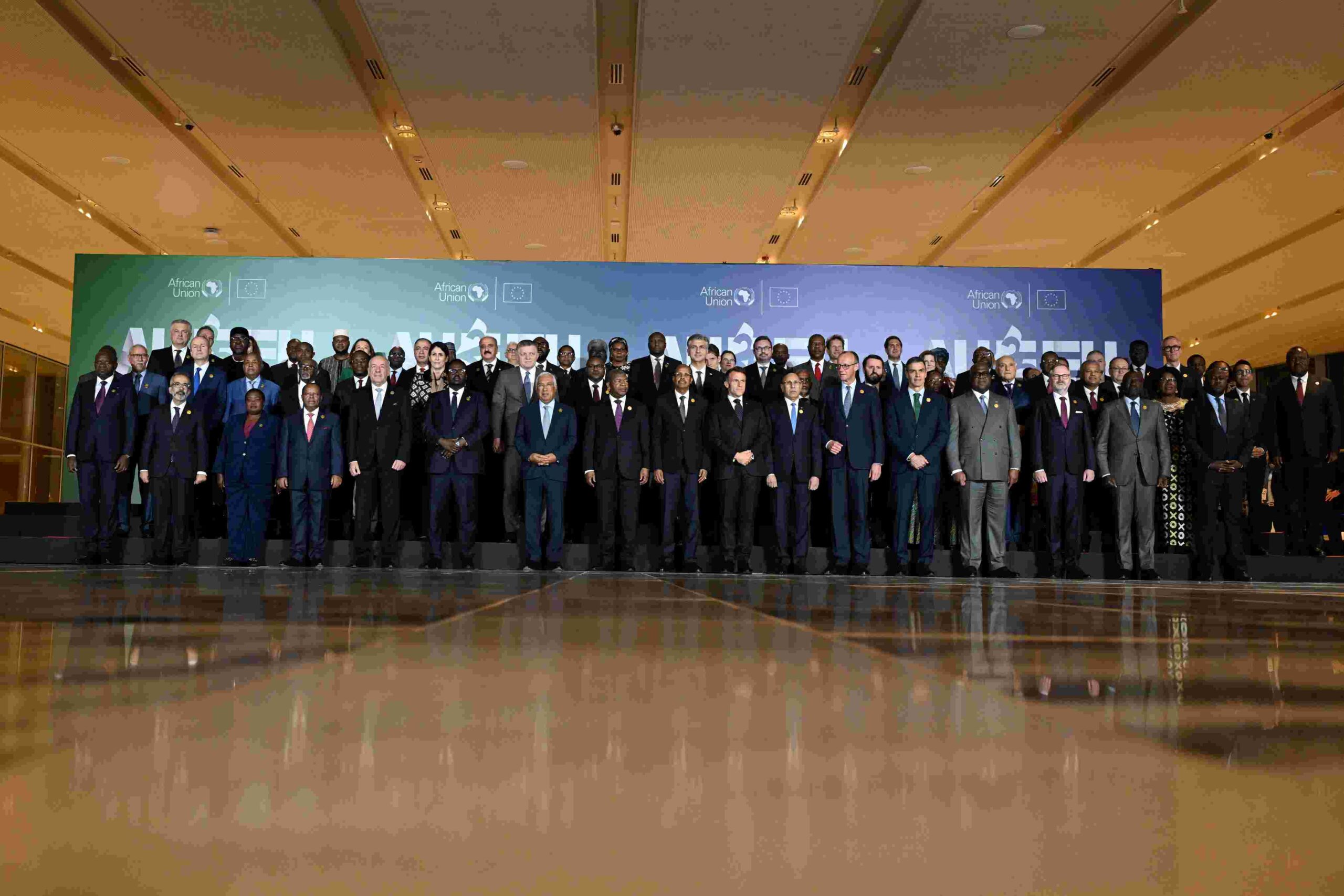
Africa played host to two major international summits. Under South Africa’s Presidency, Johannesburg played host to the 2025 Group of 20 (G20) summit. Under Angola’s chairship of the continental body, the African Union (AU), Luanda was the stage for the 7th AU and European Union (EU) summit. They took place one after the other, on 22-23 November and 24-25 November respectively.
Despite minor differences in the issues they cover, they share major convergence on the major themes covered by the agendas of the two summits. The G20 summit, being held for the first time on African soil under the theme ‘solidarity, equality and sustainability, focused, among others, on issues dubbed to be of particular interest for developing countries, particularly Africa. This can be seen from the broad thematic areas that the G20 presidency advanced: Debt reform, climate resilience, inclusive development and a more democratic global governance system.
As can be gathered from the Leaders’ Declaration, the G20 addressed, among others, debt crisis, energy transition, critical minerals for growth and sustainable development, inclusive economic growth, industrialisation and reduced inequality, sustainable financing, and equitable global governance.
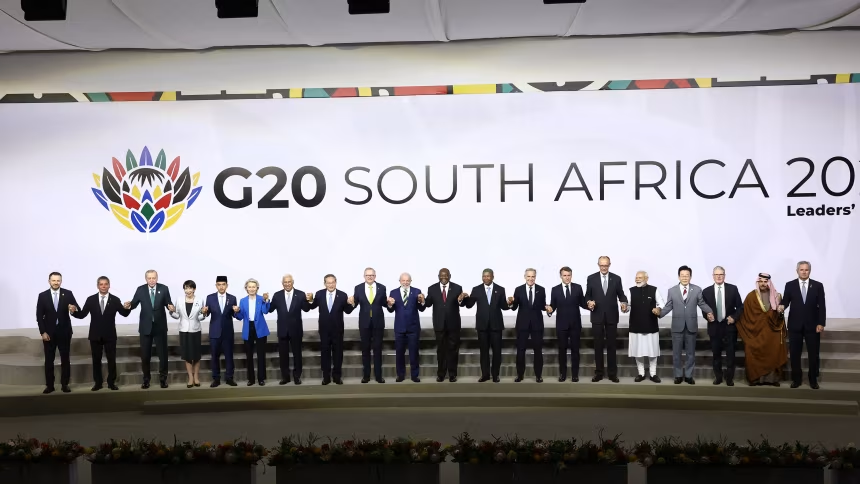
These are all issues covered in the joint AU-EU Summit Declaration under the sub-themes of ‘shaping a prosperous and sustainable future for Africa and Europe’ and ‘a stronger commitment to multilateralism.’
One of the successes of the Johannesburg G20 summit was the adoption of the Leaders’ Declaration at the start of the summit in a departure from usual practice and despite the boycott and pressure from the United States (US.) The successful convening and the adoption of a substantive leaders’ declaration is applauded for showing how multilateral diplomacy can be pursued without the US (and even in the face of opposition from it), the architect and anchor of much of the multilateral platforms of the post-World War II world order, including the G20.
With at least 25 African states in debt distress and at least three of them defaulting on their debt payment, the debt crisis is one of the most pressing issues of particular concern for Africa that was at the centre of the G20 summit agenda. According to the UN Economic Commission for Africa (UNECA) 2025 Economic Report on Africa, African countries spent about US$163 billion on debt service in 2024 alone. Despite having a lower debt-to-GDP ratio than G7 countries, African governments spend, according to a report from Tony Blair Institute, on average 18% of all revenue just on interest payments, which is up to 6 times more than G7/EU countries.
It was no surprise that debt became one of the four high-level priorities identified by the G20 under South Africa’s presidency. As President Cyril Ramaphosa of South Africa observed in his opening of the summit, the ‘G20 needs to renew its efforts to advance debt sustainability, with a particular emphasis on African countries.’ The Johannesburg G20 leaders’ declaration did not downplay nor shied away from acknowledging the gravity and adverse developmental consequences of the debt crisis. Thus, it recognised that ‘a high level of debt is one of the obstacles to inclusive growth in many developing economies, which limits their ability to invest in infrastructure, disaster resilience, healthcare, education and other development needs.’ (Emphasis added)
By contrast, the 7th AU-EU summit adopted a more reluctant framing, potentially downplaying the cost of debt distress. It thus stated ‘high level of debt can be an obstacle to inclusive growth and ‘may limit their ability to invest in infrastructure, disaster resilience, healthcare, education and other development needs.’ (Emphasis added) While the G20 recognised a high level of debt as factually being an obstacle to inclusive growth, the AU-EU summit declaration used ‘can be’ and ‘may’, hence casting uncertainty about whether high-level debt carries such consequences for affected countries. There is, however, ample evidence, including from UNECA and UNCTAD, that debt is, to use the words of President Ramaphosa, ‘stifling public spending and economic growth’. The AU draft enjoined the AU-EU to a number of targeted commitments, including ‘to take decisive actions to address the high debt premium of borrowing countries, especially in Africa, that pay significantly higher interest rates compared to their peers despite similar risk ratings.’
Both the G20 and AU-EU summits failed short of adopting robust measures that address the structural conditions embedded in the international financial order that create cyclic debt distress, including those advanced in the joint Namibia-Amani Africa High-level Panel of Experts on Africa and the Reform of the Multilateral System and the AU’s Common African Position on debt, including the proposal for a UN framework convention on sovereign debt. Even then, while the joint AU-EU summit declaration called for qualified ‘reform of the international debt architecture’, the G20 declaration adopted a more specific and emphatic language, by underscoring ‘the need for enhancing the representation and voice of developing countries in decision making in multilateral development banks (MDBs) and other international economic and financial institutions.’
What is striking about the changes introduced is not just that they watered down the already reasonable formulations in the draft from the AU. The deletion even included a reference to support for the recent initiative to find a sustainable solution to the debt crisis. One example of such deletion is ‘we welcome the Sevilla Forum on Debt launched at UNCTAD 19 to tackle entrenched debt crises in developing countries.’ Signifying the lack of common ground on addressing the structural conditions perpetuating the debt crisis, it was reported that the EU voted against a resolution on sovereign debt under discussion in New York just as the summit was being held.
The AU draft commenced the section on ‘shaping a prosperous and sustainable future for Africa and Europe’ with ‘We further reaffirm our commitment to accelerating economic transformation and sustainable development to achieve inclusive growth and sustainable development to create economic opportunities for all, particularly for youth and women.’ After the changes introduced by the EU, not only was the reaffirmation of such commitment left out, but the section commences with a language that foregrounds the EU’s Global Gateway Initiative as reflected in the final copy of the declaration adopted in Luanda. It is worth noting that, as opposed to the very positive framing reflected in the summit declaration, the AU draft on the Global Gateway emphasised ‘the need for greater transparency, timely delivery, and measurable impact to ensure that the promised investment effectively supports Africa’s priorities and is fully aligned with the vision and goals of the AU’s Agenda 2063. The selection and implementation of projects must be conducted jointly to ensure full African ownership and appropriation.’
The substantive issues raised in the draft by the AU member states around Carbon Border Adjustment Mechanism (CBAM), including its potential for increasing costs, limiting competitiveness and undermining efforts to sustainably manage natural resources, such as biodiversity-based exports and the reference to ensuring in this regard respect for implementation of Article 3(5) of the United Nations Framework Convention on Climate Change (UNFCCC) were also removed. After negotiations, the final version commits only to ‘maintaining open, transparent, and inclusive channels of dialogue, including on trade-related environmental measures, such as CBAM and EU Deforestation Regulation (EUDR).’ Instead of the reasonable and clear language calling for provision of adequate time, capacity building support and flexibility for African countries to adapt to such new regulatory measures, the final declaration stated ‘the EU and AU will tackle together challenges posed to African exporters in sustainably managing natural resources, including biodiversity-based exports.’ This language and the reading of the entire paragraph 10 hide the concern raised in the AU draft that the challenge ‘in sustainably managing natural resources’ is a potential challenge posed by trade-related environmental measures, such as CBAM and EUDR.
By contrast, despite not going far enough and falling short of making direct reference to CBAM, the G20 declaration is explicit in stating that ‘measures taken to combat climate change, including unilateral ones, should not constitute a means of arbitrary or unjustifiable discrimination or a disguised restriction on international trade.’
These are just some of the examples that highlight the contrasting outcomes of two international summits hosted on African soil, one after the other and covering similar issues. Despite all the appearances of progress and the symbolic changes on display in the lead-up to and during the AU-EU summit, substantively, the examples cited above suggest that the summit in Luanda did not mark a departure from the past. It shows the entrenchment of the power asymmetry and the reflex of being comfortable with dominating in setting the agenda and the process of shaping the outcomes of partnership meetings. The contrast between what the opening speeches projected and this outcome is reflective of what Carlos Lopes called the self-deception trap.
This outcome is not just to be blamed on the EU. After all, the AU, particularly its member states, were not without the possibility of achieving a different outcome. This can be gathered from the draft that they initiated, which sought such a different outcome. Yet, the push of the AU, particularly its member states, failed short. Whatever success was achieved in bringing back elements initially proposed, produced formulations that substantively changed the essence of the original formulation or hugely watered-down language on substantive policy issues, as those cited above exemplify.
It is worth noting that the effort to regain the momentum succeeded in securing the removal of the reference to the ambiguous and problematic language of ‘rules-based international order’ and the restoration of the reference to the work towards the UN Framework Convention on International Tax Cooperation, which was deleted from the AU draft. Thus, ‘rules-based international order’ was replaced with the neutral and accurate framing of ‘commitment to international order based on international law and effective multilateralism grounded in international law, including the Charter of the United Nations and its Purposes and Principles, as well as the Universal Declaration of Human Rights and International Humanitarian Law.’ (Emphasis added)
No doubt that this outcome could have been avoided. It happened not for lack of ways of avoiding it, but proposals advanced in various European and African publications, such as here and here, as well as earlier counsel from Lopes, were not heeded.
While the G20 summit outcome carried content that projected Africa’s interest and had about 5 times more to ‘Africa’ than the previous record of 18 references to Africa during the G20 in 2017, the AU-EU summit was a major missed opportunity to move the partnership meeting beyond performative dialogue.
This tale of the two summits amply affirms that the observation (made ahead of the two summits) that the G20 summit ‘appears to generate more excitement in the AU and Africa than the AU-EU summit’ was not without merit.
Exclusive interview: Amb. El Hadji Ibrahima Diene , Special Representative of the Chairperson of African Union Commission & Head of AUSSOM
Exclusive interview: Amb. El Hadji Ibrahima Diene , Special Representative of the Chairperson of African Union Commission & Head of AUSSOM
3 December 2025
Ahead of the upcoming meetings of the AU PSC and the UNSC on the AU Support & Stabilization Mission in Somalia (AUSSOM), the latest edition of The Pan-Africanist brings to you the Special Representative of the Chairperson of the African Union Commission & Head of AUSSOM. In this very first ever media interview since assuming office, Amb Boly discussed with our Director the current state of AUSSOM including state of deployment, financing, scenarios & plans for managing the huge financial shortfall facing the mission & the work underway on exit plans.
Monthly Digest on The African Union Peace And Security Council - October 2025
Monthly Digest on The African Union Peace And Security Council - October 2025
Date | October 2025
In October 2025, under the chairship of Botswana, the African Union (AU) Peace and Security Council (PSC) had a scheduled programme of work consisting of three substantive sessions, made up of two thematic sessions and one session on a conflict situation. Additionally, it provided for the commemoration of the Africa Amnesty Month and the Council’s annual statutory meetings with the European Union Political and Security Committee (EUPSC) and the United Nations (UN) Security Council (UNSC). After the introduction of three sessions on crisis/conflict situations and the revision of the programme of work, the PSC held six substantive sessions. Out of the six, four focused on country-specific situations, while the rest addressed thematic issues. All six sessions were convened at the ambassadorial level.
Provisional Programme of Work of the Peace and Security Council for December 2025
Provisional Programme of Work of the Peace and Security Council for December 2025
Date | December 2025
In December, the Republic of Côte d’Ivoire will assume the role of chairing the African Union (AU) Peace and Security Council (PSC). The Provisional Programme of Work (PPoW) for the month envisages four substantive sessions covering five agenda items. Three of the sessions will focus on country- and region-specific situations, while the remaining sessions will address thematic issues. In addition to the sessions, the PSC will also hold the annual High-Level Seminar on Peace and Security in Africa, held at the ministerial level, and an informal consultation with countries in political transition and the peace and security issues affecting them. All the sessions are scheduled to take place at the ambassadorial level. No open session is anticipated in the PPoW.
The PSC will begin the month with the ‘12th Annual High-Level Seminar on Peace and Security in enhancing cooperation between the AUPSC and the African Members of the United Nations Security Council (UNSC) in Addressing Peace and Security issues on the Continent,’ to be held on 1 and 2 December. Convened within the framework of Article 17(3) of the PSC Protocol, this year’s edition of the high-level seminar, also known as the Oran Process, will take place in Algiers, Algeria.
The programme for this year’s high-level seminar envisages: ‘i. Global Landscape of Peace and Security in Africa: Current Dynamics, ii. AU and UN Concerted Action on Counter Terrorism and Violent Extremism,’ and a closed session to focus on: ‘i. Taking Stock of A3+ Activities: Lessons learned and way forward, [and] ii. AUPSC and A3+: A Stronger Voice for UNSC Reform.’ It is also expected that this 12th High-Level Seminar will unveil the ‘Manual on Modalities for Enhancing Coordination Between the AUPSC and the African Members of the UNSC,’ adopted during the PSC’s 1289th meeting held in July 2025.
On 8 December, the PSC will convene its first substantive session to consider the Situation in Somalia and the operations of the African Union Support and Stabilisation Mission in Somalia (AUSSOM). It is expected to focus on the full operationalisation of the mission and the existential financing challenges facing it. Not only is AUSSOM facing significant shortfalls, but it is also expected to lose some $130 million from the UN logistics support package, further aggravating the dire funding woes of the mission. The session will build on its previous session held at the ministerial level in July 2025, in which the Council decided ‘to increase the ceiling level of the Crisis Reserve Facility (CRF) by an additional 10 million USD to make it 20 million USD for 2025 to support the deployment of AUSSOM.’ In September 2025, at the sidelines of the UN General Assembly, a High-Level Financing Event for AUSSOM jointly organised by the Federal Government of Somalia, the AU Commission, the UN and the United Kingdom (UK) saw pledges being made by both traditional and non-traditional donors for the mission. The UK pledged GBP 16.5 million (USD 22 million), while Italy and Spain each pledged to commit USD 1 million. Japan and South Korea also came on board to make some contribution to AUSSOM’s funding.
On 9 December, the PSC will convene for a briefing on the ‘Continental Early Warning and Security Outlook.’ The session will feature contributions from key AU institutions, including the Committee of Intelligence and Security Services of Africa (CISSA), the AU Mechanism for Police Cooperation (AFRIPOL), and the AU Counterterrorism Centre (AUCTC). Despite the reference to ‘continental early warning, conspicuously absent from providing analysis on early warning is the AU’s Continental Early Warning System (CEWS). CEWS, a statutory structure established under Article 12 of the PSC Protocol, was at the heart of the provision of such briefing to the PSC through horizon scanning until its demise, contrary to Article 12 of the PSC Protocol, in the context of the institutional reform that saw the merger of the Political Affairs and Peace and Security Departments in 2021. Since then, the PSC took decisions to rectify the situation, but this is yet to take effect. This session will also build up – and get an update – on Council’s 1298th meeting held on August 2025, in which it tasked the AU Commission, together with AUCTC, AFRIPOL, CISSA and APRM, to establish and institutionalise, by December 2025, a dynamic and continuously updated risk mapping tool to allow the PSC to strengthen its ability to engage in early warning for early action, by providing a consolidated picture of threats, vulnerabilities and potential triggers, including colour-coded risk levels linked to a pre-authorised menu of diplomatic, security and stabilisation tools’ as well as ‘an annual review of acted/missed alerts with lessons-learned.’
On the same day, the PSC is scheduled to consider the Draft Conclusions of the 12th High-Level Seminar.
On 11 December, the Council will have an informal consultation with countries in political transition. This meeting was initially planned for November 2025 but was eventually postponed, in part due to lack of confirmation of participation from representatives of the three central Sahel countries. This will, however, be the fourth such informal consultation since the PSC introduced this format into its working methods. This practice was introduced following the PSC’s 14th Retreat on its Working Methods in November 2022, in line with Article 8(11) of the PSC Protocol, to allow direct engagement with representatives of Member States suspended from AU activities due to unconstitutional changes of government. The upcoming session will assess the progress made and challenges encountered in these ongoing transition processes. It will also explore how the PSC can enhance its support for the political normalisation of the affected Member States. No formal outcome is expected for this session.
The following week, on 15 December, the PSC will convene to consider the Commission’s report on the Multinational Joint Task Force (MNJTF) mandate. Such a session was earlier planned by the Council in November 2025, but a decision was taken to postpone it, as Amani Africa learned, in order to address the situation together with the renewal of the mandate of the MNJTF, hence its rescheduling for this month. It is expected to provide update on implementation of previous PSC decisions including from its last 1282nd meeting on the MNJTF held in June 2025 which endorsed and validated ‘the revised Five-Year Regional Strategy for the Stabilisation, Resilience and Recovery of the Boko Haram Affected areas in the Lake Chad Basin’ and requested the AU Commission ‘to enhance its support to and collaboration with the LCBC in the implementation of the revised Five-Year RS-SRR… and continue supporting the MNJTF in its operations to consolidate and sustain the gains made thus far against the Boko Haram terrorist group.’ This session is also expected to evaluate the security situation in the Lake Chad Basin (LCB) and the MNJTF’s efforts in countering Boko Haram and the two main splinter groups, Jama’tu Ahlis Sunna Lidda’awati wal-Jihad (JAS) and Islamic State West Africa Province (ISWAP), who continue to pose significant threats to regional peace and security.
The final substantive meeting of the PSC for the month concerns the situation in Sudan. The Rapid Support Forces (RSF) are now advancing aggressively into Kordofan, with major cities such as Babnusa and El-Obeid squarely in their sights. Having defeated the Sudanese Armed Forces (SAF) in El Fasher last month – an assault that triggered widespread atrocities, including the reported killing of at least 1,500 civilians and the displacement of tens of thousands – the RSF currently holds the battlefield momentum in Sudan’s escalating war. In October 2025, following the fall of El Fasher, the PSC held an emergency session on the situation in Sudan, particularly on the atrocities that ensued following the city’s fall. From the communiqué it adopted after the session, the PSC tasked the AU Commission ‘to regularly monitor and report such heinous crimes committed throughout Sudan, in order to put in place preventive measures and reduce the risk of recurrence; develop proposals on how to address them to prevent their further escalation; [and] develop a plan for the protection of civilians, and make recommendations to the PSC within three weeks.’ Council went further and directed the Chairperson of the AU Commission to engage with the Members of the PSC Presidential Ad-hoc Committee, under the leadership of Yoweri Kaguta Museveni, President of Uganda, to urgently facilitate the negotiation process between the leaders of the Sudanese Armed Forces (SAF) and the paramilitary RSF, including the holding of an AU Special Summit on Sudan. Another assignment included tasking the Special Envoy on the Prevention of Genocide and Other Mass Atrocities to undertake a fact-finding mission to Sudan and report back to the Council with recommendations within three weeks. This, however, did not happen.
The meeting will also be held just weeks following Abdel Fattah al-Burhan, head of the SAF, rejection of a ceasefire agreement proposed by the Quad. He also criticised the UAE’s involvement in the Quad, accusing it of supporting the RSF, a claim widely shared by others. For its part, the RSF recently announced an apparently unilateral 3-month humanitarian truce. The Quad mediation efforts, which have included a push from US President Donald Trump, may be one of the factors for the recent escalation in fighting as part of the push for strengthening bargaining power in the negotiations.
As per usual practice, provision is made in the footnote for the convening of Committee of Experts meetings to consider the draft report on the State of Peace and Security in Africa and the Activities of the PSC covering January to December 2025 on a date to be determined.
Emergency Session on the Situation in Guinea-Bissau
Emergency Session on the Situation in Guinea-Bissau
Date | 28 November 2025
Today (28 November) in the afternoon, the African Union (AU) Peace and Security Council (PSC) is scheduled to meet to discuss the situation in Guinea-Bissau. This emergency session has been called following the military seizure of power by the ‘High Military Command for the Restoration of National Security and Public Order’ group, following a fiercely contested presidential and legislative elections held in the country on 23 November 2025.
The session is expected to commence with opening remarks from Churchill Ewumbue-Monono, Permanent Representative of Cameroon to the AU and Chairperson of the PSC for November, followed by a briefing by Mahmoud Ali Youssouf, Chairperson of the AU Commission. Bankole Adeoye, AU Commissioner for Political Affairs, Peace and Security (PAPS), is also expected to make a statement, followed by a representative of the Republic of Guinea-Bissau, as the country concerned, and a representative of the Republic of Sierra Leone, in its capacity as Chair of the Economic Community of West African States (ECOWAS).
The session is being held following the announcement of a group of military officers, on Wednesday, 26 November 2025, that they have taken ‘total control’ of the country, just one day after the two leading candidates, in a closely contested presidential election – incumbent Umaro Sissoco Embalo and main challenger Fernando Dias, declared victory before the release of official results. Ahead of the announcement of seizure of power by the army, the incumbent president told various news outlets on 26 November that he was arrested at his office at the presidential palace, although no force was used against him. Appearing on national television, the self-styled ‘High Military Command for the Restoration of National Security and Public Order’ read a statement suspending the electoral process ‘until further notice’ despite stating that they acted to stop attempts to ‘manipulate electoral results’, without specifying the source of such attempted manipulation. They further stated that the following day, Thursday, 27 November 2025, Major-General Horta Nta Na Man, Chief of the General Staff of the Armed Forces, was sworn in as transitional president for a one-year term after the military formally deposed President Umaro Sissoco Embaló.
During the swearing-in ceremony on Thursday afternoon, transitional president Major-General Horta Nta Na Man appointed Major-General Tomás Djassi as the new Chief of Staff of the Armed Forces. The coup unfolded just one day before the National Elections Commission was scheduled to release provisional results from the presidential runoff between incumbent Umaro Sissoco Embaló and his main challenger, 47-year-old political newcomer Fernando Dias. Hours before the military’s televised announcement on Wednesday, heavy gunfire echoed through Bissau for nearly an hour near the electoral commission headquarters and the presidential palace. Shortly afterwards, President Embaló contacted French media to confirm that he had been ousted from power. In a statement dated Thursday and released before Senegal confirmed it had granted him asylum, the military declared that Embaló and several senior officials were ‘under the control’ of the High Military Command.
This development came against the background of acute political instability and constitutional crisis in which the president has been at the centre. It is to be recalled that Embaló was sworn in on 27 February 2020 under a cloud of uncertainty about his electoral victory. His victory was confirmed by the Supreme Court only in September 2020. The tension that accompanied the contested ascent of Embaló to power had as one of its features a confrontation between him and the Assembly, which is dominated by the opposition party PAIGC. There were three instances in which he reported that he faced an attempted coup: in February 2022, December 2023 and last month. Embaló moved to dissolve the parliament in May 2022, months after the purported attempted coup of February 2022. At the time, Embaló justified his decision to dissolve the parliament by making reference to ‘persistent and unresolvable differences’ with the parliament. This triggered fierce opposition, with many questioning the constitutionality of the decision. Not long after another purported coup in early December 2023, which is attributed to a clash between a unit in the army and the presidential guard, Embalo once again blamed parliament and issued a decree dissolving the national assembly in another constitutionally questionable move. Since then, the country has been without one of the key arms of government, the legislature and Embalo was ruling through decree.
Embalo also postponed elections originally scheduled for 2024. When the five-year period since his ascent to power came in February 2025, the opposition insisted that his term expired on 27 February and his stay in power beyond that point was illegitimate. However, the Supreme Court ruled that it extends until 4 September, the date it validated his victory in 2020. ECOWAS’ efforts to mediate failed with a joint ECOWAS-UNOWAS diplomatic mission, deployed from 21 to 28 February, forced to leave on 1 March after Embaló threatened its expulsion, rejecting regional interference. When, finally, the national elections were set for November after repeated postponement and a month before the November elections, the historically prominent PAIGC party was excluded from contesting both the presidential and legislative elections, the first in such exclusion of the former ruling party in the country’s history. PAIGC blamed what it called Embalo of heavy-handed tactics that led to its exclusion from the vote on a technicality.
The last time the PSC held a session on the situation in Guinea-Bissau was in December 2022. Despite the fact that the PSC was scheduled to hold another session in December 2023, following the so-called attempted coup and Embal’s dissolution of parliament, the session was postponed. As a result, the dire constitutional crisis that characterised the political landscape of the country for over two years since the PSC’s last session did not receive the attention of the PSC. Today’s convening of the PSC emergency session, prompted by the announcement of military seizure of power, is emblematic of the deeply flawed policy approach that has become characteristic of both the AU and regional bodies like ECOWAS: react to the symptom (coup) while remaining silent to the governance crisis underlying the symptom. At least for ECOWAS, it is to be recalled that it sent a mission along with the UN Office to West Africa and the Sahel to achieve a consensual roadmap for elections, but the mission was aborted after Embaló threatened the mission. In a statement it issued at the time, ECOWAS said that it had ‘prepared a draft agreement on a roadmap for elections in 2025 and had started presenting it to the stakeholders (including the President) for their consent’. It further stated that the mission ‘departed Bissau in the early morning of 1st March, following threats by the president.’ Yet, ECOWAS did nothing when its efforts were thwarted.
The Chairperson of the AU Commission issued a Press release on 26 November 2025, stressing ‘the imperative of respecting the ongoing electoral process and upholding constitutional order, in line with the mandate of the National Electoral Commission (CNE), the sole institution legally empowered to proclaim official election results in the country.’ He further called for ‘the immediate and unconditional release of President Embaló and all de- detained officials, and urged all parties to exercise the utmost restraint in order to prevent any further deterioration of the situation.’ The AU Election Observation Mission to the November 2025 General Elections in the Republic of Guinea-Bissau Preliminary Statement pointed out, among other things, that ‘the dissolution of the National People’s Assembly before the end of its term, which was due to end in 2027, deprived the country of parliamentary representation and legislation, leading to early legislative elections in November 2025, held concurrently with the presidential election.’ The Heads of the AU Election Observation Mission, ECOWAS Election Observation Mission, and the West African Elders Forum on the Post-Election Situation in Guinea-Bissau also issued a Joint Statement in which they expressed concern about the arrests of top officials, including those who are in charge of the electoral process. In this regard, they urged the armed forces to immediately release the detained officials to allow the country’s electoral process to proceed to its conclusion.
The ECOWAS convened an extraordinary summit on 27 November. The communiqué that the summit adopted condemned the ‘coup d’etat perpetrated on 26 November’ and rejected ‘any arrangements that perpetuate an illegal abortion of the democratic process and the subversion of the will of the people of Guinea-Bissau.’ While deciding to suspend Guinea Bissau, ECOWAS demanded that the coup makers ‘respect the will of the people and allow the National Electoral Commission to proceed without delay with the declaration of the results of the elections of 23 November 2025.’ Cognisant of the imperative for swift and high-level engagement, it also mandated ‘the Chair of the (ECOWAS) Authority to lead a high-level Mediation Mission to Guinea Bissau to engage the leaders of the coup’.
There are four issues that the PSC needs to address when it convenes at 15:00hrs EAT in Addis Ababa, Ethiopia, for the in-person session. The first of these is how to ensure that the results of the elections of 23 November are not tampered with. Any possibility of reversing the military coup depends on it. The second is to convince the coup makers to heed the call of the AU Commission Chairperson and the ECOWAS Authority to allow the finalisation of the electoral process by allowing, without delay, the declaration of the results by the electoral body. The third is to plan for the terms on the basis of which the coup makers may reverse their course of action, including the kind of guarantees to be availed to them in exchange for allowing the elections to proceed. The fourth is how to effectively and decisively address the institutional crisis related to the constitutional design of power relations in Guinea-Bissau that has kept the country in perpetual political, constitutional and security instability.
The expected outcome of the session is a communiqué. The PSC is expected to condemn the seizure of power by the military on 26 November 2025 and reject the interruption of the electoral process, which violates AU principles and normative instruments, particularly the African Charter on Governance, Elections and Democracy and the 2000 Lomé Declaration. In this regard, the PSC, in line with relevant AU instruments, particularly Article 7 (g) of the PSC Protocol, and Article 25 (1) of the African Charter on Democracy, Elections and Governance, is expected to suspend Guinea-Bissau from participating in all activities of the Union, its organs and institutions, until constitutional order is restored in the country. The PSC may urge that the coup makers refrain from engaging or allowing anyone to engage in tampering with the electoral process and the results of the elections. It may also endorse the decision of ECOWAS and reiterate the AU Commission Chairperson’s statement calling for respect for the ongoing electoral process and allow the announcement of the results of the elections. To facilitate that such an outcome is secured, the PSC may task the Chairperson of the AU Commission to coordinate with ECOWAS for the AU Chairperson, along with the Commission Chairperson, joining the high-level mission to be led by the Chairperson of the ECOWAS Authority, President Julius Maada Bio of Sierra Leone, with the participation of Faure Gnassingbe, President of Togo, Jose Maria Pereira Neves, President of Cabo Verde, and Bassirou Diomaye Faye, President of Senegal, accompanied by the President of the ECOWAS Commission. Given the political trajectory that led to the coup, PSC’s action may also seek to address the persistent institutional crisis and governance fragility and to this end may task the AU Commission Chairperson to urgently appoint a special envoy on Guinea-Bissau to work closely with the Panel of the Wise, and to strengthen the mandate of the AU Liaison Office in the country, with the view to facilitate necessary constitutional and security sector governance reforms in Guinea Bissau in coordination with ECOWAS.

Briefing on the situation in eastern DRC
Briefing on the situation in eastern DRC
Date | 27 November 2025
Tomorrow (28 November), the African Union (AU) Peace and Security Council (PSC) is scheduled to meet to receive a briefing on the situation in eastern Democratic Republic of Congo (DRC). The Council last discussed this issue in February during its summit-level meeting. Since then, there have been several developments, both regarding the security situation on the ground and ongoing mediation efforts aimed at finding a lasting solution to the longstanding crisis in eastern DRC.
The session is expected to commence with opening remarks from Churchill Ewumbue-Monono, Permanent Representative of Cameroon to the AU and Chairperson of the PSC for November, followed by an introductory statement of Bankole Adeoye, AU Commissioner for Political Affairs, Peace and Security (PAPS). Representatives of DRC and Rwanda, as countries concerned, are also expected to make a statement in the open segment of the session. It is also expected that the representatives of the Southern Africa Development Community (SADC) and the Eastern Africa Community (EAC), as concerned RECs/RMs and the UN, are also expected to make statements.
Since January, the Mouvement du 23 Mars (M23) rebel group has expanded its control over territory in North Kivu and South Kivu provinces, capturing strategic cities including Goma and Bukavu, and the respective provincial capitals. Not only did the M23 expand its territorial control, but it also went on to institutionalise its control through the establishment of its own administrative structures in the territories under its control. This has created concerns over the threat of territorial fragmentation of the DRC.
In the PSC’s summit meeting on 14 February 2025, it ‘unequivocally condemned the activities of M23 and its supporters, Allied Democratic Forces (ADF), Democratic Forces for the Liberation of Rwanda (FDLR) and other armed groups’ and called for ‘the immediate withdrawal of all uninvited foreign forces, armed and terrorist groups operating in the DRC.’ On 21 February, the UN Security Council unanimously adopted resolution 2773 on the situation in eastern DRC, which, among other elements, demanded the immediate cessation of further M23 military advances, calling for an immediate and unconditional ceasefire, and expressed the Council’s readiness to consider additional measures against those contributing to the continuation of the conflict in eastern DRC.
The security situation in eastern DRC has continued to deteriorate, with further fears that the M23 will expand its territorial control into Uvira. Tension between DRC and Rwanda also continues, with both countries persisting in trading accusations. In his 23 September address during the General Debate of the 80th session of the UN General Assembly, President Tshisekedi accused Rwanda of deliberately obstructing peace efforts and continuing its support for the M23, and he called for the withdrawal of Rwandan troops from Congolese territory. Speaking at the General Assembly on 25 September, Rwanda’s Minister of Foreign Affairs and International Cooperation, Olivier Nduhungirehe, accused the DRC of renewed militarisation and ongoing collaboration with ‘genocidal and sanctioned armed groups,’ including the Forces Démocratiques de Libération du Rwanda (FDLR) —an ethnic Hutu armed group active in eastern DRC that was implicated in the 1994 genocide against the Tutsi in Rwanda—and Wazalendo militias.
As peace efforts from continental initiatives face setbacks, efforts have been underway to reorganise continental efforts. In March, the joint EAC-SADC Summit appointed a Panel of Facilitators composed of five former Presidents to support the DRC peace process. On 1 August, the Co-Chairs of the Joint EAC-SADC Summit met the Panel in Nairobi and adopted a framework to merge the Nairobi and Luanda processes. They also decided on the immediate merger of EAC-SADC and AU structures into a single mechanism comprising the AU Mediator and the EAC-SADC Panel of Facilitators. The Summit further called on the AU Commission to ensure all other initiatives and stakeholders align with this African-led process. The operationalisation of this process remains slow.
Despite the setbacks faced in the Luanda process and attempts to reorganise continental efforts, new peace efforts emerged, albeit outside of the AU and African regional bodies. Following the collapse of the meeting of the leaders of the DRC and Rwanda in December 2024, on 18 March, the Emir of Qatar, Tamim bin Hamad Al Thani, facilitated a meeting in Doha between DRC President Félix Tshisekedi and Rwandan President Paul Kagame. According to a joint statement issued afterwards, the two leaders ‘reaffirmed the commitment of all parties to an immediate and unconditional ceasefire.’
On 25 April, US Secretary of State, Marco Rubio, hosted DRC’s Minister of Foreign Affairs, International Cooperation and La Francophonie, Thérèse Kayikwamba Wagner, and Rwanda’s Minister of Foreign Affairs and International Cooperation, Olivier Nduhungirehe, in Washington, D.C. During the meeting, he facilitated the signing of a Declaration of Principles aimed at supporting a ‘pathway to peace, stability, and integrated economic development in the eastern DRC region and the resumption of normal bilateral relations.’
Negotiations between the DRC and Rwanda under US auspices ultimately led to the signing of a peace agreement on 27 June in Washington, D.C. The two parties agreed, among others, to refrain from acts of aggression; to immediately and unconditionally end state support to non-state armed groups; and to implement the Harmonised Plan for the Neutralisation of the FDLR and Disengagement of Forces/Lifting of Defensive Measures by Rwanda—an outcome of the Luanda process. To support implementation, a Joint Oversight Committee—composed of the two parties, the US, Qatar, Togo (as AU facilitator), and the AU Commission—has been operationalised and has convened four meetings so far.
The US has been working through the mechanisms established under the 27 June agreement to ease tensions and help the DRC and Rwanda translate their commitments into concrete action. Most recently, the fourth meeting of the Joint Security Coordination Mechanism was held in Washington, D.C., on 20 November. This mechanism is tasked with overseeing the implementation of the Concept of Operations (CONOPS) for the harmonised plan to neutralise the FDLR and to facilitate the disengagement of forces and the lifting of defensive measures by Rwanda. According to a joint statement issued after the meeting, the DRC and Rwanda reaffirmed their commitment to what is referred to as the Operations Order (OPORD), developed as the implementation plan for advancing the CONOPS.
On 7 November, the Joint Oversight Committee—established under the peace agreement to resolve any disputes arising during implementation—met in Washington, D.C. According to a joint statement issued after the meeting, the parties committed to refraining from any hostile actions or rhetoric that could undermine the full implementation of the 27 June peace agreement. They also initialled the text of a Regional Economic Integration Framework (REIF), which outlines key areas for fostering economic cooperation and development between the two countries. During the meeting, Qatar provided an update on the ongoing negotiations in Doha, including progress on prisoner exchanges and the first meeting of the Doha ceasefire monitoring mechanism, established in October to oversee implementation of the ceasefire between the Congolese government and M23.
Meanwhile, following a first direct encounter between representatives of the Congolese government and the M23 in Doha under Qatar’s facilitation, the two sides issued a joint declaration on 23 April reaffirming their ‘commitment to an immediate cessation of hostilities, a categorical rejection of any hate speech, intimidation, and call on local communities to uphold these commitments.’
Since then, negotiations have continued in pursuit of a comprehensive peace agreement. Several contentious issues have emerged. For example, the M23 insisted on implementing confidence-building measures—such as the release of prisoners of war—as a precondition for further progress, while the Congolese government maintained that such measures could only be considered once an agreement is signed, including on the restoration of state authority. Other sensitive matters, including the restoration of state authority and broader governance arrangements, have reportedly elicited strong reactions from both sides.
Nonetheless, Qatar has continued its facilitation efforts, and both the Congolese government and the M23 remain actively engaged in the process. Ultimately, the two parties agreed on a prisoner exchange mechanism, under which the International Committee of the Red Cross (ICRC) will oversee the identification, verification, and safe release of detainees held by both sides.
On 19 July, the Congolese government and M23 signed a Declaration of Principles in Doha, including a commitment to a ceasefire. Subsequent Qatari-led negotiations paved the way for the signing of the Doha Framework for Peace on 15 November. Under this framework, the parties affirmed their commitment to addressing the root causes of the conflict through structured dialogue, confidence-building measures, and a phased approach to de-escalation and stabilisation. The Doha Framework for Peace is intended to serve as the foundation for a comprehensive peace process, with a series of protocols, annexes, and technical arrangements to be negotiated in due course. These are expected to address specific issues, including the consolidation and verification of the ceasefire, modalities for troop disengagement, humanitarian access, reintegration, and support for national dialogue. Media reports have indicated a planned summit this month between DRC President Félix Tshisekedi and Rwandan President Paul Kagame in Washington, D.C. The signing of the Doha Framework could provide the necessary momentum for this summit.
The situation was a subject of deliberation in the consultative meetings, both between the PSC and the UNSC and the PSC and the European Political and Security Committee (EUPSC). In the joint communiqué of the PSC and the EUPSC, which, unlike the PSC-UNSC joint communiqué, contained substantive elements that reflect the current policy thinking on the state of the situation in Eastern DRC. First in relation to the M23, the PSC-EUPSC joint communiqué, reaffirming ‘the imperative obligation to fully respect the sovereignty and territorial integrity of the DRC’ as essential to resolving the country’s conflict, expressed grave concern over M23’s military operations and territorial expansion, and called for the ‘dismantlement of the so-called ‘parallel administration’ by the rebel Movement of M23.’ Second, the joint communiqué called ‘for foreign armed forces not invited by the DRC to unconditionally withdraw in line with UNSC Resolution 2773 (2025).’ While the EUPSC-AUPSC avoided naming who ‘uninvited foreign forces’ refers to, the reference to UNSC Resolution 2773 leaves very little doubt about who it refers to.
The expected outcome of the session is a communiqué. The PSC is expected to express concern over the continuation of the conflict in Eastern DRC and the tension between the DRC and Rwanda. It may reiterate the imperative for respect for the sovereignty and territorial integrity of the DRC and its call for unconditional cessation of hostilities. The PSC may also welcome the various peace processes, including the signing of agreements in Washington, D.C., and Doha and call on the parties to the peace processes to abide by the commitments they have made. It may also underscore the need for coordination of the peace processes led by the US and Qatar with the efforts of the AU mediator and the EAC-SADC Panel of Facilitators for the DRC. It may also welcome the decisions of the joint EAC-SADC Summit and the merger of EAC-SADC and AU structures into a single mechanism comprising the AU Mediator and the EAC-SADC Panel of Facilitators. In this respect, the PSC may also call for the activation of the joint secretariat under the AU for enhancing the role of the continent in peace efforts in Eastern DRC.
Will the AU-EU summit move from performative dialogue to meaningful listening for joint action?
Will the AU-EU summit move from performative dialogue to meaningful listening for joint action?
Date | 24 November 2025
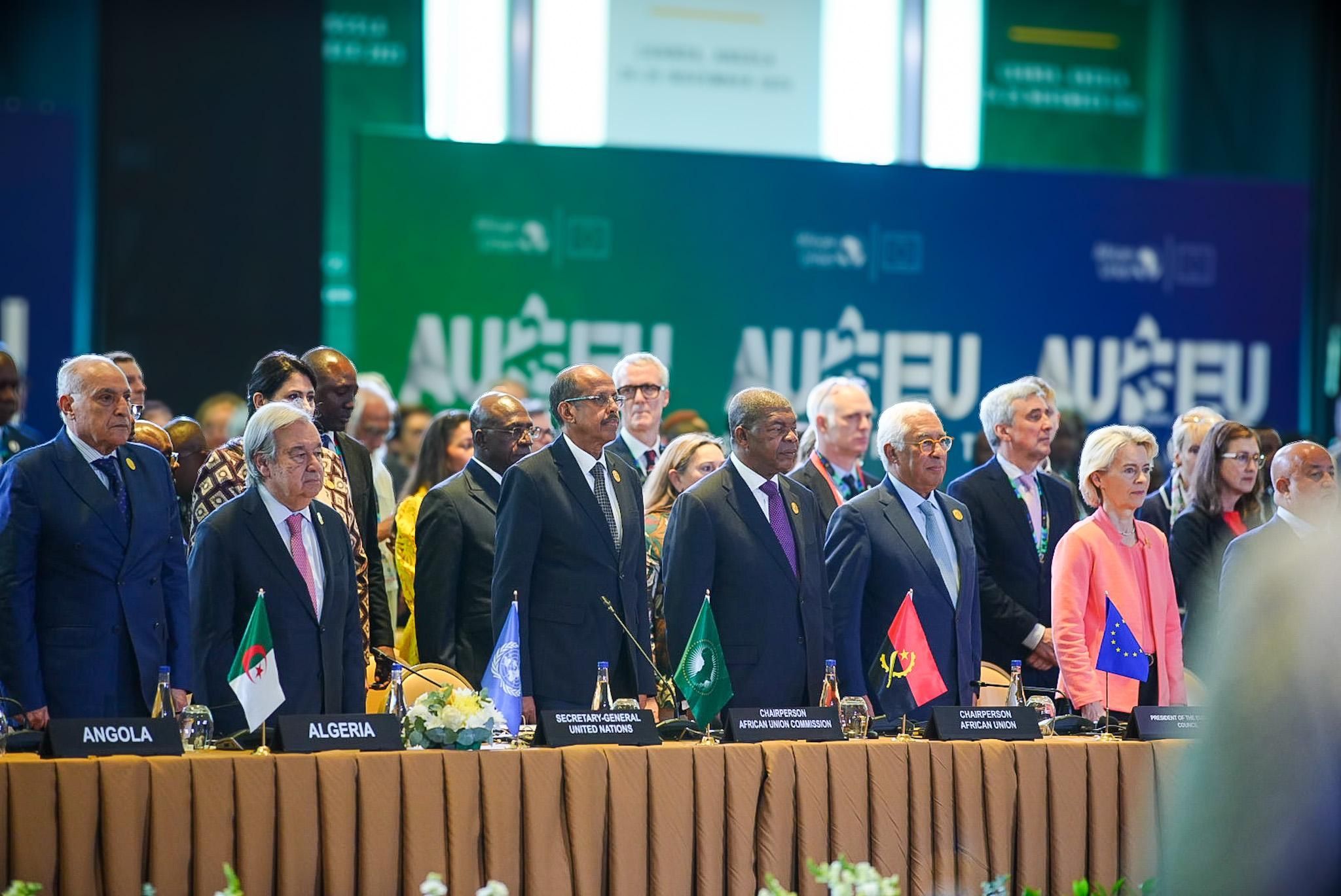
The 7th AU-EU summit kicked off earlier today under the theme ‘Promoting Peace and Prosperity through Effective Multilateralism.’ As the nearly 80 leaders of the African Union (AU) and the European Union (EU) convene in Angola’s capital, Luanda, on 24-25 November 2025, a major question in the minds of many is whether this summit will mark a departure from the previous summit.
The last time the two sides met at a summit level was in February 2022. It is to be recalled that the summit was held under the theme ‘Two unions, one vision’. As it was clear for many close observers at the time, coming against the background of major policy dissonance over the COVID-19 pandemic, including over access to the vaccine, the idea of the AU and EU having ‘one vision’ was seen as nothing more than an illusion. What unfolded soon after that summit in February 2022, with the Russian invasion of Ukraine, made it clear that the idea of ‘one vision’ was anything but grounded in reality.
The reality is that there are areas of shared interest between the AU and the EU. This has been in full display in the robust partnership and cooperation of the AU and the EU on peace and security. Indeed, it is difficult to imagine the operationalisation of the peace and security architecture of the AU without the critical role played by this partnership. Understandably, the peace and security partnership, for which the EU established the African Peace Facility, was premised on the recognition that the AU’s enhanced role in peace and security is a useful contribution to the global public good of the maintenance of international peace and security, which the EU has an interest in promoting.
Parallel to such a major area of convergence, the other equally important reality is that there are many policy areas in respect of which the interests of the two sides diverge, at times fundamentally. The policy dissonance regarding COVID-19 brought this into sharp relief. While the AU Assembly advocated for a TRIPs waiver regarding COVID-19 vaccines underscoring the need for a just international system, the EU was not supportive of the demand for TRIPs waiver. Although not the same situation, in the context of the war in Ukraine and unsurprisingly, the lack of shared policy position between the EU and the AU on the response to the war became a deal breaker in three consecutive annual consultative meetings of the EU Political and Security Committee and the AU Peace and Security Council. As a result, the annual consultative meetings held during 2022, 2023 and 2024 ended without adopting a joint communiqué.
Given that it is being held in a much more fraught global context and regional dynamics that further strain multilateral cooperation, the AU-EU summit in Luanda needs to be informed by the lessons from these experiences. For example, AU’s support for multilateralism is increasingly accompanied by the demand by AU member states (which is getting louder and was evident during the G20 summit in Johannesburg) for both a) reform, among others, of the global tax regime and the international financial institutions and b) delivery on commitments made in relation to the sustainable development goals and measures for addressing the threat of climate change.
This requires both sides treating the relationship with the seriousness it deserves. Despite being courted by many, the reality is the AU needs the EU. A case in point is the EU’s critical support for the AU’s mission in Somalia (AUSSOM). If mobilised towards priorities set by Africa and jointly designed and implemented, investments from the EU under the Global Gateway would be catalytic to advance some of the flagship projects of Agenda 2063 of the AU. The EU, on its part, needs Africa’s endowment with critical minerals, the demography that will be a major source of labour for the global economy and its growing market. It also needs, like others, AU member states in multilateral negotiations. Despite the power asymmetry and the different institutional arrangement for developing positions still working in its favour, the EU would do well not to perpetuate the business-as-usual model of engaging the AU, hence being comfortable with setting the agenda and dominating the process of shaping the outcomes of the AU-EU partnership meetings.
There is a lot of dialogue between the AU and the EU. As the cases referenced above show, the dialogue does not always translate into listening and mutual understanding. As the EU would do well not to perpetuate the business-as-usual-model of engaging the AU, for member states of the AU, there can be no exercise of agency without being able to set and negotiate the agenda of the AU-EU partnership meetings. Similarly, the rhetoric and ambition of speaking with one voice should be supported by a negotiated common position premised on Agenda 2063.
These were barely on display during the AU-EU ministerial on the part of the AU member states. By contrast, the AU adopted a different posture in the preparations for the summit. Instead of taking the easy road of copying and pasting from the AU-EU ministerial outcome document, the AU initiated a draft with new elements that reflect the interests and policy positions of Africa on the various agenda items agreed between the two sides.
In the negotiation on the outcome document for the AU-EU summit in Luanda, initially, there was no real discussion both on what informed the elements of the draft that the AU initiated and on why the EU side responded by deleting and replacing with its proposed formulations. This was far from an ideal way of engaging in negotiations. It became clear to both sides that there was a lot of value in engaging in direct negotiations held on 11 and 12 November. A critical factor in creating such an atmosphere was the role of the chair on the side of the AU. It has become apparent that there is a need for a more flexible engagement grounded in principle.
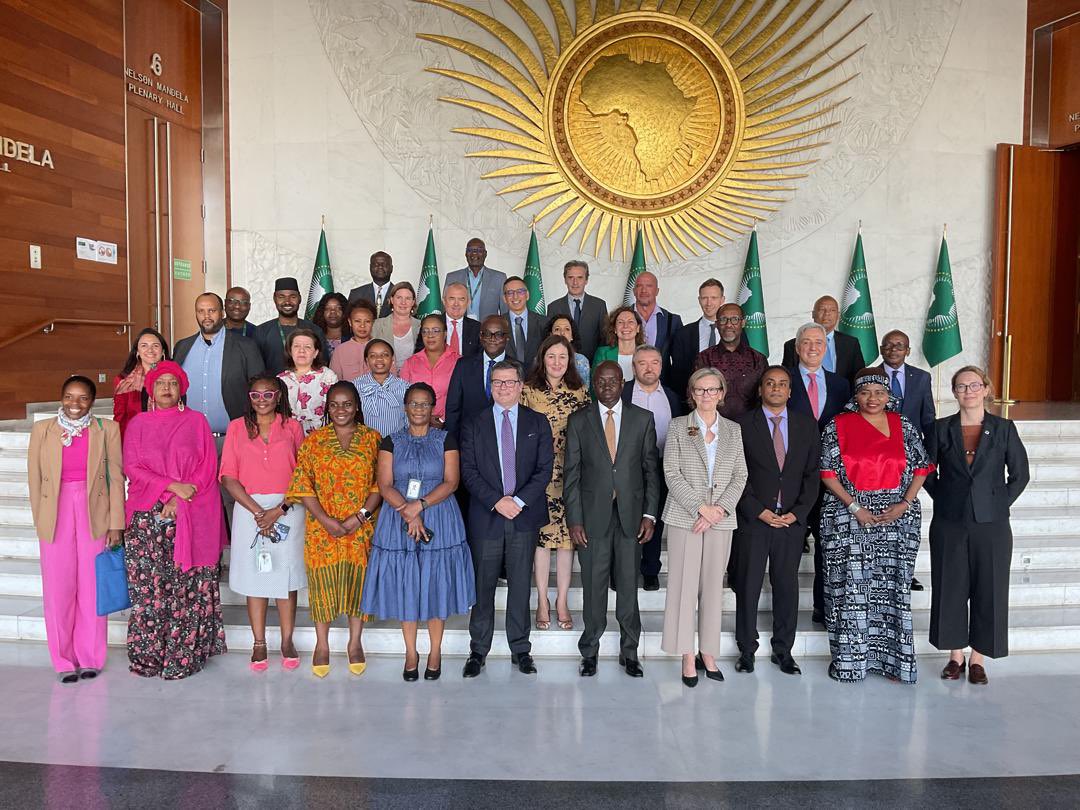
In an era in which the competition for Africa’s attention and partnership is fierce, for the EU-AU partnership to be meaningful, it also needs to shift the approach to the development and delivery of partnership projects from being supply-heavy to being demand-driven. A case in point in this respect is the very important EU infrastructure program of Global Gateway. As perceptively observed, the projects ‘were perceived—rightly or wrongly—to have been defined by Brussels, rather than together.’ Additionally, follow through and clear accounting for commitments made under the AU-EU summit will be one of the key issues that will advance enhanced trust and closer coordination between the AU and the EU.