
Provisional Programme of Work of the Peace and Security Council for January 2026
Provisional Programme of Work of the Peace and Security Council for January 2026
Date | January 2026
The Democratic Republic of Congo (DRC) will assume the chairship of the African Union (AU) Peace and Security Council (PSC) for the month of January. The Provisional Programme of Work outlines six substantive sessions, of which five will focus on thematic issues, while one will address a country-specific situation. All sessions are scheduled to be held at the ambassadorial level. With the exception of the open session commemorating Africa Reconciliation Day and reflecting on lessons learned for countries affected by conflict, all meetings will be conducted as closed sessions.
On 12 January, the PSC is scheduled to consider and adopt the Provisional Programme of Work for February through official email correspondence. It is not clear if the recent practice whereby the incoming chairperson presents his/her vision of what is to be accomplished with the items proposed in the program of work is not followed systematically.
On 19 January, the PSC will convene its first substantive session to receive an update on the situation in South Sudan. The Council last considered the situation at its 1308th session on 28 October 2025, when it expressed grave concern over the political and security situation and the risk of relapse into violence. With much of the 2018 Revitalised Agreement on the Resolution of the Conflict in South Sudan (R-ARCSS) systematically violated and intensifying conflicts, the PSC called for an all-inclusive, high-level political dialogue as the only viable path toward sustainable solutions. During the upcoming session, a key development likely to feature is the move to amend the R-ARCSS by delinking the general elections scheduled for December 2026 from the permanent constitution-making process, the national population census, and housing data. The Council of Ministers reportedly approved these amendments on 23 December, after which they are expected to undergo further institutional processes, including review by the Reconstituted Joint Monitoring and Evaluation Commission (RJMEC) and ratification by the national legislature. While the government of President Salva Kiir has presented the amendments as a necessary step to facilitate long-delayed elections, opposition groups have rejected them as illegal, arguing that they were adopted without the consent of all parties to the Revitalised Agreement. The PSC is therefore expected to receive updates on these and related developments and their implications for the Agreement, as well as for peace and stability in South Sudan.
On 21 January, the Council will convene its bi-annual consideration of the half-year report of the Chairperson of the AU Commission on elections in Africa. Building on the 1288th session held on 3 July 2025, during which the PSC reviewed elections conducted across the continent in the first half of 2025, the forthcoming session is expected to focus on elections held between July and December 2025. The report is also anticipated to provide an overview of elections scheduled for 2026, with particular attention to those planned for the first half of the year. Elections held in the second half of 2025 that are likely to feature in the Council’s deliberations include those in Cameroon, the Central African Republic, Côte d’Ivoire, Egypt, Gabon, Guinea-Bissau, Guinea, Malawi, Seychelles, Somalia, and Tanzania. Despite the attention and scrutiny that the elections in Cameroon and Tanzania attracted following reports of post-electoral violence accompanying Cameroon’s presidential election and Tanzania’s general elections, it is not anticipated that these elections will be subjected to critical scrutiny separate from other elections. The exception to this is the situation in Guinea-Bissau, where the largely credible election that had a clear winner was interrupted by a coup upon the military seizure of power by the ‘High Military Command for the Restoration of National Security and Public Order’. In addition to its treatment as part of the elections held in the second half of 2025, the PSC may also have a dedicated session to consider the conclusion of Guinea’s transition period, the general elections held on 28 December 2025, despite the lack of compliance with Article 25(4) of the African Charter on Democracy, Elections and Governance (ACDEG).
On 23 January, the PSC will hold its third substantive session of the month to consider the ‘Report on the Activities of the Peace and Security Council and the State of Peace and Security in Africa’. Pursuant to Article 7 (q) of the PSC Protocol and in keeping with established institutional practice, the Council will, following its deliberations, transmit the report to the 39th Ordinary Session of the AU Assembly, scheduled for mid-February 2026. The report is anticipated to present a consolidated account of the PSC’s undertakings during the reporting period, alongside an analytical appraisal of prevailing trends and developments shaping the continent’s peace and security environment.
On 28 January, the PSC will convene to discuss the revitalisation and consolidation of the Sanctions Sub-Committee. The session is expected to focus on clarifying the Sub-Committee’s terms of reference and mandate, as well as strengthening information-sharing and the exchange of experiences with experts from the United Nations Security Council. Notably, in 2025, the PSC did not convene any session to consider the activities of the Sub-Committee. Although the Sub-Committee was scheduled to meet on 24 June to provide updates on its work, there are no indications that this meeting took place. The forthcoming session is being held pursuant to a decision adopted by the PSC at its 1248th session, which requested the Sanctions Sub-Committee to urgently review the scope of its mandate to encompass violations of the AU Constitutive Act and the PSC Protocol beyond unconstitutional changes of government. In this context, the discussion is expected to revisit the AU’s sanctions framework, which has historically been applied primarily in cases of unconstitutional changes of government, and to assess the Union’s experience in investigating and sanctioning member states for breaches of other agreed norms. The session will also seek to draw lessons from United Nations best practices on investigations, the imposition of sanctions, and the monitoring and enforcement of compliance, with a view to adapting these processes to the AU context as relevant. Expanding the AU sanctions regime to address violations of other AU norms is therefore expected to constitute a central element of the deliberations.
On 29 January, the PSC will deliberate on the theme ‘Illegal exploitation of natural resources and proliferation of weapons in Africa as aggravating factors in conflicts: prospects for strengthening control mechanisms by the AU, Regional Economic Communities/Regional Mechanisms (RECs/RMs) and Member States’ with a focus on the Sahel, the Lake Chad Basin, Sudan, and the Great Lakes region. This is not the first time the DRC has placed this issue on the Council’s agenda during its chairship. In November 2024, at its 1246th session, the PSC, during DRC’s chairship, discussed strengthening mechanisms to curb the illegal exploitation of natural resources by armed and terrorist groups. At that session, the Council requested the AU Counter-Terrorism Centre (AUCTC) to undertake a study on the issue and tasked the AU Commission with developing robust mechanisms to combat the illicit exploitation and trade of natural resources. The session also comes against the backdrop of growing concern over the proliferation of weapons, which continues to fuel terrorism, organised crime, and violent conflicts across regions—from the Sahel and coastal West Africa to the Great Lakes—as recently noted by the AU High Representative for Silencing the Guns. Factors such as porous borders, weak stockpile management, inadequate arms transfer controls, and the expansion of terrorism and organised crime have exacerbated the problem. The upcoming meeting will therefore provide an opportunity to assess progress on previous PSC decisions and to explore ways of strengthening continental, regional, and national control mechanisms to address the illicit exploitation of natural resources and the proliferation of weapons.
The Council’s final engagement of the month will take place on 31 January, when it will convene an open session marking the fourth commemoration of the African Day of Peace and Reconciliation, with a focus on lessons for countries affected by conflict. The session is expected to facilitate comparative reflection on national reconciliation trajectories and to distil practical insights on how the AU can more effectively advance peace and reconciliation across the continent. The African Day of Peace and Reconciliation is observed annually on 31 January and has been commemorated on that date in each of the previous three cycles, following its designation at the 16th Extraordinary Session of the AU Assembly of Heads of State and Government held in May 2022 in Malabo, Equatorial Guinea, during which João Manuel Gonçalves Lourenço was appointed as the AU Champion for Peace and Reconciliation in Africa.
In addition to the substantive sessions, the PSC’s Committee of Experts (CoE) is scheduled to convene virtually on two occasions during the month. From 14 to 16 January, the CoE will meet to consider the Report on the Activities of the Peace and Security Council and the State of Peace and Security in Africa. This will be followed by another virtual CoE meeting on 26 and 27 January, focusing on the revitalisation and consolidation of the PSC Sanctions Sub-Committee.

Monthly Digest on The African Union Peace And Security Council - November 2025
Monthly Digest on The African Union Peace And Security Council - November 2025
Date | November 2025
In November 2025, under the chairship of Cameroon, the African Union (AU) Peace and Security Council (PSC) had a scheduled programme of work consisting of five substantive sessions, made up of three situation-specific sessions and two thematic sessions, as well as an informal consultation with countries in political transition. It also provided for the 17th Annual Retreat of the PSC on the Review of its Working Methods, the Abuja Lessons-Learned Forum and the 8th Annual Consultative Meeting with the United Nations (UN) Peacebuilding Commission (PBC). After the revision of the programme, the PSC held six substantive sessions, with only two dedicated to country-specific situations. All six sessions were convened at the ambassadorial level.
Ministerial session on the situation in the DRC
Ministerial session on the situation in the DRC
Date | 27 December 2025
On Monday (29 December), the African Union (AU) Peace and Security Council (PSC) will convene its 1321st session at the ministerial level to discuss the situation in eastern Democratic Republic of Congo (DRC).
The session is expected to commence with opening remarks by Kacou Houadja Léon Adom, Minister of Foreign Affairs of Côte d’Ivoire and Chairperson of the PSC for December. Mahmoud Ali Youssouf, Chairperson of the AU Commission, is also expected to brief the PSC, drawing on his visit to Kinshasa on 19 December. The Ministers of Foreign Affairs of the DRC and Rwanda, as countries concerned, are scheduled to deliver statements during the open segment of the session. In addition, Tete António, Minister of External Relations of Angola and Chairperson of the AU Executive Council, as well as Chair of the International Conference on the Great Lakes Region (ICGLR), and Robert Dussey, Minister of Foreign Affairs, Cooperation and African Integration of Togo and Representative of the AU Mediator for the conflict in eastern DRC, are expected to make statements.
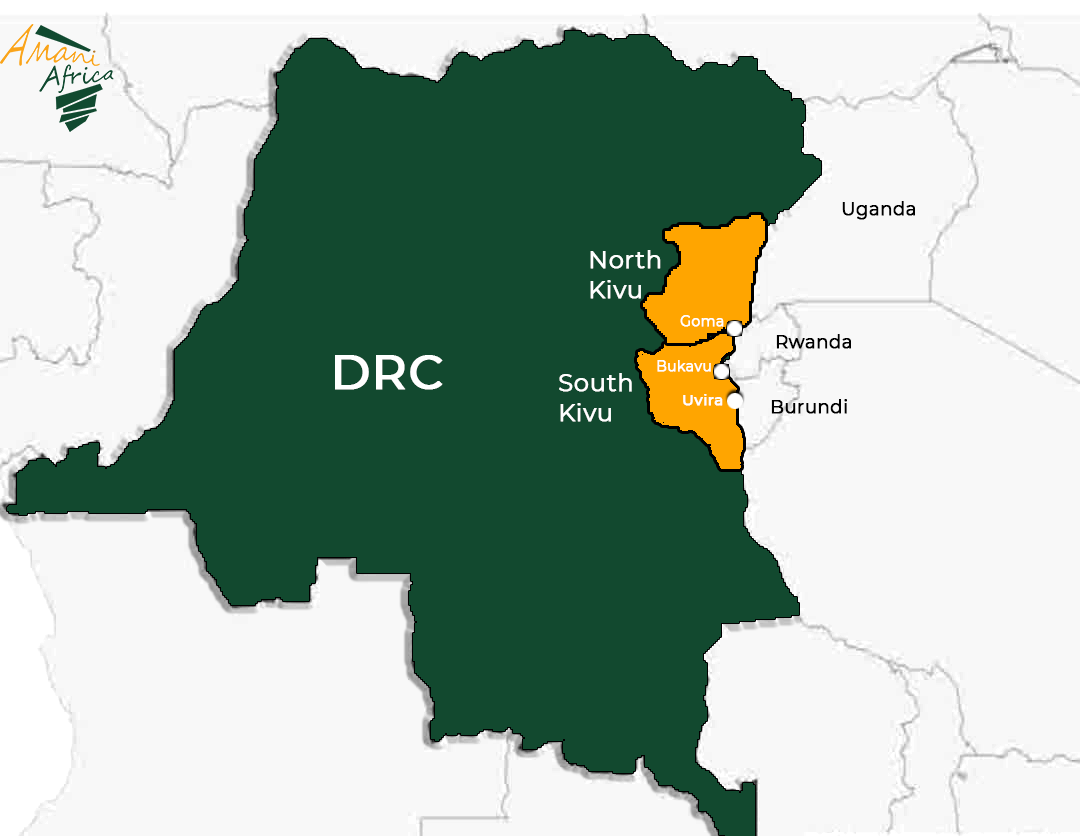
The session was not envisaged in the PSC’s programme of work but comes amid a dramatic escalation of violence in South Kivu, eastern DRC, just days after the diplomatic breakthrough of 4 December—the Washington DC Accord signed by the leaders of the DRC and Rwanda—brokered by the United States. Earlier, on 15 November, the Government of the DRC and the Alliance Fleuve Congo/Mouvement du 23 mars (AFC/M23) had also signed the Doha Framework for a Comprehensive Peace Agreement. The session also came soon after the UN Security Council (UNSC) unanimously adopted a resolution renewing the mandate of the United Nations Organisation Stabilisation Mission in the Democratic Republic of the Congo (MONUSCO) until December 2026.
Despite the diplomatic advances registered in Washington, DC and Doha, a new offensive by the AFC/M23 in South Kivu has significantly altered the situation on the ground. On 10 December, the group seized the strategic town of Uvira along the border with Burundi, further expanding the territory under its control. This year has been particularly volatile for eastern DRC, with a renewed wave of fighting between the Congolese armed forces, local militias, and the M23 intensifying earlier in the year and culminating in the fall of major towns, including Goma of North Kivu and Bukavu of South Kivu. The M23 has also entrenched parallel administrative structures in areas under its control, raising serious concerns for the DRC’s territorial integrity and constitutional administration.
The latest offensive has further exacerbated the humanitarian crisis in eastern DRC, with more than 200,000 people displaced since early December, reports of widespread human rights violations, including sexual violence, and a rapidly collapsing health system. In a statement issued on 11 December, the Deputy Spokesperson for the UN Secretary-General warned that the escalation risks seriously undermining efforts to achieve a sustainable resolution to the crisis and increasing the risk of a broader regional conflagration.
The offensive also heightens the risk of regional tension, as it brings Burundi’s capital city, Bujumbura, under a very close target of attack. During the UN Security Council briefing on eastern DRC on 12 December, the representative of Burundi expressed concern over cross-border attacks, some of which he said violated Burundi’s sovereignty. He further described the 4 December attacks in Cibitoke as ‘a grave provocation,’ warning that if such attacks were to continue, ‘it would become difficult to avoid direct escalation between the two countries [Burundi and Rwanda].’
DRC and Rwanda have continued to trade accusations over the latest violence, which both sides claim constitutes a breach of the Washington Accord. On 10 December, Kigali, in a statement issued by the Ministry of Foreign Affairs and International Cooperation, accused the DRC and Burundian armed forces of violating the ceasefire, alleging systematic bombardment of civilian villages near the Rwandan border using fighter jets and attack drones. During the 12 December Security Council briefing, Rwanda also raised concerns over what it described as atrocity indicators affecting the Banyamulenge community in South Kivu. The DRC, for its part, criticised what it described as a Rwanda Defence Forces–M23 offensive launched less than a day after the signing of the Washington Accord. It warned that continued attacks, mass displacement, and cross-border risks pose a serious threat to regional stability.
Meanwhile, language directed at Kigali has sharpened amid growing criticism of its alleged involvement in eastern DRC. In the recent UNSC briefing, a US representative expressed ‘profound disappointment’ at the renewed violence and asserted that the Rwanda Defence Forces had provided material, logistical, and training support to the M23, even fighting alongside the group in eastern DRC. The representative also levelled a serious accusation against Rwanda, stating that ‘in recent weeks, Rwanda is leading the region towards increased instability and war.’ In a subsequent post on the X platform, Secretary of State Marco Rubio warned that the United States could take action, stating that Rwanda’s actions in eastern DRC constitute a clear violation of the Washington Accord.
In a statement issued on 11 December, the Chairperson of the AU Commission, Mahmoud Ali Youssouf, expressed deep concern over the developments in South Kivu in eastern DRC, as well as in Cibitoke Province of Burundi. He reiterated AU’s ‘long-standing position that lasting peace in the Great Lakes region is predicated on full respect for the sovereignty and territorial integrity of all states,’ further condemning ‘any attempt to establish a parallel administration in eastern DRC.’ Similar language was reflected in the joint annual consultative meeting held in October between the PSC and the European Political and Security Committee (EU PSC).
The joint PSC and EUPSC communiqué issued after the consultative meeting reaffirmed the ‘imperative obligation to fully respect the sovereignty and territorial integrity of DRC’ as essential to resolving the country’s conflict, expressed grave concern over M23’s military operations and territorial expansion, and called for the ‘dismantlement of the so-called ‘parallel administration’ by the rebel movement of M23’. The joint PSC and EU PSC communiqué also called for foreign armed forces not invited by the DRC to unconditionally withdraw, in line with UN Security Council Resolution 2773 (2025). While the communiqué did not explicitly identify the forces concerned, its reference to Resolution 2773 leaves little ambiguity. That resolution calls on the Rwanda Defence Forces to cease support to the M23 and to withdraw immediately and without preconditions from DRC territory, a matter that is now governed under the Washington Accord.
Succumbing to the mounting diplomatic pressure, the M23 announced on 15 December the unilateral withdrawal of its forces from Uvira. Despite the reluctant withdrawal of the bulk of its forces, the continued presence of M23 forces in close proximity to Uvira is reported. Thus, a US official is reported as stating that the US was not satisfied due to the fact the recognition that the withdrawal was not total.
One of the issues expected to feature in tomorrow’s discussion is how the AU can reinvigorate its role in addressing the protracted conflict and decades of suffering in eastern DRC. While the AU played a critical role in facilitating dialogue between the DRC and Rwanda under the Luanda Process—including the declaration of a ceasefire in August 2024, the adoption of the Harmonized Plan for the Neutralization of the FDLR and the Disengagement of Forces/Lifting of Defensive Security Measures by Rwanda, and the adoption of the Concept of Operations (CONOPS), which also served as the basis for the US facilitated Peace Agreements— continental peace efforts have since faced setbacks, with mediation momentum shifting to Washington and Doha. At the same time, attempts to reorganise African-led efforts have so far made limited progress.
In March, the joint EAC-SADC Summit appointed a Panel of Facilitators composed of five former Presidents to support the DRC peace process. On 1 August, the Co-Chairs of the Joint EAC-SADC Summit met the Panel in Nairobi and adopted a framework to merge the Nairobi and Luanda processes. They also decided on the immediate merger of EAC-SADC and AU structures into a single mechanism comprising the AU Mediator and the EAC-SADC Panel of Facilitators. The Summit further called on the AU Commission to ensure all other initiatives and stakeholders align with this African-led process. A major update in this regard will be the planned High-Level Meeting on the Coherence and Consolidation of the Peace Process in the DRC and the Great Lakes Region, to be hosted by Togo, in its capacity as AU Mediator, on 17 January 2026.
The PSC may also need to accord developments in eastern DRC a level of attention commensurate with the gravity and pace of events on the ground. The PSC did not hold a session on the situation since its last meeting in February 2025, on the margins of the AU Summit. Although sessions were scheduled for 19 and 28 November, neither materialised. Without more regular engagement and closer follow-up, it will be difficult for the AU to provide strategic guidance or to play a more proactive and effective role in the peace process.
Supplementing and reinforcing the high-level meeting that Togo is expected to host, one avenue for the AU to reassert its leadership in advancing peace in relation to the conflict in Eastern DRC is to initiate and deploy initiatives for building trust between countries in the region and communities in Eastern DRC. This requires the AU to accord this file a heightened level of diplomatic attention and facilitate a more active role of the SADC-EAC facilitators in advancing confidence-building measures, including dialogue and reconciliation in Eastern DRC.
The expected outcome of the session is the adoption of a communiqué. The PSC is expected to welcome the signing of the Washington Accord between the DRC and Rwanda in December, as well as the Doha Framework for a Comprehensive Peace Agreement concluded in November 2025. However, the PSC is likely to strongly condemn the escalation of violence in South Kivu and the territorial expansion by the M23, including its takeover of Uvira, and the resulting deterioration of the humanitarian situation in the region. Echoing the UNSC, the PSC may call on the M23 to halt and reverse all its military operations and end the establishment of parallel administration in areas it seized. The PSC may further urge all parties to respect their obligations under the Washington Accord and the Doha Agreement, and to comply with UN Security Council Resolution 2773. The PSC may further express grave concern over the attacks affecting Cibitoke Province of Burundi and the resultant heightening risk of further regional escalation. The PSC may call on the various actors, including the DRC army and affiliated forces on the one hand and the M23 on the other, to unconditionally cease hostilities and abide by the commitments made under the Washington and Doha agreements. It may also call on the signatories of the Doha Framework to build on commitments made and finalise remaining agreements for ensuring implementation. It is also expected to re-emphasise the imperative of full respect for the sovereignty and territorial integrity of the DRC. With respect to continental mediation efforts, the PSC may welcome the decisions of the joint EAC–SADC Summit, including the merger of EAC–SADC and AU structures into a single mechanism comprising an AU Mediator and the EAC–SADC Panel of Facilitators. In this context, it may also call for the activation of a joint secretariat under the AU to strengthen Africa-led peace efforts in eastern DRC. The PSC may also welcome Togo’s plan to host the High-Level Meeting on the Coherence and Consolidation of the Peace Process in the DRC and the Great Lakes Region on 17 January 2026.
Coup d’état continues to surge as the African Union and regional bodies inadvertently make coup-making profitable again
Coup d’état continues to surge as the African Union and regional bodies inadvertently make coup-making profitable again
Date | 24 December 2025
Solomon Ayele Dersso, PhD
Founding Director, Amani Africa
Biruk Shewadeg, PhD
Research Consultant, Amani Africa
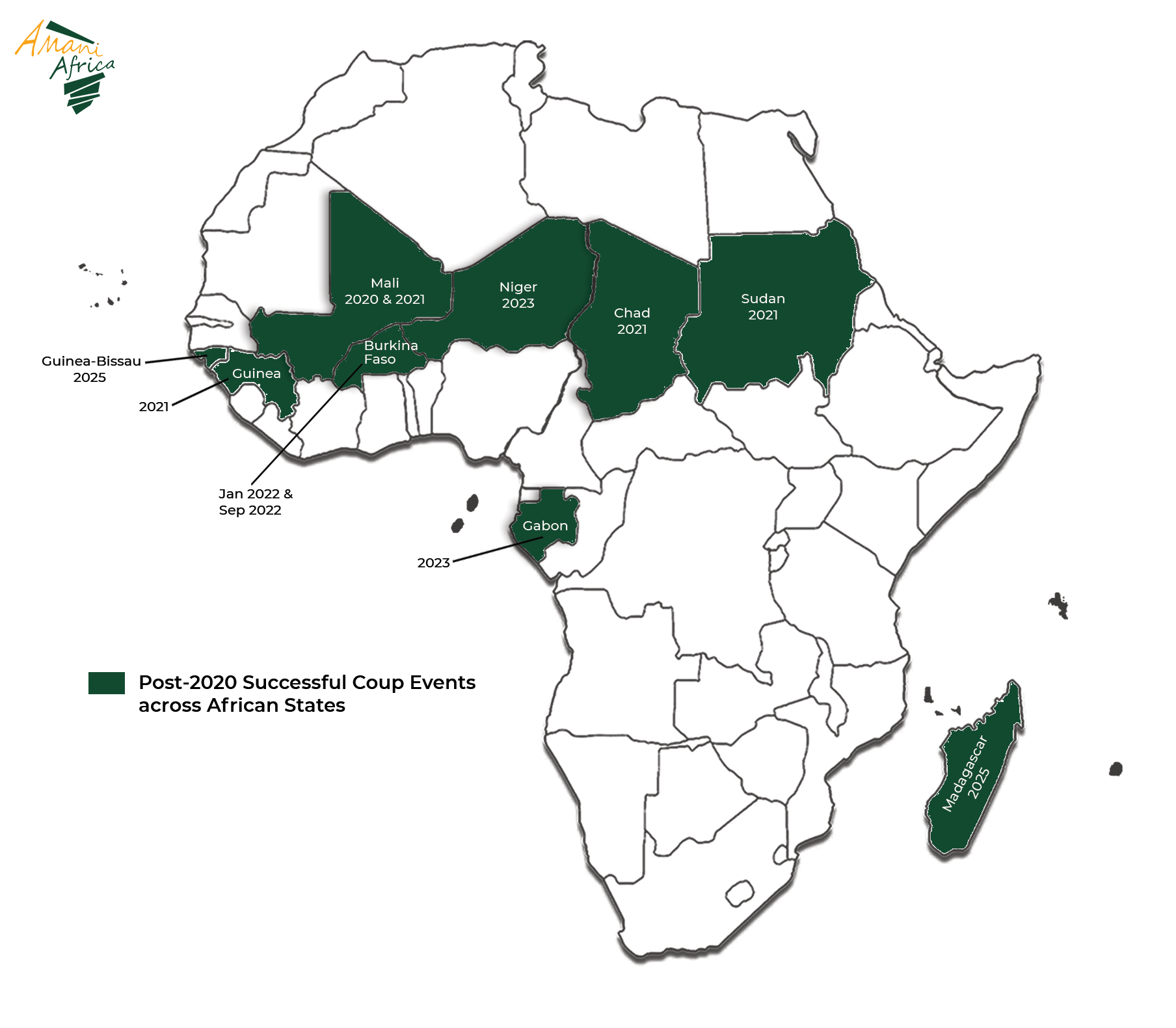
There is no end in sight for the new era of coups. Five years after it emerged, the resurgence of coups on the continent has continued well into the end of 2025. Following the coup in Madagascar in October, West Africa experienced, in November and December respectively, a coup in Guinea-Bissau orchestrated by the incumbent to prevent electoral defeat and an attempted coup in Benin. Since 2020, there were eleven instances of coups in nine African states. Of the eight countries that were suspended from the AU, currently seven remain under suspension.
Beyond the theory of contagion, the persistence of coups since 2020 is in part a result of an emerging policy practice on the part of the African Union (AU) and regional bodies that has lowered the costs of making coups and restored the most cherished prize of coup making, namely being recognised as legitimate leader.
The African Union’s anti-coup framework was meant to make military takeovers unprofitable. On paper, the Lomé Declaration; the Constitutive Act; the Summit Decision (Assembly/AU/4(XVI)), 2010; the Accra Declaration; and the African Charter on Democracy, Elections and Governance (ACDEG); together outlaw coups and provide for suspension and sanctions; ACDEG’s Article 25(4), in particular, bars coup leaders from contesting the elections meant to restore constitutional order. Article 25(5) adds further cost by making coup making a punishable criminal act under AU law. These provisions tell any officer contemplating a coup that even if such a coup succeeds, there is no path for auto-legitimisation through elections. In other words, Article 25(4) of ACDEG removed the most cherished prize that historically made coup-making profitable.
As military seizure of power surges in the face of major democratic backsliding on the continent, this rule is being hollowed out in practice, albeit, as discussed previously, without AU member states being regarded as having intended to dispense with the rule in Article 25(4) of ACDEG. Indeed, one of the paradoxical developments of AU’s policy response to the recent upsurge in coups is the fact that despite its declared commitment to zero tolerance to unconstitutional changes of government, in practice it has engaged not only in selective application of its policy but also created, as argued in an Ideas Indaba article, ‘a tendency of laxity in enforcing ACDEG’s Article 25(4) norm.’
In disregarding the application of this provision, the AU and regional bodies inadvertently remove the cost of staging coups, thereby making military seizure of power profitable again. In this context, instead of a bright red line, the anti-coup norm is becoming a negotiable constraint. Once that happens, as suggested previously, militaries start to read the norm not as a hard prohibition but as a risk that can be managed and bargained away.
This story of the lowering of the cost of military coups began in Chad. When Idriss Déby died in April 2021, and a Transitional Military Council (TMC) installed his son Mahamat Idriss Déby, the takeover met the criteria of an unconstitutional change of government (UCG): suspension of the constitution and military control of the transition. Instead of designating it a UCG and suspending Chad from the AU, the PSC accorded it ‘exceptional treatment’, excused in terms of Chad’s role as a frontline counter-terrorism partner, and marked a significant departure from the AU’s own rules. Perhaps more gravely, the PSC failed to enforce its decision on the non-eligibility of members of the TMC when Mahamat Idriss Déby Itno ran in the 2024 presidential election.
That moment matters because of the precedent it set. As a most recent Amani Africa Insight captures the signal this sent: coup leaders and militaries watching from elsewhere could reasonably infer that the PSC might be ‘willing not to insist on full compliance with AU norms if they opt for speeding up the ‘restoration’ of constitutional order as long as they hold elections.’ In other words, if you move quickly to elections, the AU may look the other way. That is the beginning of a classic moral hazard: the more you expect leniency after a risky act, the more attractive the act becomes.
Gabon then turns this early crack into a pattern. After Brice Oligui Nguema’s August 2023 coup removed Ali Bongo, the AU did the formal things: it recognised the UCG and suspended Gabon. That is as far as the AU went in upholding its norm on UCG. The AU looked the other way when Nguema, the very officer who led the coup and served as transitional head of state, stood as a candidate in the 12 April 2025 presidential election and won by about 90 per cent of the vote. The AU awarded Nguema by lifting Gabon’s suspension, in total disregard of the scenario ACDEG 25(4) was meant to prohibit.
While AU member states may not be considered as changing through practice the applicability of Article 25(4) of ACDEG, AU’s failure to at least reaffirm its commitment to this provision despite failure to enforce it in Gabon represented a significant normative rupture. It hollowed out the most important value of the non-eligibility rule, namely, coup makers cannot legitimise themselves through getting elected. If Chad’s case suggested you might escape suspension altogether, Gabon’s suggests that even if you are suspended, you can fairly quickly convert a coup into a continentally acknowledged electoral victory.
Guinea’s trajectory reinforces the same message. After the September 2021 coup, Guinea embarked on a drawn-out transition, with shifting timelines and growing concentration of power in the junta’s hands. Recent developments including, a constitutional referendum that allows junta members to stand in elections and extends presidential terms, are widely read as preparing the ground for coup leader Mamadi Doumbouya to run for president under rules his regime has crafted.
As pointed out previously, if the precedents set in Chad and Gabon are maintained, it would be unfeasible to bar Guinea from proceeding in the same direction. This will carry significant implications for the continuing credibility of the AU norm and for the AU’s broader engagement with other countries under political transition in respect to the application of this norm. This is where leverage shifts decisively to coup makers. When enforcement is inconsistent and sanctions are easily reversed, suspension, when it happens, becomes a temporary inconvenience rather than a real prohibition. Coup makers quickly learn that if they can stage elections on a timetable that satisfies regional fatigue with prolonged crises, they can keep both the prize and the recognition.
The result is a dangerous kind of normative slippage: ACDEG 25(4) still sits in the legal texts, and communiqués continue to reiterate the AU’s zero tolerance for UCG, including in the PSC’s 1305th and 1306th emergency meetings on Madagascar, but the repeated failure to enforce the non-eligibility rule in practice tells a different story. Each time the PSC validates elections where coup leaders stand, or lifts a suspension without even naming a breach of Article 25(4), it tacitly rewrites the rule. The norm survives in the legal text while erased in concrete decisions, with the policy of zero tolerance becoming more like a comforting narrative the organisation tells about itself than a binding commitment that shapes behaviour. From the perspective of militaries and political elites, the lesson is simple: the risks of staging a coup are decreasing, not only can the stigma of a coup maker be rectified by holding elections as in Gabon, but also, if you are lucky as in Chad, suspension from the AU and ineligibility for elections may all be set aside.
Reversing this normative slippage requires the AU and PSC to realign practice with the proclaimed principle. It necessitates that they close the gap between their rhetoric of upholding a policy of zero tolerance and their emerging practice of total disregard of Article 25(4) of ACDEG. First, as argued previously, the PSC would need to publicly reaffirm Article 25(4), explicitly stating that the AU fully stands by the rule in this provision despite its non-enforceability in some cases. While this course of action may be contested in light of the Pandora’s Box opened in those precedents and allegation of a double-standard, it offers the PSC an opportunity to reassert itself as guardian of the continental normative framework and its legal instruments. Second, the relatively strong stand of the AU against coups must be coupled with a firmer stance on ‘constitutional coups’: term-limit manipulation, rigging of elections or blocking electoral processes as the collusion of political and military elites did in Guinea-Bissau recently. As long as elected incumbents can hollow out constitutional processes without attracting comparable continental pressure, military actors will find it easier to present themselves as corrective forces rather than usurpers.
Informal consultation with countries in transition
Informal consultation with countries in transition
Date | 16 December 2025
Tomorrow (17 December), the African Union (AU) Peace and Security Council (PSC) will hold an informal consultation with countries in transition—namely Burkina Faso, Guinea, Guinea-Bissau, Madagascar, Mali, Niger, and Sudan.
This will be the fourth such informal consultation since the PSC introduced this format into its working methods in April 2023, following its 14th Retreat on Working Methods in November 2022. The informal consultation was established to enable direct engagement with representatives of countries suspended from AU activities due to unconstitutional changes of government. It drew on Article 8(11) of the PSC Protocol. Tomorrow’s consultation is expected to examine progress made and challenges encountered in ongoing transitions since the last consultation in March 2025.
Two notable developments have occurred since the previous consultation. First, military coups in Guinea-Bissau and Madagascar have expanded the list of countries undergoing political transitions to seven. Second, the lifting of Gabon’s suspension from the AU despite the fact that the elections did not comply with Article 25(4) of the African Charter on Democracy, Elections and Governance (ACDEG) on the ineligibility of perpetrators of unconstitutional changes of government in elections organised to restore constitutional order. As noted in our April 2025 Monthly Digest, Nguema’s participation and victory, in clear violation of ACDEG, and the subsequent lifting of Gabon’s suspension without the PSC affirming its full commitment to Article 25(4), is not without consequences for AU’s purported policy of zero tolerance to coups. It signalled to coup makers and members of the military in other African countries that the PSC may be ‘willing not to insist on full compliance with AU norms if they opt for speeding up the ‘restoration’ of constitutional order as long as they hold elections.’
Not surprisingly, Guinea’s coup leader and interim president, Mamady Doumbouya, is poised to follow Gabon’s path as the country prepares for elections. The PSC is likely to discuss technical and financial support for credible elections and, echoing its 1284th session, emphasise the importance of inclusivity in Guinea’s political process. In this respect, Guinea’s representative is expected to highlight progress toward the ‘restoration’ of constitutional order, particularly the September 2025 constitutional referendum and the general elections scheduled for 28 December 2025 and the electoral support the country needs. These elections are meant to conclude Guinea’s transition period. However, Doumbouya formally entered the presidential race in early November—reneging on his earlier pledge not to run. The PSC, during its field mission to Conakry in May and its 1284th session, urged the transition authorities to honour their commitment to complete the transition by December 2025, but stopped short of reminding them of the prohibition under Article 25(4) of ACDEG against coup leaders contesting elections. With Doumbouya now a candidate—and his victory highly probable—the PSC may follow the exact approach it applied to Gabon, unless the regional body, the Economic Community of West African States (ECOWAS), raises concern. Under the circumstances, whether or not the coup leaders in other countries will run for elections is now a matter of their choice and is not expected to face any opposition from the AU for non-compliance with Article 24(5) of ACDEG.
Similarly, Sudan’s representative may raise the issue of lifting the country’s suspension, citing the May 2025 appointment of Kamil al-Tayeb Idris as civilian Prime Minister by General Abdel Fattah al-Burhan, Chair of the Transitional Sovereign Council and head of the Sudanese Armed Forces (SAF). Following the appointment, it is to be recalled that the Chairperson of the AU Commission welcomed it as ‘a step towards inclusive governance.’ However, the appointment of the Prime Minister was not a result of national dialogue, nor did it involve the participation of Sudanese political and social forces. Indeed, discussions around the lifting of Sudan’s suspension remain premature under the prevailing circumstances, where the deteriorating security situation does not allow for an inclusive political process, there is no national dialogue and a clear pathway for the eventual convening of elections. These steps have ‘supposedly’ become the basic requirements the AU expects before lifting sanctions. Recent precedents of the Council suggest that sanctions can be lifted as long as a country organises a national dialogue and elections, even when the very actors who carried out a coup freely participate in those elections. It has become an acceptable shortcut around ACDEG. Additionally, the representative of Sudan may encourage the PSC to have a field mission to Port Sudan. In the light of recent developments including the fall of El Fasher, the last remaining major city in Darfur and the Heglig oilfield, into the hands of the para militaryRapid Support Forces, marking the de facto partition of Sudan and killing of civilians and the attack and the recent killing of UN Peacekeepers, the discussion may centre on deploying a mechanism for humanitarian and civilian protection in El Fasher and identifying credible pathways for accelerating efforts for peace as well as implementing the previous decisions of the PSC on the situation in Sudan.
Similarly, the situation in Madagascar is expected to feature in the consultation, given the military takeover that unfolded. In October 2025, a faction of the Madagascar Armed Forces led by Colonel Michael Randrianirina seized power amid mass protests in the capital Antananarivo, ousting President Andry Rajoelina and prompting the AU to suspend Madagascar’s membership for violating the Union’s zero-tolerance policy on unconstitutional changes of government. The PSC, at its 1305th and subsequent emergency sessions, condemned the coup, reaffirmed its rejection of any unconstitutional seizure of power, and called on all Malagasy actors, civilian and military, to exercise restraint, engage in inclusive dialogue, and work towards a peaceful and lawful resolution within constitutional frameworks. In its recent session held on 20 November, the Council emphasised the need for coordinated AU-SADC efforts, including high-level missions and strengthening the AU Liaison Office on the ground to support mediation, reconciliation, and stabilisation. The PSC also placed strong emphasis on the need for enhanced coordination and division of labour among the AU, SADC, and the Indian Ocean Commission, while calling on the AU Commission and partners to provide financial and technical support for the electoral management body and the drafting of a new constitution, and to extend support through the Africa Facility to Support Inclusive Transitions (AFSIT), conditional on the implementation of the Transition Road Map. These issues are likely to feature in tomorrow’s consultation with countries in transition, particularly the extent to which regional and continental coordination mechanisms are effectively aligned in supporting the country’s transition to a democratic order. Meanwhile, in the remaining countries—Burkina Faso, Mali, and Niger—relations with the regional bloc ECOWAS remain strained, as the three states continue consolidating their alliance through the confederation established in 2024. It is becoming increasingly clear that the security situation gets in the way of and provides a pretext for the lack of focused progress in the transition process. In Mali, the National Transitional Council adopted a bill on 3 July 2025 revising the Transitional Charter, granting General Assimi Goïta a renewable five-year term as President of the Transition ‘until peace is restored.’ Similarly, in Burkina Faso, the transition period was extended for another five years, starting in July 2024—the year initially planned for its conclusion. The new charter, signed by Captain Ibrahim Traoré, also allows him to contest in the elections. Niger has taken a similar path. A national conference on rebuilding the country in February 2025 decided that the National Council for the Safeguarding of the Homeland (CNSP), which seized power in July 2023, would remain in power for five years without any clear timeline for elections.
The Council is therefore expected to reiterate the concerns expressed during its 1304th ministerial session on 30 September 2025, which noted with ‘deep concern’ the ‘slow pace of political transition processes’ and urged the transitional authorities to accelerate inclusive transitions, engage all stakeholders, and facilitate genuine political dialogue. It may also again call on these authorities to adhere to their respective transitional roadmaps and operationalise joint transition monitoring committees.
While the issue of progress in the transition process may be the focus of the session, this cannot be separated from and is deeply tied to the possibility of arresting the deepening and widening threat facing these countries. A major issue for tomorrow’s session is the question of how AU and ECOWAS overhaul their approach by integrating the quest for restoration of constitutional order into a wider stabilisation and state authority expansion strategy backed by a security mechanism they develop and deploy together with the Sahel countries to address the existential threat facing these countries.
As such, tomorrow’s consultation needs to both situate the discussion on transition in these countries within the insecurity facing them and consider the kind of role the AU and ECOWAS bring to the counterterrorism efforts of these countries. Similar to Sudan and unlike Gabon and Guinea, the push for progress in the transitional process cannot be abstracted out of the pressing issue facing these countries, which is the terrorism menace that has grown to become an existential threat to these countries. A clear illustration of this involves the recent developments in Mali, with the capital Bamako under imminent threat and cut off from supply routes. Jama’at Nusrat al-Islam wal-Muslimin (JNIM), affiliated with al-Qaeda, has expanded operations from the north and centre into the western and southern regions of Mali. Its fuel blockade since September has caused severe shortages, power cuts, and economic paralysis in Bamako and other cities, triggering public unrest and fears of broader instability. Weekly fuel deliveries have reportedly fallen from 1,000 to 200 tankers. Facing mounting pressure, General Goïta has replaced several senior military officials, including the deputy chief of staff of the armed forces, the head of military security and the ground forces’ chief of staff, highlighting internal strains within the regime.
The PSC is also expected to discuss the AU’s recent intensified diplomatic engagement with these Sahelian countries and explore ways to enhance coordination. In May, the AU Commission Chairperson met representatives of the three countries in Addis Ababa to explore renewed engagement. This was followed by a visit from Angola’s Minister of External Relations—delivering a message from President João Lourenço, the current AU Chairperson—reaffirming the AU’s commitment to Sahel stability and counterterrorism efforts. In July, the AU Chairperson appointed President Évariste Ndayishimiye of Burundi as Special Envoy for the Sahel. Angola also proposed hosting a summit on the Sahel in Luanda, welcomed by the PSC during its 1304th session. Additionally, former Gambian Foreign Minister Mamadou Tangara was appointed as Special Representative for Mali and the Sahel, and Head of the AU Mission in Mali and the Sahel (MISAHEL). The PSC also decided to establish a Task Force to support counterterrorism in the region and called for a field visit by Special Envoy Ndayishimiye to engage directly with the transitional authorities. In this context, the informal consultation could provide an opportunity to discuss how to advance these initiatives and follow up on the decision of PSC and ECOWAS during their annual consultative meeting last May ‘to develop a security cooperation framework involving the AU and ECOWAS engagement with Burkina Faso, Mali and Niger, in order to more effectively address insecurity in the West Africa Region.’
In addition to the three Sahelian countries, a further concern is the widening pattern of governance instability across West Africa. This includes the recent coup d’état in Guinea-Bissau and the attempted coup in Benin, developments that underscored the growing threat of unconstitutional changes of government and prompted ECOWAS to declare a state of emergency. As such, the consultation is expected to consider the situation in Guinea-Bissau following the coup d’état of 26 November, which unfolded just before the release of the results of the presidential runoff between incumbent President Umaro Sissoco Embaló and his main challenger, Fernando Dias, on 26 November. In a statement issued during the crisis, prior to Senegal’s confirmation that it had granted Embaló asylum, the military announced that the President and several senior officials were “under the control” of the High Military Command. In response to the coup, the AU convened a PSC session on 28 November, during which it condemned and rejected the unconstitutional change of government and decided to immediately suspend Guinea-Bissau from participation in all AU activities, organs, and institutions until constitutional order is restored. The Council further requested the AU Post-Conflict, Reconstruction and Development (PCRD) Centre in Cairo, in collaboration with UN peacebuilding institutions, to engage relevant national stakeholders in Guinea-Bissau to support development activities aimed at preventing further relapses into political crisis. In addition, the PSC mandated the Chairperson of the Commission to establish an inclusive AU monitoring mechanism, in collaboration with ECOWAS and other relevant stakeholders, to closely follow developments on the ground, particularly the implementation of ECOWAS and PSC decisions. At the sub-regional level, the 68th Ordinary Session of the ECOWAS Authority of Heads of State and Government, held in Abuja on 14 December, rejected the transition programme announced by Guinea-Bissau’s military authorities and called for a swift return to constitutional order. The Authority warned of targeted sanctions against individuals obstructing the process and mandated the ECOWAS Chair to lead a high-level delegation to Guinea-Bissau to engage the junta.
On the other hand, the representative of Sudan is expected to update the PSC on the recent developments in the conflict in Sudan, including the fall of El-Fasher—the last major SAF stronghold— to the Rapid Support Forces (RSF) on 26 October, and on reports of attacks on civilians and mass killings committed during and after the takeover. During the emergency meeting held in Sudan on 28 October, the PSC ‘strongly’ condemned the ‘criminal activities against Sudanese civilians and the grave violations of human rights and international humanitarian law, perpetrated by the paramilitary RSF’. The emergency session further requested the AU Commission to regularly monitor and report heinous crimes committed in Sudan, develop proposals on how to address them to prevent their further escalation, develop a plan for the protection of civilians, and make recommendations to the PSC within three weeks. It also requested the Special Envoy on the Prevention of Genocide and Other Mass Atrocities to urgently undertake a fact-finding mission to Sudan and report back to the Council with recommendations within three weeks. While meeting these deadlines may prove challenging, tomorrow’s consultation could consider ways Sudan might facilitate the implementation of these tasks.
As with previous consultations, tomorrow’s engagement is not expected to result in an outcome document.