
Health security and the promotion of peace and security in Africa
Health security and the promotion of peace and security in Africa
Date | 7 February 2024
Tomorrow (8 February), the African Union (AU) Peace and Security Council (PSC) will convene its 1200th session to deliberate on the theme of ‘health security and the promotion of peace and security in the continent’.
The session is expected to commence with opening remarks by Mohammed Arrouchi, the Permanent Representative of Kingdom of Morocco and Chairperson of PSC for the month of February. The AU Commissioner for Political Affairs, Peace and Security (PAPS), Bankole Adeoye, and the Commissioner for Health, Humanitarian Affairs and Social Development, Minata SAMATE CESSOUMA, as well as the Director-General of the Africa Centres for Disease Control and Prevention (Africa CDC), Dr. Jean Kaseya, are expected to deliver statements. The African Commission on Nuclear Energy (AFCONE), the International Committee of the Red Cross (ICRC) and Pateur Institute of Morocco are also expected to participate in this session.
This session comes amid a cholera outbreak gripping the Southern Africa region, which highlights the persisting challenges of disease epidemics facing the continent. According to Africa CDC, from January 2023 to January 24, 2004, a staggering total of 252,934 cases and 4,187 deaths have been reported from 19 AU Member States. Alarmingly, over 72.5% of these cases are reported from the Southern Africa Development Community (SADC) region. In response to the crisis, SADC convened an extraordinary summit on 2 February, during which the regional bloc outlined range of measures to curb the outbreak. While the session provides an opportunity to explore ways of supporting SADC’s efforts to address the outbreak, it also underscores the growing recognition of the need for a holistic approach that properly caters to human security.
The PSC has previously deliberated on various aspects concerning the nexus of health, peace and security, within the framework of its mandate under Articles 6 and 7 of the PSC Protocol, which outline humanitarian action and disaster management as integral powers and functions of the PSC. Article 15(1) of its Protocol also stipulate that the PSC shall take active part in coordinating and conducting humanitarian action in the event of conflicts or natural disasters, while Article 13(f) specifically mandates the African Standby Force (ASF) to engage in humanitarian assistance to alleviate the suffering of civilian population in conflict areas and supporting efforts to address major natural disasters. Among its significant decisions in fulfilling this mandate was the authorization of an AU-led military and civilian humanitarian mission during its 450th session in August 2014 in response to the West Africa Ebola Virus Disease outbreak.
At its 742nd session held in January 2018, PSC recognized that disease epidemics are increasingly pausing serious social, economic, political and security threat to many parts of the continent, while emphasizing the imperative of mainstreaming Africa’s public health security within the overall framework of the AU Peace and Security Architecture. It also underscored the need for Member States to embrace and further enhance their collective security approaches and cooperation in preventing, controlling and combating disease epidemics. In the wake of the COVID-19 outbreak, PSC also convened several sessions to explore and address its impact on the peace and security in the continent. Notably, PSC’s 918th session, held in April 2020, acknowledged that ‘COVID-19 constitutes an existential serious threat to international peace and security’, further recognizing the ‘very serious and unprecedented threats to human security and national economies’ posed by the pandemic.
Over the years, AU has initiated different institutions and strategies to address the health related challenges of the continent. Aspiration 1 of Agenda 2063, Africa’s blueprint and master plan for transforming Africa into the global powerhouse of the future, envisions a prosperous Africa based on inclusive growth and sustainable development. One of the key goals for Africa to realize this aspiration is to ensure that its citizens are healthy and well-nourished and adequate levels of investment are made to expand access to quality health care services for all people. AU also developed the African Health Strategy 2007-2015 and 2016-2030. In January 2017, the Africa Centers for Disease Control and Prevention (Africa CDC) was launched to support public health initiatives of Member States and strengthen the capacity of their public health institutions to detect, prevent, control and respond quickly and effectively to disease threats. In a significant move in February 2022, the Assembly (Assembly/AU/Dec. 835(XXXV)) elevated Africa CDC to an autonomous public health institution. It also upgraded the ‘AU COVID-19 Response Fund’ into the ‘Africa Epidemics Fund’ to mobilize resources for preparedness and response to disease threats on the continent. Furthermore, the Africa Medicine Agency (AMA) has been established as a specialized agency of the AU through a treaty adopted in February 2019 to enhance the capacity of State Parties and regional mechanisms to regulate and improve access to quality, safe and efficacious medicines, medical products and technologies in Africa.
While the initiative to enhance its health security architecture is commendable, the continent still faces recurring disease outbreaks, including emerging and re-emerging infectious diseases. The COVID-19 pandemic starkly exposed the ‘weaknesses and inequities’ inherent in the global health ecosystem, where Africa found itself largely neglected as wealthier nations monopolized doses for their own citizens and refused the request for TRIPS waiver to allow the generic production of COVID-19 vaccine. This underscores the critical imperative for Africa to prioritize investments in its health system and enhance its preparedness for future outbreaks. Indeed, it was against this context that the AU launched a framework for action known as ‘A New Public Health Order for Africa’ in September 2022 with the view to addressing the structural deficiencies ranging from national to global health system. The new public health order calls for: strengthened public health institutions, strengthened public health workforce, expanded manufacturing of health products, increased domestic investment in health, and action-oriented and respectful partnerships.
One key aspect of tomorrow’s deliberation is expected to be the intersection between health, peace and security. Echoing the sentiments of the Director-General of the World Health Organization (WHO), it is often stated that ‘there is no health without peace and no peace without health’, encapsulating the ideals of the WHO Constitution which recognizes that the health of all peoples is fundamental to the attainment of peace and security and is dependent on the fullest co-operation of individuals and states. The new WHO Global Health and Peace Initiative (GHPI), aimed at strengthening the WHO and health sector’s roles in fostering peace, highlights the intricate and bidirectional interplay between conflict, health and peace. The most apparent nexus between health and peace arises when conflicts precipitate direct, violent fatalities among civilians and combatants, leading to physical and psychological disabilities. Conflicts disrupt health systems, impede medical supply chains, break social structures, and cause health care workers to leave, and fuel epidemics and starvation.
On the other hand, as the GHPI notes, for citizens, the provision of healthcare and other essential services serves as the most tangible manifestation of national authority and a key determinant of state legitimacy. Disparities in the delivery of these services can erode such legitimacy and escalate the risk of violence, particularly when certain groups perceive unequal access as deliberate exclusion or neglect by the government. In some context, the lack of access to basic services, including health, has been identified as a driver for recruitment into violent extremist groups. Healthcare systems that address economic, geographic, epidemiological and cultural barriers to access, while striving for Universal Health Coverage (UHC), enhance better state-citizen relationships. This aspect of the intersection also underpins the concept of health security, an essential component of human security, as good health is not only vital for human survival but also plays crucial role in sustaining livelihoods and upholding human dignity.
In light of the above, there are several policy considerations that merit reflection in tomorrow’s deliberation. Beyond mere recognition of constitutional recognition, governments should demonstrate their commitment to the right to health through tangible actions, including through prioritizing and allocating adequate resources for healthcare. In April 2001, Member States of the AU committed to allocate at least 15% of their annual budgets to health, known as the ‘Abuja Declaration’. However, over two decades later, only a few countries (South Africa and Cape Verde, according to one source) have achieved that target. It is also imperative that health policies and their implementation be grounded in the principles of equity and universal access to high-quality care. Such an approach not only fosters inclusivity but also contributes to achieving sustainable peace. In fragile and conflict settings, targeted health interventions have a high potential to significantly enhance prospects for peace. These interventions are particularly effective when tailored to address the root causes, drivers, and triggers of conflict. Moreover, initiatives aimed at preventing the collapse of health systems and subsequent reconstruction play pivotal role in mitigating simmering grievances and preventing further tension fueled by inadequate access to healthcare.
The expected outcome of the session is a communiqué. PSC may take the opportunity to welcome the convening and outcome of the 2 February extraordinary summit of SADC on the cholera outbreak in the region. In this regard, PSC may call upon the Africa CDC and international partners to sustain their technical and financial support for the cholera response efforts in the region. Recognizing the nexus between health and peace, and health security as a fundamental pillar of human security, PSC may echo the statement by Director-General of the World Health Organization (WHO) that ‘there is no health without peace and no peace without health’. While highlighting the imperative of health security in fostering sustainable peace and development in the continent, PSC may urge Member States to demonstrate political commitment by increasing investments in the health sector and establishing equitable health system to attain universal health coverage. In this connection, PSC may seize the opportunity to reiterate the importance of Member States reaffirming their commitment to the Abuja Declaration, which calls for allocating 15% of their annual budget on health. In relation to Africa’s New Public Health Order, it may call upon various stakeholders, including Member States, international partners, the private sector, Civil Societies to support the full implementation of the initiative and enhance health emergency preparedness and response. It may also underscore the significance of investing in vaccine production, as well as the imperative to protect health infrastructure and personnel. Finally, PSC may urge the Commission to work on the full operationalization of the different initiatives that are aimed at strengthening AU’s health security architecture, notably Africa CDC, the Africa Medicine Agency (AMA), and Africa Epidemics Fund.

Monthly Digest on The African Union Peace And Security Council - December 2023
Monthly Digest on The African Union Peace And Security Council - December 2023
Date | December 2023
In December, under the chairship of the Gambia, the African Union (AU) Peace and Security Council (PSC) had a scheduled program of work consisting of two sessions, the annual retreat with the African Peer Review Mechanism (APRM), the annual high-level seminar and an informal consultation. Additionally, the PSC held a consultation to discuss the draft UN Resolution on Financing of Peace Support Operations.
Discussion on Transitional Justice and Post-Conflict Peacebuilding
Discussion on Transitional Justice and Post-Conflict Peacebuilding
Date | 5 February 2024
Tomorrow (6 February) the African Union (AU) Peace and Security Council (PSC) will convene its 1199th Session. This session will consider transitional justice and post-conflict peacebuilding.
The session is expected to begin with opening remarks by Mohammed Arrouchi, the Permanent Representative of Kingdom of Morocco and Chairperson of PSC for the month of February. This will be followed by a presentation of the AU Transitional Justice Policy by Bankole Adeoye, the AU Commissioner for Political Affairs, Peace and Security (PAPS). Statement is also expected to be delivered by the African Commission on Human and People’s Rights. Representatives of the National Human Rights Council of Morocco and the EU Delegation to the AU are also respectively expected to make statements.
Since the adoption of the AU Transitional Justice Policy (AUTJP) in 2019, the PSC has only convened once to discuss the AUTJP on 23 August 2022. The 1102nd session, focused on the deliberation of the AUTJP, aimed at allowing AU Member States to exchange their experiences, best practices, challenges, and prospects in the implementation of the policy. Additionally, it aimed to explore ways of better addressing the underlying causes of conflict and insecurities and foster synergies that can have a multiplied impact. It is also recalled that the 1102nd session decided to regularize briefing on the theme as an annual meeting of the Council.
Facts on the AU Transitional Justice Policy (TJP)
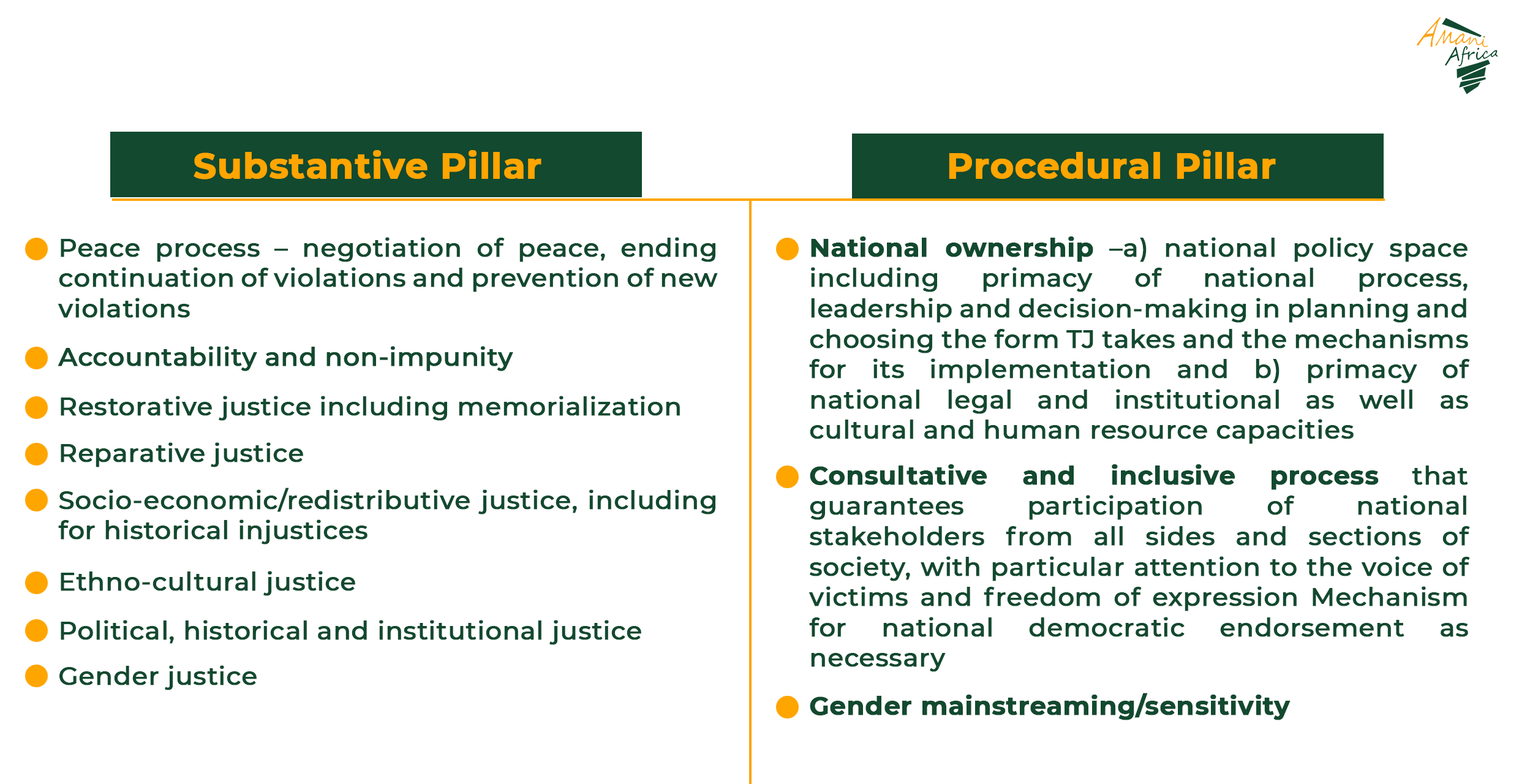
Although there were no specific sessions dedicated to transitional justice and post-conflict peacebuilding, the Council held various sessions to identify policy options for transitional justice initiatives and discussed different transnational justice mechanisms. Under the theme ‘peace, reconciliation and justice’, the PSC conducted several discussions. Notably, during the 16th Extraordinary Session of the AU Assembly in May 2022 in Malabo, Equatorial Guinea, the focus was on terrorism and unconstitutional changes of government in Africa. It was during this session that 31 January of each year was designated as the ‘Africa Day of Peace and Reconciliation’. Moreover, in its 525th session in July 2015, the PSC agreed to include the theme ‘Peace, Reconciliation, and Justice’ as a regular item on its annual program of activities. Lastly, during its 899th session on 5 December 2019, the PSC agreed to dedicate an annual session to sharing experiences and learning lessons related to national reconciliation, peace restoration, and cohesion building in Africa.
As indicated in the Concept note prepared for the session, tomorrow’s session will serve as an opportunity for the PSC to receive an update in the implementation of the AUTJP. In ensuring the effective implementation of the policy, the Roadmap for the Implementation of the AUTJP outlines various activity areas to be implemented by the AU Commission. One of the key activities is resource mobilisation in support of the implementation of the policy. In this regard, during its 1102nd session, the PSC requested the Chairperson of the AU Commission to mobilize the necessary resources for the successful implementation of the AUTJP.
In response to this request and in alignment with the roadmap, the AU and EU have launched the Initiative for Transitional Justice in Africa (ITJA) project. This three-year project, officially launched on 25 October 2023, aims to support AU member states in adopting the AUTJP and implementing transitional justice processes at the national level. The ITJA project will be executed by a consortium of three organisations, with the International Center for Transitional Justice (ICTJ) leading the initiative, despite the existence of African institutions that could play a leading role in the development of the AUTJP, most notably the Centre for the Study of Reconciliation and Violence (CSVR). The African Transitional Justice Legacy Fund (ATJLF) and the Centre for the Study of Violence and Reconciliation (CSVR) are also part of the consortium. This initiative covers various activities outlined in the implementation roadmap, including awareness creation and popularising the AUTJP, technical assistance to AU Member States and commissioning research on transnational justice in Africa. Most importantly, the initiative assists in the establishment and coordination of the African Women Platform on Transitional Justice and increases the meaningful participation of civil society organisations in the design, implementation, and monitoring of transitional justice mechanisms by strengthening its capacity. In this regard, it is expected that the AU Commission will brief the Council on how these activities are planned to be undertaken by the consortium.
“The ITJA project will be executed by a consortium of three organisations, with the International Center for Transitional Justice (ICTJ) leading the initiative, despite the existence of African institutions that could play a leading role in the development of the AUTJP, most notably the Centre for the Study of Reconciliation and Violence (CSVR). “
Furthermore, the AU Commission is also expected to emphasize its efforts in implementing the AUTJP in relation to capacity building. In this regard, the Commission is likely to discuss various capacity-building training activities offered to youth and women. These include providing training on the application of the Policy to The Gambia, Ghana, Zimbabwe and South Sudan.
In exploring the challenges, the PSC may emphasise that the successful implementation of transitional justice in Africa hinges on addressing key challenges. The success of transitional justice endeavours is intricately tied to the political commitment, leadership, mobilization of support for and confidence in the process from a critical mass of the public and the capacity of the country concerned. Political buy-in along with a level of public support for and confidence in the process remains a crucial determinant of the success of transnational justice.
Even when political buy-in exists, capacity limitations may get in the way of implementing the AUTJP. The AU’s capacity to provide assistance is intricately linked to the financial resources at its disposal. One viable solution that the Council could explore to overcome this financial challenge involves the exploration of alternative sources of funding identified in the revised AU PCRD policy considering the critical contribution of transitional justice mechanisms, including truth and reconciliation processes for post-conflict peacebuilding. Additionally, lack of public awareness and active participation in the transitional justice process may also be raised as a factor that could hinder the success of the transitional justice process. Some of the key considerations for addressing technical and public awareness challenges could be the establishment of a continental network of transitional justice practitioners and analysts as an important platform for providing timely and relevant technical support for the implementation of the AUTJP in member states and the institutionalisation of the continental forum on transitional justice into the annual indicative program of the PSC.
“Some of the key considerations for addressing technical and public awareness challenges could be the establishment of a continental network of transitional justice practitioners and analysts as an important platform for providing timely and relevant technical support for the implementation of the AUTJP in member states and the institutionalisation of the continental forum on transitional justice into the annual indicative program of the PSC. “
In relation to countries that are undergoing political transition, the absence of a comprehensive legal framework or supportive legislation can impede the successful implementation of transitional justice. Moreover, in regions facing ongoing or latent conflict, security concerns can pose a significant challenge to the implementation of transitional justice.
Another aspect of the session is expected to be the sharing of experiences and challenges in the implementation of the AUTJP, particularly in relation to the development and implementation of transnational justice programs. There are various AU member states that are resorting to the use of transitional justice as a means of resolving grievances that resulted from conflicts. A recent example of this aspect is Ethiopia. The peace deal that was signed in November 2022 between the Federal Democratic Republic of Ethiopia (FDRE) and the Tigray People’s Liberation Front (TPLF) envisaged that ‘the government of Ethiopia shall implement a comprehensive national transitional justice policy aimed at accountability, ascertaining the truth, redress for victims, reconciliation and healing consistent with the constitution of the FDRE and the African Union Transitional Justice Policy Framework’. In March 2023, the AU announced that it will pledge to provide support to the planned transnational process in Ethiopia. Therefore, it is anticipated that the PSC will receive an update on the contribution of the AU towards the development of the transitional justice policy in Ethiopia and the extent to which the AUTJP has been used to inform and shape Ethiopia’s policy.
The AU is also assisting South Sudan’s transitional justice and post-conflict peace-building efforts. The revitalized Agreement for Resolution of Conflict in South Sudan (R-ARCSS) signed in 2018 provides for transitional justice, reconciliation and healing (Chapter 5). Under the R-ARCSS, the parties committed to the establishment of three transitional justice mechanisms: Hybrid Court, the Commission for Truth Reconciliation and Healing (CTRH) and the Compensation and Reparations Authority (CRA). The AU collaborated with the Government of South Sudan in convening a transitional justice conference in May 2023 in support of the process towards the adoption of the relevant legal instruments for the operationalization of the transitional justice mechanisms under Chapter V of the agreement. Despite the failure to meet the deadline for the operationalization of these mechanisms, there are recent developments highlighted in the report of the Reconstituted Joint Monitoring and Evaluation Commission (RJMEC). The report stated that CTRH and CRA Bills was adopted by the Council of Misters and they are expected to be enacted by the parliament. Yet, there is no progress regarding the hybrid court.
The expected outcome is a communique. The PSC may encourage the developments made regarding resource mobilization and advocate for sustained efforts in resource mobilization to support the effective implementation of the African Union Transitional Justice Policy (AUTJP). Additionally, the PSC may applaud and reinforce support for the AU-EU Initiative for Transitional Justice in Africa (ITJA) project and encourage enhanced use of the technical expertise present in African institutions that played a leading role in the development of this globally most up-to-date policy on transitional justice and post-conflict peacebuilding. It may underscore the need to strengthen efforts to raise awareness and popularize the AUTJP across Member States. The PSC may in this respect call for the establishment of a continental network of transitional justice practitioners and analysts as an important platform for providing timely and relevant technical support for the implementation of the AUTJP in member states. The Council may also request the establishment of a regular monitoring and evaluation mechanism for AUTJP implementation progress. In recognising the important role of civil society organisations, particularly women and youth-led organisations, the Council may emphasise the need for increased collaboration with civil society organisations, empowering them to actively participate in the design, implementation, and monitoring of transitional justice mechanisms. Furthermore, the PSC may reiterate the need for regular updates on the experiences and challenges faced by AU Member States in implementing the AUTJP and facilitating knowledge-sharing sessions to derive best practices and lessons learned from countries undergoing transitional justice processes. To this end, the PSC may decide to institutionalise the continental forum on transitional justice that the AU Commission organises annually as part of its calendar of events in its annual indicative program.
How Africa organizes itself will make or break AU’s G21 membership
As part of covering some of the major themes on the agenda of the AU summit, this Ideas Indaba presents analysis on preparations for and modalities of organizing AU’s participation in G21.
How Africa organizes itself will make or break AU’s G21 membership
Date | 2 February 2024
Faten Aggad
Member of the Namibia-Amani Africa High-Level Panel
Solomon Ayele Dersso, PhD
Founding Director, Amani Africa
The decision of the India G20 summit last September admitting the African Union (AU) as a permanent member has been hailed as a historic development both continentally and globally.
While it is not true that the benefit of AU membership to the global body is insignificant, there is merit to the view that the potential benefits of AU’s membership for Africa are significant. AU’s G21 membership can transform Africa’s position from being a passive receiver (object) into an active contributor (agent) of global financial and economic policy-making. This could be consequential particularly when such policy-making affects Africa’s social and economic interests directly or substantially.
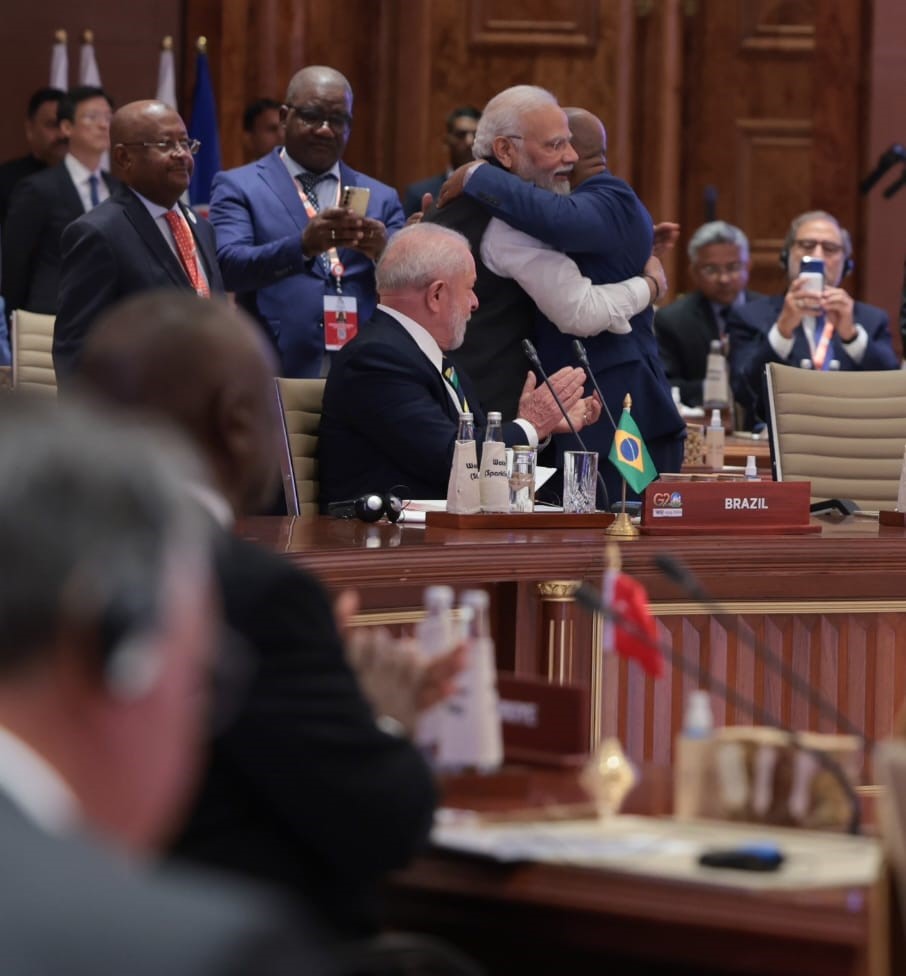
Needless to say, the mere fact of AU’s membership in the G21 will not be enough to harness the opportunities that membership in G21 presents for Africa. Seizing these opportunities depends mainly on AU’s effective participation and exertion of influence in shaping both agenda setting and negotiation of policies in the group.
A critical pre-requisite for such participation and influence is the establishment of politically legitimate, technically equipped and operationally dynamic institutional arrangement and processes. Now that it secured a seat at the table, it is time for the AU to properly address the question of such institutional arrangement and processes that facilitate the effective planning and active participation of the AU in the G21 processes.
While the discussion on how to go about AU’s membership in the G21 picked pace only few months after the India presidency summit in September, this discussion in the AU reveals both a clear recognition of the weight of the responsibility and commitment for crafting the institutional arrangement and processes necessary for AU’s meaningful use of its membership in the G21.
Thus, following the meeting of the AU Permanent Representatives Committee (PRC) on 8 December, a PRC Sub-Committee on the Working Group on Modalities and Participation of the AU in G20, headed by Emilia Ndinlao MKusa Namibia’s Permanent Representative to the AU, was tasked to work with Albert Muchanga, the AU Commissioner for Economic Development, Trade, Tourism, Industry and Minerals to develop options on how to organize AU’s role as member of the G21. For its part, the AU Commission constituted a high-level taskforce co-chaired by the Commission’s Director General and Muchanga. Following the meeting of the PRC Sub-committee Working Group on 12 January, a report outlining options on modalities and priorities on AU participation in the G21 and draft decisions for adoption by 37th AU summit to be held during 14-18 February 2024 have been prepared.
As commendable as this recognition and commitment of the AU as well as the work accomplished this far are, what matters the most is the choices that the AU makes on both the structures/entities that represent the AU, present and defend its policy position at the various levels of G21 negotiations and the internal processes for preparing, negotiating and adopting AU’s policy positions. Thus Muchanga rightly observed during the 12 January PRC meeting that ‘effective collaboration between the AUC and Member States is critical to facilitate coordination and ensure that Africa speaks with one voice.’ A major dilemma that the AU faces and the policy discussions thus far reveal is the balance that should be struck between political legitimacy and institutional and technical competency that are key for effectiveness of AU’s membership.
It is, therefore, important to ensure that the AU membership is supported by adequate, mandated preparatory processes and politically astute and technically robust representation in both the G20 Tracks (see Visual 1) as well as the thematic priorities of each G20 Presidency.
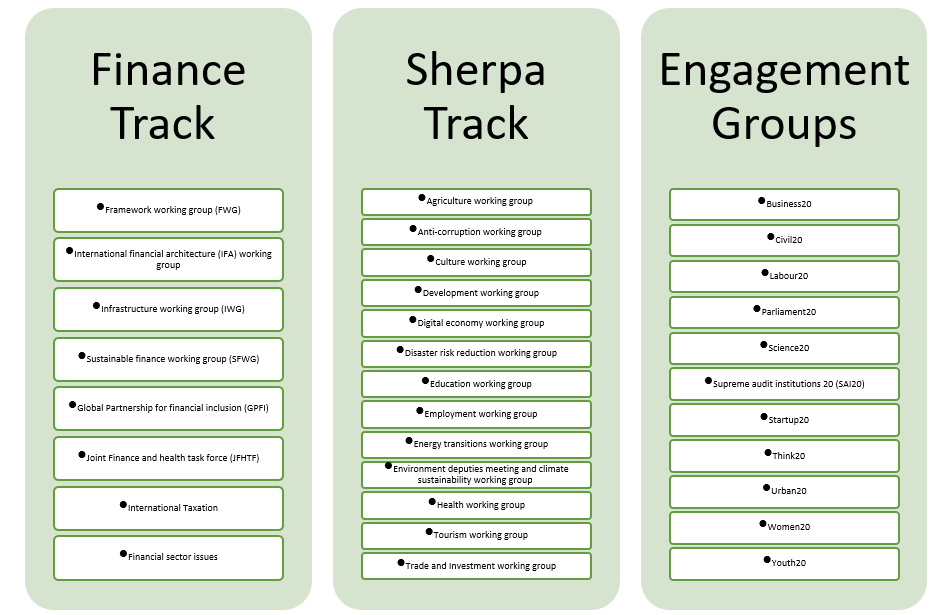
More specifically, the following points provide recommended inputs for a possible roadmap currently being proposed for AU summit to ensure an effective engagement of Africa in the G21:
1.The AU representation at G20 summit: Unlike other regional representation at the G20 (i.e. the EU), the AU (Union Chair and Commission) does not have delegated authority to act on behalf of AU member states on most issues covered by a typical G21 agenda. Therefore, the working methods are key to define the scope of engagement while ensuring that the AU reaps maximum benefits from its G21 membership.
In formulating the working methods, member states will need to strike a balance between, on the one hand, the imperative of inclusivity through adequate consultations of AU Membership, and, on the other hand, speed considering the pace of G21 processes.
In this respect, the AU could consider adopting an approach whereby, based on the incoming G21 Presidency announced priorities, the AU Chair, supported by the AU Commission, presents its detailed engagement proposal for consideration by the AU decision making structures during the annual AU Summit. Such engagement mandate would be subject to debate and refinement after which it could be adopted as guidance to the AU Presidency in its engagement.
2.Coordination at Assembly level in between AU summits: the AU can consider and use two avenues for this. First, the experience thus far including best practice following the outbreak of the COVID-19 pandemic shows the role that the Bureau of the AU Assembly could play for coordination in between AU summits. This has allowed a degree of continuity in the AU agenda and shall provide an excellent basis for the continent’s engagement in the G20 through close coordination between presidencies. The G20 should therefore be included in the coordination efforts of the Bureau and should be a standing item in their meetings. Second and as proposed in the conclusion of the 12 January PRC meeting is for the AU Executive Council to deal with G20 matters during its mid-year meeting on the basis of delegated authority from the AU Assembly.
3.Clarifying representation beyond the leaders’ summit: while the 2023 AU Summit Decision is clear about who represents the Union at G20 Summit, the G20 also meets at the level of Foreign Ministers. The upcoming AU summit needs to decide on AU’s participation at this level. This can be guided by the model of representation at the summit level and may as such assign the Chairperson of the Executive Council of the AU, assisted by the AU Commission, to represent the AU in the G20 Ministers of Foreign Affairs Meeting
It is worth noting that the heavy lifting of G20 meetings is done by the Sherpas, supported by the sous-Sherpas. During the 12 January meeting the PRC discussed the two options of designating the AU Sherpa to the G20: a) from the country Chairing the Union that year and the Sous-Sherpa from the AU Commission and b) from the AU Commission, preferably the Commissioner for Economic Development, Trade, Tourism, Industry and Minerals and the Sous-Sherpa from the country chairing the AU.
The proposal on the table is to have the Sherpa from the country chairing the AU and the Sous-Sherpa from the AU Commission. This has the advantage of balancing political legitimacy and institutional and technical responsibility. It also aligns representation where much of the heavy lifting is done with the summit decision on AU representation at G20 summit.
In order to address the issue of continuity at the level of the Sherpa, the AU may also wish to consider a consultation framework involving the Sherpa and the incoming Sherpa. The implication of this is that the incoming chairperson of the AU would designate the person who would serve as the incoming Sherpa.
Furthermore, the G20 Finance Track is led by the finance ministers and central bank governors. Unlike the EU, the AU does not have an African Central Bank. It is critical for the AU to tap into the role of Specialized and Technical Committees that have mandates relevant to the sectoral ministerial meetings of the G20. Here, as with the approach with respect to the Sherpa and Sous-Sherpa, important to have a balance between political representation and accountability and institutional and technical responsibility. In this respect, it is essential to draw on the role of both the relevant AU Commission department specifically the directorate responsible for finance and that of the association of African Central Bank Governors.
4.Consultation of the wider AU membership in the formulation of the AU common position on G20 matters: the effective representation of AU in the G20 depends on the support and buy in of the wider AU membership considering that neither the AU Chairperson nor the AU Commission have delegated sovereign authority. This is where the role of the Permanent Representatives Committee and its relevant sub-committee/s become crucial. At this level, the relevant sub-committee, namely that of Economic and Trade matters, can be assigned with the role of anchoring the G20 file at the level of the PRC.
Beyond this participatory consultation framework, the formulation of common position necessitates that there is deeper and more enhanced harmonization of economic, financial and trade policies of African states. It is thus critical that as part of the effort to enhance AU’s effective membership priority is given to speeding up the operationalisation of relevant AU bodies such as financial institutions that could facilitate this process of harmonization of policies.
5.Technical support: with its considerable number of annual meetings, the G21 process is time-consuming and technically demanding. While creating important opportunities, the G21 engagement will require significant investments from the AU system. It is therefore important to put in place adequate support structure for the AU’s role in the G21. This could take the form of a hybrid technical team that is composed of a team of technical advisors from the member state chairing the Union, the Commission, the Bureau, AU specialised agencies (AUCDC, AMDC, AFREC, ARC, ACBF, etc), partner institutions (UNECA, AFRIXEMBANK, AfDB, etc.) and African specialists drawn from relevant think tanks. This standing technical unit could be hosted under the office of the Chairperson of the AU Commission or under AU AUDA and should be strictly financed from the AU Budget.
6.Ensure coordination between African G21 members – apart from South Africa, which is a permanent member of the G21, individual African member states are also invited to attend the G20 summit by the G20 presidency. This necessitates that there is close coordination between the AU Chairperson, South Africa and the other African states that get invited into the G20 summit. Such coordination is a prerequisite for ensuring that Africa speaks with one voice.
7.Clarify the financing source. The independence of the African agenda in the G21 is of paramount importance due to its direct implications on African countries’ economies and finances. The current global geopolitical context makes it even more critical. Therefore, as much as possible, the AU engagement in the G21 should be financed through the AU budget and sources mobilized from within the continent and pan-African institutions.
Now that Africa has a seat at table, we hope that the ideas in this brief complement the ongoing work in the AU to ensure that Africa uses its seat to shape the making of the menu as well.
The content of this article does not represent the views of Amani Africa and reflect only the personal views of the authors who contribute to ‘Ideas Indaba’
Provisional Program of Work for the Month of February 2024
Provisional Program of Work for the Month of February 2024*
Date | February 2024
In February, Morocco takes over the role of chairing the African Union (AU) Peace and Security Council (PSC) from Ghana. The PSC’s Provisional Programme of Work of the month, prepared under Morocco’s lead, includes twelve substantive sessions. This number is almost twice more than the average number of sessions held by the PSC on a monthly basis. Four of these sessions will address country-specific issues, while the remaining eight will cover thematic topics. Except for one ministerial-level session, all the sessions will be held at the ambassadorial level. Additionally, the Programme of Work also envisages that the PSC will convene an informal meeting for an exchange with countries in political transition.
The first session of the month taking place on 1 February will be on transitional justice and post-conflict peacebuilding. It is a session for discussing trends regarding the use of transitional justice and post-conflict peacebuilding in Africa and the implementation of the AU Transitional Justice Policy (AUTJP) of 2019. As the most comprehensive and authoritative articulation of the principles, benchmarks and policy parameters for planning and implementing transitional justice processes, the AUTJP avails globally the most current legal and policy resources both for the pursuit of justice and reconciliation in post-conflict settings and for addressing the root causes and drivers of conflicts. By focusing on the AUTJP, this session contributes towards an enhanced understanding of the AUTJP and the enormous potential it carries. In doing so, it will enable the AU and its member states to develop a context-specific comprehensive policy, strategy and programme toward democratic and socio-economic transformation, achieving sustainable peace, justice, reconciliation and social cohesion. The session may also serve as a platform to share experiences and best practices in the implementation of the TJP and provide recommendations to improve the effectiveness of transitional justice in post-conflict peace-building initiatives.
On 5 February, the PSC will convene an Informal Consultation to provide an updated briefing on the countries in political transition, namely Guinea, Mali and Burkina Faso. In 2023, the PSC implemented a new format to overcome limitations in engaging with member states suspended from AU activities. These consultations were held on 26 April 2023 and 21 December 2023, with representatives from Burkina Faso, Guinea, Mali, and Sudan, as well as a representative of the Economic Commission for Western African States (ECOWAS). The purpose of these informal consultations was for the PSC to directly engage with member states suspended from AU activities and enable countries concerned with the opportunity to address challenges faced in implementing transitional roadmaps to return to constitutional order. In the upcoming informal engagement, the PSC may address the recent joint statement by Burkina Faso, Niger, and Mali announcing their withdrawal from ECOWAS.
On 7 February, the PSC will address the intersection of health, peace and security on the continent. The PSC has previously convened sessions to discuss various aspects of health peace and security, including public health threats and pandemics, such as Ebola and COVID-19. The COVID-19 pandemic has exposed the complex societal impacts of health crises and how they exacerbate existing peace and security challenges. Building on these experiences, the upcoming session on the 7th may assess the interlinkage between health and security, pandemic preparedness and response, humanitarian impacts of health crises, international collaboration and partnerships. Importantly, this also provides an opportunity to address issues around the protection of healthcare facilities, professionals and humanitarians, considering the disastrous attacks on healthcare infrastructures that became apparent in the ongoing war in Sudan. Additionally, the session could serve as an opportunity for the PSC to explore the role of health diplomacy exemplified by Africa CDC’s delivery of assistance for Sudan, the involvement of peacekeeping missions in health security and discuss prevention and early warning systems.
On 9 February, the Council’s session will hold two country-specific agenda items. The first part will provide the PSC with an update on the current situation in Gabon. Following the coup that took place on 30 August 2023 in Gabon, the PSC convened two meetings. The first meeting (1172nd) resulted in the suspension of Gabon from all AU activities until the restoration of constitutional order, while the second meeting (1180th) assessed the political progress made since the coup. During the 1180th session, the Council expressed concern regarding the delay and the lack of a clear, practical and time-bound timetable for a transition, especially regarding national dialogue processes and elections. There are, however, some developments that took place following the PSC’s last session, including the announcement of a deadline for a transition, which is set for August 2025 with the holding of general elections. Furthermore, a national dialogue is scheduled for April 2024 and the development of a new constitution is planned for December 2024. The PSC is expected to monitor the progress concerning the transition process, particularly developments in relation to the national dialogue and the development of the new constitution. Additionally, as a follow-up from PSC’s 1172nd session, the AU Commission is expected to update the Council on the deployment of a high-level mission to Gabon.
The second agenda, expected to be discussed on 9 February, marks PSC’s first session of the year on the situation in Sudan. This session comes against the recent announcement by the AU Commission Chair on the appointment of three individuals to make up the AU High-Level Panel effective as of 17 January. During the PSC last convening on Sudan in 2023, the PSC made two forthcoming requests to the AU Commission, one to expedite the two-stage political dialogue process with the support of IGAD and in alignment with the AU and IGAD Roadmap and two, the request for the Commission to set up a High-Level Ad hoc Panel on Sudan. It is anticipated that this session will address three key developments on the situation in Sudan since the start of the year, namely, the appointment on the AU High-Level Panel by the AU Commission per the request from the PSC; the key outcomes on Sudan from the 42nd IGAD Summit held on 18 January; and the impact of the announcement by the Sudanese government to suspend its membership and sever ties with IGAD, the regional body in the process of facilitating a convening between the conflict actors in Sudan.
On 12 February, the PSC will convene a session for the commemoration of the International Day against the use of child soldiers. The meeting will provide an opportunity to reflect on the trends on the continent regarding the recruitment and use of child soldiers, the challenges faced and progress made in preventing recruitment of children. It is also expected that the meeting will include discussions on reviewing the current status of efforts deployed by the AU Commission to prevent the use of child soldiers in Africa; share best practices and successful initiatives in demobilizing and rehabilitating former child soldiers; identify areas for enhanced collaboration and coordination among member states, RECs/RMs and other relevant stakeholders and lastly explore strategies to strengthen advocacy and raise awareness about the plight of child soldiers.
It is to be recalled that last time Morocco chaired the PSC, this theme also formed part of the agenda of the monthly program of the PSC and is expected to build on the outcome of that 1105th session of the PSC. This session will also build on the last PSC ministerial and high-level open session on the Promotion and Protection of the Rights and Welfare of Children in situations of conflict which was held on 4 and 5 December 2023 and adopted the Banjul Conclusions.
The only ministerial session of the PSC for the month will be held on 16 February on ‘Connectivity: the path to strengthening peace, security and integration in the Sahel’. Considering previous years’ sessions, it is worth noting that the PSC held several individual sessions on the countries in the Sahel region but only managed to dedicate one session on the Sahel in 2023. Apart from last year’s session, the ministerial session is expected to also build on the 1116th session of the PSC on the Sahel which was also held during Morocco’s Chairship of the PSC. Among others, the issues expected to be addressed during the session include the continuing threat of terrorism affecting the countries of the region, the adverse impact of the deepening geopolitical tension involving various outside powers, and the progress in the transitional processes for restoration of constitutional rule in the countries of the Sahel as well as how to provide coordinated support to the countries.
On 21 February, the Council is expected to convene a session on the Peace, security and development nexus: follow-up to the Tangier’s Conference. This in accordance with the Conclusions of the Tangier Declaration of 2022 adopted during the 1134th PSC session, in which the PSC was urged to consider convening an annual Council session. The session is expected to give an update on the implementation of the recommendations of the Declaration, ahead of the 37th Ordinary Session of the Assembly of the Heads of State and Government.
On 23 February, the PSC will convene on migration as a stand-alone item for the first time since 2018. Since 2018, the PSC convened on various thematic issues that intersect with migration including its session on xenophobic violence on African Migrants in South Africa and its most recent convening during its 1081st session commemorating 30 years of cooperation between the AU and the International Committee of the Red Cross (ICRC) where among other issues of concern, migrations was significantly covered. Due to the PSC’s hiatus on session solely addressing migrations, this session provides an opportunity to re-engage the issues of migration in relations to development and peace and security holistically. The last convening of the PSC held on migration as a stand-alone agenda item was during its 782nd session where the PSC highlighted key outcomes that may be revisited in the upcoming session. These include the revision of the migration policy framework and the development of a plan of action between 2018-2023; the establishment of various platforms for intel sharing among member states regarding migration (i.e, establishment of the Regional Operational Centre in Khartoum, the Continental study Centre for Migration, Research and Data in Mali and the Observatory for Migration in Morocco). More recently, during the PSC session commemorating the cooperation between the AU and ICRC, the PSC also noted the production of a report on the ‘registration and documentation of vulnerable populations in Africa’ in collaboration with AU, regional and international actors which may also be revisited during the upcoming session. Other key developments on the issues of migration that may be a point of discussion during the PSC session may also comprise the outcome from the Fourth Ordinary Session of the Specialized Technical Committee (STC) on Migration, Refugees and Displaced Persons which took place in May 2022. The objective of the It is also expected that the African Migration Observatory, the Rabat-based AU body, is expected to provide a briefing as well.
On 27 February, the PSC will hold its session with two agenda items. The first agenda item that will be discussed by the PSC is the situation in the Central African Republic (CAR). During the PSC’s 1157th session on 13 June 2023, discussions were held regarding the status of the implementation of the 2019 Political Agreement for Peace and Reconciliation in CAR (PAPR-CAR). The discussions highlighted the challenges posed by the illicit proliferation of arms in CAR, which is connected to the war in Sudan, as well as the disagreements among CAR’s political stakeholders in organizing a constitutional referendum. Considering the hindrance of these challenges on the full implementation of the PAPR, the PSC is expected to examine the current political and security challenges on the implementation of the agreement. One area that was not addressed during the 1157th meeting was the update on the status of drawdown of the AU Military Observer Mission to CAR (MOUACA). Therefore, it is expected that the upcoming session on the 27th will provide an opportunity for the PSC to review the progress made in incorporating MOUACA’s mandate into the AU Mission in CAR. Additionally, it is expected that an assessment of the AU Mission in CAR’s capacity to execute its responsibilities will also be conducted during the session.
In addition to its briefing on the situation in the CAR, the second agenda item of the PSC’s session on 27 February is the agenda of terrorism and violent extremism (TVE). The last convening of the PSC held on TVE in 2023 was centered around the AU Commission’s Report on Countering Terrorism in Africa. Key outcomes from that session that may be featured in this session include the request from the PSC to expedite the establishment of the AU Ministerial Committee on Counter-Terrorism (AUCCT), the Coordination Task Force (A2CTF), and the operationalization of the PSC Sub-Committee on Counter-Terrorism. In alignment with recent findings by Amani Africa’s special research report, the PSC took key decisions that aim to take a holistic approach to addressing the challenges of terrorism and violent extremism. This includes its decision to establish an annual roundtable on alternative approaches to counter and prevent violent extremism. A follow-up on this decision is also expected to feature in this session.
On 28 February, the PSC will convene a session with two agenda items at the ambassadorial level. The first session will be discussions on the AU election observation, a lever for better governance through lessons learned. AU election observation mission reports have shown that the majority of electorates across the continent have been receptive to the deployment of election observation missions, although the contribution of these missions for clean elections remains a subject of major contestation.
The last agenda item of the session and the program of the month will be on the political situation in South Sudan. The country is slated for general elections at the end of the transitional period in December 2024 despite major remaining tasks. According to a recent Report by the Reconstituted Joint Monitoring and Evaluation Commission (RJMEC), it is premised that due to the insufficient funding for the unification of the Necessary Unified Forces (NUF) and the ineffective functioning of the agreement mechanisms and institutions including the National Elections Commission, National Constitutional Review Commission and Political Parties Council, the country will continue to struggle with the implementation of the Revitalized Agreement on the Resolution of Conflict in the Republic of South Sudan (R-ARCSS), in which the ripple effect will be felt in the holding of elections in December. In addition, the humanitarian situation in South Sudan remains dire. The impact of the conflict in Sudan has worsened the existing humanitarian crisis in the country, in addition to inter-communal conflicts, with the influx of Sudanese refugees and South Sudanese returnees who had sought refuge in Sudan amidst dwindling support from humanitarian actors. The convening of this PSC session will give an opportunity for Council to get an update on the aforementioned issues.
__________________________________________________________________________________
*Post-script: The PSC Provisional Programme of Work for February as initially adopted has been revised. As per the Rev 1 of the Program, the following changes have been made.
Items indicated in the original program that have since been removed are:
- Informal session on exchange with countries in political transitions scheduled for 5 Feb 2023
- Briefing on the situation in the Republic of Gabon scheduled for 9 Feb 2023
- The situation on the Republic of Sudan scheduled for 9 Feb 2023
- Migration: the co-development approach to reinforce peace and security in the continent scheduled for 16 Feb 2023
- AU Elections observation, a lever of better governance through lessons learned scheduled for 29 Feb 2023
The dates and agenda items of the various sessions to be held starting 6 February are as follows:
- Transitional justice and post-conflict peacebuilding now scheduled for 6 Feb 2023
- Health security and the promotion of peace and security in the continent now scheduled for 8 Feb 2023
- Peace, security and development nexus: follow-up to the Tangier’s Conference scheduled for 21 Feb 2023
- Fighting against Terrorism and violent extremism scheduled for 23 Feb 2023
- Commemoration of the International Day against the Use of Child Soldiers scheduled for 27 Feb 2023
- Update on the situation in the Republic of South Sudan scheduled for 27 Feb 2023
Amani Africa wishes to express its gratitude to the Australian Embassy in Ethiopia for the support in the production of this Insight on the Monthly Programme of Work of the AU Peace and Security Council
Commemoration of Africa Day of Peace and Reconciliation
Commemoration of Africa Day of Peace and Reconciliation
Date | 30 January 2024
Tomorrow (31 January), the African Union (AU) Peace and Security Council (PSC) will convene its 1198th session where it will discuss the commemoration of the ‘Africa Day of Peace and Reconciliation’ as its second agenda item for the session.
Following the first agenda item for the session on Post-Conflict Reconstruction and Development (PCRD), the PSC will proceed to address the second agenda item for the session on Africa Day of Peace and Reconciliation. The session will take place virtually with an opening statement by the chairperson of the PSC for the month, Amma A. Twum-Amoah, Permanent Representative of Ghana to the AU. This will be followed by a statement by Bankole Adeoye, Commissioner of Political Affairs, Peace and Security. Mr Domingos Miguel Bembe, Permanent Representative of the Republic of Angola to the African Union may also provide a briefing on the Biennale of Luanda Pan-African Forum as the AU Champion for Peace and Reconciliation. Other members that may participate in the session include the Chairperson of the AU Panel of the Wise and members of the Regional Economic Communities and Regional Mechanisms (RECs/RMs).
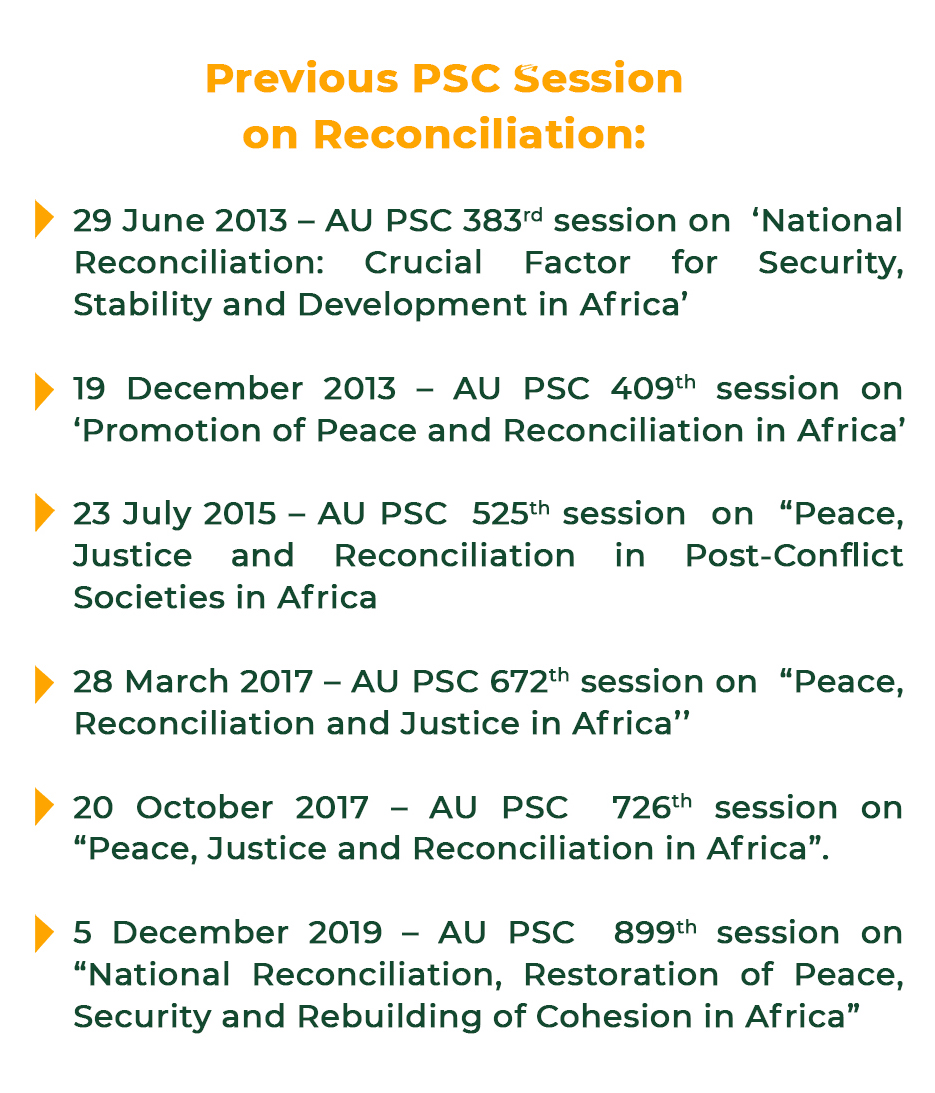
31st January was designated as ‘Africa Day of Peace and Reconciliation’ during the 16th Extraordinary Session of the Assembly of the AU in Malabo, Equatorial Guinea, where the Declaration on Terrorism and Unconstitutional Changes of Government (UCGs). It was marked for the first time on 31 January 2023. Before the establishment of 31 January as the Africa Day of Peace and Reconciliation, the AU PSC has since as early as 2013 convened a total of six sessions solely dedicated to the agenda of the national reconciliation processes The 899th session of the PSC convened under Angola’s chairship called for an annual convening on experience sharing among member states that have undergone national reconciliation and set the basis for the inaugural session of the Africa Day of Peace and Reconciliation. Among others, in some of the sessions the PSC’s request for the establishment of a draft AU policy framework on justice and reconciliations. In 2019, the AU Assembly adopted the AU Transitional Justice Policy that outlined guidelines and benchmarks for the initiation and implementation of justice, accountability and reconciliation processes.
“Before the establishment of 31 January as the Africa Day of Peace and Reconciliation, the AU PSC has since as early as 2013 convened a total of six sessions solely dedicated to the agenda of the national reconciliation processes. “
It is against this backdrop that the AU PSC held its first inaugural meeting on Africa Day of Peace and Reconciliation in 2023. Although the first PSC session on the Africa Day of Peace and Reconciliation was successful in establishing a platform that allowed experience sharing among member states who have undergone reconciliations, it did not take account of PSC’s previous engagements and the role that AU Transitional Justice Policy plays in that respect. The first inaugural session primarily focused on the experience-sharing component where member states such as Gambia, Rwanda, Burundi and South Africa provided their experience on the reconciliation process. The outcome also emphasizee several issues in the light of reconciliation including the need to focus on the Disarmament, Demobilization, and Reintegration (DDR) program for soldiers; the need for parties involved in any form of cessation of hostility agreement to be fully committed to the implementation of such agreements and lastly the need to strengthen AU mechanisms including PCRD frameworks and continental early warning systems.
As the PSC convenes its second Africa Day of Peace and Reconciliation, it is anticipated that the session will serve as a platform for receiving updates from Angola on its role of championing peace and reconciliation. In this respect, the PSC may hear about Angola’s efforts in relation to the conflict in Eastern DRC including the implementation of the outcome of the inaugural Quadripartite Summit which most recently convened at the level of Chiefs of Defence (CDFs) to enhance coordination and identify the division of labor regarding implementation of the outcomes. It is also to be recalled that early in 2023 Angola also hosted a tripartite summit involving Chad and the Central African Republic. Although there aren’t any tangible outcomes from the tripartite summit, it is indeed an indication of the political will of both member states to address cross-border security issues amicably and identify areas of cooperation and coordination. The session may also focus on countries that have begun the process of undergoing transitional justice and reconciliation during the past year. Countries such as South Sudan and Ethiopia may be mentioned as they have both received support from the AU TJP unit throughout 2023 in the implementation of their own transitional justice and reconciliation processes.
The expected outcome will be a communiqué. The communiqué may welcome the institutionalization of the annual Africa Day of Peace and Reconciliation. It may also commend the efforts by the AU Champion for Peace and Reconciliation, João Manuel Gonçalves Lourenço, President of the Republic of Angola, for his efforts in the promotion of reconciliation and peace-building via the Biennale of Luanda Pan-African Forum. The PSC may also welcome member states that have undergone mediation, dialogue, and reconciliation processes. The PSC may urge countries undergoing the reconciliation process to ensure an inclusive process that takes into consideration vulnerable groups, particularly women, youth and community leaders and leaders of religious groups. The PSC may also reiterate the need to complement the ‘Africa Day of Peace and Reconciliation’ with a focus on the promotion of the implementation of the AU Transitional Justice Policy.
Consideration of the revised AU Post-Conflict Reconstruction and Development (PCRD) Policy
Consideration of the revised AU Post-Conflict Reconstruction and Development (PCRD) Policy
Date | 30 January 2024
Tomorrow (31 January), the African Union (AU) Peace and Security Council (PSC) is set to convene its 1198th session to consider the AU Post-Conflict Reconstruction and Development (PCRD) Policy as one of its agenda items.
The session will commence with the opening remarks by the chairperson of the PSC for the month, Amma A. Twum-Amoah, Permanent Representative of Ghana to the AU. Bankole Adeoye, the Commissioner for Political Affairs, Peace and Security (PAPS), is expected to brief the PSC on the revised AU PCRD Policy, highlighting key elements of the revision. The representative of the Arab Republic of Egypt, as the AU Champion for PCRD and Representative of the Republic of Angola, as the Champion of Africa Day of Peace and Reconciliation may also deliver statements.
The last time the PSC addressed the issue of PCRD was during its 1188th session, on 29 November 2023. In that session, the PSC urged the Commission to expedite the review process of the AU PCRD Policy and promptly submit the draft for consideration by the PSC. Subsequent consideration by the Permanent Representatives of the Committee, the Executive Council, and ultimately, the AU Assembly is expected during its upcoming ordinary session scheduled for 17-18 February 2024. Tomorrow’s session is therefore convened in line with this direction from the PSC and will focus on the revised AU PCRD Policy, which is a culmination of two review processes conducted in Accra and Cairo in September 2022 and May/June 2023, respectively. It is recalled that the AU Assembly (at its 35th Ordinary Session [Assembly/AU/Dec. 815(XXXV)]) and PSC (at its 1047th session) called for the urgent review of the 2006 PCRD Policy with the view to re-aligning and adapting to the evolving continental security dynamics.
The revised Policy highlights several reasons behind the revision of the 2006 PCRD Policy Framework. The first is the evolving nature of conflicts and other threats to peace, security and development in Africa including the rise to dominance of conflicts involving terrorism and the growing impact of climate change. The Policy originally operated on the premise of a ‘linear conception of conflicts progressing from pre-conflict to post-conflict states’. As a result, PCRD interventions were initially conceived to occur towards the end of the process, following the cessation of hostilities and the conclusion of peace agreements. However, the revised Policy notes, that contemporary conflicts in Africa exhibit a non-linear nature, requiring engagements and interventions throughout a peace continuum for ‘dynamic, sufficient and timely responses at the various stages of conflict’. This shift is seen as an opportunity to enhance the AU’s focus on conflict prevention, aiming to address not just the symptoms but also the underlying causes of conflicts. Indeed, the 1047th session emphasized the imperative of broadening the scope of AU PCRD activities, which involves incorporating a peacebuilding dimension, thus covering the entire conflict cycle phase—pre-conflict, conflict, and post-conflict.
“the revised Policy notes, that contemporary conflicts in Africa exhibit a non-linear nature, requiring engagements and interventions throughout a peace continuum for ‘dynamic, sufficient and timely responses at the various stages of conflict’. “
The other reason highlighted in the revised policy is the need to align the Policy Framework with the normative, policy and institutional evolutions around the African Peace and Security Architecture (APSA), the African Governance Architecture (AGA), as well as other AU frameworks and instruments that have been established since the adoption of the Policy in 2006. The third factor driving the need for revision is the evolving conceptual landscape, both at the international and regional levels, shifting from post-conflict peacebuilding to a broader perspective of peacebuilding and sustaining peace, which is understood as ‘a goal and a process that encompasses activities aimed at preventing the outbreak, escalation, continuation and recurrence of conflict’.
This conceptual underpinning also informed the definition of ‘post-conflict reconstruction and development/ peacebuilding’ provided under paragraph 16 of the draft revised Policy, adopting a more holistic working definition that draws upon peacemaking, conflict prevention, stabilization and peacebuilding practices. ‘Post-conflict reconstruction and development/ peacebuilding’ is thus described as ‘a comprehensive set Against this background, the other proposed change is the proposal to rename the PCRD Policy and related AU Commission organs and mechanisms, including the AU Center for PCRD, to be the AU Policy on ‘Peace Building, Reconstruction and Development (PBRD)’. The representative of Egypt put forth this proposal during the Cairo Workshop, arguing that replacing ‘Post-Conflict’ with ‘Peace Building’ could address the challenge of the stigma that persists around some countries being labeled as ‘conflict situation’ or ‘post-conflict situation’.
” ‘Post-conflict reconstruction and development/ peacebuilding’ is thus described as ‘a comprehensive set of measures that seek to prevent the outbreak, escalation, continuation and recurrence of conflicts through assessing and addressing the needs of countries and regions affected by conflicts, violence and instability, including the needs of affected populations.’ “
Alongside the shift in the conceptual framework and the expansion of the scope of PCRD activities, another significant revision in the Policy concerns the indicative pillars. The revised Policy incorporates two additional pillars, namely youth and environmental security. It recognizes the significant role that youth play in PCRD and peacebuilding, highlighting the importance of tapping into their demographic dividend. Accordingly, the Policy not only views them as peacebuilding actors but also strives to actively engage and involve young women and men, as well as youth organized groups, in the promotion of peace. Concerning environmental security, the revised Policy highlights the imperative of effectively integrating an environmentally security-sensitive and gender-responsive approach into peacebuilding strategies for multi-actor engagement, aligning with the other indicative elements of PCRD. Within this pillar, the revised Policy addresses Africa’s mineral wealth and its critical role in the energy transition agenda amid the challenges of climate change. Despite Africa’s involvement in global value chains for green minerals, the Policy notes that its role is predominantly concentrated in the first phase of the value chain—exploration and extraction. Consequently, the Policy, under this pillar, underscores the need for Member States to develop value chains and strategies for green minerals to leverage the opportunities arising from the ongoing energy transition.
“The revised Policy incorporates two additional pillars, namely youth and environmental security. “
The practical impact of revising the Policy will however largely depend on establishing a robust peacebuilding infrastructure and allocating adequate resources. This is particularly important as the scope of the Policy expands to cover interventions and initiatives across all stages of conflict. In recent years, the AU has taken steps to strengthen its peacebuilding and PCRD architecture with the establishment of the AU PCRD Centre in Cairo and the launch of a Working Group on AU PCRD. Yet, there are still outstanding initiatives awaiting implementation, including revitalizing the interdepartmental Task Force on PCRD, reactivating the PSC Sub-Committee on PCRD, and fully operationalizing the PCRD Centre. Meanwhile, resources earmarked for AU’s PCRD and peacebuilding initiatives are diminishing, even as the continent grapples with ever-more intricate security threats. Securing adequate, predictable and sustainable funding for PCRD and peacebuilding efforts is imperative, especially as their scope is envisaged to expand in line with the revised Policy. In addressing the funding challenge, the revised Policy highlights that ‘the AU’s strategic policy direction will be underpinned by ownership of its PCRD and peacebuilding mechanisms and processes which are largely financed by external partners.’
Furthermore, recognizing the limitations faced by initiatives such as the African Solidarity Initiative (ASI) and the African Peace Fund in terms of implementation, the revised Policy outlines a broad spectrum of actions that should be pursued for mobilizing resources. These include: seeking unconventional sources of financial and other support for PCRD mechanisms and processes such as south-south and triangular cooperation; attracting investment and encouraging the private sector to participate in PCRD activities; encouraging the involvement of regional financial mechanisms such as development banks in PRCR processes; advocating debt cancellation for post-conflict countries that do not traditionally qualify under HIPC and other debt-relief initiatives; providing ‘seed money’ to kick-start PCRD activities; cooperating with the UN Peacebuilding Fund; and providing support to cater the special needs of countries and regions emerging from conflict, such as the lack of resources to finance the basic functioning of the state including salaries and pensions for civil service and security sector.
“the revised Policy outlines a broad spectrum of actions that should be pursued for mobilizing resources. These include: seeking unconventional sources of financial and other support for PCRD mechanisms and processes such as south-south and triangular cooperation; attracting investment and encouraging the private sector to participate in PCRD activities; encouraging the involvement of regional financial mechanisms such as development banks in PRCR processes; advocating debt cancellation for post-conflict countries that do not traditionally qualify under HIPC and other debt-relief initiatives; providing ‘seed money’ to kick-start PCRD activities; cooperating with the UN Peacebuilding Fund; and providing support to cater the special needs of countries and regions emerging from conflict, such as the lack of resources to finance the basic functioning of the state including salaries and pensions for civil service and security sector. “
It may be of interest to members of the PSC to seek clarity on some aspects of the revised policy. The first of these is around the core focus of this policy. While welcoming the interlinkages of PCRD to the entire peace continuum established under the revised policy, the identification of its core focus areas is key in distinguishing PCRD from measures initiated by conflict prevention, management and resolution mechanisms of the APSA. Related to this is also the demarcation of the roles of PCRD actors vis-à-vis other AU entities with related responsibilities in peace and security to avoid duplication.
“the identification of its core focus areas is key in distinguishing PCRD from measures initiated by conflict prevention, management and resolution mechanisms of the APSA. Related to this is also the demarcation of the roles of PCRD actors vis-à-vis other AU entities with related responsibilities in peace and security to avoid duplication. “
The expected outcome of tomorrow’s session is a communiqué. The key outcome of the session is expected to be the adoption of the revised PCRD Policy with the view to facilitating its consideration by the AU Assembly in the upcoming ordinary session slated for 17-18 February 2024. Echoing the revised Policy, the PSC may underscore the imperative of establishing a robust peacebuilding and PCRD architecture aligned with the expanded scope envisaged in the Policy. In this regard, it may reiterate the urgency of expediting the full operationalization of the AU PCRD Centre in Cairo, reactivation of the PSC Sub-Committee on PCRD and revitalization of the interdepartmental Task Force on PCRD, among other measures. The PSC may also affirm the importance of the strategic leadership of the PSC in the implementation and deployment of PCRD interventions. It may also reaffirm the importance of securing adequate, predictable and sustainable funding for AU’s PCRD and peacebuilding initiatives to fully realize the objectives outlined in the revised Policy.
“The PSC may also affirm the importance of the strategic leadership of the PSC in the implementation and deployment of PCRD interventions. “