
Provisional Program of Work for the Month of August 2023
Provisional Program of Work for the Month of August 2023
Date | August 2023
Burundi will be chairing the African Union (AU) Peace and Security Council (PSC) for the month of August 2023. The PSC’s Provisional Program of Work includes eight substantive sessions. Three of these will focus on country specific situations. Three will address thematic issues, with the remaining two dealing with consultative meetings. All of the planned sessions are expected to be held virtually, unless in person meeting is specifically called for. The PSC is also expected to conduct a field mission to the Republic of Guinea from 14 to 16 August.
On 3 August, the PSC will convene its first substantive session to consider the report of its field mission to Burkina Faso. It is to be recalled that the PSC undertook the field mission from 24 to 28 July. The report is expected to present the assessment of the mission on the political, security, economic and humanitarian situation in Burkina Faso with recommendations on how the AU could enhance its support for the transitional process and contribute to the effort to contain the insecurity and accompanying humanitarian crisis in Burkina Faso.
On 11 August, the PSC will convene its second substantive session, which will be committed to the joint engagement between the Permanent Representative Committee (PRC) Subcommittee on Human Rights, Democracy and Governance (HRDG). This will be the second such joint consultative session. The first was held during the 1095th session of the PSC on 1 August 2022. This upcoming consultative meeting will serve to review the implementation of the outcome of the previous session and exchange with the Sub-Committee on developments since the last session. In light of the coup in Niger and the launch of the African Peer Review Mechanism’s African Governance Report 2023 focusing on unconstitutional changes of government, this consultative meeting offers the PSC and the Sub-Committee to reflect on the recurrence of unconstitutional changes of government on the continent.
The third week of August will commence with the PSC’s Field Mission to Guinea, which is expected to take place from 14 to 16 August. It is to be recalled that on 4 December 2022, the transitional military government has agreed to a consolidated 24 months transition time table with elections scheduled for January 2025. The field mission presents the PSC the opportunity to engage with Guinea’s transition authorities on the various tracks of the transition. Apart from enabling the PSC to have first-hand engagement with various national stakeholders and communicate its policy position directly with the relevant authorities, the field mission highlights PSC’s willingness to show its presence on the ground.
On 17 August, the PSC is scheduled to convene its third substantive session which will assess unfolding development in Niger following the coup that took place on 26-28 July 2023. On 28 July, the PSC met to discuss the situation and demanded that the military shall ‘immediately and unconditionally return to their barracks and restore constitutional authority, within a maximum period of fifteen days’ from the date of the decision. The coming session is hence being convened in the context of the 15 days’ timeline stipulated by the PSC. Following its discussion on 31 July of the proposal to have another meeting on Niger following the ECOWAS summit, the PSC took the right conclusion for considering the outcome of the ECOWAS summit when it convenes the session its 28 July session envisaged after two weeks. This timeline would also give members of the PSC enough time to scrutinize the nature and implications of the outcome of the ECOWAS summit and the follow up action that ECOWAS may adopt upon the expiry of the one week timeline it gave to the junta in Niger.
On 18 August, the PSC will hold its fourth substantive session of the month, where it will be briefed on the situation in Sudan. This is the fifth time the PSC will be discussing the situation in Sudan since the beginning of the conflict on 15 April. At the 1156th session held on 27 May, it adopted the AU Road Map for the Resolution of the conflict in Sudan, which is meant to serve as a blueprint for the AU to work towards resolving the conflict. The PSC had requested the AU Chairperson to coordinate the implementation of this roadmap in cooperation with the warring parties, IGAD, LAS, UN and partners towards the restoration of peace and stability, as well as to promptly develop and execute the means of implementation of this roadmap. It is therefore envisaged that the PSC will be briefed on both the situation in Sudan and where the diplomatic efforts stand and how best these efforts could be strengthened.
For its fifth meeting taking place on 22 August, the PSC will receive a briefing on the Continental Early Warning and Security Outlook. The Committee of Intelligence and Security Services of Africa (CISSA), African Center for the Study and Research on Terrorism (ACSRT) and AU Mechanism for Police Cooperation (AFRIPOL) are expected to update the PSC on key emerging trends and issues of relevance to the peace and security landscape of the continent. At its 1073rd session held on 6 April 2022, the PSC requested the AU Commission to facilitate quarterly briefings to the PSC by the department of PAPS, Panel of the Wise, AFRIPOL, ACSRT and CISSA to ensure prompt conflict resolution. In line with this decision, the PSC, in its annual indicative program of activities for 2023 had scheduled to receive such briefings in February, June, October and December. However, the briefing session initially planned for June did not take place. The coming session hence provides the chance to follow-up on the implementation of PSC’s decisions adopted at the 1138th session held in February 2023, including its request for the AU Commission to better capacitate and resource the ACSRT, AFRIPOL and the AU Post-Conflict Reconstruction and Development (PCRD) Centre.
The third Annual Consultative Meeting between the PSC and Regional Economic Communities and Regional Mechanisms (RECs/RMs) Policy Organs will take place from 24 to 26 August in Bujumbura, Burundi, constituting the sixth meeting of the month. The representatives of the Policy Organs of the RECs and RMs and members of the PSC are expected to reflect on the state of AU-RECs/RMs relationships and engagements. The second Annual Consultative Meeting between the PSC and RECs/RMs Policy Organs took place two years back in 2021, where substantive challenges in the harmonization of decision making between the PSC and RECs/RMs was discussed. In addition to sharing ideas on how to resolve such challenges, specific crises situations and themes of interest to these decision-making organs could be addressed at the coming consultative meeting.
The seventh session of the month is expected to be a briefing on the Development of the Common African Position on Cyber Security in Africa, expected to take place on 29 August. It is to be recalled that in its 1148th session held on 13 April 2023, the PSC had requested the preparation of a draft statement on the application of international law to cyberspace and a questioner to be filled by States on such application. The PSC had also requested the AU Commission on International Law (AUCIL) to urgently complete and submit the draft statement of a ‘Common African Position on the Application of International Law to Cyberspace’. It is expected that the PSC will be briefed on the developments of the draft statement and draft Common African position in this respect.
On the same day, the PSC is also expected to receive a presentation on a) the draft ToR of the Sanctions Committee; b) the draft ToR for the Ministerial Committee on Counter Terrorism – both to be established in line with the decision of the May 2022 Malabo Declaration on Terrorism and Unconstitutional Changes of Government – and c) the draft Manual on the working methods/modalities for engagement between the PSC and the African three member of the UN Security Council (A3). It is to be recalled that the PSC Committee of Experts (CoE) has been extensively engaged in the development of these documents including through the convening of a retreat in May 2023.
On 31 August, as its eighth and final session of the month, the PSC will receive updates for its annual session on the impact of climate change on peace and security. During its 1079th meeting convened on 21 April 2022, the PSC discussed climate change and peace and security, and requested the AUC to expedite the finalization of the report of the AUC Chairperson on the Study on the Nexus Between Climate Change and Peace and Security and to submit it to the PSC for consideration. Apart from presenting an opportunity to receive update on this and related previous decisions of the PSC, the session on 31 August will particularly focus on developing contribution to the Africa Climate Summit scheduled to take place in Nairobi, Kenya in early September on the climate and security nexus.
In addition to the substantive sessions and activities of the PSC, the programme of work encompasses the meetings of the CoE. The CoE is scheduled to convene on 8 and 21 August to deliberate on the agenda for the third Annual Consultative Meeting between the PSC and RECs/RMs Policy Organs. As envisaged in footnote of the programme, the PSC will also consider via email, the provisional programme of work for the month of September.
Amani Africa wishes to express its gratitude to the Australian Embassy in Ethiopia for the support in the production of this Insight on the Monthly Programme of Work of the AU Peace and Security Council

The coup in Niger: Lessons from a trouble in paradise
The coup in Niger: Lessons from a trouble in paradise
Date | 31 July 2023
Solomon Ayele Dersso, PhD
Founding Director, Amani Africa
Lea Mehari Redae
Associate Researcher, Amani Africa
After two earlier unsuccessful attempts, the latest usurpation of power by Niger’s army succeeded in ousting the country’s elected President, ending the last central Sahel country under civilian rule. Niger has been put on a pedestal. As a country where the incumbent respected presidential term limits and transferred power to a successor after the holding of elections in 2021, Niger was portrayed as an island of democracy in a sea of military coups and terrorism. During his visit to Niger US Secretary of State Anthoni Blinken praised Niger as ‘a model of resilience, a model of democracy, a model of cooperation.’
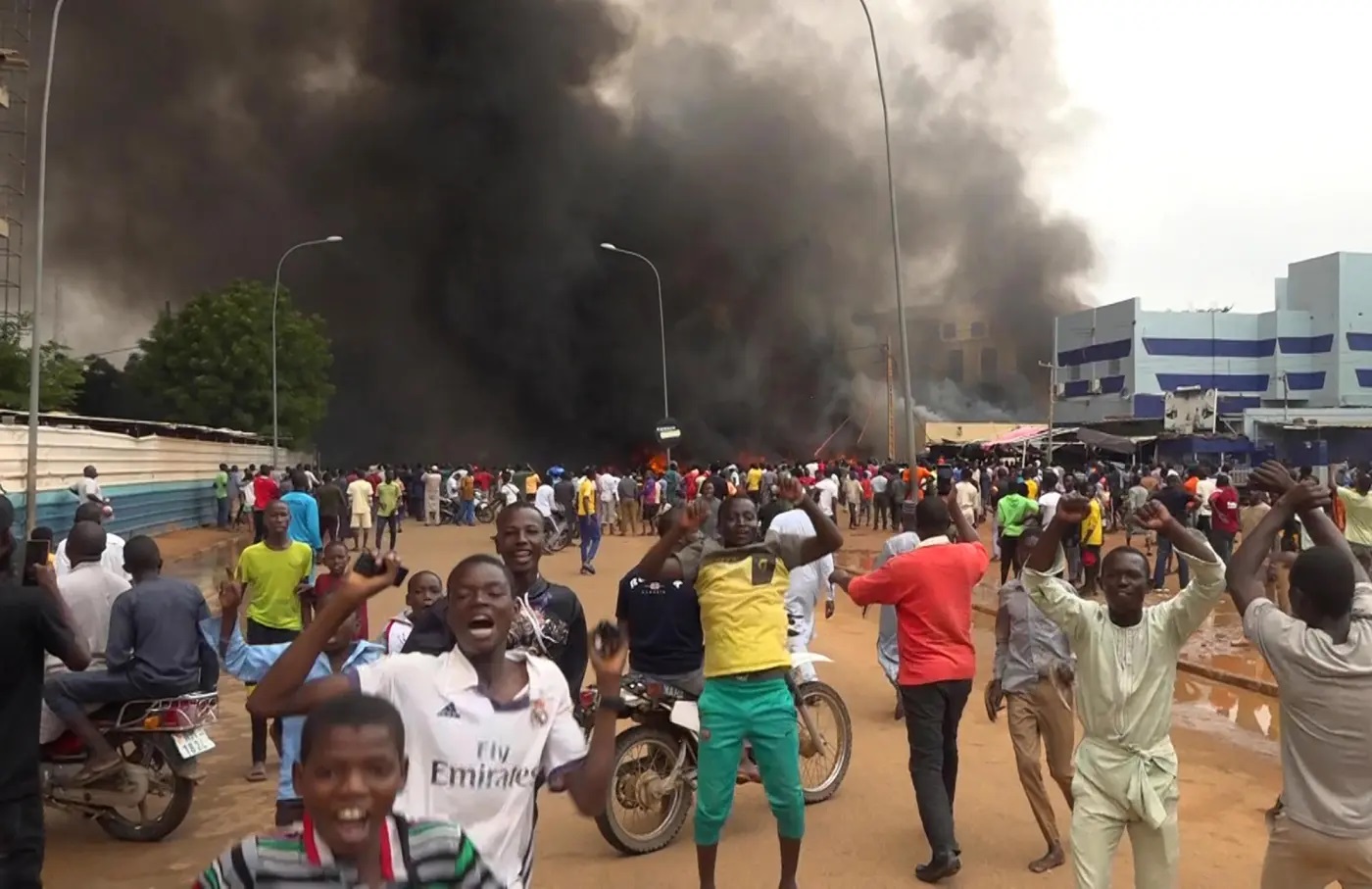
For a country with such standing, the coup that took place on 26-28 July ousting Niger’s elected President may come as a trouble in paradise. Certainly, it is a major blow to the country’s fragile democratization process. Even more troubling is the constitutional and political uncertainties the coup induces may compound the country’s fragilities. These uncertainties would detract from the effort to contain the terrorism menace unfolding in the country. There is also a huge risk that it exacerbates the geopolitical rivalry unfolding in the region by rendering the country to be a theatre of the power tussle that Niger’s neighbours became victims of.
Yet, the attempted coup in March 2021 made it apparent that Niger was not free of the threat of military seizure of power. France 24 reported quoting a Nigerien official that while the President was in Turkey ‘a second bid to oust Bazoum occurred last March.

Niger also shares some of the fragilities that characterise the central Sahelian countries, although it fared better than its immediate neighbours and avoided the crisis that befell Mali following the collapse of Libya in 2012.
Niger’s democratic credential shares some of the characteristics of Mali’s prior to 2012. Like Niger, Mali prior to 2012, was viewed as an example of democracy in the region. This view is best summed up by one analyst who asserted that ‘Mali has achieved a record of democratization that is among the best in Africa.’ As the events in 2012 revealed and many admitted, Mali’s democracy was not much more than electoral democracy.
Like Mali, Niger’s democracy is bereft of substantive depth that goes beyond elections. According to Afrobarometer’s 2020 survey, despite 53% support for democracy in Niger, 67% of Nigerians surveyed thought that the army ‘can intervene if leaders abuse power.’ Unless democracy is reduced to relatively free elections, it is difficult to imagine why citizens consider military intervention in politics as a first choice for holding leaders to account. A major factor that may account for such attitude is the absence or poor performance of the constitutional mechanisms in a democracy such as separation of powers and checks and balances, independent judiciary, free media and open civic space with autonomous civil society.
Apart from the public attitude to military intervention, the other context for the coup involves the widespread perception of President Bazoum administration’s deepening ties with France and the West in the face of the spreading anti-French sentiment in much of Francophone Africa. In other words, putting Niger on a pedestal might inadvertently have exposed Bazoum’s administration to be on a collision course with Nigeriens opposing to Niger becoming the new hub for France’s operation against terrorist groups in the Sahel as protests earlier in the year showed.

None of the foregoing however makes the coup right, although these could limit public opposition against the coup. Indeed, despite the excuse by the junta that the coup was staged due to ‘the continuing deterioration of the security situation and poor economic and social governance’, the coup mostly has to do with greed and personal interests of those who led it. The actual motivation for the coup is immediately tied to President Bazoum’s plan to replace the leader of the Presidential Guard, General Abdourahmane Tchiani, who took over as Niger’s leader.

The coup in Niger is the seventh successful coup to take place in Africa since 2020. Six countries stretching from the Atlantic coast in the West to the Red Sea coast in East Africa are being led by men in uniform.

The epidemic of coups, as UN Chief characterized it, is, among others, a result of the crisis of governance of the security sector. The coup in Niger manifests the lack of total break from the experiences of politicization of the armed forces and the militarization of politics associated reflected in the number of successful and attempted coups in the country. As the attempt by Tchiani to forestall his planned replacement shows, the coup also shows the poor level of professionalism and integrity of the military. All of these suggest that democracy in its electoral form will remain susceptible to the vagaries of the army as long as these issues of the crisis of security sector governance are not effectively resolved.
In response to the latest coup in Niger, apart from the unanimous condemnation from AU, UN & other international entities, the regional body ECOWAS adopted the most severe measures including closure of borders & airspace, suspension of economic & financial exchanges and threat of military intervention. These may not be enough to reverse the coup without support from Nigeriens. This highlights that it is utterly inadequate for regional and continental norms to be effective in discouraging coups and other unconstitutional seizure of power to be dependent largely on external mechanisms of protecting constitutional order. More often than not, these norms are not adequately backed by national level robust formal and informal processes and institutions of accountability and checks and balances. They are further undermined by governing elites tampering constitutions including presidential term limits.
The failure of the anti-coup norms of the AU to prevent coups is not thus merely a result of the lack of effective enforcement and consistent application of the norms on the part of the AU. It is also attributable to the lack of mobilizing and nurturing of anti-coup constituency on the part of the African public at the national level. This emphasizes that continental and international actors have to rethink the dominant approaches to democracy that are election centric and to international relations, including development and security cooperation, that are elite-driven. Not only that continental and international actors need to avoid downplaying the political and socio-economic grievances of local populations against national authorities. Their engagement and development and security cooperation should go beyond the security sector and national elites and extend to the human security, political freedom and development needs of local populations as well.
The upshot of the foregoing is that there is a need for rethinking both democracy promotion and counterterrorism security cooperation in Africa anchored on the primacy of the local. As Amani Africa’s research on terrorism asserted, such a paradigm shift necessitates policy interventions that focus ‘on the vulnerabilities and fragilities as well as political and socio-economic governance pathologies that create the conditions both for the emergence and … resilience of terrorist groups’ as well as coups. With such policy interventions that also entail ‘the same, if not more, level of infusion of technical assistance, financial resources and training of civilian expertise is directed to the governance, the economic and social issues facing local populations as the security-related sectors’, it is possible to mobilize a public that would become a bulwark against coups and other threats to constitutional order and security.
The content of this article does not represent the views of Amani Africa and reflect only the personal views of the authors who contribute to ‘Ideas Indaba’
Consideration of Mid-year report of the Chairperson of the Commission on Elections in Africa
Consideration of Mid-year report of the Chairperson of the Commission on Elections in Africa
Date | 31 July 2023
Tomorrow (31 July), the African Union (AU) Peace and Security Council (PSC) will convene its 1165th session to consider the mid-year report of the Chairperson of the AU Commission on elections in Africa as one of its agenda items.
The session opens with the opening remarks of the Permanent Representative of Senegal to the AU and the Chairperson of the PSC for the month of July, Mohamed Lamine Thiaw. The Commissioner for Political Affairs, Peace and Security (PAPS), Bankole Adeoye, is expected to present the half year report. The representatives of Member States that held elections in the first half of 2023, namely Benin, Djibouti, Guinea Bissau, Mauritania, Nigeria, and Sierra Leone are expected to make statements.
The Chairperson’s mid-year report on elections in Africa is in line with the PSC’s decision at its 424th session of March 2014 to receive regular briefings on national elections in Africa. The last time the Chairperson presented the half year report was during PSC’s 1132nd session in January of this year, covering elections conducted between July and December 2022 and outlooks for 2023. Tomorrow’s briefing is expected to provide updates on the outcomes of elections conducted in the first half of 2023 (January to June) and preview of upcoming elections that are expected to take place in the second half of 2023. It is also expected to reflect on some of the key trends observed in the continent’s electoral and political governance during the period under review.
The review of elections that took place during the last six months will cover the six elections that were organized during this period. Nigeria and Sierra Leone held general elections while Benin, Djibouti, Mauritania, and Guinea Bissau organized parliamentary elections. AU deployed election observers in all these countries except Benin to assess the electoral process.
In Benin’s parliamentary election, which was held on 8 January, the opposition won 28 seats in the 109-seat parliament. This marked the return of the opposition into the parliament after a four-year of absence, which bodes well to the country’s democratic trajectory. On 24 February, Djibouti held its parliamentary election with the ruling coalition amassing 94 percent of the vote. AU’s observers characterized the election as ‘effective, peaceful and orderly’, an election which the main opposition boycotted calling it a ‘sham’.
The most anticipated election during the review period was perhaps the 25 February Nigeria’s general election. According to AU’s preliminary statement, the election was ‘crucial in consolidating democracy, peace and stability’ in the country despite that the election was held in a challenging economic, operational and security context. Bola Tinubu of the ruling All progressives Congress (APC) party was declared winner, though the two main opposition leaders (Atiku Abubakar of the Peoples Democratic Party and Peter Obi of the Labour Party) filed separate petitions to challenge the outcome of the election citing irregularities. With an overall turnout of 29 % of voters, it is reported that it is the lowest in Nigeria’s democratic history. While the introduction of digital technologies for voter verification and electronic transmission of result forms was welcomed as a critical measure to enhance credibility of the electoral process, it did not function as promised by the Independent National Electoral Commission (INEC). According to the report of one of the local observer groups, together with poor communication by INEC, incidents of violence meant to influence the electoral process and allegations of manipulation during collation of votes, the failure of technology reduced from the level of confidence that the elections were expected to garner from the public.
In the parliamentary and local elections held on 13 May in Mauritania, the EI Insaf ruling party registered a sweeping victory, grabbing 107 of 176 seats in the National Assembly, despite complaint from the opposition about rigging. The country is expected to conduct a presidential election in the coming year.
In Guinea Bissau, a coalition of opposition groups, led by the African Party for the Independence of Guinea and Cape Verde (PAIGC), won majority of the seats in the parliament, picking up 54 of the 102 seats. The conduct of the 4 June parliamentary election in a peaceful climate and the concession of defeat by the ruling party contributes positively to the democratization process in a country that has been experiencing political turmoil, including the February 2022 coup attempt and the dissolution of the parliament in May of the same year, and the challenge of organized crime involving drug trafficking.
On the other hand, Sierra Leone’s 24 June multi-tier elections (presidential, parliamentary, and local elections) were marred by ‘politically motivated violence spurred by the general mistrust between the two main political parties’, the Sierra Leone People’s Party (SLPP) and the All-People’s Congress (APC), according to AU observers. The incumbent President Julius Maada Bio of the SLPP was declared winner with more than 56 percent of the votes – a result rejected by the main rival Samura Kamara. Claiming ‘glaring irregularities’, APC announced its decision not to participate in the governance structure of the country in addition to calling for a rerun of the election.
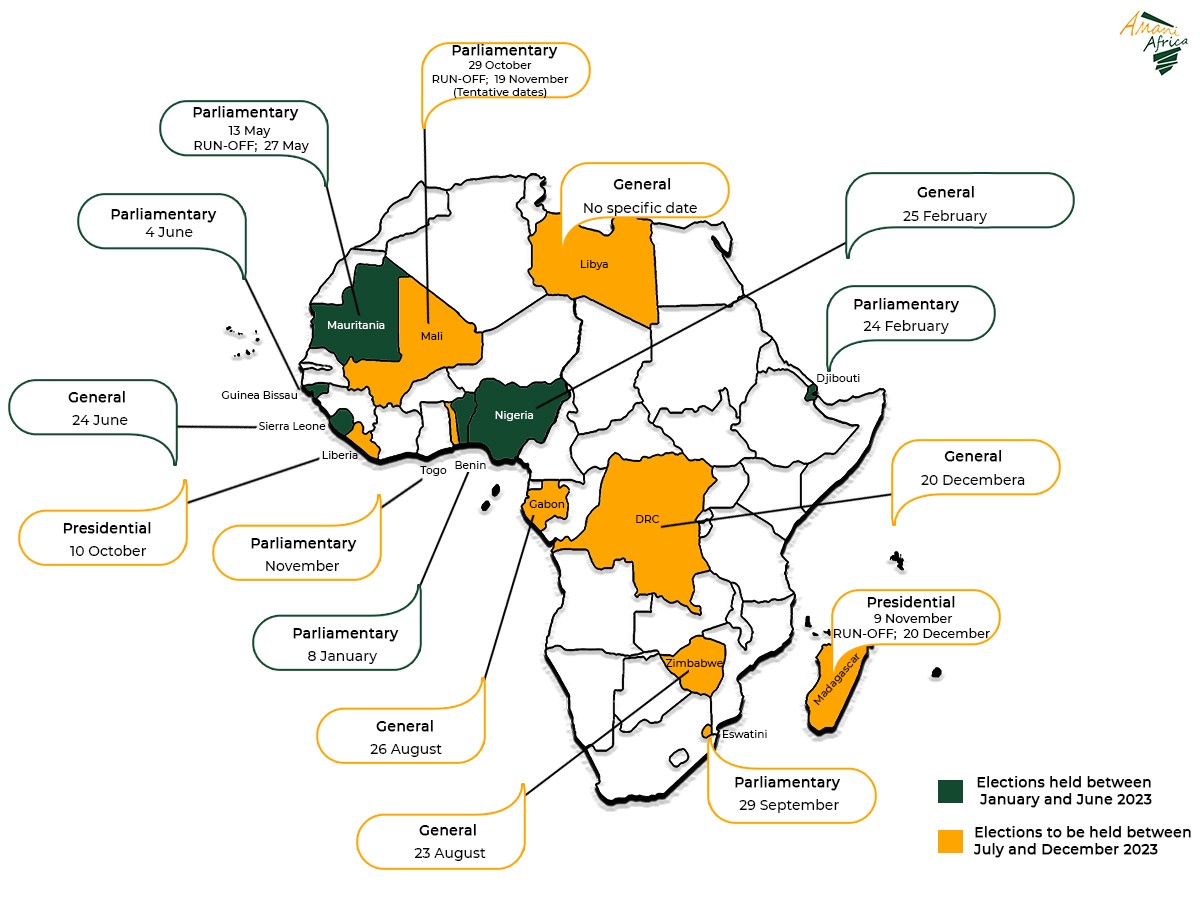
In relation to election outlook for the second half of 2023, Zimbabwe, Gabon, Madagascar, Democratic Republic of Congo (DRC), Liberia, Togo, and Eswatini are among the countries that are expected to organize presidential and/or parliamentary elections. Although Libyan Government indicated readiness to organize general elections (originally scheduled for December 2021) in 2023, it is not clear whether this could happen. Rwanda’s parliamentary election, which was slated for September 2023 is now rescheduled for next year.
Zimbabweans will go to the polls on 23 August to elect their president and members of both houses of the Parliament, with 2 October scheduled for runoff if required. The incumbent President Emmerson Mnangagwa of the ruling ZANU-PF party will face his main contender, Nelson Chamisa of Citizens’ Coalition for Change (CCC), who finished second during the 2018 presidential election. Ensuring even playing field for political parties and creating a peaceful environment will remain key for credible elections in Zimbabwe.
26 August is set for Gabon’s general elections where the incumbent President Ali Bongo will seek a third term, facing 14 other presidential candidates. It is to be recalled that in April of this year, the parliament voted to amend the constitution that reduced presidential term from seven to five years and turned the presidential election into a single round.
Madagascar will conduct the first round of the presidential election on 9 November while the second round is expected to take place on 20 December, if required.
DRC is also gearing up for the December 2023 general elections amidst extremely difficult security context, which indeed remains one of the biggest threats to the credibility of the polls. As elections campaign are expected to heat up in the coming months, it is also important to ensure that such campaigns do not escalate tension with neighbouring countries, notably Rwanda. Liberians will also head to the polls in October to elect their next president as well as members of their parliament.
Togo and Eswatini will hold their parliamentary elections in the second half of the year. The timeline for Togo’s election is not confirmed yet, but Eswatini is set to conduct its election in September, which will be interesting to watch as it is going to take place at the backdrop of rising political tension.
Meanwhile, Mali organized a constitutional referendum on 18 June, which was approved overwhelmingly with 97 percent of the vote. The referendum is considered as a critical step towards the 24 February 2024 election and a return to civilian rule, but some critics raises their concern that the new constitution strengthens the role of the President. Although Mali slatted October and November 2023 for the first and second rounds of parliamentary elections, it appears that the timelines are likely to be revised. On the other hand, CAR went ahead with the controversial constitutional referendum on 30 July while suspending the preparations for local elections (the first since 1988), initially scheduled for July, until September of this year. If approved, the new constitution will remove the two-term limit and clear the deck for the incumbent President Faustin Touadera to seek re-election in 2025 for a third-term. This requires the attention of the PSC as the third term bid through contested amendment of constitutional clause on presidential term limits is contrary to the position the AU seeks to advance on third termism as outlined in the Accra Declaration and may trigger instability and worsen the already fragile situation in this country.
The expected outcome of the session is a communique. PSC is expected to adopt the report of the chairperson of the Commission on Elections in Africa for the period of January-June 2023 and the outlook for second half of the year (July-December 2023). It may congratulate those Member States that successfully conducted elections during the first half of the year while urging them to work on aspects of the electoral process that led to contestations. With respect to AU’s support to Member States, it may urge the Commission to regularly deploy its initiative of the ‘Return Visit’ to make sure that the recommendations of its election observer missions are implemented. In relation to those Member States preparing to conduct their elections in the second half of the year, PSC may urge them to put their utmost efforts towards ensuring the conduct of credible elections in accordance with the African Charter on Democracy, Elections and Governance. In light of what transpired in Niger, PSC may take the opportunity to strongly condemn the coup in the country and echo the call of the Chairperson of the AU Commission for the ‘immediate and unconditional return of the felon soldiers to their barracks’. PSC may also reiterate its request for the Commission to expedite the operationalization of the PSC Sub-Committee on Sanctions pursuant to the Declaration adopted by the 16th Extraordinary Session of the AU Summit held in May 2022 in Malabo, Equatorial Guinea. As constitutional manipulations have continued to extend term limits, PSC may find it necessary to re-emphasize the need for the AU to finalize and adopt the AU guidelines on the amendment of constitutions in Africa to guide constitutional amendment processes adhere to formal rules and procedures and ensure that such amendments are outcomes of national consensus.