
Briefing on the situation in the Sahel
Briefing on the situation in the Sahel
Date | 20 July 2023
Tomorrow (20 July), the African Union (AU) Peace and Security Council (PSC) is expected to convene its 1162nd session to receive an update on the situation in the Sahel region.
Following opening remarks by Mohamed Lamine Thiaw, Permanent Representative of Senegal and Chairperson of the PSC for the month of July, AU Commissioner for Political Affairs, Peace and Security (PAPS), Bankole Adeoye is expected to make a statement. The AU High Representative for Mali and the Sahel (MISAHEL); representatives of the Republic of Ghana as the Chair of the Economic Community of West African States (ECOWAS); the Economic Community of Central African States (ECCAS) and the United Nations (UN) Office to the AU (UNOAU) may also participate in the session.
The last time the PSC convened a session to assess the situation in the Sahel region was at its 1116th meeting held in October 2022. In addition to reflecting on the overall security situation in the Sahel region, the session served the PSC to follow-up on the status of transition processes in specific member states undergoing political transition, specifically Burkina Faso, Mali and Guinea. At the session, the PSC also made the commitment to revisit the possible deployment of 3000 troops to the Sahel as directed by the decision of the AU Assembly [Assembly/AU/Dec.792(XXXIII)]. Tomorrow’s session serves both as an opportunity for the PSC to follow-up on this commitment and to receive updates on the status of transitions in concerned member states in the region. It also presents the chance to for the PSC to reflect on the continuing deterioration of the security situation and spread of terrorism in the wider region.
Since the end of 2022, conflicts, political instability and violence in Burkina Faso, Mali, and Guinea have intensified. In the first half of 2023 alone, UN-OCHA has reported that the number of refugees in the region has doubled, reaching 1.3 million people. A total of 5.8 million people are currently displaced in the Sahel.
The region continues to face serious threats from al-Qaida and Islamic State-affiliated groups. While the Liptako-Gourma region, a border triangle between Mali, Burkina Faso, and Niger, experiences significant terrorist activity, the threat has also spread to other countries in the Sahel and coastal West Africa. This has prompted regional countries to enhance their cooperation through the Accra initiative, a security mechanism established in 2017. The current members of the Accra initiative include Benin, Burkina Faso, Cote D’Ivoire, Ghana, Mali, Niger, and Togo.
The Group of Five Sahel countries, consisting of Burkina Faso, Chad, Mali, Mauritania, and Niger, have been at the forefront of efforts to counter terrorism in the Sahel region through the G5 Sahel Joint Force (FC-G5S). However, the withdrawal of Mali from the force in May 2022 created a major setback. On its 1087th session on June 1, 2022, the PSC had expressed its concern over the withdrawal of Mali from the G5 Sahel joint force as its withdrawal is considered to negatively impact the “momentum, achievements recorded and required unity and effectiveness” of the task force. . On a November 16, 2022 G5 Sahel joint force briefing, the Executive Secretary of the G5 Sahel Eric Tiaré described how Mali’s withdrawal “plunged the sub-regional organization into an institutional crisis”. The remaining G5 Sahel countries have been appealing to Mali to rejoin the force, and this appeal was reiterated by Mauritanian President Mohamed Ould Cheikh El Ghazouani at the opening of the 4th session of the General Assembly of the Sahel Alliance held in Nouakchott on July 10, 2023.
Creating further uncertainty about the multilateral response to the terrorism challenge in the Sahel is Mali’s request for the UN Multidimensional Integrated Stabilization Mission in Mali (MINUSMA), which has been deployed in the country for the past decade, to withdraw without delay. Various issues including the charges of failure of the mission to curb the spread of terrorism and disputes over a fact-finding report on 12 May 2023 by the Office of the High Commissioner for Human Rights, implicating the Malian Armed Forces and foreign military personnel in the killing and summary execution of over 500 people during a military operation in Moura, boiled over into Mali’s call for withdrawal of MINUSMA. The Malian Foreign Minister Abdoulaye Diop who addressed the Security Council on 16 June, 2023 stated that his government was left with “no choice but to come to the objective conclusions of the assessment of the ten-year presence of MINUSMA, which has not been able to provide adequate responses to the security situation in Mali, and whose prospects for continuation do not meet the security imperatives of the Malian people”. In response to Mali’s request for MINUSMA’s immediate withdrawal, the Security Council adopted resolution 2690 (2023), terminating the mission’s mandate as of June 30, 2023 and providing a six-month timeline for its drawdown and exit. The upcoming PSC meeting will provide an opportunity to discuss and react to this significant development.
In response to the developments related to MINUSMA, ECOWAS leaders have also decided to establish a Presidential Task Force comprising Benin, Guinea Bissau, and Nigeria to further reflect on the MINUSMA withdrawal and related security matters. An extraordinary session of ECOWAS will be convened in Nigeria by the end of August 2023 to discuss concrete measures to address regional security challenges. Additionally, the ECOWAS leaders also directed the President of the ECOWAS Commission to propose a comprehensive response mechanism within 90 days to address concerns related to the withdrawal and the presence of foreign private armies in the region.
Since 2021, the Wagner Group, a Russia Private Security Company, has been operating in Mali. Yet, after this group’s fallout with the Russian government following its mutiny in June 2023, the implications for its operations in Africa including in Mali remain uncertain. Nevertheless, Russian Foreign Minister Sergei Lavrov has reportedly assured Mali and Central African Republic authorities that the Wagner Group personnel will not be withdrawn. Yet, the crisis of reliance on such forces also highlights the imperative for a more effective and robust multilateral mechanism for the challenges in Mali and Sahel.
The complex security situation in the Sahel has been fueled by various factors, including weak governance, porous borders, poverty, and inter-communal conflicts. Extremist groups exploit these vulnerabilities to establish bases, launch attacks, and recruit followers across the region. In response, on September 25, 2022, the UN, the AU, ECOWAS, and the FC-G5S jointly launched a high-level independent panel led by the former president of Niger, Mahamadou Issoufou, to conduct a strategic assessment of the underlying challenges in the Sahel. The assessment includes the surge in violent extremism, the growing fragility of the region’s economies due to climate change and the COVID-19 pandemic, as well as complex political transitions. The panel’s report and findings, expected to be released in September, are anticipated to recommend a coordinated regional and international response to address the political, security, and development challenges in the Sahel.
The ongoing transition processes in the Sahel region, aiming to restore constitutional order following military coups in Burkina Faso, Mali, and Guinea, will also be a focus of the PSC meeting.
In Burkina Faso, the transitional authorities have prioritized military campaigns in their efforts to address the security situation, and ECOWAS has faced challenges in agreeing on a transition timetable with the Burkinabe authorities, including the cancellation of a visit by its Mediator, former President Mahamadou Issoufou, in January. ECOWAS expressed regret over the minimal cooperation received from the transition authorities in the three countries, emphasizing the need to reassess mediation efforts.
Mali conducted a referendum in June 18, 2023 on a controversial draft constitution, where 97% of the voters reportedly voted in favor of the new constitution. However, it was only 39.40% of the registered voters that actually casted their votes. According to the opposition, this new constitution concentrates too much power in the presidency, including the power to appoint and dismiss the prime minister and members of the cabinet. The referendum is also expected to pave the way for elections in February 2024. ECOWAS took note of the referendum as an important step toward the restoration of constitutional order in Mali.
On December 4, 2022 ECOWAS announced that it welcomed the consolidated 24 months transition timetable in Guinea, commencing the same month, which included ten priority issues for the transition authority. The regional bloc also instructed the ECOWAS Commission ‘to support an inclusive national dialogue’ and called on international partners to support the transition process with the necessary material, financial and technical resources. This 24 months transition timetable mandates Guinea to hold elections by January 2025. Until such elections are held, Guinea will continue to be suspended from ECOWAS.
The regional bloc ECOWAS has urged the three countries to remain committed to implementing the agreed transition timetables in a transparent, inclusive, and consultative manner with all relevant stakeholders. In the meantime, Burkina Faso, Guinea, and Mali have been seeking to strengthen their tripartite relations in the face of security, economic, and humanitarian challenges they collectively encounter.
The expected outcome of the session is a communiqué. The PSC may express grave concern over the surge in violent extremism as well as the increasing economic fragility experienced in the Sahel region. It may note with concern the security vacuum that could be created as a consequence of MINUSMA’s withdrawal from Mali and what this could entail to the wider Sahel region. Having regard to that, the PSC may discuss how implementation of the decision for the deployment of 3000 troops to Sahel can be expedited. The PSC may also welcome ongoing regional initiatives including ECOWAS’s decision to establish a Presidential Task Force to reflect on MINUSMA’s withdrawal and related security matters. It may also express that it looks forward to the outcome of the high-level independent panel led by the former president of Niger to assess the underlying challenges in the Sahel region and encourage coordination and coherence to boost effectivity of these and other initiatives deployed to respond to the crisis in the Sahel region. With respect to member states in the region undergoing political transitions, the PSC may commend steps taken in each member state to pave the way for elections and urge the transition authorities to strictly abide by the agreed transition timelines and urge that those in the transitional authorities not to run for elections to be held to restore constitutional order. The PSC may also reiterate its call on the AU Commission to effectively operationalize the transitional support mechanisms for effectively and materially accompany the transitional process. It may also reiterate that all military operations conducted in the Sahel region including those deployed against non-state armed groups, should be done in full compliance with principles of international humanitarian law and international human rights law and in a manner that ensures the full protection of civilian populations.

Amani Africa Dispatch Ep1 - Senegal upsets recent continental trends in extension of term limits
https://youtu.be/ArTnwlxKJNo?si=vzKx-2Wid6QAkCNt
Transcending the state-centric peace and security diplomacy a pre-requisite for peace in the contemporary complex security landscape
Transcending the state-centric peace and security diplomacy a pre-requisite for peace in the contemporary complex security landscape
Date | 10 July 2023
Solomon Ayele Dersso, PhD
Founding Director, Amani Africa
Tsion Hagos
Senior Researcher, Amani Africa
As the African Union (AU) Peace and Security Council (PSC) convened the second annual consultative meeting on 6 July, a powerful example that drove home the critical role of civil society actors is the war in Sudan. When the fighting between the Sudan Armed Forces (SAF) and the Rapid Support Forces (RSF) pushes Sudan to the brink of collapse, neither the diplomats who are in the business of peace-making nor those in the business of delivery of humanitarian assistance were able to marshal the level of response to bring the situation to a halt.
As our analysis and the work of many others (here, here and here) highlighted, those hailed as heroes and came to the rescue of civilians through humanitarian action and worked tirelessly to contain the expansion of the fighting through local peace deals were Sudanese civic actors.

CSOs in Sudan providing humanitarian assistance and support (Source: BNN Breaking News Network, May 2023)
This experience has brought home the increasing importance of recognizing the role of civic actors in peace and security and the imperative of developing tools and close working relationships for leveraging their roles in AU’s efforts for the prevention, management and resolution of conflicts within the framework of Article 20 of the PSC Protocol.
While the AU peace and security order as designed in the PSC Protocol and as practiced for the past two decades is mostly state-centric, it also recognizes and seeks to provide space for the role of non-state actors as envisaged in Article 20 of the PSC Protocol which mandates close working relationship between the PSC and CSOs. The journey thus far shows that, various milestones have been registered over the years towards the realization of this ambition.
The PSC dedicated two of its more than a dozen retreats, first in Livingston in 2008 and later in Maseru in 2014, on formulating the modalities for close working relationship with CSOs.
In practice, the PSC also developed the tradition of inviting CSOs who work on or have the expertise on specific thematic issues to brief the PSC. Although this practice is yet to be fully institutionalized, it has enabled the PSC to draw on the inputs of various CSOs in its policy making on various thematic issues.
Prior to the outbreak of the COVID-19 pandemic, it was not also uncommon for CSOs to participate in the open sessions of the PSC with the possibility of making statement during such session.
In March 2022, the PSC convened the Accra Forum on Unconstitutional Changes of Government which, among others, provided unique platform for CSOs to join the PSC in deliberating on and co-developing policy decisions for countering the resurgence of unconstitutional changes of government. This culminated in the adoption of the Accra Declaration.
Later on, in September of last year, the PSC held the inaugural consultative meeting with CSOs, which decided to hold the consultative meeting annually.

Inaugural Consultative Meeting between the PSC and CSOs (Source: ECOSOCC Website, September 2022)
Some of the other important developments in creating space for participation of CSOs in the peace and security work of the AU include the launch of the Network of Think Tanks for Peace (NETT4Peace) and the Pan-African Civil Society Organizations Network on Political Affairs, Peace and Security.

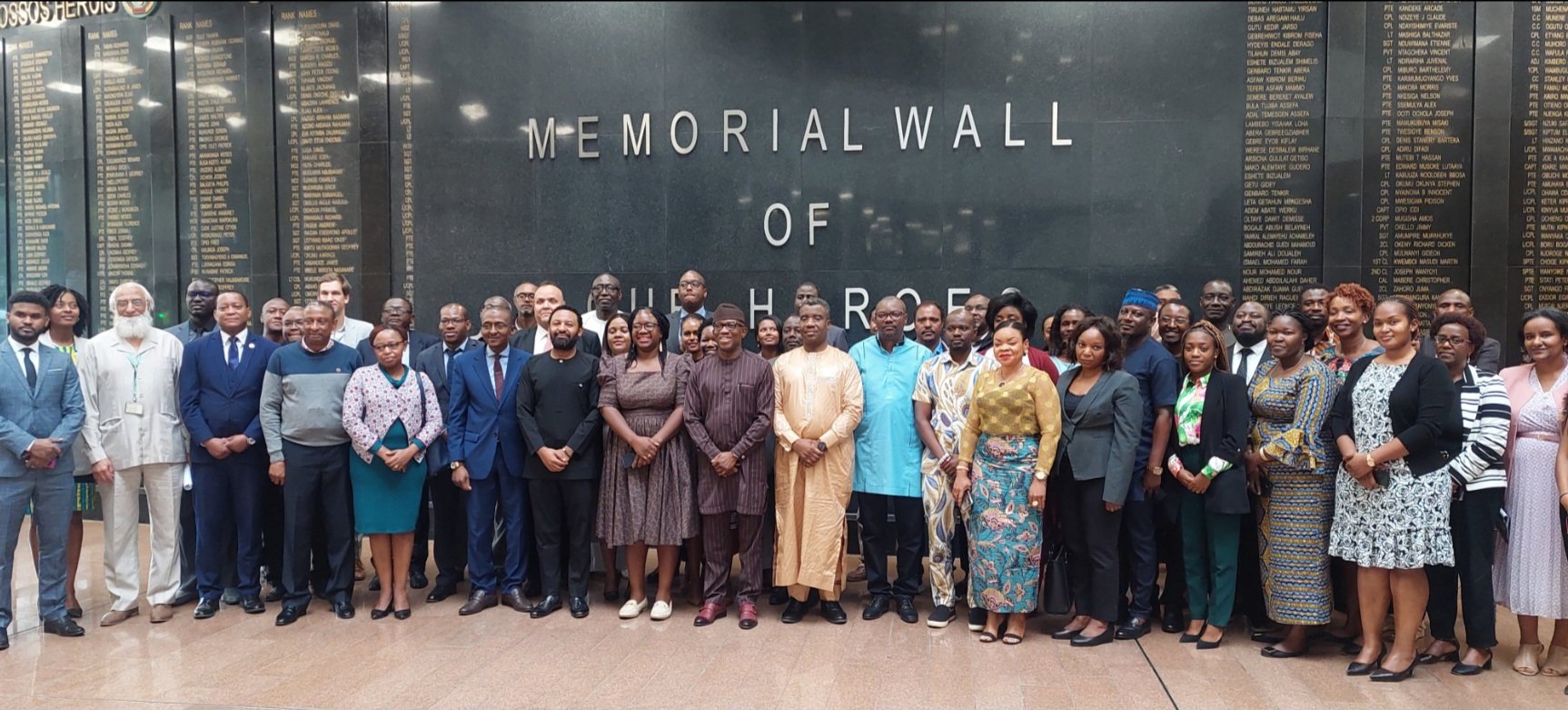
Second retreat between CSOs and AU PAPS (Source: @AUC_PAPS, April 2023)
These various encouraging developments are worth preserving and consolidating. This is important not only because it is a legal imperative under Article 20 of the PSC Protocol and is the right thing to do. It is also because the nature and scale of peace and security challenges on the continent is such that the PSC and state actors cannot by themselves alone overcome. Instead, these challenges require a whole of society approach, hence transcending the hitherto dominant state-centric peace and security diplomacy.
For the whole of society approach, the central significance of close working relationship between the PSC and CSOs cannot be overemphasized. Among others, CSOs are placed in a unique position that would enable them to bridge the divide between the policy space and the wider African public. As the experience of Sudan’s civic actors attest, they also play critical life saving role in times of conflict as first responders and through promoting local peace initiatives.
For the progress made so far to be meaningful, there is urgent need for institutionalizing a more dynamic and systematic role of CSOs in AU peace processes. In the work of the PSC, while the practice of inviting representatives of CSOs for briefing the PSC is applied increasingly over the years and is no longer contested or opposed, it remains ad hoc and confined to thematic issues.
This practice ordinarily does not apply to PSC meetings on country specific situations. There is thus a need for making this practice more systematic, regular and institutional. For this, one practice that the PSC may look into for emulation is the UN Security Council’s practice of convening what is known as the Aria Formula meeting. The PSC can easily accomplish this by operationalizing Article 8 (11) of the PSC Protocol which provides for informal consultation with CSOs.
The holding of this consultative meeting on a yearly basis is a welcome development. However, it is critical to formulate a clearer vision of how this meeting could materially contribute to advance the objectives of the PSC Protocol. This could be for example by dedicating a part of the consultation to the provision of substantive analysis on regional situations by respective representatives of CSOs from the various regions of the AU. This could feed into the Council’s annual report on the state of peace and security in Africa by presenting a non-state component to the report.
In the face of the contemporary complex security landscape, it is of profound strategic significance that peace and security diplomacy transcends its state centric wiring and adapts to the current reality by creating space and leveraging the role of non-state actors
The content of this article does not represent the views of Amani Africa and reflect only the personal views of the authors who contribute to ‘Ideas Indaba’