
Provisional Programme of Work for the Month of June 2023
Provisional Programme of Work for the Month of June 2023
Date | June 2023
Zimbabwe will be chairing the African Union (AU) Peace and Security Council (PSC) for the month of June 2023. The PSC’s Provisional Programme of Work includes six substantive sessions. Two of the sessions will address country/region-specific issues, while the remaining four will cover thematic topics. All sessions except one, which will be held at the ministerial level, are scheduled to be held at ambassadorial level.
On 13 June, the first session of the month is scheduled to provide the PSC with an update on the current situation in Central Africa Republic (CAR). During PSC’s 1093rd session, major decisions were made regarding the drawdown and closure of the AU Military Observer Mission to the Central African Republic (MOUACA). The upcoming session on the 13th could serve to follow up on the status of implementation of the peace agreement, including developments regarding integration of MOUACA’s mandate into the AU Mission in CAR and the capacity of the AU Mission in CAR to follow up on those tasks. In addition, it is anticipated that the PSC will receive a briefing on the necessary arrangements for CAR’s local and regional election, which is planned for July 2023.
On the same day – 13 June – the PSC will also consider and adopt the programme of work for the month of July.
The second item on the agenda for the month is an update on the situation in the Horn of Africa, planned to take place on 15 June. It is expected that the central focus of the session will be the situation in Sudan and the regional impact of the conflict. Since the outbreak of the conflict, the PSC convened four sessions on Sudan including the recent session at the level of Heads of States and Government. It is therefore expected that the PSC will follow up on the decisions made during its previous sessions and specifically consider the regional implications of the conflict.
On 20 June, for its third session and the first thematic topic of the month, the PSC is set to conduct a review to evaluate the progress made towards achieving one of AU’s flagship projects, Silencing the Guns in Africa. This review is in line with the Monitoring and Evaluation Mechanism of the AU Master Roadmap of Practical Steps to Silence the Guns in Africa by 2030. The Monitoring and Evaluation Mechanism for the AU Master Roadmap was adopted in Nairobi in May 2021, in line with the decision of the 14th Extra-Ordinary Session of the AU Assembly [Ext/Assembly/AU/Dec.1(XIV)], and endorsed by the Assembly in February 2022. It is expected that the PSC will receive a briefing from the newly appointed AU High Representative for Silencing the Guns, Mohammed Ibn Chambas. It is expected that the PSC will hear from Chambas on his plans on how best to pursue the agenda of silencing the guns. This is particularly pressing considering the setback that Africa continues to face in the effort for preventing and resolving conflicts in recent years. Furthermore, the upcoming session is expected to review the efforts made by member states, Regional Economic Communities and Regional Mechanisms (RECs/RMs), and relevant stakeholders towards silencing the guns in Africa using the existing monitoring and evaluation mechanisms outlined in the roadmap.
The fourth session of the month scheduled to take place on 22 June will be held at ministerial level. The session will focus on the progress made in implementing the Common African Defence and Security Policy, along with other relevant Instruments on Defence and Security on the Continent. The session will primarily update the PSC on developments regarding the full operationalisation of the Africa Standby Force (ASF) since PSC’s last briefing on the topic, at its 1069th session. This session is expected to give particular focus on steps taken by the various RECs in operationalising the ASF. Coming after the recent conclusion of the 15th Ordinary Session of the Specialized Technical Committee on Defence, Safety and Security (STCDSS), the upcoming session is also expected to provide updates regarding the status of the draft 2021-2025 strategic work plan for the enhancement of ASF and the Memorandum of Understanding (MoU) between the AU and RECs/RMs on the Deployment and Employment of ASF, issues that were tabled for discussion at the 15th Ordinary Session of the STCDSS. The PSC may also receive updates on force/capability generation and rapid recruitment and deployment processes, as well as the status of the Continental Logistics Base (CLB) and the Regional Logistics Depots (RLD).
On 27 June, the fifth substantive session will be committed to a briefing on the continental early warning and security outlook (CEWS). This session will be held in line with the decision of PSC’s 360th session of March 2013 to review the state of peace and security on the continent through horizon scanning, biannually. At the 1138th session which was the last time the PSC received a briefing on CEWS, it also underscored the need for regular briefing on the topic. During the coming session, it is expected that the PSC will be briefed by the Committee of Intelligence Services of Africa (CISSA), the African Union Mechanism for Police Cooperation (AFRIPOL) and African Center for the Study and Research on Terrorism (ACSRT). It should also be noted that at its 1073rd session, the PSC emphasized the need for Member States and RECs/RMs to address the persistent denial of credible early warning reports of potential crisis and conflict situations on the continent. To address this issue, the PSC, among other key asks, requested the Commission to elaborate a trigger mechanism and indicators to facilitate the role of the PSC in responding to early warning information on potential conflict or crisis situations, and urgently submit both for its consideration. Apart from follow up on these decisions, this session may also serve as an opportunity for reviewing developments relating to the last briefing on the security outlook of the continent and since that briefing.
The last session of the month, scheduled for 29 June, will be dedicated to the annual consultative meeting with the Pan-African Parliament (PAP). The consultative meeting is in line with Article 18 of the PSC Protocol which envisages maintaining close working relations between the PSC and the PAP in furtherance of peace, security and stability in Africa and emphasizes the importance of cooperation between the two bodies.
In addition to the activities of the PSC, the program of work also lists activities of the PSC subsidiary bodies, namely Military Staff Committee (MSC) and the Committee of Experts (CoE). In addition to the sessions of the PSC, the MSC will undertake a technical field mission to Somalia from 5 to 7 June. On 19 June, the report of the MSC’s technical field mission to Somali will be considered. It is anticipated that the report will include major implementation component as well as challenges of the ATMIS mandate to implement the Somali Transition Plan (STP), detailing the handover of security responsibilities from ATMIS to the Federal Government of Somalia by December, 2024. Particularly, the report is expected to provide key findings on the preparations for the drawdown of 2000 soldiers by 30 June 2023.
On 16 June, the PSC CoE will convene a briefing session on the outcomes of three key items discussed during its retreat held from 18 – 22 May 2023. As such, the briefing will cover status of finalization of the Terms of Reference (ToR) of the Sanctions Committee and finalization of ToR for the AU Ministerial Committee on Counter-Terrorism, both to be established in line with the decision of the May 2022 Malabo Declaration on Terrorism and Unconstitutional Changes of Government (UCG). Moreover, the CoE will reflect on the working methods and modalities for the engagement between the PSC and the African three-members of the UN Security Council (A3).

Authorizing use of UN assessed contributions for AU PSOs is about fulfilling UN Charter's most fundamental pledge, Amani Africa tells the UN Security Council
Authorizing use of UN assessed contributions for AU PSOs is about fulfilling UN Charter's most fundamental pledge, Amani Africa tells the UN Security Council
Date | 25 May 2023
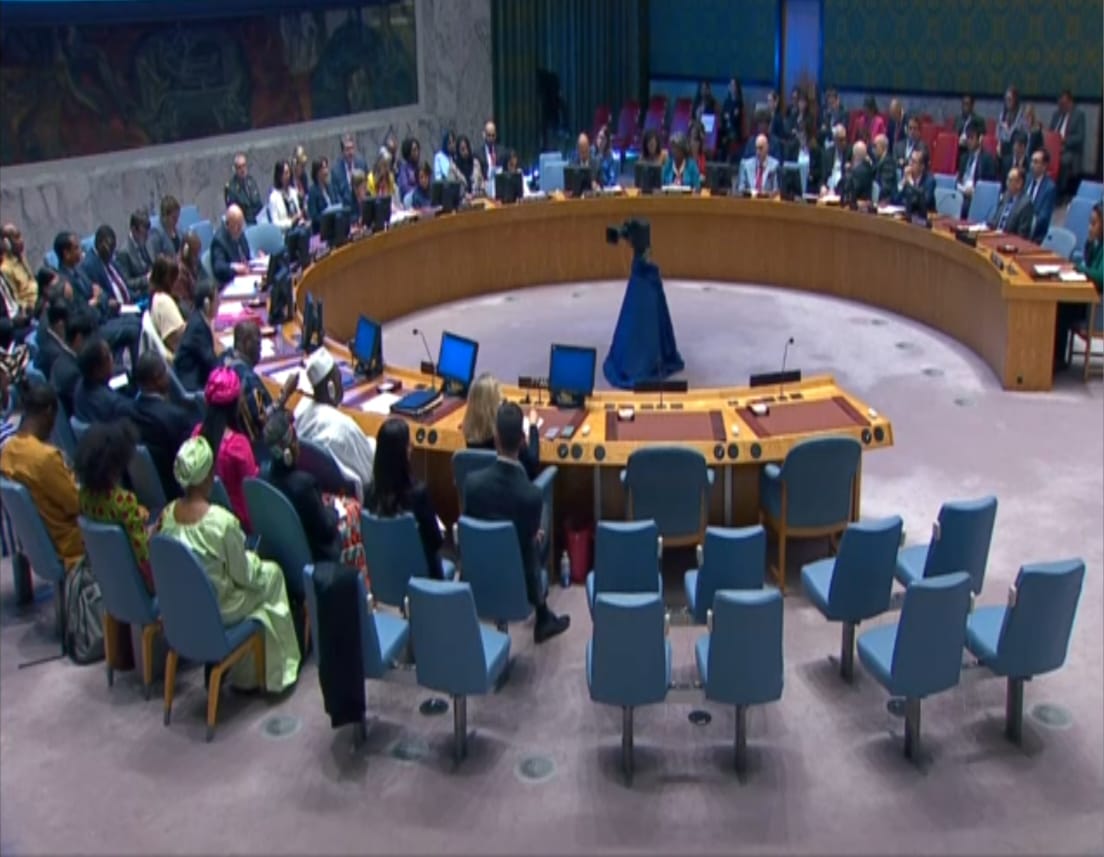
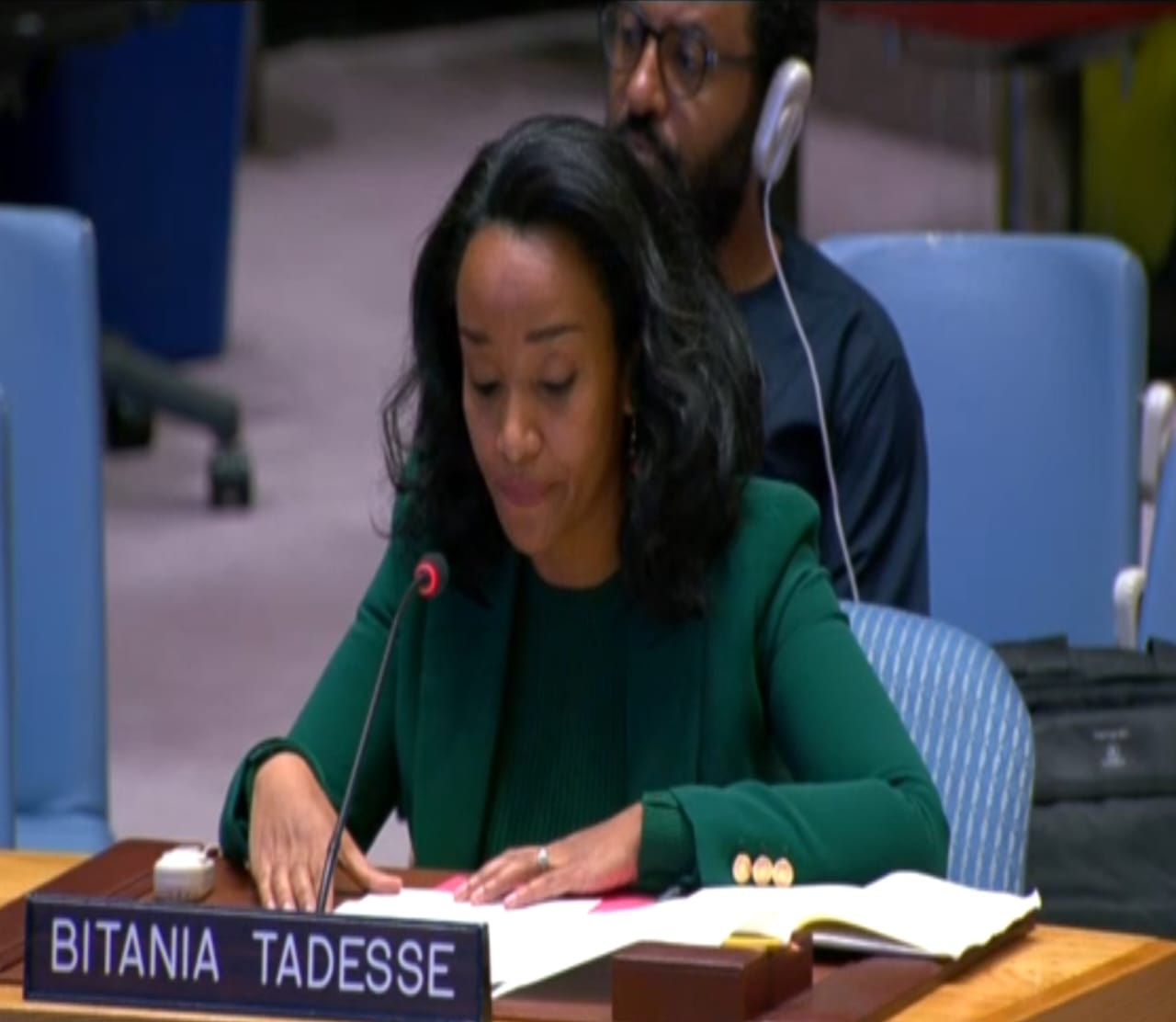
Amani Africa Statement delivered to the United Nations Security Council
Thank you, Madame President.
I would like to thank the Swiss Presidency for this invitation to address the Council on my behalf and on behalf of my organization Amani Africa Media and Research Services (Amani Africa).
Amani Africa is a pan-African policy research, training and consulting think-tank that works on multilateral processes on peace and security and democratic and constitutional rule in Africa with a focus on the role of the African Union (AU) and its Peace and Security Council (PSC). 1 It is an honor for me to draw on and use the rich research work of my organization in addressing you today. 2
Madame President, distinguished members of the Council
We would like to propose that at its core the subject of this session is not about money. Rather, it is first and foremost about the kind of arrangement that can best deliver on the pledge of the UN Charter of ‘saving succeeding generations from the scourge of war’ at a time when existing arrangements and tools for delivering on this promise have been found wanting.
At various junctures in its 78 years history, this Security Council had to make bold decisions for adapting the arrangements and tools for the maintenance of international peace and security to the challenges of each era. Although not always successful, there is no doubt that they give the UN the fighting chance for doing better in its efforts towards ‘saving succeeding generations from the scourge of war.’
Considering the nature of the peace and security challenges facing Africa, which account for 60 % of the decisions of this Council, it is the moment to make the necessary decision for adapting the arrangement and the tools for the realization of the Charter’s most fundamental pledge.
This the Council can achieve by heeding the UN Secretary-General’s call in the report presented today for the ‘Security Council to signal its clear support for providing African Union peace support operations with access to the United Nations assessed contributions.’
As discussed in some detail in Amani Africa’s special research report 3, the question of financing of AU PSOs has been an important part of the policy discourse on international peace and security in Africa for nearly fifteen years. At the turn of the century, the Protocol Establishing the Peace and Security Council was cognizant of the necessity for resort to the use of UN assessed contributions. This was premised on the fundamental recognition that when the AU deploys peace support operations with UNSC Chapter VII authorization, it does so as part of the arrangement deemed necessary and in pursuit of the global public good for the maintenance of international peace and security.
The experiences witnessed in the use of AU PSOs under this Council’s authorization have made it clear that the full potential of this arrangement (AU led UN authorized PSOs) can only be realized if AU PSOs are provided with sustainable, predictable and flexible funding. This Council has on many occasions affirmed the imperative for such funding. 4
This Council has actually deployed assessed contributions for funding AU peace support operations, 5 although in each instance as an exception. Following Resolution 2320 (2016) and Resolution 2378 (2017) as well as Presidential Statement of 31 August 2022 that requested the preparation of the Secretary-General’s Report presented today, I wish to indicate that the Secretary-General is spot on in stating that this is ‘an opportune, timely moment for the United Nations Security Council to rise to the challenge of laying the foundation for a new generation of African Union-led, United Nations-supported peace support operations on the African continent.’
On whether the institutional and technical work accomplished is good enough for such action, solid enough progress has been made albeit with some areas requiring further consolidation.
There is significant progress with respect to compliance framework for AUs peace support operations pursuant to UNSC Resolutions 2320 (2016) and 2378 (2017). 6
The AU has also established a unit dedicated to compliance. 7 This can be strengthened further. The implementation of the compliance standards can also be enhanced with further support.
With respect to burden sharing, institutionally the most critical development is the revitalization of the AU Peace Fund dedicated to mobilizing funds from within the continent for financing AU’s peace and security work. 8
Although the question is framed narrowly in monetary terms, there are questions about giving considerations to the enormous price that AU personnel pay with their lives and limbs and the resultant financial, social and other costs that result from such loss to the families, communities and institutions that these personnel are part of.
The use of UN assessed contribution is the avenue for crafting, along the lines outlined in the Secretary-General’s report and the AU Consensus Paper, that arrangement and the accompanying combination of tools required for this era to give the UN, working in concert with the AU, the fighting chance to make meaningful effort towards the promise of the Charter to save ‘succeeding generations from the scourge of war’ in Africa.
The conflict situations in various parts of the continent, including those in which the major UN peacekeeping operations are currently engaged, require the use of the combination of peace enforcement, stabilization and peacebuilding instruments. Lacking the combination of these tools and the doctrinal space for using some of these tools, UN missions in the CAR, DRC and Mali have come to face enormous challenges.
As the progress made in Somalia, under AU’s mission there, clearly attests, AU PSOs are willing, and when properly resourced, able to use peace enforcement for creating conditions for peace. In similar conflict situations, AU PSOs financed through UN assessed contribution can be the necessary alternative to UN peacekeeping.
Madame President,
At a time when there is apathy to using UN peacekeeping, using AU PSOs offers this Council the avenue for preventing the emergence of such a dangerous vacuum for security arrangements that don’t operate on the basis of multilateral principles.
The future of multilateralism lies in Africa. The interest of the peoples of the African continent is best served under a multilateral system even when it is imperfect. As Nkrumah said 60 years ago ‘although confidence in the United Nations has suffered several shocks since its foundation, …, it remains the only world organization in which the many problems of the world have a chance of finding reasonable solution.’ His endorsement of multilateralism within the framework of the UN is so absolute that he was emphatic that the UN ‘must, therefore, be supported by all interested in the preservation of peace and the progress of human civilization.’ 9
Madame President, excellencies members of the Council
The adoption of the framework resolution on the use of UN assessed contributions for AU PSOs will contribute materially to restoring Africa’s faith in the multilateral system as forcefully put by Nkrumah and facilitate the harnessing of the enormous reservoir of support for multilateralism in Africa.
Moreover, the use of UN assessed contributions within agreed institutional arrangement jointly worked out by the AU and the UN offers the best framework for AU’s role in the maintenance of international peace and security to be one that meets the expectations of the UN Charter. All indications are AU-led PSOs financed by UN assessed contributions are cost effective.
This is not about writing a blank cheque nor is it a matter of charity. Doing this is rather about this Council crafting the framework for shouldering its part of the responsibility in the shared global public good of maintaining peace and security in Africa.
Africa is looking up to this Council. It is our firm believe that this Council will rise to the occasion and muster the will for demonstrating, as the Secretary-General puts it, its ‘readiness to address a critical gap in the international peace and security architecture as well as strong reaffirmation of the willingness of this council to stem the scourge of armed conflict on the African continent.’
I thank you for your kind attention!
______________________________________
1 We are the leading source of information and analysis on matters the Peace and Security Council, including its role in projecting Africa’s voice, in concert with the three African members, in this august body. Some examples of Amani Africa’s products in this area include: ‘Financing Peace and Security in Africa: Breakthrough in Increased African Ownership?’ (July 2017); ‘The Internal Institutional Setup and Working Processes Shaping the Relationship between the AUPSC and the UNSC’ (December 2019); ‘Making Africa’s Voice Matter in the UN Security Council: Bridging the Gap Between Ambition and Reality in the Role of the African Three Members of the UNSC’ (March 2021); and ‘Seizing the New Momentum for UNSC Resolution on UN funding of AU Peace Operations’ (May 2023).
2 I will particularly draw on the report we launched the week before last titled ‘Seizing the new momentum for the adoption of UNSC Resolution on UN funding of AU PSOs’. As you can see from the sources cited in this latest special research report, Amani Africa closely followed the policy discussion on this file since the very first special research report it produced on this file in mid 2017.
3 Amani Africa, ‘Seizing the New Momentum for UNSC Resolution on UN funding of AU Peace Operations’ (May 2023), available on: https://bit.ly/433Xsp6
4 Various expert bodies established under the authority of this Council have also on several occasions indicated that one most viable, if not exclusive, option in this respect is the use of UN assessed contributions. United Nations, “Note to the Secretary General: Follow up to the AU-UN Panel (Prodi Report)”, 5 May 2009 and Report of the High-level Independent Panel on Peace Operations on uniting our strengths for peace: politics, partnership and people (17 June 2015).
5 It did so for the AU Mission in Sudan (AMIS) as part of the plan to facilitate its transition to the joint UN-AU mission. It has done so and still does for the AU mission in Somalia (AMISOM/ATMIS).
6 First, in addition to broad normative commitments, the AU adopted specific policy instruments including the AU Policy on Conduct and Discipline for PSOs and the AU Policy on Prevention and Response to Sexual Exploitation and Abuse (SEA) for PSOs. Second, through the AU-UN-EU tripartite project, the AU has also developed its strategic framework for compliance and accountability, which was adopted earlier this month at a ministerial meeting, where the AU policy on selection and screening of PSO personnel was also adopted. There has also been deliberate integration of IHL in the various mission documents prepared by the AU Commission including Concepts of Operations (CONOPs), Rules of Engagement (ROE), Force commanders’ directives and Memorandum of Understanding (MoU) with Police/Troop Contributing Countries (P/TCCs). At mission level, the AU developed the Indirect Fire Policy of AMISOM, which has contributed to the reduction of civilian harm, and through the establishment of no fire zones and setting up restrictions on the modalities of use of specific weapons. The Board of Inquiry and the Civilian Casualty Tracking Analysis and Response Cell (CCTARC) are the other tools critical to giving effect to the compliance policy of the AU. There are also instructive experiences of convening marshal courts for holding non-complying personnel accountable.
7 At a time when our founding director led an assessment of AU’s experience with compliance through field mission including to AMISOM and MNJTF in 2018, one of the gaps identified was the absence of such a dedicated capacity. See report submitted by Solomon A. Dersso to AU PSOD on ‘Comprehensive Assessment of AU Mandated and Authorized Peace Support Operations (PSOs) Approaches to Compliance with Human Rights, International Humanitarian Law and Conduct and Discipline Standards: Towards a System Wide AU PSOs Compliance Framework’.
8 Three major developments are worth noting in this respect. First, unlike in the past, the scale of assessment of member states serves as a dedicated mechanism to resource the Fund. Second, significant progress has been made towards the operationalization of the Fund through instituting the governance and management structures of the Fund. With the recent appointment of the head of the PF Secretariat, the full operationalization of the Peace Fund is at its final stages. Third, the AU adopted the Consensus Paper on financing of PSOs presenting Africa’s position and the progress made in meeting Resolution 2320 (2016) and Resolution 2378 (2017).
9 Africa Must Unite.
Monthly Digest on The African Union Peace And Security Council - April 2023
Monthly Digest on The African Union Peace And Security Council - April 2023
Date | April 2023
Tunisia assumed the role of chairing the African Union (AU) Peace and Security Council (PSC) in April. Six meetings were held during the month. One of these was an emergency session not envisaged within the programme of work and one session scheduled for the month was postponed. The initial programme of work for the month also envisaged convening of PSC’s 15th Retreat on its Working Methods but the activity was removed from the revised programme of work.
Briefing on the situation in Sudan
Briefing on the situation in Sudan
Date | 27 May 2023
Tomorrow (27 May), the African Union (AU) Peace and Security Council (PSC) is expected to convene its 1156th session at the level of Heads of State and Government to consider the situation in Sudan.
Uganda’s President and chairperson of the PSC for the month of May, Yoweri Kaguta Museveni, will preside over the session. President of the Union of the Comoros and Chairperson of the AU, Azali Assoumani, is expected to make remarks while the Chairperson of the AU Commission, Moussa Faki Mahamat, will brief the PSC. Executive Secretary of the Intergovernmental Authority on Development (IGAD), Workneh Gebeyehu; Executive Secretary of the League of Arab States, Ahmen Aboul Gheit; Secretary-General of the United Nations (UN), António Guterres; as well as the representative of Egypt are also expected to deliver statements.
The PSC is convening on Sudan for the second time in less than two weeks, constituting the third session of the PSC since the outbreak of the conflict on 15 April 2023. The last time the PSC met on Sudan was on 16 May, at its 1154th session, with a press statement released as the product of the session. In the press statement, the PSC, apart from condemning the ongoing fighting between the Sudanese Armed Forces (SAF) and the Rapid Support Forces (RSF), warned that ‘all perpetrators of criminal actions will be held accountable.’ This warning came against the backdrop of the widespread looting and destruction of civilian infrastructure, as well as diplomatic missions in violation of international law.
As the fighting continued, new dynamics are emerging in the conflict while exacerbating the existing ones. On 22 May, the Special Representative of the UN Secretary-General for Sudan and Head of the UN Integrated Transition Assistance Mission in Sudan (UNITAMS), Volker Perthes, in his briefing to the UN Security Council, raised alarm over the ‘growing ethnicization’ of the ongoing fighting and its risk of ‘engulfing the country in a prolonged conflict, with implication for the region.’ This was particularly manifested in West Darfur’s El Geneina where the fighting between SAF and RSF morphed into ethnic violence on 24 April while ethnic mobilization is simmering in South Kordofan and the Blue Nile region.
As the belligerents opted for urban warfare with sheer disregard for international humanitarian law and international human rights, the humanitarian consequence of the conflict in Sudan has become devastating. Sources indicate that more than 850 civilians have been killed and over 5,000 injured since the fighting began. The number of displaced people due to the conflict has now topped the 1 million mark, fleeing to safer locations inside and outside the country. Despite the pressing need for humanitarian aid, the revised Humanitarian Response Plan launched by OCHA was able to secure 12.4% of the required $2.6 billion funds to reach 18 million people in need.
Looting has become rampant in Khartoum and elsewhere and key civilian infrastructures have been targeted, severely restricting the accessibility of essential goods and services to those who are caught in the crossfire. During the 22 May briefing to the UN Security Council, SRSG Perthes highlighted the collapse of the health sector with more than two-thirds of hospitals being closed. International organizations such as the UN, humanitarian actors and diplomatic missions are not spared from the attacks and the widespread looting.
As documented by Amani Africa, ten declarations for ceasefire have been announced with many of which represent the parties’ expression of readiness to observe the declared ceasefire. However, almost all of the ceasefires did not hold. The latest of these is the Short-Term Ceasefire and Humanitarian Arrangements signed in Jeddah, Saudi Arabia, on 20 May. Envisaged to become effective on 22 May, this latest ceasefire seeks to facilitate the delivery of emergency humanitarian assistance and the restoration of essential services. Unlike the previous ones, the ceasefire agreement is the first with a monitoring mechanism comprising the representatives of Saudi Arabia and the US, albeit it lacks effectiveness in the absence of presence on the ground or the involvement of Sudanese on the ground. It is hoped to provide a brief respite for the civilians from the enormous suffering, but the fighting has not meaningfully stopped as in the previous ceasefires.
Tomorrow’s session will present PSC members with the opportunity to take stock of the ongoing diplomatic efforts and discuss the next steps to end the conflict. Given that the session is convened at the highest (summit) level, the PSC is expected to take strategic decisions based on the De-Escalation Plan, which is expected to guide tomorrow’s discussion on Sudan. It is to be recalled that the 20 April Ministerial Special Session on Sudan requested the development of an urgent plan for de-escalation. In his briefing to the UN Security Council on 22 May, Bankole outlined the six pillars of the Plan that need to be addressed for a sustainable resolution of the conflict in Sudan. These pillars are:
- Co-ordinated international action to avoid a proliferation and duplication of mediation initiatives;
- Immediate, comprehensive and unconditional ceasefire;
- Urgent humanitarian action to relive the suffering of the Sudanese people;
- Protection of civilians, state infrastructure and ensuring accountability;
- Firm support to neighboring countries of the region impacted by the crisis; and
- Resumption of inclusive and fully representative political process towards a democratic, civilian-led government.
Indeed, one of the concerns emerging out of the ongoing diplomatic efforts to resolve the conflict is the proliferation of actors and mediation initiatives. Despite that the key actors who participated during the 20 Ministerial Special Session agreed to ‘coordinate, collaborate, and harmonize their respective initiatives to resolve the conflict’, the initiatives are not only uncoordinated but also at times competing.
The 16 April emergency session of the PSC as well as the Ministerial Special Session envisaged the Chairperson of the AU Commission to take the leadership in coordinating international responses to the crisis within the framework of the Trilateral Mechanism (AU-IGAD-UN). On the other hand, IGAD’s 16 April extraordinary summit formed a high-level delegation led by South Sudan’s President Salva Kiir Mayardit. The 7 May emergency ministerial level meeting of the League of Arab States (LAS) established a contact group on Sudan composed of Egypt, Saudi Arabia, and the LAS Secretary-General to find a peaceful settlement for the conflict. It was in addition to these diplomatic initiatives that Saudi Arabia and the US created a separate mediation track that culminated in the signing of two important agreements: the Jeddah Declaration of Commitment to Protect the Civilians of Sudan and the 20 May Short-Term Ceasefire and Humanitarian Arrangements.
Regional actors such as the AU and IGAD may appreciate the outcomes of the Jeddah mediation process, but are likely to remain unhappy with a process that has sidelined them. The need for the involvement of regional actors has been a major issue emphasized by the different speakers during the 22 May UN Security Council briefing. For instance, IGAD’s Executive Secretary stressed the importance of involving Sudan’s neighbors, while the African Members in the UN Security Council (A3) reaffirmed ‘the central role of the AU, IGAD and the Trilateral Mechanism in stabilizing Sudan’.
The other key concern is that ongoing diplomatic efforts have failed to include one of the key stakeholders in Sudan’s peace process – the civilians. This is a major omission considering that civilian actors in their various formations continue to play, as they did during and since the 2019 Sudan revolution, a vital role towards the achievement of democratic transition. Since the outbreak of the war, civilians continue to display their organizational ingenuity in identifying safe corridors for civilians to escape the sights of fighting to safer areas, in organizing humanitarian help of various kinds including medical assistance in their neighborhoods and in signing local peace agreements. In light of the nature of the conflict, it is a missed opportunity that international diplomatic efforts are not leveraging these various local initiatives for enhancing the space for civilian protection, ceasefire monitoring, local level peace building and humanitarian protection. Tomorrow’s session is an opportunity for the PSC to call on the representation of civilians in all diplomatic efforts.
The expected outcome of tomorrow’s session is a communique. It is expected that the PSC will endorse the De-escalation Plan developed by the AU Commission pursuant to the 20 April Ministerial Special Session. PSC may welcome the signing of a Seven-day Agreement on a Short-Term Ceasefire and Humanitarian Arrangements in Jeddah, Saudi Arabia, on 20 May, while expressing its deep concern over the reported violations of the Agreement by both sides. It may remind the parties of their obligations under international law and urge them to fully uphold their commitments under the Agreement. As the duration of the ceasefire agreement expires early next week, the PSC may urge the parties to extend the agreement for additional periods so that it paves the way for talks towards a more comprehensive ceasefire agreement. The PSC may commend various civilian actors in Sudan for their efforts in lessening the impact of the war on civilians through local humanitarian action, peace agreements and identification of safe corridors. It may emphasize the need for international diplomatic and humanitarian efforts to leverage and support these local civilian initiatives and ensure that civilians are represented in negotiations. Against the widespread looting and violations of international humanitarian law and international human rights by the parties, the PSC may call for the documentation and reporting of the various acts of violations as the key measure for ensuring the protection of civilians. While noting Saudi Arabia/US facilitated talks in Jeddah, the PSC may stress not only the imperative of a coordinated and consolidated diplomatic effort to resolve the conflict but also the centrality of the region (AU, IGAD, the Trilateral Mechanism, and the neighboring countries) in this process. In this respect, the PSC may call for the establishment of an international contact group on Sudan co-chaired by the AU and the UN and represented by all regional and international actors including the sponsors of the recent ceasefire.
Open Session on Humanitarian Action in Africa
Open Session on Humanitarian Action in Africa
Date | 18 May 2023
Tomorrow (18 May), the African Union (AU) Peace and Security Council (PSC) is scheduled to convene its 1155th meeting which will be committed to its annual open session on humanitarian action in Africa.
Following opening remarks by Rebecca Amuge Otengo, Permanent Representative of the Republic of Uganda and Chairperson of the PSC for the month of May, AU Commissioner for Political Affairs, Peace and Security (PAPS), Bankole Adeoye is expected to make a statement. Representative of the AU Agriculture, Rural Development, Blue Economy and Sustainable Development may deliver a statement. Representatives of the International Committee of the Red Cross (ICRC) and the World Food Programme (WFP) are also expected to participate in the session.
Being convened within the framework of the decision of PSC’s 469th press statement to dedicate an annual session to humanitarian action in Africa, tomorrow’s meeting is expected to offer updates on the humanitarian situation in the continent, with a specific focus on the issue of food insecurity and prospects to enhance Africa’s self-reliance in food production. Having regard to the growing prevalence of the issue, it is to be recalled that the PSC committed its 1083rd session to ‘food security and conflict in Africa’. In the Communiqué of that session, the impact of conflicts on food production and the role they play in the disruption of agricultural yields and value chains was emphasised. The coming session serves to highlight the continuing increase in food insecurity in the continent and opportunities for Africa to enhance agricultural production to promote food security.
Driven by multiple man-made and natural causes, the current food security crisis experienced across the various regions and countries in Africa has reached unprecedented levels over the past couple of years. The outbreak of the Covid-19 pandemic and its socio-economic impact, the war in Ukraine and resulting disruption to food and energy supply chains as well as cropping seasons characterised by poor rains and even drought in some regions, compounded by ongoing conflicts and unstable security settings, have resulted in acute food insecurity in many parts of the continent. According to the United Nations (UN) Food and Agriculture Organisation (FAO), a total of 20.2 percent of the African population was facing hunger in 2021 alone. Last year, after Russia’s invasion of Ukraine and the ensuing war and the geostrategic confrontation it triggered, African countries that depend on Russia and Ukraine for at least half percentage of their cereal import experienced over 70 percent raise in cereal prices. Not only has this put a major strain on the availability of and access to basic food items, it has also elevated hunger levels as the portion of population that cannot cope with the rise in food prices increased.
Both the COVID-19 pandemic and the food and energy crisis that the Russian invasion and the ensuing geopolitical confrontation triggered have underscored the imperative for Africa to severe its dependence on global supply chains for its food. The corollary to this imperative is the need for Africa to harness its enormous agricultural potential for achieving food security. Additionally, AU member states need to use this crisis for leveraging the African Common Free Trade Area (AfCFTA) for enhancing intra-Africa trade in agricultural products by prioritizing and fast tracking the processes for trading in agricultural products.
The East and Horn of Africa constitutes one of the regions, not only in Africa but also globally, most affected by food insecurity. As of December 2022, the World Health Organization (WHO) estimated 37 million people in the region to be faced with acute food insecurity. Aside from being faced with the worst droughts experienced in decades, the region is home to some of the worst conflict situations in the continent. The devastating combined effect of insecurity, drought and other impacts of climate change such as floods have led to the displacement of over 13 million people in the east and horn region, as of June last year. South Sudan, which faces severe challenges in agricultural production due to the highest level of flooding the country has gone through in over 60 years, has 8.3 million people who face critical level of food insecurity as well as famine reported in multiple areas of the country. In Ethiopia, where over 22 million people are reportedly facing severe food shortages, over 8 million people are affected by prolonged drought experienced in the country’s south and south-east parts while the conflict in Tigray and affected neighbouring regions has left 83 percent of the population food insecure. In Somalia, 6.5 million people are reportedly facing acute food insecurity due to multiyear drought that the country continues to suffer from. Despite earlier predictions of improved cereal production in Sudan due to projected favourable weather conditions, the situation in the country is not looking good either, due to the difficult economic conditions and the political instability, which are now compounded by the outbreak of the raging war.
West Africa and the Sahel are faring no better than the east and horn region. Estimates indicate that over 18 million people in the Sahel region experience severe food insecurity. Nigeria hosts 13 million people living under grave level of acute food insecurity. A significant amount of these are located in Boko Haram affected regions. Erratic rainy season, insecurity and rise in food price with reduced supply of food items leaves 1.2 million people in Mali requiring urgent food assistance. Substantial portion of these people are populations displaced due to terrorism related conflict and intercommunal violence. Burkina Faso which now hosts the highest number of IDPs in the Sahel region – 1.9 million Burkinabe citizens displaced internally – is projected to have 3.5 million people facing acute food insecurity in the coming agricultural season of 2023.
In CAR, reduced access to basic materials required for agricultural production has been a principal factor behind the increase in the price of local foodstuff while the cost of imported goods has gone even higher due to rise in fuel and transportation prices. In the coming months of 2023, estimates point that about 3 million people are likely to be in crisis and emergency phases of food insecurity, particularly in violence affected and displaced community hosting regions. One of the world’s largest hunger crisis currently, DRC is home to 26.4 million food insecure people, a number topping the total for some of the entire sub-regions of the continent. As the current conflict in the eastern part of the country fuels the growing displacement rate, factors related to climatic shocks and poor agricultural yields drive the increasing degree of food insecurity.
Although to a much lesser extent, countries in the north and southern Africa regions have also felt the impacts of the cost-of-living crisis resulting from the Covid-19 pandemic and the Ukraine war. In countries like Egypt, Morocco and Tunisia inflation rates have gone up considerable percentages leading to increase in food prices while people’s purchasing power decreases. In the southern Africa region, in addition to the spike in cost-of-living, Malawi and Zimbabwe are susceptible to raising degrees of food crisis due to likelihood of droughts and cyclones while violent conflict is the main driver of food insecurity in Mozambique.
Although all of these data project a grim image, it also offers the opportunity to re-examine Africa’s approach in responding to food insecurity, in order to identify gaps and find solutions. In this respect, one important aspect the PSC may reflect on is the significance of responding to Africa’s food security crisis in a comprehensive manner that takes account of humanitarian, developmental and peace and security factors into consideration. While partnerships for humanitarian aid are pertinent and in fact indispensable to respond to immediate needs of affected populations, it is essential to ensure sustainability of humanitarian assistance, specifically by linking such efforts with development programmes that aim to boost food production at the national level. This opens up the potential for local communities to be assisted in a manner that would not only enable their eventual self-reliance, but also their contribution to nation-wide food production.
Further to tailoring humanitarian assistance towards building durable and sustainable food production along with addressing urgent needs, it is also critical for African member states to make all the necessary efforts to ‘build sustainable and resilient agri-food system to ensure food sovereignty’ as articulated in the Declaration of the 15th Extraordinary AU Humanitarian Summit [Ext/Assembly/AU/Decl.(XV)]. In most of the highly affected African countries, absence of agricultural modernisation and weak institutional capacity to provide research supported farming practices are among the factors which facilitate food insecurity. This requires that AU member states invest more on the agricultural sector.
Having regard to the role conflict and political instability play in inflaming food insecurity, the imperative for practical steps for silencing the guns cannot be overemphasized. For this, the AU, Regional Economic Communities (RECs), UN and others together with CSOs need to work on preventing new conflicts from erupting and in mobilizing all their efforts for resolving existing conflicts.
The expected outcome of tomorrow’s session is a Communiqué. Expressing grave concern over the increasing rate of food insecurity faced in multiple parts of the continent, the PSC may recall the ‘African Common Position to accelerate the implementation of the Decade of Action to achieve the Sustainable Development Goals by 2030’, which articulates Africa’s collective resolve to strengthen the resilience of its food systems with the aim to meet the goals of Agenda 2063 and the Sustainable Development Goals (SDGs). It may urge member states, in close collaboration with the AU Commission, to strengthen efforts towards realising the Common African Position as well as the outcomes of the 15th Extraordinary AU Humanitarian Summit relating to ‘food security and nutrition in humanitarian situations in Africa’. Noting AU’s theme for the year 2023 ‘Acceleration of African Continental Free Trade Area (AfCFTA) Implementation’, the PSC may underscore the importance of AfCFTA for boosting intra-African trade in agricultural products and creating affordable food supply chains that can offer alternatives to increasing price of imports from outside of Africa. In this regard, the PSC may call on the AfCFTA Secretariat and states parties to the AfCFTA to prioritize and fast-track the adoption and operationalisation of the necessary institutional and legal arrangements for intra-African trade in agricultural products. PSC may encourage member states to invest more on services and raw materials relevant for advancing agricultural production and the sourcing of agricultural products used for humanitarian assistance from within the continent. The PSC may reiterate the request of its 1083rd session for the AU Commission to ‘undertake a study and propose to Member States recommendation on the strategies to boost food production in Africa’. It may further restate the need to ‘strengthen the linkage between humanitarian assistance, development and peacebuilding, with a view to enhance greater cooperation and coordination between actors in humanitarian assistance, development cooperation and peacebuilding’ to leverage the role of each for enhancing food security.