

With no viable collective plan emerging from the AU and Kampala summit, it falls on each AUSSOM TCC to plan for saving itself individually
With no viable collective plan emerging from the AU and Kampala summit, it falls on each AUSSOM TCC to plan for saving itself individually
Date | 7 August 2026
Zekarias Beshah, Senior Researcher, Amani Africa
Solomon Ayele Dersso, PhD, Founding Director, Amani Africa
With the African Union (AU) Support and Stabilisation Mission in Somalia (AUSSOM) facing a clear risk of operational incapacity when the UN Support Office in Somalia (UNSOS) ends in December 2026, Kampala hosted the second Extraordinary Summit of AUSSOM troop-contributing countries (TCCs) and the Federal Government of Somalia (FGS) on 31 July 2026.
The trigger for the untenability of AUSSOM’s continuation beyond December 2026 and the convening of the extraordinary summit was a letter of 1 July 2026 from the United States (US) Mission to the AU (USAU) notifying the AU Commission that the US will not support the continuation of the UN Support Office in Somalia (UNSOS) beyond the expiry of the current authorisation for AUSSOM on 31 December. Equally significantly, Washington also indicated that, although it would not object to renewal of AUSSOM’s mandate, it would not support a Security Council resolution that retained UNSOS or provided for UN logistical and operational support to the Mission.
Long before this US letter, it had been repeatedly argued that the AU and AUSSOM TCCs needed to begin considering alternatives before the Mission reached a breaking point (see here, here, and here). Yet these propositions, grounded in serious consideration of changing dynamics that necessitate the pursuit of such alternatives, were met with a largely ‘business as usual’ attitude that was not in tune with the prevailing changing realities. It was only in December 2025, during the PSC’s 1317th session, that the Council considered three options on the future of AUSSOM presented in a report of the AU Commission. Even then, follow-up was lacking. The PSC requested the AU Commission to ‘urgently convene’ a meeting of AUSSOM TCCs/PCCs at the level of Chiefs of Defence Forces to consider the three options and submit recommendations for the Council’s consideration.
The US letter came before PSC’s directives were acted on. The contents of the letter fundamentally change the equation for AUSSOM’s immediate future at the end of December 2026. AUSSOM may still have a mandate after December, but without the logistical architecture required to implement it.
As pointed out in an earlier Amani Africa article, while AUSSOM may continue to operate with major funding shortfalls, it cannot continue with its operations without UNSOS logistics support or without finding, within the short time left, an alternative logistics support arrangement fully replacing UNSOS. Indeed, a recent policy brief rightly pointed out that UNSOS is not simply an administrative or technical support office. It is a strategic enabler without which a mission such as AUSSOM cannot operate at scale in Somalia’s exceptionally difficult operational environment.
The summit was convened to articulate a collective plan for AUSSOM in view of the end of UNSOS by December 2026. The outcome of the summit called for a unified integrated mission support capability, mandated by the UN Security Council, to continue providing uninterrupted support to the mission for a period of 18 to 24 months with the aim of enabling the implementation of agreed milestones, strengthening the capacity of Somali security institutions and facilitating the orderly transfer of security responsibilities.
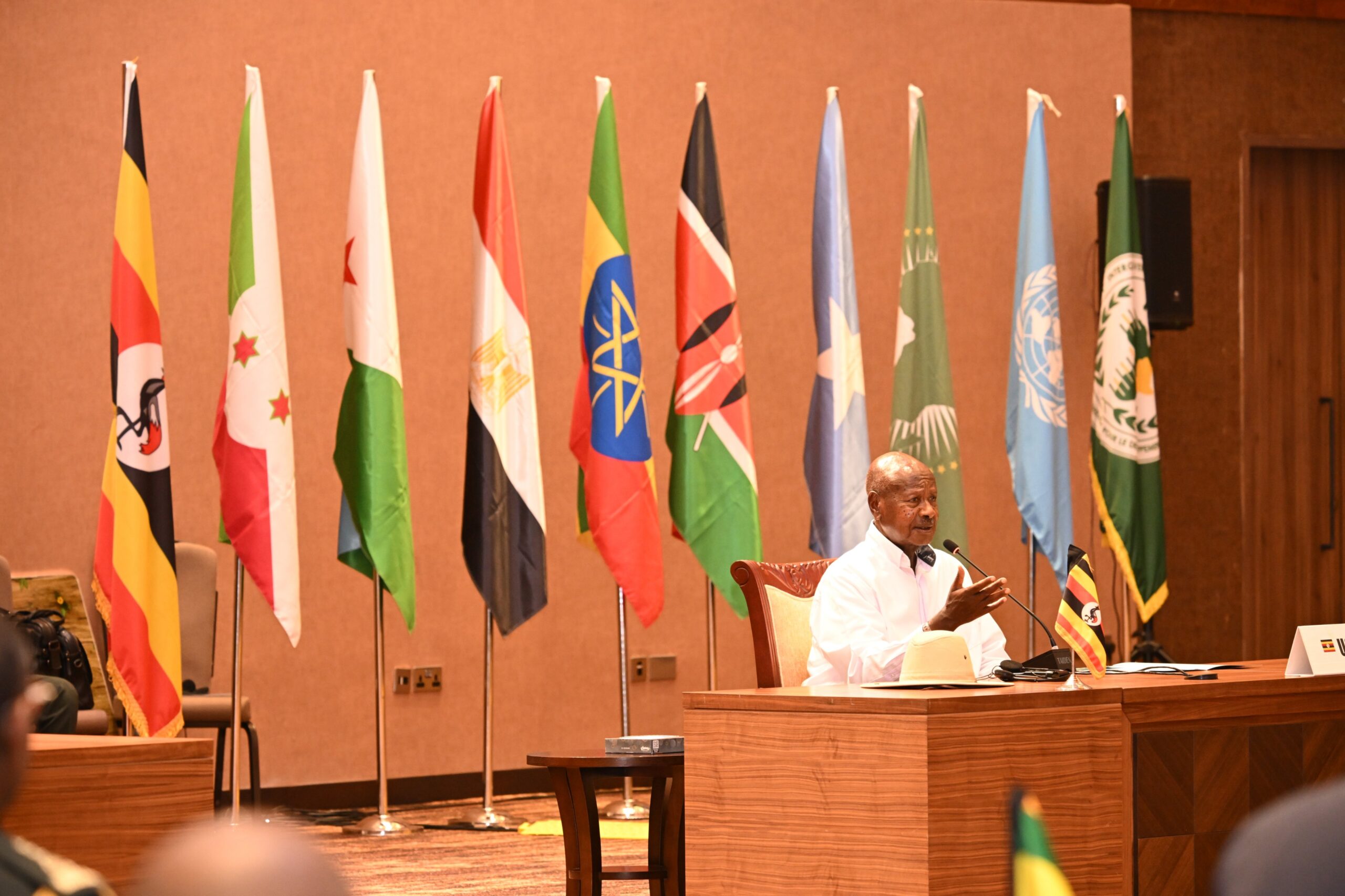
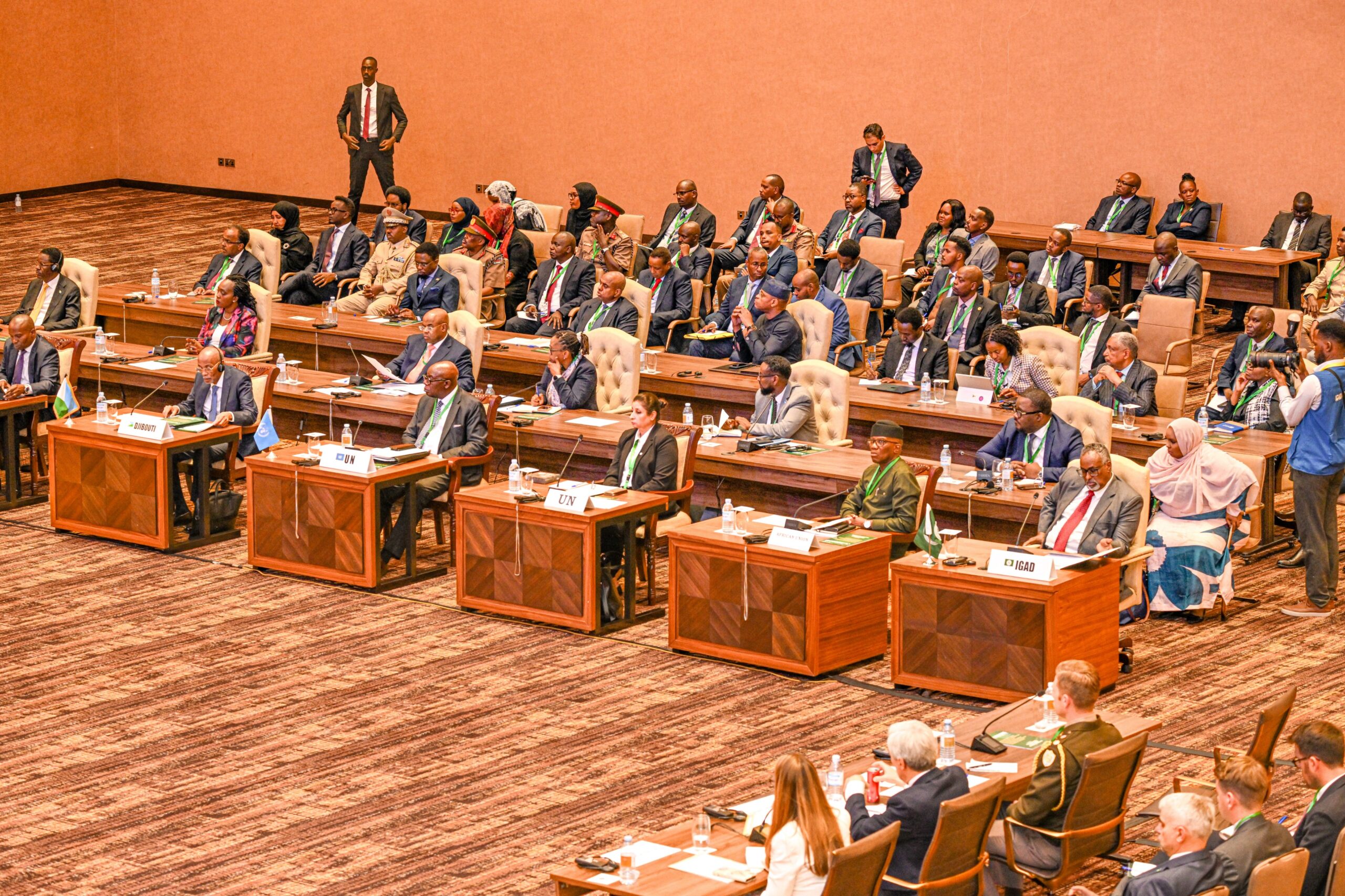
Extraordinary Summit of the AUSSOM TCCs, 31 July 2026, Kampala, Uganda (Source: @StateHouseUg)
Against this background, the Kampala Summit, in a clear indication that the TCCs have taken over decision-making on AUSSOM from the AU, mandated the foreign ministers of the TCCs, in coordination with the AU and the FGS, to form a Joint Task Force and engage in diplomatic outreach for predictable and sustainable financing. This includes the organisation of a donors’/partners’ conference intended to mobilise financial and political commitment.
On the option of a donors’ conference, it is to be recalled that an earlier effort for convening a donors’ conference failed to materialise. In its place, a High-Level Financing Event held in September 2025 on the sidelines of the UN General Assembly, which mobilised about USD 44 million, was not anything close to what the Mission required. TCCs have thus been forced to subsidise the AU mission. Efforts to mobilise substantial resources from non-traditional partners have repeatedly produced little.
There is little reason to assume, however, that another round of fundraising will fundamentally change the situation. International partners’ priorities have shifted. The political consensus that existed when the AU mission was first established two decades ago has also weakened considerably.
The feasibility of the 18-to-24-month transition period proposed by the TCCs would depend on obtaining precisely the financing and logistical support that are now least certain. This is the reality that the AU, the TCCs and Somalia increasingly need to confront. The central question is no longer simply how to preserve AUSSOM for two or three years. It is how to prevent the Mission’s financial and logistical crisis from producing a disorderly collapse with serious consequences for all the sacrifices paid with the lives and limbs of thousands of AU troops and investments made for stabilising Somalia.
It is very unlikely that an 18-to-24-month transition would secure the necessary financing and logistical support. The priority should then be to design an orderly transition—potentially within six to twelve months—during which AUSSOM would wind down and a new arrangement (such as bilateral deployment) for providing security support for Somalia would be put in place.
For AUSSOM, the lack of funding for troops nor the imminent end of UN logistics support did not come in a vacuum. In part, it is attributable to the politics of transition in Somalia that has stalled the progress towards the transfer of security responsibility to Somali forces.
Relations between the Federal Government and the Federal Member States have deteriorated sharply. Jubaland and Puntland have formally suspended cooperation with the Federal Government. Disagreements over constitutional amendments and the electoral process have further strained relations among Somali political actors. In June, these tensions reached a dangerous point when clashes erupted in Mogadishu between federal government forces and opposition-aligned forces (see here).
Since the first TCCs extraordinary summit of April 2025 held in Kampala, there has been a call for putting in place a process for addressing the political dimension of the transition in Somalia.
IGAD Deputy Executive Secretary Mohamed Abdi Ware captured the problem well in his remarks to the ministerial meeting preceding the Kampala Summit: ‘We must insist that Somalia assume responsibility for their sovereign territory in the shortest possible time.’ He also requested the TCCs Summit to secure an ‘iron-clad commitment’ from the Somali Government to pursue a political settlement. At the meeting of Chiefs of Defence Forces of TCCs on 29 July, Uganda reportedly called for Somalia to produce a roadmap for inclusive political dialogue. Somalia and Djibouti sought to defer discussion of the issue to the Summit level.
As in the first extraordinary summit of TCCs in April 2025, the aspect of the summit proposal on the political crisis in Somalia faced firm rejection from Somalia.
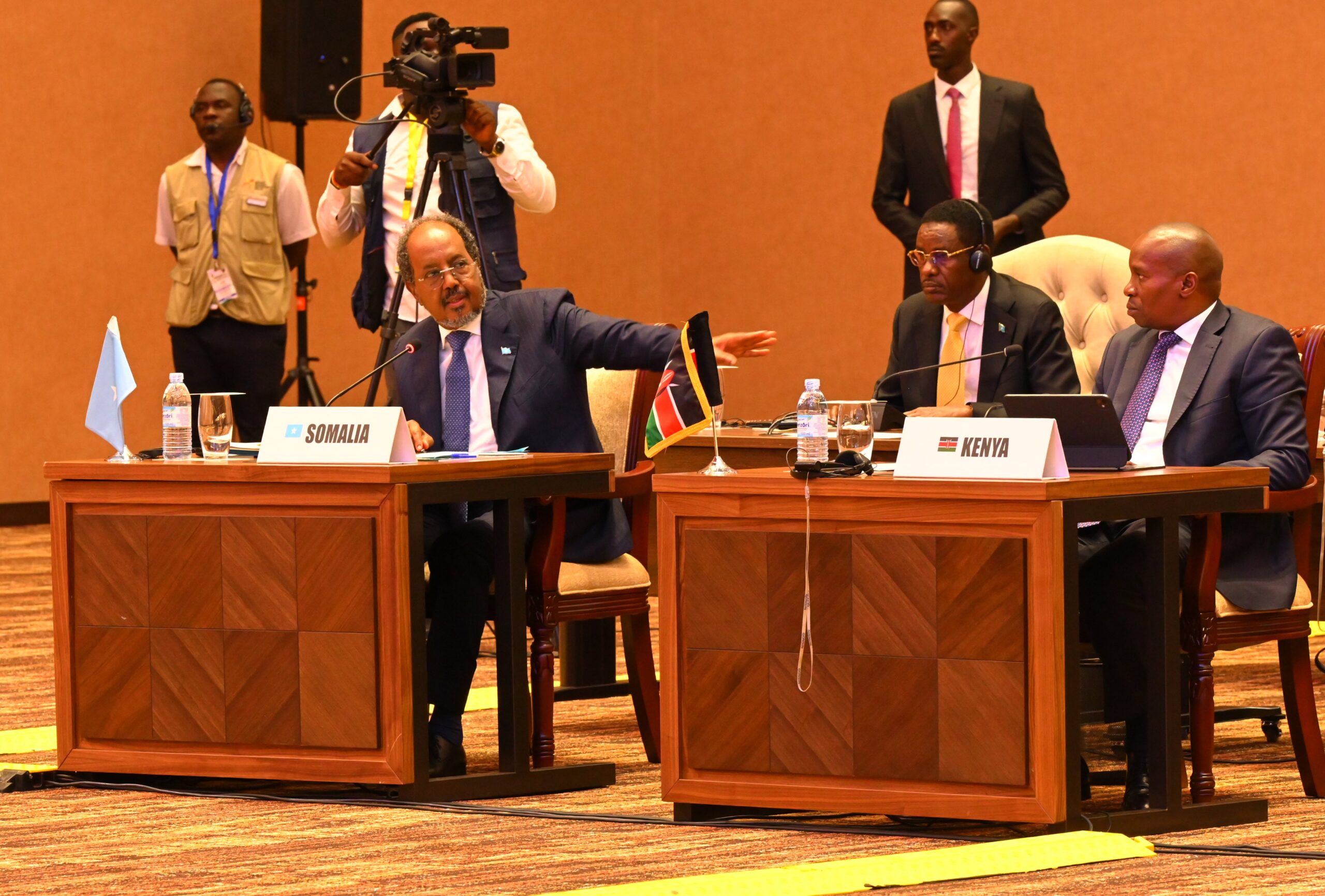
At the Summit, President Hassan Sheikh Mohamud, as he did in 2025, strongly and repeatedly objected to the inclusion of political matters in the communiqué, maintaining that Somali political questions are a sovereign matter that should be handled by Somalis themselves and that the Summit should remain focused on security and AUSSOM. The relevant provision was subsequently removed. As in 2025, the opportunity for mutual accountability and for a shared commitment was lost.
The problem with this is that it would be difficult for TCCs and the AU to convince the US or other partners to continue to enable the funding of AUSSOM. The removal of that clause from the Kampala summit outcome robbed the TCCs of a much-needed bargaining tool in their outreach for mobilising logistics support for AUSSOM beyond December 2026.
Under these circumstances, there is a possibility that even the shorter transition period suggested above may not be attained. As argued in an earlier article, a plan for the worst-case scenario of withdrawal of AUSSOM by December 2026 should be considered. However, the AU and the Kampala summit did not produce a collective plan for such a scenario. Under the circumstances, TCCs have no option but to put in place their own respective individual contingency plan.
Update on the situation in the Sahel
Update on the situation in the Sahel
Date | 6 August 2026
Tomorrow (7 August 2026), the African Union (AU) Peace and Security Council (PSC) will receive an update on the situation in the Sahel region.
The session is expected to commence with opening remarks by Mohamed Khaled, Permanent Representative of Algeria to the AU and the Chairperson of the PSC for August, followed by a statement by the Commissioner for Political Affairs, Peace and Security (PAPS), Bankole Adeoye. The Special Representative of the AU Commission for Mali and the Sahel and Head of the AU Mission in Mali and the Sahel (MISAHEL), Mamadou Tangara, is expected to brief the Council.
While the PSC addressed the political transitions in Burkina Faso and Niger during its most recent 1356th session, the last time it held a session on the Sahel as such was on 30 September 2025, during its 1304th session, which addressed the Sahel region as a whole. Convened at ministerial level and attended by AU Commission Chairperson Mahmoud Ali Youssouf, that session tasked the Chairperson of the Commission to establish a Task Force to support the countries of the Sahel in fighting terrorism.
The security situation in the region appears to have worsened further since the 1304th session. In Mali, the Al-Qaeda-affiliated Jama’at Nusrat al-Islam wal-Muslimin (JNIM) and Tuareg separatists belonging to the Azawad Liberation Front (FLA) ratcheted up the pressure against the Malian armed forces and their Russian allies by launching coordinated attacks across several locations in the country. These attacks targeted military installations, imposed blockades on key transport routes, and increased pressure on government-controlled areas. Several senior military officials, including Defence Minister General Sadio Camara, were also reportedly killed in these latest rounds of attacks.
Similarly, Burkina Faso continues to experience a surge of attacks by JNIM and the Islamic State in the Greater Sahara (ISGS). These groups launched coordinated attacks in the north and east part of the country in February, overrunning military detachments and killing troops and civilians. Reports indicate that a large part of Burkina Faso remains outside the government’s effective control.
In Niger, JNIM attacked Niamey’s international airport in June, killing more than 30 troops and civilians. This attack took place five months after a similar attack on the airport in January, which was claimed by the Islamic State Sahel Province (ISSP). The statement, the Chairperson of the AU Commission issued after the 17 July ambush of a Nigerien detachment on the Bankilaré–Téra axis in Tillabéri, described a resurgence of terrorist attacks across the Sahel exacting a heavy toll on both security forces and civilians.
The humanitarian toll behind these trend lines is severe. The United Nations Office for the Coordination of Humanitarian Affairs (UN-OCHA) figures for the first quarter of 2026 record 2,640 conflict-related deaths and 1,179 security incidents across the Central Sahel. The region hosts 2.8 million internally displaced persons, 2.1 million of them in Burkina Faso and 283,000 in Niger, alongside 444,400 refugees. An estimated 11.4 million people require food assistance, including 2.7 million facing IPC Phase 3-or-worse acute food insecurity, and 401,000 children are suffering from severe acute malnutrition. These figures give texture to what the Council is likely to describe, once again, as a humanitarian emergency inseparable from the security crisis.
On the diplomatic front, there have been some notable developments. The US appears to be actively trying to re-engage with the three Sahelian states through diplomatic visits and offers of pragmatic security cooperation. During his first official trip to Africa since assuming office, the new US Assistant Secretary of State for African Affairs, Frank Garcia, visited several West African countries, including Mali, to strengthen economic and security partnerships, particularly focusing on critical minerals and counterterrorism cooperation.
Russian Foreign Minister Sergey Lavrov visited the region in July and met with his counterparts from Burkina Faso, Mali, and Niger in Niamey, in an apparent attempt to reassure them of his country’s continued support to strengthen their operational capacities. While the three countries reaffirmed their security partnership with Russia, they appear to be increasingly trying to diversify their security cooperation to counter the growing threat they face.
Niger’s military leader, General Abdourahamane Tiani, visited Turkey in June to explore opportunities for enhanced cooperation, including on defence.
Meanwhile, the three Sahelian states have also sought to repair relations with Algeria, a key regional actor with longstanding influence on Sahelian security and diplomacy. In February, Niger’s transitional President, Abdourahamane Tiani, visited Algeria to restore bilateral ties, while Burkina Faso dispatched a high-level delegation led by its Minister of Energy, Mines and Quarries. Both Niger and Burkina Faso had previously recalled their ambassadors from Algiers in solidarity with Mali, which severed diplomatic relations with Algeria in 2025 after accusing it of downing a Malian surveillance drone. Mali subsequently restored diplomatic ties with Algeria in July, apparently with the help of Russia’s facilitation behind the scenes. These developments reflect a growing recognition among the Sahelian states that cooperation with Algeria is indispensable for their counterterrorism efforts.
In terms of AU’s engagement, a major development, which follows the PSC’s call in its 1304th session for the ‘intensification of diplomatic engagements with the countries of the Sahel’, was the AU Commission Chairperson Youssouf’s first visit to Ouagadougou, on 15-16 July, meeting Foreign Minister Karamoko Jean-Marie Traoré and Prime Minister Rimtalba Jean Emmanuel Ouédraogo. In view of the existential threat facing the countries of the Sahel, this is a long overdue mission. Youssouf stated that his visit was ‘intended to convey the Union’s solidarity with the Government & people of Burkina Faso in their efforts to restore peace, combat terrorism & promote stability.’ He went on to reaffirm ‘the Commission’s commitment to accompanying Burkina Faso, through the relevant organs & institutions of the AU, in support of humanitarian response, public health & sustainable development.’ Youssouf also visited Bamako, where he held meetings with several senior Malian officials, including General Assimi Goïta.
Youssouf underscored the importance of strengthening regional cooperation to address shared peace, security & development challenges. He also called for revitalising the Nouakchott Process on security cooperation and for closer AES-ECOWAS harmony, while committing the Commission to a three-pillar Sahel strategy of governance, security and development. In what signals the recognition of the need for a multidimensional approach inclusive of addressing governance issues, the Chairperson noted that the African Charter on Democracy, Elections, and Governance ‘remains an important continental framework for promoting good governance & responsive institutions.’
The AU has faced criticism over its lacklustre engagement in the Sahel crisis. Coming after increasing diplomatic steps including the 2025 appointment of Évariste Ndayishimiye as Special Envoy for the Sahel and Gambian Foreign Minister Mamadou Tangara as his Special Representative for Mali and the Sahel and Head of the AU Mission in Mali and the Sahel (MISAHEL), based in Bamako, the visits to the Sahel, if accompanied by meaningful measures for wider AU support for Sahel countries including through following up on the decision of the PSC for the establishment of a Task Force, this has the potential of elevating AU’s role in the Sahel.
The Economic Community of West African States (ECOWAS) remains engaged with the three Sahelian states that announced their withdrawal from the bloc. In March, former Guinean Prime Minister Lansana Kouyaté was appointed as ECOWAS Chief Negotiator to lead efforts to maintain dialogue and explore avenues for engagement with these countries. The security situation in the Sahel was also discussed during ECOWAS’ 69th Authority of Heads of State and Government summit, held in Freetown, Sierra Leone, in July. The Authority directed the President of the Commission to intensify engagement with the Sahelian states with a view to establishing a pragmatic security cooperation framework centred on the shared objective of containing the spread of terrorism and addressing broader regional security challenges.
In August 2025, the Authority decided to activate the ECOWAS counterterrorism brigade, marking a renewed effort to strengthen the region’s collective response to growing security threats. Since then, military chiefs and defence officials have been working to establish the necessary structures and operational framework for the force. At its most recent summit, the Authority endorsed a Revised Roadmap outlining phased implementation timelines aimed at achieving the brigade’s full operational capability by July 2027. It also tasked the ECOWAS Commission with facilitating consultations among Côte d’Ivoire, Ghana, and Nigeria to reach an agreement on the location of the force’s headquarters.
The UN Security Council discussed the situation in West Africa and the Sahel in July. Briefing the Council, the Secretary-General’s Special Representative for West Africa and the Sahel, Leonardo Santos Simão, highlighted the increasing use of drones, sophisticated communications technologies, and cryptocurrencies by armed groups and terrorists to coordinate their cross-border operations, underscoring the growing complexity of the regional threat. The UN is undertaking an independent strategic review of its regional office, led by former Ethiopian President Sahle-Work Zewde. The review is expected to inform the Security Council’s consideration of how to adapt the UN’s engagement and presence in West Africa and the Sahel to the region’s rapidly evolving political and security landscape.
The expected outcome of the session is a communiqué. The PSC could express deep concern over the deteriorating security situation in Burkina Faso and Niger, particularly the persisting terrorist activities by groups affiliated with JNIM, ISGS and ISSP, and underscore the urgent need for strengthened regional and continental coordination to address the evolving threat landscape. The Council may condemn continued terrorist attacks targeting civilians, national defence forces and security institutions, while expressing solidarity with the people of Burkina Faso and Niger and emphasising the importance of responses that address not only immediate security threats but also the governance, development and humanitarian dimensions of the crisis. The PSC may express concern about and call for enhanced effort for ameliorating the severe humanitarian consequences of the crisis, and may encourage the AU Commission, in coordination with humanitarian actors and regional organisations, to reinforce interventions anchored on a peace-security-development nexus approach that recognises the interconnected nature of the sources of vulnerabilities and humanitarian needs in the Sahel. The PSC may call for enhanced coordination among the AU, ECOWAS, the Alliance of Sahel States (AES), and other regional and international actors, to ensure that the limited resources available are organised around addressing the growing threat endangering the collective existence of affected countries. The PSC may welcome the visit that the AU Commission undertook to the Sahel countries and encourage the AU Commission to sustain its engagement with Burkina Faso and Niger through high-level diplomatic channels. The PSC may request that the Chairperson develop a strategy to deliver on the commitment he expressed during his visit for AU’s accompaniment of the Sahel countries in their quest for restoring peace, addressing humanitarian challenges and advancing regional cooperation. The PSC may also reiterate its decision on the establishment of the AU Task Force to support the Sahel countries in the fight against terrorism and efforts to restore peace and security.
Quarterly briefing by the A3 to the PSC
Quarterly briefing by the A3 to the PSC
Date | 4 August 2026
Tomorrow (5 August), the African Union (AU) Peace and Security Council (PSC) will convene its 1358th session to receive a quarterly briefing by the A3 to the PSC on its activities.
The session will commence with opening remarks by the Permanent Representative of Algeria to the AU and PSC Chairperson for August 2026, Mohamed Khaled, followed by an introductory statement by Bankole Adeoye, AU Commissioner for Political Affairs, Peace and Security. The Council is also expected to receive briefings from Lewis G. Brown, Permanent Representative of of Liberia and Coordinator of the A3, and Mohamed Edrees, Permanent Representative of the African Union to the United Nations in New York. In addition, Parfait Onanga-Anyanga, Special Representative of the United Nations Secretary-General to the African Union and Head of the United Nations Office to the African Union (UNOAU), will deliver a statement.
Tomorrow’s briefing is being convened pursuant to the first Conclusions of the High-Level Seminar on Peace and Security in Africa, held in Algiers in December 2013, which agreed that the A3 would brief the PSC quarterly on African issues on the UN Security Council’s agenda. This was reaffirmed in the Manual on the Modalities for Enhancing Coordination between the PSC and the A3, with a view to facilitating information-sharing and enabling the PSC to provide the necessary guidance. More than a decade later, the briefings remain irregular, although there are signs of improvement this year. The A3 last briefed the PSC on 20 April 2026, during its 1340th session, covering activities during the first quarter of 2026. During that session, the PSC directed the AU Commission to assess the feasibility of holding one quarterly briefing at AU headquarters and to develop a matrix of Common African Positions, as well as an annual plan of action for advancing those positions and reflecting relevant PSC decisions in the resolution of the UN Security Council. Tomorrow’s engagement is expected to follow up on these decisions and review the A3’s activities during the second quarter of 2026.
One area the briefing is expected to highlight is the steps taken to strengthen internal cohesion. As noted in Amani Africa’s Special Research Report on the A3, the group has become a force that others within the UN Security Council reckon with and has demonstrated its capacity to exert influence in its decision-making processes. When acting as one and speaking with one voice, its influence can go as far as operating as a ‘de facto veto power,’ requiring other members, including the P5, to consult the A3, particularly on the African files.
One way of articulating their collective positions is through joint statements. Both their frequency and scope have expanded considerably: according to a study by the Security Council Report, the number increased from six in 2018 to 105 in 2024. Initially focused on African country situations, they now extend to thematic agenda items and non-African files. Publicly available information indicates that, between April and June 2026, the A3 delivered joint statements on at least 20 occasions. As observed by Security Council Report, speaking with one voice has increased the visibility of African positions; made it easier for other Council members to support or align with them; and enabled delegations with limited capacity to share the drafting burden while drawing on individual members’ regional expertise. This is an important step towards strengthening cohesion and amplifying African positions. The A3’s next stage of development should, however, be judged by whether its collective positions shape negotiations, influence voting behaviour and affect Security Council decisions and actions.
Although outside the review period, the briefing is likely to highlight the Arria-formula meeting convened by DRC during its July 2026 presidency as an encouraging experience. Held on 13 July and titled ‘The Normative Gaps Linking Natural Resources and Peace: Foundations and Perspectives,’ it built on Sierra Leone’s July 2025 meeting on critical minerals and their links to insecurity in Africa. The A3 have used Arria-formula meetings less frequently than other Council members, but their growing recourse to this mechanism is welcome. Used strategically, Arria-formula meetings can help shape subsequent Security Council deliberations and enable the A3 to move from responding to agendas set by others towards exercising a more proactive agenda-setting and drafting role. This was evident when, following the Arria-formula meeting, the DRC convened a high-level open debate on natural resource governance on 22 July under the agenda item ‘Maintenance of International Peace and Security.’
A3 members are also trying to expand their penholding or co-penholding role on African files and other issues of interest to the continent as called for in the communiqué of the 983rd session of the PSC. At its 1340th session, the PSC encouraged the A3 to assume greater responsibility in shaping Security Council outcomes through such arrangements. So far, these roles have mainly covered West Africa and the Sahel and the Central African region. As pointed out in a recent publication on the tenure of Sierra Leone, leadership is exercised additionally ‘through sanctions and working group responsibilities, including chairing the 1533 Sanctions Committee concerning the DRC, the 2206 Sanctions Committee concerning South Sudan and the Informal Working Group on International Tribunals.’
Despite the A3’s emergence as a cohesive negotiating bloc with significant influence on Security Council dynamics—and its support becoming a ‘de facto requirement’ for the adoption of Security Council products concerning African files—, there remains significant room for improvement. Several challenges continue to limit the group’s role in agenda-setting and its influence over Security Council outcomes and are worth highlighting in tomorrow’s engagement.
The first is the lack of strong strategic and political guidance from the AU, as well as inadequate coordination and timely, proactive engagement between Addis Ababa and New York. In the absence of clear and timely AU guidance, the A3 cannot effectively influence Security Council dynamics and remains vulnerable to division. Various PSC sessions, including the 983rd and 1340th sessions, the Oran Process and the Manual on the Modalities for Enhancing Coordination between the PSC and the A3 have identified mechanisms to address this. The difficulty lies not in the absence of modalities but in their limited operationalisation.
Modalities that have not been implemented regularly include inviting the A3 to PSC meetings on items also under UN Security Council discussion; holding quarterly videoconferences between the PSC Troika and the A3; facilitating interactions between their experts; and aligning the two Councils’ programmes of work on African files. Although the PSC’s 1340th session requested that its deliberations precede, to the extent possible, discussion of the same issues in the UN Security Council, thereby providing clear continental guidance, this rarely happens. Responses from Addis Ababa are often late. The AU Permanent Observer Mission, which serves as the A3 Secretariat and is expected to provide technical, administrative and logistical support to the group, remains under-resourced, while the request for a dedicated focal point within the Department of Political Affairs, Peace and Security has not been acted upon. Similarly, while the A3 increasingly serves as penholder or co-penholder on some files, the P3 still control most African files and usually initiates meetings and drafts.
These shortcomings have political consequences. Without timely continental guidance, the A3 formulates positions after negotiations on UNSC outcome documents are underway. Under these circumstances, its ability to influence first drafts declines, national positions can displace collective ones, and exposure to permanent-member pressure increases. Regular contact is therefore a condition of political cohesion, not an administrative formality.
Against this backdrop, tomorrow’s sessions should focus on operationalising agreed modalities for coordination outlined in various PSC session outcome documents on the A3 and in the Manual. As underscored in its 983rd session, the PSC should also reflect in its Programme of Work African files expected to feature in the UNSC agenda so that African positions are settled before, not after, Security Council negotiations begin.
Second, it is important that a clear set of continental priorities is set for A3 leadership in the UNSC. The Annual Plan of Action requested at the 1340th session should identify a) the files on which the A3 is expected to seek concrete Council outcomes, b) the principles that should guide A3 engagement, and c) the positions to be advanced and the coalitions required.
Third, there is also a need to expand its coalition base within and outside the Security Council. Building on the A3 Plus arrangement created with Caribbean members, the group should build a constituency among the E10—the ten elected non-permanent members. Beyond the Security Council, closer engagement with the wider African Group in New York and members of the UN from the Global South, including within the framework of the Non-Aligned Movement, could reinforce support around African common positions.
Finally, accountability of the A3 to the AU should be ensured. AU endorsement and leadership of the A3 are not nice things to have but a strategic necessity. They should become part of the strategic framework that anchors the role of the A3 and the projection of collective influence rather than a routine regional process. The AU Assembly in Decision Assembly/ AU/Dec.598 (XXVI) adopted in January 2016 explicitly inscribed the A3’s special responsibility to ensure that the decisions of the PSC are well reflected in the decision-making process of the Security Council on peace and security issues of concern to Africa. As such, the A3 seat carries not only national responsibilities but also continental ones. In addition to the annual seminar and the quarterly briefing, one way of strengthening accountability could be inviting African candidates for the Security Council seeking AU endorsement, both during their candidatures and at the conclusion of their mandates, to provide an assessment of how they have advanced agreed African positions.
The expected outcome of tomorrow’s session is a communiqué. The PSC may commend the progress made over the years, during which the A3 has evolved into a major power bloc within the UN Security Council. It may also welcome continued efforts to strengthen the A3’s influence and advance Common African Positions with one voice, including through the delivery of joint statements. The PSC may emphasise the importance of operationalising the agreed modalities for enhancing coordination between the A3 and the PSC, with a view to ensuring timely and proactive guidance on African files. To this end, it may request that the AU Commission and the AU Permanent Observer Mission report on the challenges to the implementation of the modalities for coordination and provide proposals on how to address those challenges. Taking note of the lessons from Sierra Leone’s tenure, the PSC may also encourage A3 members to expand their influence through chairing sanctions committees and informal working groups of the UNSC. It may also welcome the emerging use of Arria-formula meetings for setting agendas and shaping UNSC engagement on particular issues and encourage the A3 to use Arria-formula meetings strategically.
Regional order and the new geopolitics of ports, maritime infrastructure, and transport corridors in the Horn of Africa
Regional order and the new geopolitics of ports, maritime infrastructure, and transport corridors in the Horn of Africa
Date | 3 August 2026
Seife Ayalew Asfaw, PhD.
Affiliate Faculty, Carter School for Peace and Conflict Resolution
African Peacebuilding Project
George Mason University
One of the key questions in a recent policy dialogue that Amani Africa hosted on The Horn of Africa in an age of Regional Fragmentation and Global Disorder was the nature of the changing relationship between ports, maritime infrastructure, logistics and transport corridors on the one hand and peace and security, and regional order in the Horn of Africa on the other. In my presentation, my central argument was that ports and corridors are no longer simply matters of transport infrastructure or commercial access. In a contested global order, their role as strategic institutions in which sovereignty, economic integration, security, political authority and geopolitical alignment are increasingly negotiated has become most prominent.
This transformation reflects one of the defining features of today’s global disorder: the changing political meaning of infrastructure. For much of the post-World War II order, and under the dominant development paradigm, ports, maritime infrastructure and transport corridors were understood primarily as engines of development and globalisation. They were expected to facilitate trade, deepen economic interdependence, connect markets, attract investment and sustain international cooperation.
Those assumptions are now being challenged as the unipolar moment of the post-Cold War era gives way to a more fragmented, fluid, multipolar and increasingly unpredictable geopolitical landscape. In this context, ports and corridors function not only as gateways for trade and investment, but also as instruments of economic statecraft, strategic competition and regional influence. If ports and corridors have become strategic instruments rather than simply commercial assets, the central question is no longer only how to expand regional connectivity, but how to govern the political, economic and security relationships that connectivity creates.
Connectivity and Regional Integration
A central implication of this transformation is that connectivity should not automatically be equated with regional integration. A region may become more physically connected while becoming more politically fragmented. A new port, railway, transport corridor or logistics arrangement can reduce transport costs, diversify access to international markets and expand economic opportunities. At the same time, it can redistribute political influence, intensify bilateral competition, bypass neighbouring countries, strengthen contested political authorities and embed the region more deeply in competing external networks.
Infrastructure is never politically neutral. Every corridor prioritises particular routes, ports and territories, redistributes opportunities, reshapes strategic geography and creates both winners and losers. When these choices are made principally through bilateral arrangements without broader regional consultation, infrastructure can deepen the very fragmentation it is expected to overcome.
The question, therefore, is not simply whether infrastructure connects places, but what kinds of political, economic and security relationships that connectivity produces. Does it create reciprocal interdependence or new forms of asymmetric dependence? Does it broaden regional cooperation or reinforce bilateral competition? Does it strengthen collective regional agency or deepen reliance on external actors? These questions suggest that physical connectivity alone says little about the quality of the regional order it produces.
Accordingly, the governance of infrastructure becomes as important as the infrastructure itself. These are fundamentally questions of regional governance rather than engineering, logistics or investment. The central challenge with the proliferation of port and transport corridor development is therefore not whether the Horn becomes more connected, but whether that connectivity is governed in ways that deepen regional integration rather than regional fragmentation.
Strategic Infrastructure, Peace and Regional Order
The significance of this distinction becomes clearer when viewed through current developments across the Horn of Africa. Infrastructure is no longer simply an economic issue. It has become an integral part of peace, security and regional order. Somaliland illustrates this particularly well. Its strategic significance is shaped not only by questions of political status, but also by Berbera’s maritime position, Ethiopia’s search for diversified access to the sea and the growing strategic importance of the Red Sea. Recent developments surrounding Berbera, including diplomatic initiatives, major infrastructure investments and growing strategic interest from regional and extra-regional actors, further illustrate how commercial infrastructure has become increasingly entangled with questions of recognition, security and geopolitical competition.
At the same time, these issues should not be collapsed into one another. Commercial cooperation around ports does not necessarily have to await the resolution of every sovereignty dispute, nor should cooperation over transit and logistics automatically be interpreted as political recognition. Developing practical arrangements that distinguish commercial cooperation from questions of sovereignty may therefore help reduce tensions while preserving opportunities for mutually beneficial connectivity.
The evolving politics of the Red Sea provides another illustration of the same broader transformation. Littoral states understandably have primary responsibilities because their sovereignty and security are directly affected. However, the consequences of disruptions in the Red Sea extend far beyond the coastline. Trade continuity, corridor security and supply chain resilience also affect the wider hinterland. The impact can have serious security, economic and political ramifications for affected countries. Recent debates over exclusive versus more inclusive approaches to Red Sea security governance, including Ethiopia’s calls for greater participation in regional maritime affairs, illustrate how questions of infrastructure, access and security have become increasingly intertwined. They also reflect competing visions of regional order. One emphasises sovereignty-focused arrangements centred primarily on littoral states, while another advocates a broader regional framework that recognises the legitimate interests of interconnected hinterland states. In an era of regional fragmentation and global disorder, these competing governance models risk reinforcing political polarisation, weakening the legitimacy and accountability of regional governance, and creating greater opportunities for external powers and competing geopolitical agendas to shape the region’s security architecture. An inclusive regional approach should therefore recognise both the sovereignty-based legitimate interests of coastal states and the wider regional consequences of maritime governance and security.
These developments also illuminate a broader challenge concerning regional agency. The countries of the Horn possess agency. They negotiate investments, develop infrastructure and choose their international partners. Yet this agency is often exercised separately through bilateral arrangements rather than through shared regional frameworks. The result is not an absence of agency, but its fragmentation. The issue, therefore, is not whether the region possesses agency, but whether it can exercise that agency collectively in ways that strengthen collective regional governance rather than deepen strategic competition.
Imagining a new regional order
The real challenge facing the Horn is not connectivity itself, but how the region chooses to govern it. Rebuilding regional order is therefore not simply about developing more infrastructure or expanding access to ports. It is about strengthening the regional governance needed to manage the growing political, economic and security interdependence that infrastructure creates. This, in turn, requires restoring collective regional agency, not by withdrawing from external partnerships, but by developing the capacity to shape them through shared regional priorities and institutions.
From that perspective, peace and security can no longer be understood only through conflict management or military balances. They also depend on how the region governs its ports, corridors, maritime space and economic connectivity. Infrastructure has become part of the region’s security architecture, and its governance must increasingly become part of the region’s peace architecture. This also requires reimagining ports, corridors and the connectivity they create not simply as objects of geopolitical competition or national advantage, but increasingly as shared regional public goods for whose provision, sustenance and long-term value all affected countries should bear responsibility and jointly shoulder the responsibility towards cooperation, collective stewardship and mutual benefit.
The broader lesson is that the Horn has long been socially, culturally and historically interconnected, but it is becoming materially more interconnected through infrastructure, trade and transport networks while politically more fragmented. Connectivity, by itself, does not necessarily produce regional integration. Without common rules and institutions, it can instead deepen rivalry and fragmentation and in a context of political fragmentation, fuels tension and proxy conflicts.
This, in turn, raises a broader question for the region. The question is no longer simply who controls the next port or finances the next corridor. Rather, it is whether the countries of the Horn can transform increasingly securitised and zero-sum competition over ports, corridors and infrastructure into complementary, cooperative and mutually beneficial regional connectivity.
If so, what forms of regional governance, political trust and prudent regional risk management are needed to make that transformation possible by strengthening and politically empowering existing regional and sub-regional cooperation and coordination mechanisms, so that the region’s geography, infrastructure and connectivity contribute to peace, security and a more resilient regional order rather than becoming another source of fragmentation?
Education in Conflict Situations
Education in Conflict Situations
Date | 2 August 2026
Tomorrow (3 August), the African Union (AU) Peace and Security Council (PSC) is expected to convene its 1357th meeting, dedicated to its annual open session on education in conflict situations.
The session commences with the opening remarks of the Permanent Representative of Algeria to the AU and Chairperson of the PSC for August 2026, Mohamed Khaled, followed by the statement of Bankole Adeoye, AU Commissioner for Political Affairs, Peace and Security (PAPS). The PSC is expected to receive presentations from Professor Gaspard Banyankimbona, AU Commissioner for Education, Science, Technology and Innovation (ESTI), and Amma A. Twum-Amoah, AU Commissioner for Health, Humanitarian Affairs and Social Development. Jainaba Jagne, AU Special Envoy for Children Affected by Armed Conflict (CAAC); Rebecca Amuge Otengo, Co-Chair of the Africa Platform on CAAC (AP-CAAC); Professor Robert Doya Nanima, the African Committee of Experts on the Rights and Welfare of the Child (ACERWC) Special Rapporteur on Children in Conflict Situations; Vanessa Frazier, UN Special Representative of the Secretary-General for Children and Armed Conflict; and a UNICEF representative are also expected to brief the session.
The last time the Council considered the theme was at its 1296th meeting, held on 13 August 2025. It tasked the AU Commission ‘to develop a policy on the protection and provision of education services during conflicts on the Continent’ and to issue ‘periodic Scorecards on the Elimination of Harmful Practices, tracking trends in child marriage and other violations in conflict-affected areas.’ The Council also requested a comprehensive and regularly updated matrix of AU legal frameworks, strategies and initiatives supporting inclusive education and continuity of learning during conflict, accompanied by an action plan for implementation from 2025 onwards. Tomorrow’s session may therefore assess progress on these assignments, identify outstanding policy, institutional, financing and capacity gaps, and consider how recurring commitments can be translated into measurable protection and education-continuity measures.
A notable institutional development since the last session is the appointment of Ambassador Jainaba Jagne as AU Special Envoy for CAAC on 1 February 2026. The appointment responds to a long-standing PSC request, reiterated at its 1229th meeting, the Council’s first dedicated open session on inclusive education in conflict situations. As the AU’s lead political advocate on CAAC, the Envoy provides a focal point for advocacy, coordination and accountability regarding grave violations, including those that obstruct access to education. In a June 2026 AU–UN joint statement, she called for movement ‘from commitments to implementation’ through stronger Member State action, child-sensitive early warning, protection of essential infrastructure and climate-resilient recovery. The PSC could accordingly involve the Envoy in developing and monitoring the proposed policy and implementation framework.
The broader policy environment has also evolved. The AU Decade of Accelerated Action for the Transformation of Education and Skills Development in Africa, 2025–2034, was formally launched in October 2025 alongside six strategic frameworks, including CESA 2026–2035. A February 2026 high-level partners’ consultation and CESA’s proposed cluster, governance and monitoring arrangements provide a stronger implementation architecture. The Nouakchott Declaration likewise calls for education in emergencies to be integrated into national education plans, for education-management information systems to cover conflict-affected and displaced children, and for a continental accountability mechanism. At the international level, UN Security Council Resolution 2601 (2021) reinforces the protection framework by condemning attacks and threats against schools, affirming their civilian character and calling for continuity of education.
The scale of disruption gives urgency to the Council’s deliberations. The June 2026 Education Cannot Wait Global Estimates indicate that the crises affect 258 million school-aged children and adolescents worldwide, including 93 million who are out of school, with Africa accounting for about 128 million across 38 countries. Although the available figures measure different periods and dimensions of disruption and are not directly comparable, they illustrate the breadth of the crisis across the continent.
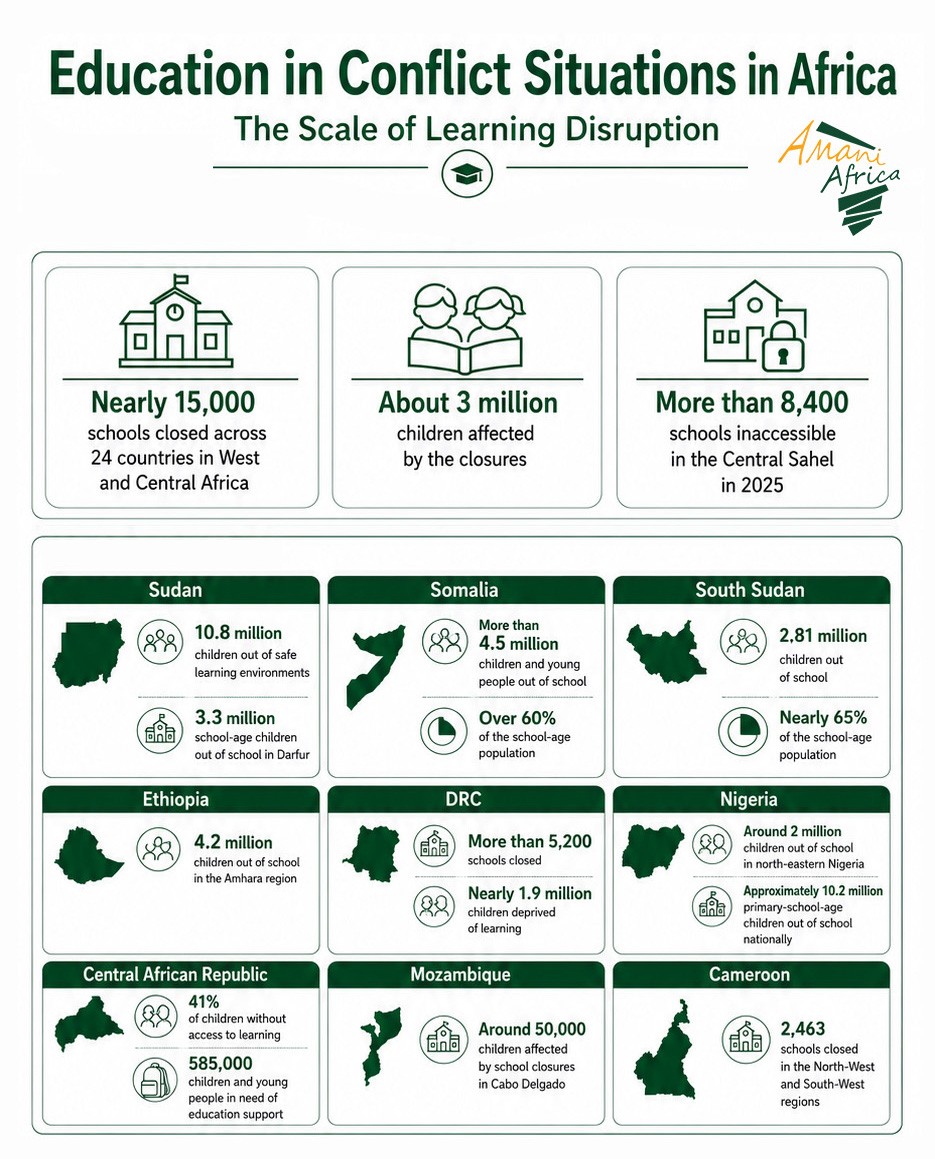
Against the background of the foregoing data, it is of importance for the PSC to organise tomorrow’s discussion around four mutually reinforcing priorities. The first is protecting education by translating the Safe Schools Declaration into national doctrine and practice, strengthening early warning, reporting, investigation and accountability, and safeguarding learners, teachers and the civilian character of education facilities.
The second is sustaining continuity of education through emergency planning, temporary, accelerated and flexible learning, appropriate offline options, portable records and recognition of prior learning for displaced children.
The third concerns learning recovery and inclusion, with emphasis on foundational learning, teacher support, psychosocial services and barriers affecting girls, children with disabilities, displaced learners and children formerly associated with armed groups.
The fourth is financing and measuring delivery through stronger domestic and pooled financing.
In terms of protecting education, the PSC’s 1314th meeting recognised the internationally recognised six grave violations against children in armed conflict, including attacks on schools and hospitals. These violations are mutually reinforcing, as attacks and prolonged disruption can increase exposure to recruitment, exploitation, early marriage and sexual violence. Education under Attack 2026 recorded that thirteen of the 28 country profiles involving attacks on education and incidents of military use concern African states, with the DRC and Ethiopia among those recording the highest incidence of attacks and Nigeria and Cameroon among those with the highest numbers of students and education personnel harmed. Although African participation in the Safe Schools Declaration is substantial, implementation remains uneven. The Fifth International Conference on the Safe Schools Declaration, held in Nairobi in November 2025, identified domestication and implementation as the main gaps.
With respect to sustaining continuity, deliberations are likely to consider suitable delivery methods in conflict-affected settings. Mobile provision, digital platforms and radio-based learning broadly align with the AU Digital Education Strategy. Nevertheless, Amani Africa’s post-session analysis of the 1296th meeting cautioned that unreliable electricity, weak connectivity, inadequate infrastructure, device scarcity and internet shutdowns can severely limit digital learning in conflict settings. Commissioner Banyankimbona reinforced this point at the July 2026 Innovating Education in Africa Expo, noting that many schools still lack electricity and affordable internet and stressing that ‘technology is simply a tool, and people are the purpose.’ Digital delivery should therefore complement functioning schools, teachers and face-to-face support and be combined with radio, print materials, mobile classrooms and community learning spaces. The discussion may also consider accessibility across languages, locations and levels of connectivity, while avoiding measures that deepen exclusion among displaced and marginalised learners.
On learning recovery and inclusion, the mutually reinforcing nature of grave violations requires responses linking education with child-protection monitoring, DDR, humanitarian assistance, psychosocial support, mediation and post-conflict reconstruction. Teacher support is equally central. The October 2025 regional Call to Action urges governments and partners to ‘protect, support, and invest in’ teachers through improved safety, fair and predictable remuneration, training, well-being and participation in policy. Reopening schools without a protected, supported and adequately paid workforce risks creating formally open schools unable to provide safe and meaningful learning. The BRIDGES programme, launched in Sudan in May 2026, offers a practical recovery model. It aims to restore learning for more than 328,000 conflict-affected children, reopen about 850 schools, support over 9,000 teachers and establish nearly 1,800 safe learning spaces. Its value lies in linking access with teacher support, remedial learning, alternative spaces, improved data and longer-term system strengthening, rather than treating recovery as physical rehabilitation alone. Support for displaced learners should also include investment in host-community schools to prevent overcrowding and pressure on fragile receiving areas.
Finally, financing is expected to be central to the Council’s deliberations. Africa faces an estimated annual education financing gap of US$77 billion, while conflict-affected systems must compete with other urgent humanitarian priorities. This pressure is compounded by UNICEF’s projection that global education aid will decline by US$3.2 billion, or 24 per cent, between 2023 and 2026, potentially placing nearly six million additional children at risk of dropping out, including about 1.9 million in West and Central Africa. Although crisis-affected families continue to prioritise education, nearly four in five school withdrawals are attributed either to financial barriers or conflict-related school closures, accounting for 39 per cent and 38 per cent, respectively. Against this backdrop, the 1296th meeting emphasised higher domestic allocations, pooled emergency education funds, mobilisation through relevant AU mechanisms, possible AU Peace Fund support and closer donor alignment with CESA 2026–2035. The PSC may therefore deliberate on how to expand these financing options while directing resources towards emergency preparedness, teacher remuneration, host-community education services and sustainable education data systems.
The expected outcome of the session is a communiqué. The Council may condemn attacks on learners, teachers and education facilities and demand an end to the military use of schools. In this regard, the PSC may underscore the importance of the Safe School Declaration in advancing protection of education. The PSC may emphasise its integration into military doctrine, training, and child-sensitive risk assessment. Welcoming the appointment of the AU Special Envoy on Children Affected by Conflict and to advance implementation, the PSC may task the AU Special Envoy, working closely with the Special Rapporteur of ACERWC on Children in Conflict Situations, to regularly document and report on incidents of attacks and military use and facilitate investigation and accountability. It may also assign the Special Envoy to follow up and report on the implementation of the decisions of the 1229th and the 1296th sessions of the PSC. The Council may call for education continuity interventions to be integrated into mediation, ceasefires, humanitarian access, stabilisation and post-conflict reconstruction processes, while encouraging support for affected learners and personnel, and restoration of the civilian character of education facilities. The PSC may welcome the launch of AU Decade of Accelerated Action for the Transformation of Education and Skills Development in Africa, 2025–2034. The Council may also task the AU Commission, particularly the Departments of ESTI, HHS and PAPS, to develop joint action plan to advance a) the adoption by states of adequately financed, gender-responsive and disability-inclusive emergency education plans and b) the protection and remuneration of teachers, strengthening of host-community schools and provision of temporary, accelerated, flexible and viable offline learning arrangements for displaced and other conflict-affected children.
Monthly Digest on The African Union Peace And Security Council - June 2026
Monthly Digest on The African Union Peace And Security Council - June 2026
Date | June 2026
In June, under the chairship of the Federal Republic of Nigeria, standing in for the Republic of Sierra-Leone, the African Union (AU) Peace and Security Council (PSC) had a scheduled Provisional Programme of Work (PPoW) consisting of four substantive sessions, covering five agenda items. Following the revision of the PPoW, three substantive sessions took place, covering four agenda items. Out of the four agenda items, only one focused on a country-specific issue, while the rest addressed thematic issues. All the substantive sessions during the month were held at the level of ambassadors.