
Open Session on Refugees, IDPs and Humanitarian Assistance in Africa
Open Session on Refugees, IDPs and Humanitarian Assistance in Africa
Date | 1 June 2026
Tomorrow (2 June), the African Union (AU) Peace and Security Council (PSC) is scheduled to convene an open session on refugees, internally displaced persons (IDPs), and humanitarian assistance in Africa.
The session will commence with opening remarks by Nasir Aminu, Permanent Representative of the Federal Republic of Nigeria to the African Union (AU) and stand-in Chairperson of the Peace and Security Council (PSC) for June 2026. This will be followed by an introductory statement by Bankole Adeoye, AU Commissioner for Political Affairs, Peace and Security. The Council will then receive presentations from Amma Adomaa Twum-Amoah, AU Commissioner for Health, Humanitarian Affairs and Social Development (HHS), and Churchill Ewumbue-Monono, Permanent Representative of the Republic of Cameroon to the AU and Chairperson of the Permanent Representatives’ Committee (PRC) Sub-Committee on Refugees, Returnees, Internally Displaced Persons (IDPs) and Migration. The session will also feature briefings from representatives of the International Committee of the Red Cross (ICRC) and the World Food Programme (WFP), who are expected to provide updates on the humanitarian situation across the continent and ongoing response efforts.
The session is being convened within the framework of the PSC’s annual indicative program of work. It is often scheduled to coincide with World Refugee Day, which is marked on 20 June, in accordance with the UN General Assembly Resolution 55/76/2001. The last time the PSC convened a session to examine the humanitarian situation in Africa was during its 1307th session on 23 October 2025, when it received a briefing from the ICRC on its activities across the continent. The session takes place at a time when the continent is confronting the combined effects of armed conflict, forced displacement, food insecurity, public health emergencies, and shrinking humanitarian financing. More than 160 million people across Africa require humanitarian assistance, while approximately 45 million people have been forcibly displaced. Despite these growing needs, only about 26.7 per cent of the required humanitarian funding has been mobilised. The session is therefore expected to address both immediate humanitarian challenges and the longer-term question of how Africa can develop more sustainable and self-reliant response mechanisms.
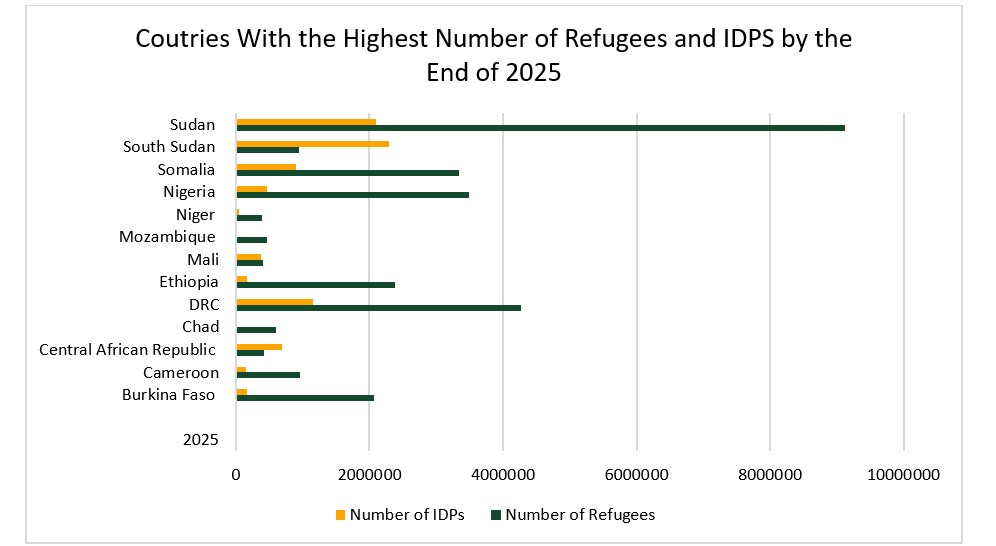
A major issue likely to feature during the session is the continued escalation of forced displacement across Africa. Displacement figures for 2025 reveal both the scale and complexity of the challenge. Internal displacement remains the dominant form of forced displacement, with Sudan hosting more than 9 million IDPs, followed by the Democratic Republic of the Congo (DRC), Nigeria, Somalia, Ethiopia, and Burkina Faso. Refugee flows similarly reflect the regionalisation of conflicts, with Sudan generating more than 2 million refugees and South Sudan accounting for approximately 2.3 million refugees despite having fewer than one million IDPs. The DRC and Somalia also continue to generate large refugee populations, highlighting the persistence of protracted crises compounded by climate change that extend beyond national borders.
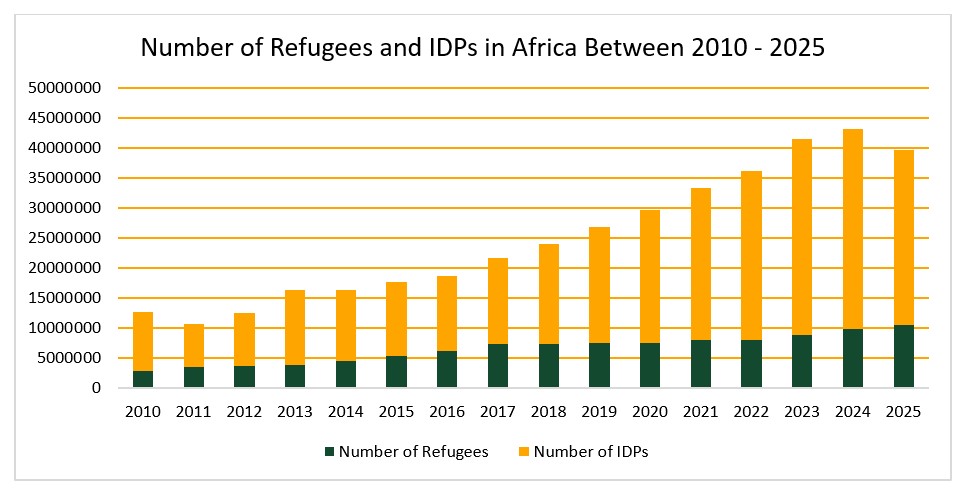
Longer-term trends demonstrate that displacement in Africa is becoming increasingly entrenched. Between 2010 and 2025, the number of refugees on the continent increased from 2.9 million to 10.6 million, while the number of IDPs rose from 9.8 million to more than 29 million. Although IDP numbers declined slightly between 2024 and 2025, the overall trajectory points to a continent experiencing unprecedented levels of forced displacement. These trends suggest that displacement is increasingly becoming a long-term challenge requiring solutions that extend beyond emergency humanitarian assistance.
It is clear from the trends these figures represent that Africa needs to adopt both mitigation measures geared towards addressing the immediate needs and risks associated with displacement and resolution measures seeking to address the conditions that induce and sustain displacement. Considering that conflicts and political and security crises account for much of the displacement on the continent, it is of paramount significance in this respect that the AU and its member states restore their grip on the prevention, management and resolution of conflicts on the continent as a critical measure for reversing the current worrying trend of year-on-year increase in displacement on the continent.
Within the framework of the foregoing, it is necessary that policy measures are tailored to the specific dynamics of each conflict situation. In this respect, Sudan may need to receive particular attention in the Council’s discussions. As the conflict enters its fourth year, Sudan has become the world’s largest humanitarian and displacement crisis. More than 33 million people require humanitarian assistance, while nearly 12 million people have been displaced internally and across borders. The crisis has also generated severe food insecurity, with more than 19 million people facing acute hunger and famine conditions already confirmed in some areas. The collapse of health services in conflict-affected regions has further contributed to outbreaks of cholera, malaria, dengue fever, and other diseases.
Alongside and central to addressing conflicts as sources of displacement, the session may also engage with the increasingly developmental nature of displacement. Refugees and IDPs often remain displaced for years, which in itself affects development trends both in origin and host countries. Countries such as Uganda, Ethiopia, and Chad continue to shoulder significant responsibilities despite limited resources. This reality has strengthened calls for implementing the humanitarian-development-peace nexus and moving beyond approaches that focus exclusively on short-term humanitarian relief. In this regard, tomorrow’s session provides the opportunity to explore measures to reduce aid dependency and address the structural drivers of displacement, including conflict, governance challenges, and climate-related vulnerabilities.
In view of recent developments, the session may also examine the growing intersection between public health emergencies, conflict, and displacement. Recent outbreaks, including Ebola affecting parts of the DRC, have highlighted the challenges of responding to health emergencies in environments characterised by insecurity, displacement, and weak health systems. Ongoing violence in affected areas has disrupted healthcare delivery, restricted humanitarian access, and undermined response efforts. Such situations illustrate how humanitarian crises increasingly overlap and reinforce one another, creating complex emergencies that are more difficult and costly to address.
Another major issue expected to feature prominently is the deepening humanitarian financing crisis. Humanitarian organisations increasingly warn that funding shortfalls are no longer simply operational constraints but are becoming drivers of instability in their own right. Reduced funding is affecting food assistance, shelter, protection services, and support for host communities. UNHCR has cautioned that funding reductions threaten essential services for vulnerable groups, including refugee women and girls, while also undermining prospects for durable solutions and voluntary returns. Humanitarian support often functions as a stabilising factor in fragile contexts, and reductions in aid can exacerbate grievances and desperation among affected populations. The broader financing landscape remains equally concerning.
These developments may strengthen calls within the PSC for accelerating the development of African-owned financing mechanisms. The session may provide an opportunity for the Council to revisit discussions on innovative financing, greater domestic resource mobilisation, and reducing dependence on increasingly uncertain external funding sources.
With regards to new developments, the launch of the African Humanitarian Coordination Platform in May 2026, following a continental engagement in Seychelles, is expected to feature during the session. The platform adopted a 2026–2027 Joint Implementation Plan focused on humanitarian diplomacy, localisation, financing, accountability, and resource mobilisation. Its establishment aims to address longstanding coordination gaps within Africa’s humanitarian architecture and translate previous AU humanitarian commitments into more operational mechanisms. The PSC may therefore use tomorrow’s session to reinforce political backing for the platform and encourage regular reporting on implementation progress.
Tomorrow’s session is also expected to revisit several decisions from previous sessions. Among the most significant is the operationalisation of the African Humanitarian Agency (AfHA), which is expected to become operational in 2026 and be headquartered in Uganda. While the establishment of AfHA represents a major institutional step in strengthening Africa’s humanitarian architecture, important questions remain regarding timelines, benchmarks, and sustainable financing arrangements. Another significant previous decision that requires the attention of the Council is its request to the AU Commission to undertake a comprehensive study, identifying the financial shortfalls and making concrete and practicable proposals on how to address the financial challenges for meeting Africa’s humanitarian needs.
The expected outcome of the session is a communiqué. The PSC is expected to express deep concern over the worsening humanitarian situation across the continent, characterised by increasing forced displacement, food insecurity, public health emergencies, and shrinking humanitarian financing. The Council is also expected to make a call on Member States, Regional Economic Communities/Regional Mechanisms (RECs/RMs), international partners, and humanitarian actors to strengthen coordinated responses to humanitarian emergencies across the continent. The PSC may further express serious concern over the deepening humanitarian financing shortfall and its direct implications for the delivery of life-saving assistance, including food security, health services, and protection programs, and may request the AU Commission to expedite the previously mandated study on humanitarian financing and present concrete proposals for sustainable and predictable funding mechanisms. In this regard, the Council may call for increased contributions to existing African instruments such as the Special Emergency Assistance Fund (SEAF) and the Africa Risk Capacity (ARC), while also urging the development of innovative and African-owned financing solutions, including stronger engagement with domestic resource mobilisation and non-traditional sources, including through establishing a strategy for private sector partnership. The Council may further emphasise the importance of strengthening Africa’s institutional humanitarian architecture, including by calling for the fast-tracked operationalisation and sustainable financing of the African Humanitarian Agency (AfHA), and by expressing support for the African Humanitarian Coordination Platform and its 2026–2027 Joint Implementation Plan. Lastly, the PSC may reiterate the need to embed the humanitarian-development-peace nexus in all responses to protracted displacement and recurrent crises and stress the need to address the root causes of displacement, particularly conflict and political instability, while strengthening African-led mechanisms capable of responding to increasingly interconnected crises.

Open Session on Refugees, IDPs and Humanitarian Assistance in Africa
Open Session on Refugees, IDPs and Humanitarian Assistance in Africa
Date | 1 June 2026
Tomorrow (2 June), the African Union (AU) Peace and Security Council (PSC) is scheduled to convene an open session on refugees, internally displaced persons (IDPs), and humanitarian assistance in Africa.
The session will commence with opening remarks by Nasir Aminu, Permanent Representative of the Federal Republic of Nigeria to the African Union (AU) and stand-in Chairperson of the Peace and Security Council (PSC) for June 2026. This will be followed by an introductory statement by Bankole Adeoye, AU Commissioner for Political Affairs, Peace and Security. The Council will then receive presentations from Amma Adomaa Twum-Amoah, AU Commissioner for Health, Humanitarian Affairs and Social Development (HHS), and Churchill Ewumbue-Monono, Permanent Representative of the Republic of Cameroon to the AU and Chairperson of the Permanent Representatives’ Committee (PRC) Sub-Committee on Refugees, Returnees, Internally Displaced Persons (IDPs) and Migration. The session will also feature briefings from representatives of the International Committee of the Red Cross (ICRC) and the World Food Programme (WFP), who are expected to provide updates on the humanitarian situation across the continent and ongoing response efforts.
The session is being convened within the framework of the PSC’s annual indicative program of work. It is often scheduled to coincide with World Refugee Day, which is marked on 20 June, in accordance with the UN General Assembly Resolution 55/76/2001. The last time the PSC convened a session to examine the humanitarian situation in Africa was during its 1307th session on 23 October 2025, when it received a briefing from the ICRC on its activities across the continent. The session takes place at a time when the continent is confronting the combined effects of armed conflict, forced displacement, food insecurity, public health emergencies, and shrinking humanitarian financing. More than 160 million people across Africa require humanitarian assistance, while approximately 45 million people have been forcibly displaced. Despite these growing needs, only about 26.7 per cent of the required humanitarian funding has been mobilised. The session is therefore expected to address both immediate humanitarian challenges and the longer-term question of how Africa can develop more sustainable and self-reliant response mechanisms.
A major issue likely to feature during the session is the continued escalation of forced displacement across Africa. Displacement figures for 2025 reveal both the scale and complexity of the challenge. Internal displacement remains the dominant form of forced displacement, with Sudan hosting more than 9 million IDPs, followed by the Democratic Republic of the Congo (DRC), Nigeria, Somalia, Ethiopia, and Burkina Faso. Refugee flows similarly reflect the regionalisation of conflicts, with Sudan generating more than 2 million refugees and South Sudan accounting for approximately 2.3 million refugees despite having fewer than one million IDPs. The DRC and Somalia also continue to generate large refugee populations, highlighting the persistence of protracted crises compounded by climate change that extend beyond national borders.
Longer-term trends demonstrate that displacement in Africa is becoming increasingly entrenched. Between 2010 and 2025, the number of refugees on the continent increased from 2.9 million to 10.6 million, while the number of IDPs rose from 9.8 million to more than 29 million. Although IDP numbers declined slightly between 2024 and 2025, the overall trajectory points to a continent experiencing unprecedented levels of forced displacement. These trends suggest that displacement is increasingly becoming a long-term challenge requiring solutions that extend beyond emergency humanitarian assistance.
It is clear from the trends these figures represent that Africa needs to adopt both mitigation measures geared towards addressing the immediate needs and risks associated with displacement and resolution measures seeking to address the conditions that induce and sustain displacement. Considering that conflicts and political and security crises account for much of the displacement on the continent, it is of paramount significance in this respect that the AU and its member states restore their grip on the prevention, management and resolution of conflicts on the continent as a critical measure for reversing the current worrying trend of year-on-year increase in displacement on the continent.
Within the framework of the foregoing, it is necessary that policy measures are tailored to the specific dynamics of each conflict situation. In this respect, Sudan may need to receive particular attention in the Council’s discussions. As the conflict enters its fourth year, Sudan has become the world’s largest humanitarian and displacement crisis. More than 33 million people require humanitarian assistance, while nearly 12 million people have been displaced internally and across borders. The crisis has also generated severe food insecurity, with more than 19 million people facing acute hunger and famine conditions already confirmed in some areas. The collapse of health services in conflict-affected regions has further contributed to outbreaks of cholera, malaria, dengue fever, and other diseases.
Alongside and central to addressing conflicts as sources of displacement, the session may also engage with the increasingly developmental nature of displacement. Refugees and IDPs often remain displaced for years, which in itself affects development trends both in origin and host countries. Countries such as Uganda, Ethiopia, and Chad continue to shoulder significant responsibilities despite limited resources. This reality has strengthened calls for implementing the humanitarian-development-peace nexus and moving beyond approaches that focus exclusively on short-term humanitarian relief. In this regard, tomorrow’s session provides the opportunity to explore measures to reduce aid dependency and address the structural drivers of displacement, including conflict, governance challenges, and climate-related vulnerabilities.
In view of recent developments, the session may also examine the growing intersection between public health emergencies, conflict, and displacement. Recent outbreaks, including Ebola affecting parts of the DRC, have highlighted the challenges of responding to health emergencies in environments characterised by insecurity, displacement, and weak health systems. Ongoing violence in affected areas has disrupted healthcare delivery, restricted humanitarian access, and undermined response efforts. Such situations illustrate how humanitarian crises increasingly overlap and reinforce one another, creating complex emergencies that are more difficult and costly to address.
Another major issue expected to feature prominently is the deepening humanitarian financing crisis. Humanitarian organisations increasingly warn that funding shortfalls are no longer simply operational constraints but are becoming drivers of instability in their own right. Reduced funding is affecting food assistance, shelter, protection services, and support for host communities. UNHCR has cautioned that funding reductions threaten essential services for vulnerable groups, including refugee women and girls, while also undermining prospects for durable solutions and voluntary returns. Humanitarian support often functions as a stabilising factor in fragile contexts, and reductions in aid can exacerbate grievances and desperation among affected populations. The broader financing landscape remains equally concerning.
These developments may strengthen calls within the PSC for accelerating the development of African-owned financing mechanisms. The session may provide an opportunity for the Council to revisit discussions on innovative financing, greater domestic resource mobilisation, and reducing dependence on increasingly uncertain external funding sources.
With regards to new developments, the launch of the African Humanitarian Coordination Platform in May 2026, following a continental engagement in Seychelles, is expected to feature during the session. The platform adopted a 2026–2027 Joint Implementation Plan focused on humanitarian diplomacy, localisation, financing, accountability, and resource mobilisation. Its establishment aims to address longstanding coordination gaps within Africa’s humanitarian architecture and translate previous AU humanitarian commitments into more operational mechanisms. The PSC may therefore use tomorrow’s session to reinforce political backing for the platform and encourage regular reporting on implementation progress.
Tomorrow’s session is also expected to revisit several decisions from previous sessions. Among the most significant is the operationalisation of the African Humanitarian Agency (AfHA), which is expected to become operational in 2026 and be headquartered in Uganda. While the establishment of AfHA represents a major institutional step in strengthening Africa’s humanitarian architecture, important questions remain regarding timelines, benchmarks, and sustainable financing arrangements. Another significant previous decision that requires the attention of the Council is its request to the AU Commission to undertake a comprehensive study, identifying the financial shortfalls and making concrete and practicable proposals on how to address the financial challenges for meeting Africa’s humanitarian needs.
The expected outcome of the session is a communiqué. The PSC is expected to express deep concern over the worsening humanitarian situation across the continent, characterised by increasing forced displacement, food insecurity, public health emergencies, and shrinking humanitarian financing. The Council is also expected to make a call on Member States, Regional Economic Communities/Regional Mechanisms (RECs/RMs), international partners, and humanitarian actors to strengthen coordinated responses to humanitarian emergencies across the continent. The PSC may further express serious concern over the deepening humanitarian financing shortfall and its direct implications for the delivery of life-saving assistance, including food security, health services, and protection programs, and may request the AU Commission to expedite the previously mandated study on humanitarian financing and present concrete proposals for sustainable and predictable funding mechanisms. In this regard, the Council may call for increased contributions to existing African instruments such as the Special Emergency Assistance Fund (SEAF) and the Africa Risk Capacity (ARC), while also urging the development of innovative and African-owned financing solutions, including stronger engagement with domestic resource mobilisation and non-traditional sources, including through establishing a strategy for private sector partnership. The Council may further emphasise the importance of strengthening Africa’s institutional humanitarian architecture, including by calling for the fast-tracked operationalisation and sustainable financing of the African Humanitarian Agency (AfHA), and by expressing support for the African Humanitarian Coordination Platform and its 2026–2027 Joint Implementation Plan. Lastly, the PSC may reiterate the need to embed the humanitarian-development-peace nexus in all responses to protracted displacement and recurrent crises and stress the need to address the root causes of displacement, particularly conflict and political instability, while strengthening African-led mechanisms capable of responding to increasingly interconnected crises.
Monthly Digest on The African Union Peace And Security Council - April 2026
Monthly Digest on The African Union Peace And Security Council - April 2026
Date | April 2026
In April, under the chairship of the Federal Democratic Republic of Ethiopia, the African Union (AU) Peace and Security Council (PSC) adopted a Provisional Programme of Work (PPoW) consisting of five substantive sessions covering a total of six agenda items. However, during the month, the PPoW underwent two revisions. These revisions led to seven sessions being held, covering nine agenda items. Out of the nine agenda items, four focused on country-specific situations, while the rest addressed thematic issues. Of all the agenda items, only one was held at the ministerial level, while the rest were held at the level of permanent representatives. It is also worth noting that only one was held as an open session.
Provisional Programme of Work of the Peace and Security Council for June 2026
Provisional Programme of Work of the Peace and Security Council for June 2026
Date | June 2026
In June 2026, the Federal Republic of Nigeria assumes the role of chairing the African Union (AU) Peace and Security Council (PSC). The Council’s Provisional Programme of Work (PPoW) for the month envisages four substantive sessions covering five agenda items. Of the five agenda items, three are dedicated to thematic issues, while the remaining two will address conflict-specific issues. All sessions are expected to be at the ambassadorial level.
The first session of the month, scheduled for 2 June, will be an open session on refugees, IDPs and humanitarian assistance in Africa. The session takes place during the month in which World Refugee Day is observed, specifically on 20 June, in accordance with the UN General Assembly Resolution 55/76/2001. The last time the PSC convened a substantial session on the theme ‘Refugees, IDPs and Humanitarian Assistance in Africa’ was in June 2024 at its 1216th session, in which it tasked the AU Commission ‘to develop systems for the collection, analysis and management of data and statistics related to refugees and internally displaced persons.’ Since then, there have been two sessions on humanitarian action in Africa relevant to this thematic session. These were the Council’s 1286th and 1307th meetings. Of relevance to the session on 2 June, the PSC, in its 1307th session, emphasised the need for stronger humanitarian assistance for refugees, returnees, and IDPs, and called on humanitarian agencies and partners to scale up resource mobilisation, resilience-building, reintegration support, and access to basic services while addressing the root causes leading to these situations.
On 3 June, the PSC will convene for its second substantive session on the ‘Situation in Guinea.’ This will mark the PSC’s second session in the year to consider the situation in the country, following the formal end of Guinea’s transition period after the September 2021 military coup. The transition concluded with the presidential election held on 28 December 2025. General Mamadi Doumbouya, who led the 2021 coup, was declared the winner with 86.72 per cent of the vote after the Supreme Court announced the final results on 4 January 2026. He was subsequently sworn in as President on 17 January 2026. Following this, the Council convened for its 1325th meeting in January 2026 to consider the political transition in the country, in which it decided to lift the suspension of Guinea. This 3 June session comes amid a widening political crackdown in the country, where the government recently dissolved 40 political parties — including the main opposition groups. The dissolved parties include the Union of Democratic Forces of Guinea (UFDG), the Rally of the Guinean People (RPG), linked to former President Alpha Condé, and the Union of Republican Forces (UFR). Their assets were frozen, and use of their names and symbols was banned. In a rejoinder, Guinea’s main opposition leader, Cellou Dalein Diallo, called for ‘direct resistance’, stating that ‘war has been openly declared’ on those challenging President Doumbouya. The dissolution of the parties came two months ahead of legislative and local elections – planned for 31 May 2026. It has also been reported that since taking power, his government has also shut down media outlets, banned protests and targeted opposition figures and activists.
The third substantive session of the month, scheduled for 9 June 2026, will be an update on the ‘Situation in Libya.’ The last time the PSC considered the situation in the country was in July 2025 during its 1291st session, held at the Summit level. Several actionable decisions which require follow-up were made from that session, including undertaking a field mission to the country, tasking the AU, UN and EU to reactivate the Tripartite Task Force on migration, and the Chairperson of the Commission to ‘appoint a Special Envoy on Migration with a view to coordinating migration issues on the continent.’ The assignment also included tasking the Chairperson of the Commission to accelerate the relocation of the AU Liaison Office to Tripoli – which was temporarily relocated to Tunis. Since then, there has been some political and economic development in the country. On the one hand, and in a positive development, for the first time in over a decade, Libya’s rival legislative factions agreed on a unified state budget, signalling an unusual display of cooperation in a nation long divided by conflict. On the other hand, the two rival governments, the UN recognized government based in Tripoli and headed by Prime Minister Abdul Dbeibha and the eastern-based Government of National Unity headed by Prime Minister Osama Hamad with the backing of the House of Representatives are not any closer to reaching at consensus on a draft legislation for holding elections and the formation of an interim unity government for preparing and presiding over the elections, despite efforts by the UN Support Mission in Libya (UNSMIL).
On 11 and 12 June, the PSC will be in Abuja, Nigeria, for its 3rd Annual Joint Consultative Meeting with the ECOWAS Mediation and Security Council (MSC). The annual joint convening will provide an opportunity for the PSC and the ECOWAS MSC to deliberate on issues relating to governance, peace and security in the West African Region, and review the status of progress in the implementation of the joint commitments adopted at the Inaugural Annual Joint Consultative Meeting held in April 2024, in Nigeria and the 2nd Annual Joint Consultative Meeting held in May 2025, in Ethiopia. Particularly, building on the second annual joint consultations, it will provide the opportunity to get an update and advance discussions of the decisions from the meeting, which included the call for the ‘establishment of a Joint Threat Fusion and Analysis Cell as part of the proposed AU–ECOWAS Counter-Terrorism Coordination Platform, with the African Union Counter Terrorism Centre (AUCTC),’ among others.
The last substantial session for the month, which is scheduled for 30 June, will have two agenda items. The first will be a ‘Briefing on 10-Year Country Structural Vulnerability and Resilience Assessment (CSVRA) Review.’ The last time the Council considered this theme was in December 2024, at its 1251st session. It is important to recall that the CSVRA (alongside the Country Structural Vulnerability Mitigation Strategies (CSVMS)) were developed in response to a request by the PSC at its 463rd session for a structural vulnerability assessment framework. Following their completion, the PSC, at its 901st meeting, encouraged Member States to fully utilise the Commission’s tools for structural conflict prevention, including the CSVRA. Despite being voluntary instruments designed to support Member States in assessing vulnerability and strengthening resilience, uptake has remained limited. In its 1251st meeting, the PSC commended the four Member States that have engaged in the CSVRA/CSVMS process—Ghana, Côte d’Ivoire, Zambia, and Malawi—for their commitment to identifying and reinforcing resilience factors, addressing structural vulnerabilities to conflict, and developing targeted recommendations to mitigate risks and enhance stability. At the same time, the PSC expressed concern over the low level of accession to the Continental Structural Conflict Prevention Framework (CSCPF) tools, nine years after their adoption. In addition to this, some recent engagements have also been held in advancing collective efforts to strengthen structural conflict prevention and resilience, including the Malawi draft report validation meeting held in November 2025, and the Strategic Review of the Continental Early Warning System (CEWS) methodology held in November 2025 in Rwanda, which included reviewing the CSCPF implementation (which considered the CSVRA and CSVMS). This session is therefore expected to give an update on the 10-Year CSVRA review, and follow up on the tasks from the 1251st session, which included undertaking a comprehensive review of the CEWS, CSVRA and CSVMS, establishing a comprehensive coordination mechanism, in collaboration with RECs/RMs and the African Peer Review Mechanism (APRM) and [challenges to] providing half-yearly reports on the implementation of the CSVRA and CSVMS to the Council, as agreed.
The second agenda item will be an ‘Update on Compliance and Accountability Framework.’ The session is expected to provide an opportunity to assess the status of the implementation of the tripartite AU-EU-UN project on the AU Compliance and Accountability Framework (AUCF). Launched in November 2022, the project aims to enhance AU’s capacity to ensure that its PSOs are continuously planned and conducted in compliance with international human rights law and international humanitarian law, as well as applicable standards of conduct and discipline. In early May 2026, the AU–EU–UN Strategic Steering Committee (SSC) of the AUCF convened its annual meeting to shape the project’s next four-year phase. Building on the strong achievements of the first phase — including a 97% implementation rate and the successful rollout of a digital Case Management System — the discussions focused on institutionalising compliance mechanisms across all AU PSOs, advancing sustainable financing arrangements, and strengthening operational and governance structures for the 2026–2030 period.
Aside from these substantive sessions, the PSC subsidiary body, the Committee of Experts (CoE), will meet on 5 June for preparations for the Joint Consultative Meeting between the AU PSC and ECOWAS MSC. In addition, the newly elected Military Staff Committee members will travel to Abuja, Nigeria, for their induction, following their election to the Council during the 39th Ordinary Session of the Assembly of the Union held in February 2026. In addition, the 5th Policy Session of the AU Inter-Regional Knowledge Exchange on Early Warning and Conflict Prevention (I-RECKE) will be held on 26 June, which will precede the 8th Mid-Year Coordination Meeting of the AU, RECs and RMs, to be held on 27 June. All these engagements will take place in El Alamein, Egypt, on the sidelines of the 49th Ordinary Session of the Executive Council.
Lastly, the PPoW envisages in the footnote that the Chairpersons of the PSC for the months of May and June 2026 will present a communication on the activities conducted by the PSC in the months during which they chaired the Council.
AU's Review of the African Peace and Security Architecture should focus on implementation deficit
AU's Review of the African Peace and Security Architecture should focus on implementation deficit
Date | 30 May 2026
INTRODUCTION
In an address to chiefs of intelligence services gathered in Mombasa, Kenya, in April 2026, President William Ruto of Kenya, who is the African Union (AU) Champion for Institutional reform, proclaimed that the African Union (AU), as it stands today, is not fit for purpose.’ While it may seem evident given the increasing ineffectiveness of the AU in dealing with the challenges facing the continent, this statement does not exactly tell us what the AU is not fit for. It is true that Africa’s peace, security and governance landscape is undergoing one of its most severe stress tests since the establishment of the African Union (AU). Despite the existence of one of the most elaborate regional peace and security frameworks, the continent continues to experience a proliferation of armed conflicts, unconstitutional changes of government, democratic regression and complex humanitarian emergencies. It is this growing gulf between the policy, normative and institutional arrangements of the AU and the peace and security realities of the continent that, in part, led to the call for the reform of the AU, including its peace and security system.
African Union’s financing envoy calls for financing sovereignty as AU plans an extraordinary ministerial session
African Union’s financing envoy calls for financing sovereignty as AU plans an extraordinary ministerial session
Date | 26 May 2026
The question of financing is taking centre stage in the policy discussions on the African Union’s (AU) role in peace and security. It is in this context that the Eminent Panel of Experts on the review of the African Peace and Security Architecture (APSA) and the AU Champion on Institutional Reform proposed to increase the capitalisation of the Peace Fund from its current $400 million to $1billion, although this did not receive the enthusiastic support of AU member states.
In addition to the near existential financial crisis afflicting the AU Stabilisation Support Mission to Somalia (AUSSOM), the financing challenge facing the AU can also be drawn from the fact that the lion’s share of the peace and security fund of the AU in 2025 was not from member states contributions. When it comes to member states’ contribution to peace operations, the lack of progress in meeting the Johannesburg target of 25% becomes even more glaring. The July 2024 Executive Council decision (EX.CL/Dec.1265(XLV) carrying the 2025 budget indicated that ‘peace support operations with a budget of US$52,929,131’ was ‘funded by International Partners.’
In the context of the major shifts in the nature of international relations involving, among others, the drying up of traditional sources of financing, enhanced self-reliance has become a strategic imperative. This was highlighted in the context of Donald Kaberuka’s recent engagement with the AU. Last March, the African Union (AU) Peace and Security Council (PSC) held consultations with Donald Kaberuka, the AU Special Envoy on Sustainable Financing for the Union and Financing for Peace in Africa. Kaberuka informed member states that times have changed and Africa needs to adapt accordingly. On the preceding day, the High Representative also met with the Chairperson of the AU Commission.
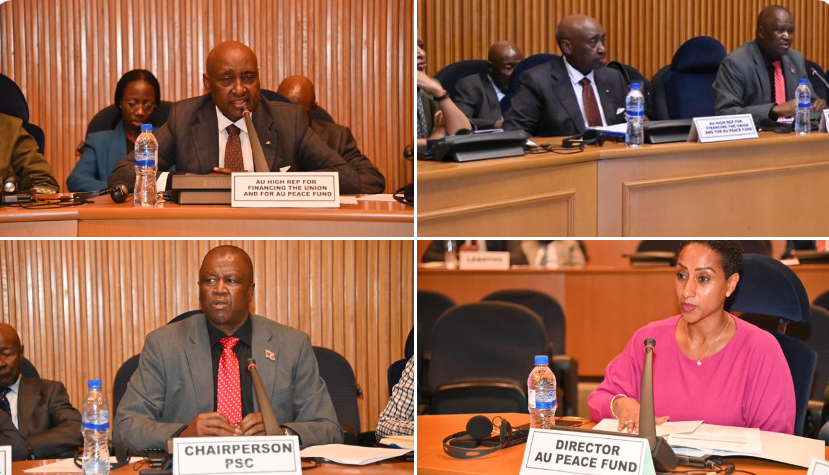
During his engagement with the PSC, Kaberuka underscored the imperative for the AU to rely more decisively on its own financing mechanisms, including the Peace Fund, while expanding partnerships with the private sector and African financial institutions.
He also emphasised the importance of equitable access to UN-assessed contributions through fair burden-sharing arrangements to support African-led peace operations. While this proposition is in line with UN Security Council Resolution 2719, it is worth recalling that as far as AU-led PSOs authorized under Chapter VII by the UN Security Council is concerned emphasis should be put on the legal and institutional responsibility of the UN for bearing the cost of such mission with AU and its member states bearing the burden that is paid with the lives and limbs of troops and the financial costs associated with the mobilization of such troops.
While its sustainability remains to be seen, the Peace Fund Secretariat has initiated efforts to source funds from such sources as the private sector and African financial institutions, as well as high-net-worth individuals. Thus, high-level pledging events convened in 2024 and 2025 mobilised some commitments. For instance, in 2024, Afreximbank pledged $210 million over three years, while Standard Bank Group and Ethiopian Airlines committed $1 million each. In 2025, additional contributions were secured from institutions such as Africa Reinsurance (Africa Re) ($1 million), United Bank for Africa (UBA) ($500,000), and the African Trade & Investment Development Insurance (ATIDI). Despite these contributions, available resources remain inadequate to meet the continent’s growing peace and security needs.
Across his engagements at the AU in March, Kaberuka stressed the broader objective of strengthening the Union’s financial sovereignty, particularly in light of shifting geopolitical dynamics that are placing increasing strain on the financial position of multilateral institutions. In his X post, Kaberuka further noted that while international solidarity remains important, the AU should fund itself, characterising the financing challenge as ‘longstanding’ but now requiring resolution.
One of the important avenues for advancing the aspiration of self-financing lies in the implementation of decision AU/Dec.605(XXVII) of July 2016, which instituted the 0.2% import levy on eligible imports as a sustainable financing mechanism for the Union. However, progress in this regard has been limited. In 2018, the AU reported that only 16 Member States were implementing the Kigali Decision on the 0.2% levy; by 2025, that number had increased by only one.
The dismal state of progress in meeting the Kigali targets is not without consequences. As the Deputy Chairperson of the AU Commission pointed out in her address to the opening of the 50th ordinary session of the Permanent Representatives Committee (PRC) of the AU on 9 June 2025, apart from perpetuating heavy reliance on external funding and thereby deferring the ambition of ownership, the funding challenge significantly ‘constrained the AUC’s capacity to effectively implement the decisions of the Policy Organs and strategic priorities.’ Additionally, this funding constraint, Haddadi pointed out, ‘has significantly hindered the effective implementation of security and safety standards.’
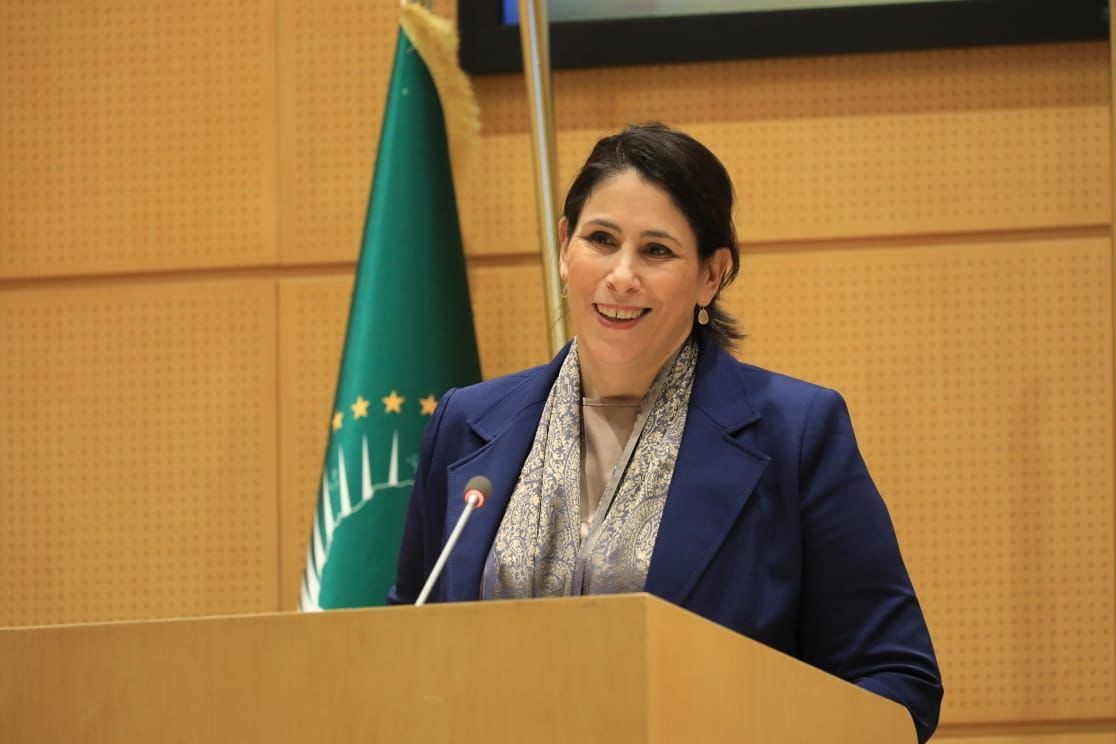
In addition to the adverse impacts of the funding challenges to AU’s mandate, Kaberuka’s engagements took place against the backdrop of decisions adopted by the AU Assembly at its 39th Ordinary Session on financing the Union. The Assembly adopted several key measures aimed at strengthening the Union’s financial sustainability. Among others, it:
- Requested the High Representative for Financing the Union, with the support of the Commission, to undertake further consultations with Member States to strengthen consensus on key strategic financing issues.
- Requested the High Representative to expedite consultations on progress made in the overall financing of the Union.
- Directed the Executive Council to convene an Extra-Ordinary Session, bringing together Ministers of Foreign Affairs and Ministers of Finance of Member States to strengthen the Financing of the Union and the Peace Fund, in line with Decision Assembly/AU/Dec.687 (XXX) of January 2018, not later than November 2026.
- Requested the AU High Representative for Financing the Union to present a report to the above-mentioned Extraordinary Session of the Executive Council.
- Decided to leverage internal financial resources and the support of African Financial Institutions to complement Member States’ contributions in financing the priority programmes of Agenda 2063.
- Directed the Executive Council to invite Chief Executive Officers of African Financial Institutions to participate in the Extraordinary Session to consider funding modalities for the priority programmes of Agenda 2063.
- Requested the Chairperson of the Commission and the AU High Representative for Financing, in close consultation with the Bureau of the Assembly, the PSC and the three African Members of the UN Security Council (A3+), to re-engage and advocate for the implementation of UN Security Council Resolution 2719 (2023) on predictable and sustainable financing for AU-led Peace Support Operations (PSOs).
It remains to be seen if this upcoming executive council extraordinary session will adopt a decision that fundamentally changes the current funding trajectory of the AU.
Annual Activity Report of Amani Africa 2025
Annual Activity Report of Amani Africa 2025
Message from Our Founding Director
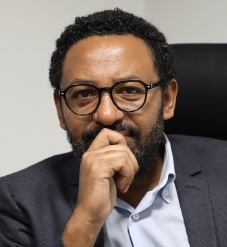
Solomon A. Dersso, PhD
Founding Director
Dear friends of Amani Africa,
It is certain that the 2020s would be registered in history as the most defining decade in the unravelling of the post-1945 world order. Events in 2025 both here in Africa and the world over from the emergence of a new era of insecurity and instability and African Union’s eroding influence in advancing peace and security to the collapse of development aid, the proliferation of internationalised wars fought without limits and with impunity and the replacement of principled peace-making with transactional ceasefire deals are reflections of the shifts constituting this unravelling.
While these disruptive developments are making the pursuit of multilateral diplomacy more daunting, they make it more urgent and necessary to, at least, mitigate suffering, if not to resolve the sources of such suffering. In this context, the work of institutions like Amani Africa contributing to the pursuit of multilateral diplomacy in this age of disorder is more, not less, necessary than ever before. As we also face growing constraints amidst pressing needs, we persisted in sustaining our work, through both optimising the limited, and even shrinking, resources we have and leveraging existing and new partnerships.
In this context of disorder and constraints, we focused our efforts on making our work count through catalysing sustained multilateral engagement in the most pressing conflict situations and issues through the Peace and Security Council (PSC) of the African Union (AU) in particular but not exclusively. Even when such engagement fell short of changing the fundamentals of those situations, our work contributed to its sustenance in order to keep the plight of affected populations caught in the crossfire of conflicts on the spotlight and to push against the normalisation of violent conflicts. As the outputs and results produced during 2025 attest, the work of Amani Africa also continues to serve as repository of knowledge and institutional memory and to advance transparency and enhanced understanding of AU’s policy making and Africa’s role in a changing global dynamic. At the same time, it also sought to push against and chart out ways of arresting the further erosion and risk of loss of established norms and institutional legitimacy.
The increasing attention we continued to dedicate in our work to global governance is not just as response to and about addressing the challenges posed by the unravelling world order with a particular focus on Africa. It is also in pursuit of identifying and supporting how Africa can expand the projection of its voice, including through the AU, in the thinking and working towards the transformation of the world order.
Clearly, the nature of the challenges of this era has intensified the force of the temptation to give in not just to despair but even to cynicism. Yet, these are also times for more responsibility and doubling down on the search for peace and for ending the human suffering that the unravelling occasions and contributes to. It is in this spirit that Amani Africa undertook its activities during 2025 and presents highlights of these activities in the pages that follow.
I wish to thank all of you who accompanied and supported us during 2025. May all our collective efforts open the avenues for a peaceful, prosperous and integrated Africa that is a force for good in the world!
Please read our annual report for more from the link here: https://amaniafrica-et.org/wp-content/uploads/Annual-Activity-Report-of-Amani-Africa-2025.pdf
Message from Amani Africa Founding Director
Annual Activity Report of Amani Africa 2025
Message from Our Founding Director
Solomon A. Dersso, PhD
Founding Director
Dear friends of Amani Africa,
It is certain that the 2020s would be registered in history as the most defining decade in the unravelling of the post-1945 world order. Events in 2025 both here in Africa and the world over from the emergence of a new era of insecurity and instability and African Union’s eroding influence in advancing peace and security to the collapse of development aid, the proliferation of internationalised wars fought without limits and with impunity and the replacement of principled peace-making with transactional ceasefire deals are reflections of the shifts constituting this unravelling.
While these disruptive developments are making the pursuit of multilateral diplomacy more daunting, they make it more urgent and necessary to, at least, mitigate suffering, if not to resolve the sources of such suffering. In this context, the work of institutions like Amani Africa contributing to the pursuit of multilateral diplomacy in this age of disorder is more, not less, necessary than ever before. As we also face growing constraints amidst pressing needs, we persisted in sustaining our work, through both optimising the limited, and even shrinking, resources we have and leveraging existing and new partnerships.
In this context of disorder and constraints, we focused our efforts on making our work count through catalysing sustained multilateral engagement in the most pressing conflict situations and issues through the Peace and Security Council (PSC) of the African Union (AU) in particular but not exclusively. Even when such engagement fell short of changing the fundamentals of those situations, our work contributed to its sustenance in order to keep the plight of affected populations caught in the crossfire of conflicts on the spotlight and to push against the normalisation of violent conflicts. As the outputs and results produced during 2025 attest, the work of Amani Africa also continues to serve as repository of knowledge and institutional memory and to advance transparency and enhanced understanding of AU’s policy making and Africa’s role in a changing global dynamic. At the same time, it also sought to push against and chart out ways of arresting the further erosion and risk of loss of established norms and institutional legitimacy.
The increasing attention we continued to dedicate in our work to global governance is not just as response to and about addressing the challenges posed by the unravelling world order with a particular focus on Africa. It is also in pursuit of identifying and supporting how Africa can expand the projection of its voice, including through the AU, in the thinking and working towards the transformation of the world order.
Clearly, the nature of the challenges of this era has intensified the force of the temptation to give in not just to despair but even to cynicism. Yet, these are also times for more responsibility and doubling down on the search for peace and for ending the human suffering that the unravelling occasions and contributes to. It is in this spirit that Amani Africa undertook its activities during 2025 and presents highlights of these activities in the pages that follow.
I wish to thank all of you who accompanied and supported us during 2025. May all our collective efforts open the avenues for a peaceful, prosperous and integrated Africa that is a force for good in the world!
Please read our annual report for more from the link here: https://amaniafrica-et.org/wp-content/uploads/Annual-Activity-Report-of-Amani-Africa-2025.pdf