
Will Hassan Sheikh Mohamud succeed where his predecessor failed five years ago?
Will Hassan Sheikh Mohamud succeed where his predecessor failed five years ago?
Date | 8 June 2026
Zekarias Beshah, Senior Researcher, Amani Africa
Solomon Ayele Dersso, PhD, Founding Director, Amani Africa
The weakest link in Somalia’s quest to end the protracted conflict is the fragmentation and infighting between the political elites of the country. The constitutional revision process and the conduct of elections have become major sites of power struggle and confrontation between rival political elites, although these are not the only sites of confrontation between these elites.
Five years ago, the expiry of the terms of parliament and the president in December 2020 and February 2021 respectively, without any political consensus on the time and modality of elections plunged Somalia into a constitutional crisis and political uncertainty. In a development that mimicked the resultant violent confrontation of April 2021, Somalia’s weakest link struck again as political leaders failed to agree on a constitutional amendment and the modality for holding parliamentary and presidential elections.
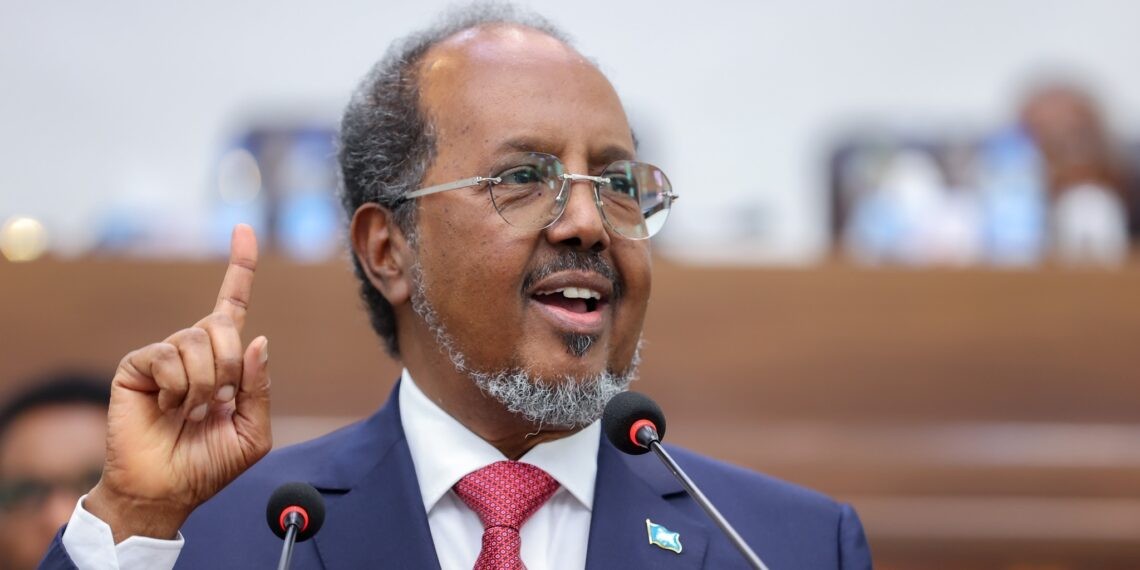
On 3 June, fighting erupted in Mogadishu between government forces and armed groups loyal to opposition leaders near the residences of former Prime Minister Hassan Khaire and former President Sharif Sheikh Ahmed. The clashes occurred ahead of a planned protest scheduled for 4 June against the one-year extension of President Hassan Sheikh Mohamud’s term, which opponents argue expired in mid-May. The confrontation continued into 4 June before subsiding following mediated talks.
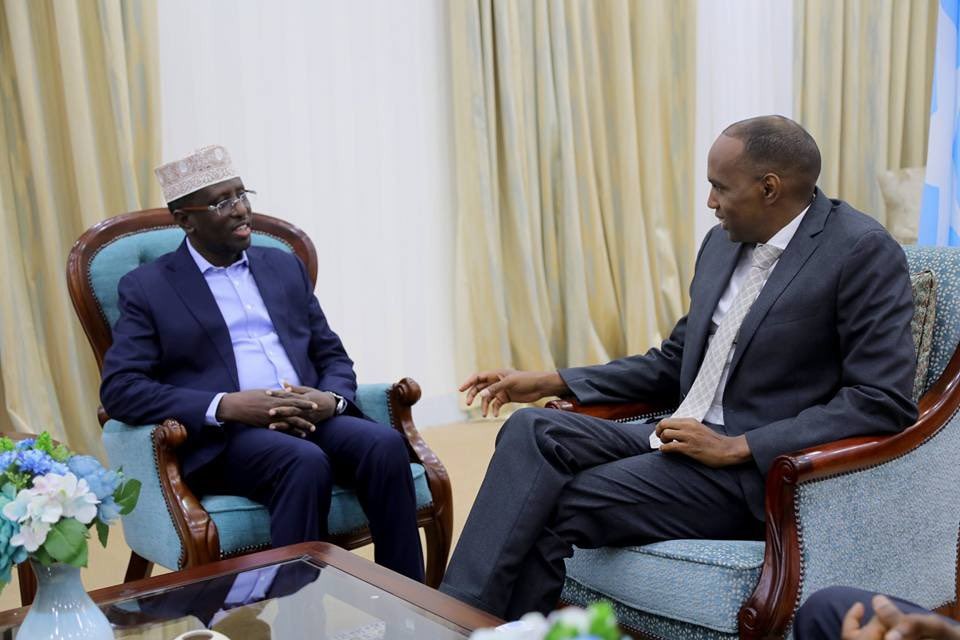
The latest violence is the culmination of months of growing tensions between the FGS and opposition forces organised under the Somali Future Council—a coalition established in October 2025 by the leaders of Puntland and Jubaland, together with other opposition figures, to coordinate positions on major national issues, including constitutional amendment, notably those relating to electoral reform and the role of the Federal Government of Somalia (FGS) vis-à-vis Federal Member States (FMS).
Five years ago, Somalia plunged into political and security turmoil after the lower house of Somalia’s parliament adopted a bill extending its own term of office and that of the President and President Farmajo’s assenting of the bill into a ‘Special Election Law’ purporting to return Somalia to a one-person one-vote electoral model. The latest eruption of political showdown and armed confrontation in Mogadishu followed, as in April 2021, the adoption by Somalia’s bicameral Federal Parliament of amendments to the 2012 Provisional Constitution, among others, extending the terms of the Federal Parliament and the President from four to five years and introducing a highly contested direct electoral system. Just like former President Farmajo, President Mohamud did exactly what he opposed five years ago and signed the constitutional amendments into law on 8 March. As in 2021 (which sought to extend elections by two years), the constitutional changes extended the incumbent president’s tenure by one year beyond its expiry on 15 May and postponed federal elections until 2027.
As in 2021, opposition groups have strongly rejected the constitutional changes. They argued that the changes were adopted unilaterally and without the broad political consensus required for such fundamental reforms. Consequently, they do not recognise the extension of President Mohamud’s mandate and maintain that his constitutional term ended in May.
The political impasse that these amendments and Mohamud’s continuation in power after the expiry of his term in May eventually escalated into armed confrontation, when opposition groups sought to stage protests on 4 June. It was against this backdrop that the opposition sought to organise demonstrations in Mogadishu on 4 June, but the deployment by the Government of security forces to the residences of the former Prime Minister and former President amid rising tension tipped the situation into armed confrontation.
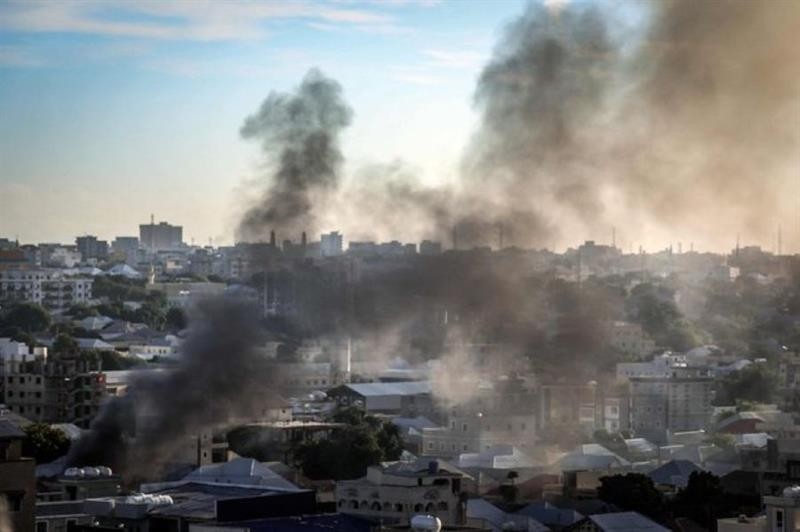
The confrontation has alarmed both domestic and international actors because of the risk that the escalation could spiral into a broader and less controllable conflict. Such an outcome would have profound implications for Somalia’s fragile stability and could undermine years of hard-won security gains achieved in the fight against Al-Shabaab. There are growing concerns that the militant group could exploit political divisions and security vacuums created by the crisis to expand its influence and operational reach.
International and regional actors responded swiftly to the violence. The Chairperson of the African Union Commission called on all parties to cease hostilities immediately, exercise maximum restraint, protect civilians, and avoid actions that could further escalate tensions. The Chairperson also urged Somali stakeholders to resolve their differences through dialogue and established constitutional mechanisms. The Intergovernmental Authority on Development (IGAD) called for de-escalation to protect Somalia’s stability and future. Similarly, the United Nations Secretary-General issued a statement, underscoring the urgent need for all stakeholders to resume dialogue and identify a way forward to preserve the progress Somalia has achieved over recent years.
Although the immediate violence appears to have subsided following intense mediation efforts by traditional leaders and international actors, the underlying political disagreements remain unresolved, leaving open the possibility of renewed escalation.
Beyond the immediate security implications, the crisis constitutes a major test of Somalia’s state-building project, the resilience of its institutions, and the maturity of political actors in managing disputes before they evolve into wider conflict. The developments also warrant close attention from international partners, particularly the AU, which has deployed peace support operations in Somalia since 2007 and secured substantial, albeit fragile, security gains through the sacrifice of the lives and limbs of thousands.
The timing of the crisis is particularly concerning given the challenges facing the African Union Support and Stabilisation Mission in Somalia (AUSSOM). The mission is currently grappling with significant political, operational, and financial constraints as it seeks to preserve security gains and support the gradual transfer of security responsibilities to Somali forces.
For years, Somali political actors have continued to defer the assumption of full responsibility, as they continue to outsource security responsibility with their heavy reliance on AU-led security support. Despite notable progress, Somalia, on account of the weakest link in the equation for its stability, has yet to develop the level of institutional and security capacities necessary to fully assume responsibility for its own security. The latest political confrontation, if not resolved promptly, undermines confidence about progress for achieving a level of organisation and capability of Somalia’s security institutions for them to assume full security responsibility.
The crisis also reinforces a broader lesson for the AU: security interventions alone cannot provide a sustainable solution to Somalia’s challenges. Without an accompanying political strategy capable of addressing the underlying causes of instability and fostering political consensus, even significant security achievements remain vulnerable to reversal. AU’s interest and role are not just that of any third party. It has a direct and major stake in what is unfolding in Somalia and as such cannot afford to simply limit its engagement for de-escalating the situation and securing agreement on the holding of elections at the level of issuing statements.
First, as it did during the April 2021 political crisis, the AU Peace and Security Council could convene an emergency session to provide strategic guidance and adopt firm and principled policy decisions for urgent consensus on the holding of elections. In 2021, the PSC condemned the extension of the mandate of the president and the parliament. Second, the Chairperson of the AU Commission could undertake a high-level diplomatic mission to Mogadishu to engage directly with key stakeholders and encourage a negotiated resolution to the crisis. Third, the AU could work with IGAD, the United Nations, and international partners with leverage on Somali political actors—including the United States and Türkiye—to establish a coordinated mediation framework aimed at establishing a consensual and mutually acceptable arrangement for holding elections, while creating conditions for a broader political settlement that permanently ends Somalia’s weakest link.
In the short term, one of the intriguing questions is whether the incumbent, President Mohamud, would succeed in what his predecessor, former President Farmajo, tried and failed five years ago. This will determine the trajectory of the political dimension of Somalia’s protracted conflict.

At a fragile moment for the African Union’s support to the country, Somalia’s weakest link strikes, again
At a fragile moment for the African Union’s support to the country, Somalia’s weakest link strikes, again
Date | 8 June 2026
Zekarias Beshah, Senior Researcher, Amani Africa
Solomon Ayele Dersso, PhD, Founding Director, Amani Africa
The weakest link in Somalia’s quest to end the protracted conflict is the fragmentation and infighting between the political elites of the country. The constitutional revision process and the conduct of elections have become major sites of power struggle and confrontation between rival political elites, although these are not the only sites of confrontation between these elites.
Five years ago, the expiry of the terms of parliament and the president in December 2020 and February 2021 respectively, without any political consensus on the time and modality of elections plunged Somalia into a constitutional crisis and political uncertainty. In a development that mimicked the resultant violent confrontation of April 2021, Somalia’s weakest link struck again as political leaders failed to agree on a constitutional amendment and the modality for holding parliamentary and presidential elections.
On 3 June, fighting erupted in Mogadishu between government forces and armed groups loyal to opposition leaders near the residences of former Prime Minister Hassan Khaire and former President Sharif Sheikh Ahmed. The clashes occurred ahead of a planned protest scheduled for 4 June against the one-year extension of President Hassan Sheikh Mohamud’s term, which opponents argue expired in mid-May. The confrontation continued into 4 June before subsiding following mediated talks.
The latest violence is the culmination of months of growing tensions between the FGS and opposition forces organised under the Somali Future Council—a coalition established in October 2025 by the leaders of Puntland and Jubaland, together with other opposition figures, to coordinate positions on major national issues, including constitutional amendment, notably those relating to electoral reform and the role of the Federal Government of Somalia (FGS) vis-à-vis Federal Member States (FMS).
Five years ago, Somalia plunged into political and security turmoil after the lower house of Somalia’s parliament adopted a bill extending its own term of office and that of the President and President Farmajo’s assenting of the bill into a ‘Special Election Law’ purporting to return Somalia to a one-person one-vote electoral model. The latest eruption of political showdown and armed confrontation in Mogadishu followed, as in April 2021, the adoption by Somalia’s bicameral Federal Parliament of amendments to the 2012 Provisional Constitution, among others, extending the terms of the Federal Parliament and the President from four to five years and introducing a highly contested direct electoral system. Just like former President Farmajo, President Mohamud did exactly what he opposed five years ago and signed the constitutional amendments into law on 8 March. As in 2021 (which sought to extend elections by two years), the constitutional changes extended the incumbent president’s tenure by one year beyond its expiry on 15 May and postponed federal elections until 2027.
As in 2021, opposition groups have strongly rejected the constitutional changes. They argued that the changes were adopted unilaterally and without the broad political consensus required for such fundamental reforms. Consequently, they do not recognise the extension of President Mohamud’s mandate and maintain that his constitutional term ended in May.
The political impasse that these amendments and Mohamud’s continuation in power after the expiry of his term in May eventually escalated into armed confrontation, when opposition groups sought to stage protests on 4 June. It was against this backdrop that the opposition sought to organise demonstrations in Mogadishu on 4 June, but the deployment by the Government of security forces to the residences of the former Prime Minister and former President amid rising tension tipped the situation into armed confrontation.
The confrontation has alarmed both domestic and international actors because of the risk that the escalation could spiral into a broader and less controllable conflict. Such an outcome would have profound implications for Somalia’s fragile stability and could undermine years of hard-won security gains achieved in the fight against Al-Shabaab. There are growing concerns that the militant group could exploit political divisions and security vacuums created by the crisis to expand its influence and operational reach.
International and regional actors responded swiftly to the violence. The Chairperson of the African Union Commission called on all parties to cease hostilities immediately, exercise maximum restraint, protect civilians, and avoid actions that could further escalate tensions. The Chairperson also urged Somali stakeholders to resolve their differences through dialogue and established constitutional mechanisms. The Intergovernmental Authority on Development (IGAD) called for de-escalation to protect Somalia’s stability and future. Similarly, the United Nations Secretary-General issued a statement, underscoring the urgent need for all stakeholders to resume dialogue and identify a way forward to preserve the progress Somalia has achieved over recent years.
Although the immediate violence appears to have subsided following intense mediation efforts by traditional leaders and international actors, the underlying political disagreements remain unresolved, leaving open the possibility of renewed escalation.
Beyond the immediate security implications, the crisis constitutes a major test of Somalia’s state-building project, the resilience of its institutions, and the maturity of political actors in managing disputes before they evolve into wider conflict. The developments also warrant close attention from international partners, particularly the AU, which has deployed peace support operations in Somalia since 2007 and secured substantial, albeit fragile, security gains through the sacrifice of the lives and limbs of thousands.
The timing of the crisis is particularly concerning given the challenges facing the African Union Support and Stabilisation Mission in Somalia (AUSSOM). The mission is currently grappling with significant political, operational, and financial constraints as it seeks to preserve security gains and support the gradual transfer of security responsibilities to Somali forces.
For years, Somali political actors have continued to defer the assumption of full responsibility, as they continue to outsource security responsibility with their heavy reliance on AU-led security support. Despite notable progress, Somalia, on account of the weakest link in the equation for its stability, has yet to develop the level of institutional and security capacities necessary to fully assume responsibility for its own security. The latest political confrontation, if not resolved promptly, undermines confidence about progress for achieving a level of organisation and capability of Somalia’s security institutions for them to assume full security responsibility.
The crisis also reinforces a broader lesson for the AU: security interventions alone cannot provide a sustainable solution to Somalia’s challenges. Without an accompanying political strategy capable of addressing the underlying causes of instability and fostering political consensus, even significant security achievements remain vulnerable to reversal. AU’s interest and role are not just that of any third party. It has a direct and major stake in what is unfolding in Somalia and as such cannot afford to simply limit its engagement for de-escalating the situation and securing agreement on the holding of elections at the level of issuing statements.
First, as it did during the April 2021 political crisis, the AU Peace and Security Council could convene an emergency session to provide strategic guidance and adopt firm and principled policy decisions for urgent consensus on the holding of elections. In 2021, the PSC condemned the extension of the mandate of the president and the parliament. Second, the Chairperson of the AU Commission could undertake a high-level diplomatic mission to Mogadishu to engage directly with key stakeholders and encourage a negotiated resolution to the crisis. Third, the AU could work with IGAD, the United Nations, and international partners with leverage on Somali political actors—including the United States and Türkiye—to establish a coordinated mediation framework aimed at establishing a consensual and mutually acceptable arrangement for holding elections, while creating conditions for a broader political settlement that permanently ends Somalia’s weakest link.
In the short term, one of the intriguing questions is whether the incumbent, President Mohamud, would succeed in what his predecessor, former President Farmajo, tried and failed five years ago. This will determine the trajectory of the political dimension of Somalia’s protracted conflict.
At a fragile moment for the African Union’s support to the country, Somalia’s weakest link strikes, again
At a fragile moment for the African Union’s support to the country, Somalia’s weakest link strikes, again
Date | 8 June 2026
Zekarias Beshah, Senior Researcher, Amani Africa
Solomon Ayele Dersso, PhD, Founding Director, Amani Africa
The weakest link in Somalia’s quest to end the protracted conflict is the fragmentation and infighting between the political elites of the country. The constitutional revision process and the conduct of elections have become major sites of power struggle and confrontation between rival political elites, although these are not the only sites of confrontation between these elites.
Five years ago, the expiry of the terms of parliament and the president in December 2020 and February 2021 respectively, without any political consensus on the time and modality of elections plunged Somalia into a constitutional crisis and political uncertainty. In a development that mimicked the resultant violent confrontation of April 2021, Somalia’s weakest link struck again as political leaders failed to agree on a constitutional amendment and the modality for holding parliamentary and presidential elections.
On 3 June, fighting erupted in Mogadishu between government forces and armed groups loyal to opposition leaders near the residences of former Prime Minister Hassan Khaire and former President Sharif Sheikh Ahmed. The clashes occurred ahead of a planned protest scheduled for 4 June against the one-year extension of President Hassan Sheikh Mohamud’s term, which opponents argue expired in mid-May. The confrontation continued into 4 June before subsiding following mediated talks.
The latest violence is the culmination of months of growing tensions between the FGS and opposition forces organised under the Somali Future Council—a coalition established in October 2025 by the leaders of Puntland and Jubaland, together with other opposition figures, to coordinate positions on major national issues, including constitutional amendment, notably those relating to electoral reform and the role of the Federal Government of Somalia (FGS) vis-à-vis Federal Member States (FMS).
Five years ago, Somalia plunged into political and security turmoil after the lower house of Somalia’s parliament adopted a bill extending its own term of office and that of the President and President Farmajo’s assenting of the bill into a ‘Special Election Law’ purporting to return Somalia to a one-person one-vote electoral model. The latest eruption of political showdown and armed confrontation in Mogadishu followed, as in April 2021, the adoption by Somalia’s bicameral Federal Parliament of amendments to the 2012 Provisional Constitution, among others, extending the terms of the Federal Parliament and the President from four to five years and introducing a highly contested direct electoral system. Just like former President Farmajo, President Mohamud did exactly what he opposed five years ago and signed the constitutional amendments into law on 8 March. As in 2021 (which sought to extend elections by two years), the constitutional changes extended the incumbent president’s tenure by one year beyond its expiry on 15 May and postponed federal elections until 2027.
As in 2021, opposition groups have strongly rejected the constitutional changes. They argued that the changes were adopted unilaterally and without the broad political consensus required for such fundamental reforms. Consequently, they do not recognise the extension of President Mohamud’s mandate and maintain that his constitutional term ended in May.
The political impasse that these amendments and Mohamud’s continuation in power after the expiry of his term in May eventually escalated into armed confrontation, when opposition groups sought to stage protests on 4 June. It was against this backdrop that the opposition sought to organise demonstrations in Mogadishu on 4 June, but the deployment by the Government of security forces to the residences of the former Prime Minister and former President amid rising tension tipped the situation into armed confrontation.
The confrontation has alarmed both domestic and international actors because of the risk that the escalation could spiral into a broader and less controllable conflict. Such an outcome would have profound implications for Somalia’s fragile stability and could undermine years of hard-won security gains achieved in the fight against Al-Shabaab. There are growing concerns that the militant group could exploit political divisions and security vacuums created by the crisis to expand its influence and operational reach.
International and regional actors responded swiftly to the violence. The Chairperson of the African Union Commission called on all parties to cease hostilities immediately, exercise maximum restraint, protect civilians, and avoid actions that could further escalate tensions. The Chairperson also urged Somali stakeholders to resolve their differences through dialogue and established constitutional mechanisms. The Intergovernmental Authority on Development (IGAD) called for de-escalation to protect Somalia’s stability and future. Similarly, the United Nations Secretary-General issued a statement, underscoring the urgent need for all stakeholders to resume dialogue and identify a way forward to preserve the progress Somalia has achieved over recent years.
Although the immediate violence appears to have subsided following intense mediation efforts by traditional leaders and international actors, the underlying political disagreements remain unresolved, leaving open the possibility of renewed escalation.
Beyond the immediate security implications, the crisis constitutes a major test of Somalia’s state-building project, the resilience of its institutions, and the maturity of political actors in managing disputes before they evolve into wider conflict. The developments also warrant close attention from international partners, particularly the AU, which has deployed peace support operations in Somalia since 2007 and secured substantial, albeit fragile, security gains through the sacrifice of the lives and limbs of thousands.
The timing of the crisis is particularly concerning given the challenges facing the African Union Support and Stabilisation Mission in Somalia (AUSSOM). The mission is currently grappling with significant political, operational, and financial constraints as it seeks to preserve security gains and support the gradual transfer of security responsibilities to Somali forces.
For years, Somali political actors have continued to defer the assumption of full responsibility, as they continue to outsource security responsibility with their heavy reliance on AU-led security support. Despite notable progress, Somalia, on account of the weakest link in the equation for its stability, has yet to develop the level of institutional and security capacities necessary to fully assume responsibility for its own security. The latest political confrontation, if not resolved promptly, undermines confidence about progress for achieving a level of organisation and capability of Somalia’s security institutions for them to assume full security responsibility.
The crisis also reinforces a broader lesson for the AU: security interventions alone cannot provide a sustainable solution to Somalia’s challenges. Without an accompanying political strategy capable of addressing the underlying causes of instability and fostering political consensus, even significant security achievements remain vulnerable to reversal. AU’s interest and role are not just that of any third party. It has a direct and major stake in what is unfolding in Somalia and as such cannot afford to simply limit its engagement for de-escalating the situation and securing agreement on the holding of elections at the level of issuing statements.
First, as it did during the April 2021 political crisis, the AU Peace and Security Council could convene an emergency session to provide strategic guidance and adopt firm and principled policy decisions for urgent consensus on the holding of elections. In 2021, the PSC condemned the extension of the mandate of the president and the parliament. Second, the Chairperson of the AU Commission could undertake a high-level diplomatic mission to Mogadishu to engage directly with key stakeholders and encourage a negotiated resolution to the crisis. Third, the AU could work with IGAD, the United Nations, and international partners with leverage on Somali political actors—including the United States and Türkiye—to establish a coordinated mediation framework aimed at establishing a consensual and mutually acceptable arrangement for holding elections, while creating conditions for a broader political settlement that permanently ends Somalia’s weakest link.
In the short term, one of the intriguing questions is whether the incumbent, President Mohamud, would succeed in what his predecessor, former President Farmajo, tried and failed five years ago. This will determine the trajectory of the political dimension of Somalia’s protracted conflict.
Briefing on the Situation in Libya
Briefing on the Situation in Libya
Date | 8 June 2026
On Tuesday (9 June), the African Union (AU) Peace and Security Council (PSC) will convene its 1352nd meeting to receive an update on the ‘Situation in Libya’. Since its last meeting in July 2025, the country has witnessed some political and security developments.
The session will commence with opening remarks by Nasir Aminu, Permanent Representative of Nigeria to the AU and Stand-in Chair of the PSC for May, followed by a statement from Bankole Adeoye, AU Commissioner for Political Affairs, Peace and Security (PAPS). The Special Representative of the Chairperson of the Commission for Libya, Ambassador Wahida Ayari, will also brief the Council. As a concerned country, Libya’s representative is expected to make a statement. As per the usual practice of the PSC, Hanna Tetteh, Special Representative of the Secretary-General of the UN for Libya and Head of the United Nations Support Mission in Libya (UNSMIL), is also expected to deliver a statement. A representative of Congo may also make a statement as Chairperson of the AU High-Level Committee on Libya.
Libya’s political transition remains stalled, with key stakeholders continuing to disagree on the legal, constitutional, and institutional arrangements necessary for holding national elections. As a result, the elections originally scheduled for December 2021 remain indefinitely postponed, perpetuating the country’s political fragmentation and the existence of rival institutions.
Beyond the indefinite postponement of the elections that left Libya in a transitional limbo, the 2020 peace process that ended the civil war has not been able to overcome the political and security fragmentation that has become the characteristic feature of the political and institutional landscape of Libya. Libya continues to operate on the basis of two rival governments. The internationally recognised Government of National Unity (GNU) is based in Tripoli, while the Government of National Stability (GNS), aligned with the House of Representatives (HoR) and the Libyan National Army (LNA) under General Khalifa Haftar, operates from eastern Libya. Each command has some influence in the political and economic spheres and is supported by rival local and external backers.
In a renewed push for breaking the continuing political impasse, the United Nations Support Mission in Libya (UNSMIL) has been exerting diplomatic efforts and has proposed a political roadmap aimed at helping Libyan stakeholders overcome their differences. The UN roadmap aims to facilitate the adoption of a viable electoral framework for presidential and legislative polls; unify institutions under a new government; and pave the way for the holding of elections. To this end, the mission launched a structured dialogue among Libyan stakeholders in December 2025 to advance implementation of the roadmap. But there has been little progress toward meeting the major milestones set out in the roadmap to pave the way for the unification of institutions and the holding of elections. In her briefing to the UN Security Council, Tetteh reported the lack of tangible progress in implementing the political roadmap and announced a new ‘two-step approach’.
In a statement that he issued on 30 August 2025, the AU Commission Chairperson, Mahmoud Ali Youssouf, welcomed the UN-backed political roadmap. The statement emphasised ‘the importance of coordination between all regional, continental and international actors to ensure the necessary political support to implement the roadmap.’ While the signing of the Libyan Reconciliation Charter by some political actors in mid-February 2025, on the margins of the 38th AU Summit and under the auspices of the AU’s High-Level Committee on Libya under the leadership of President Denis Sassou Nguesso of the Republic of Congo, constituted a milestone in efforts to restore peace and stability in the country, not all significant Libyan actors signed the Libyan Reconciliation Charter of February 2025. Despite the fact that the head of the Presidential Council was in Addis Ababa, he did not sign the Charter. The Government of National Unity also did not send a representative to sign the reconciliation charter. Indeed, the persistence of the fragility of the situation became evident when a military confrontation that erupted in Tripoli in May 2025, prompting the PSC to hold an emergency session.
During its last session of the 1291st meeting, the PSC welcomed the adoption of the Charter and appealed to all signatory parties to ensure its full implementation. The Council also urged those stakeholders who had not yet endorsed the document to join the consensus without delay, emphasising the importance of an inclusive reconciliation process as a foundation for lasting peace and stability in Libya. A notable development occurred in January 2026 when the President of the Presidential Council, Mohamed al-Menfi, formally signed and approved the Charter. In a press release issued on 14 January 2026, the Chairperson of the AU Commission, Mahmoud Ali Youssouf, welcomed the decision, describing it as an important step towards advancing national reconciliation and achieving durable peace in Libya.
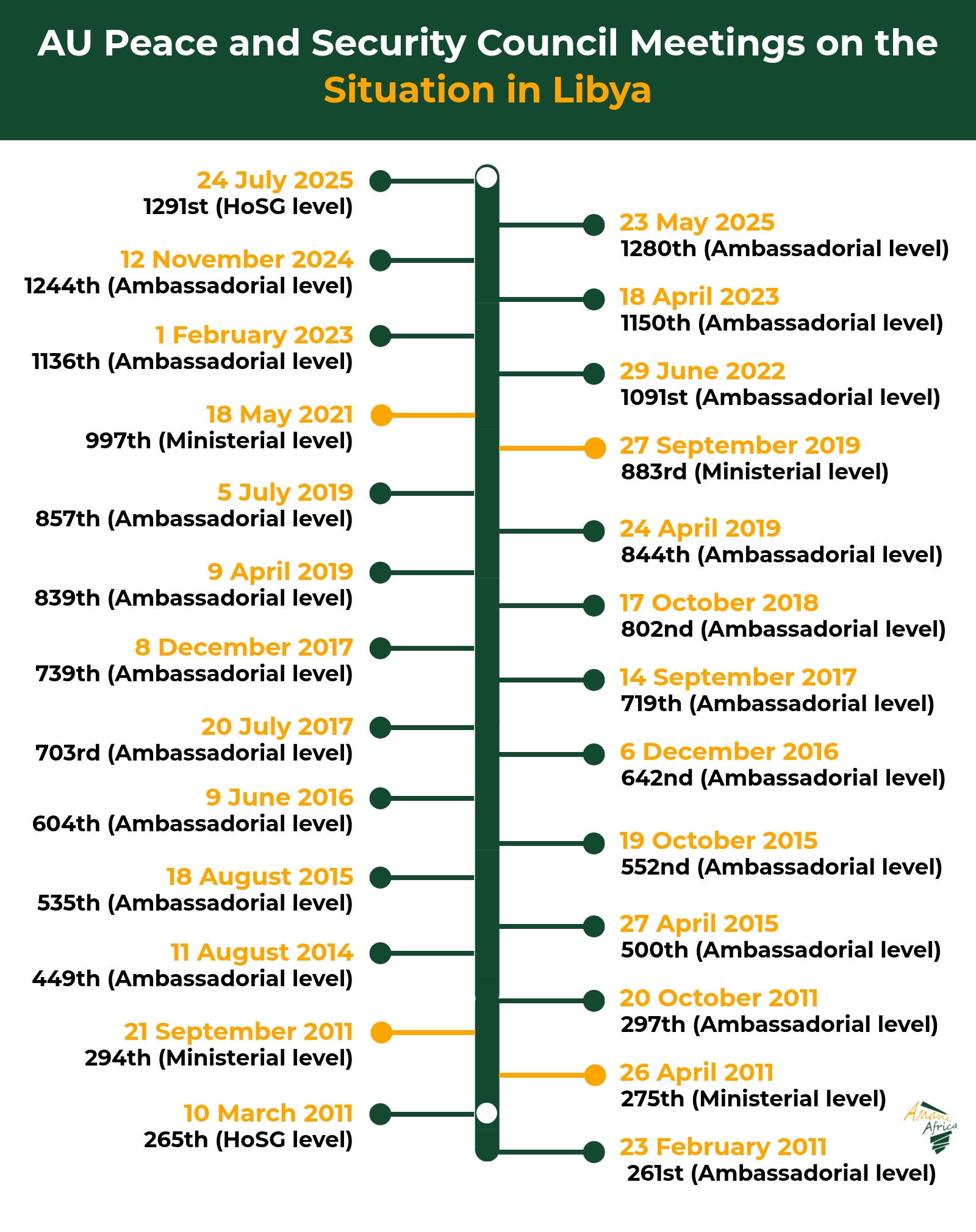
Despite this positive development, however, implementation of the Charter has remained limited. Persistent political fragmentation, the continued existence of rival institutions, and the absence of consensus among key stakeholders on the future political and governance framework have hindered progress.
Meanwhile, the US appears to have intensified its diplomatic engagement in Libya, including through its Senior Advisor for Africa, Massad Boulos. For the first time in a decade, Boulos facilitated an agreement on Libya’s first unified budget, which was signed on 11 April. This was hailed as a major success in bridging differences between the Libyan political actors. However, his apparent efforts to broker a power-sharing deal by proposing Sadam Haftar, son of commander Khalifa Haftar, who is an influential figure in eastern Libya, as head of a new presidential Council, while keeping the Tripoli-based Prime Minister Abdel Hamid Debeibeh in power, faced strong opposition by various Libyan political and military factions.
Although Boulos reiterated US support for UNSMIL’s ongoing efforts to advance the UN political roadmap, facilitate national elections, and promote Libyan unity, his parallel engagement with Libya’s rival political leaders generated mixed reactions. Concerns are raised, including from some of the major actors, that the initiatives risk undermining the framework established under the 2015 Libyan Political Agreement (the Skhirat Agreement), which remains the cornerstone of international efforts to support a unified and inclusive political transition in Libya. Critics argued that any political arrangement negotiated outside established UN mechanisms could weaken the legitimacy of the UN-led process and reinforce elite-driven bargaining at the expense of broader national consensus. In meetings held in January and May 2026 of the tripartite framework of neighbouring countries of Libya involving Algeria, Tunisia and Egypt, the foreign ministers of these countries emphasised their support for developing the political process under the auspices of the United Nations and rejecting all forms of foreign interference.
Nevertheless, the US appears to be pursuing a broader strategic agenda in Libya that extends beyond support for the political process. Libya’s substantial energy resources, strategic location on the Mediterranean, and importance for regional security appear to have drawn significant attention in Washington. Reports of growing US interest in expanding energy cooperation, including opportunities for American companies in Libya’s oil and gas sector, underscore the economic dimension of the deal that Washington successfully brokered.
At the same time, the US has sought to strengthen security cooperation with Libyan actors. In April, the US Africa Command (AFRICOM) conducted its annual special operations exercise in Sirte, bringing together military personnel from eastern and western Libya alongside participants from 11 other countries. The exercise aimed to enhance coordination on counterterrorism, border security, and crisis response while promoting confidence-building between Libya’s divided security institutions. The participation of personnel from both eastern- and western-based forces was seen as particularly significant given the country’s continuing political and military fragmentation.
Regarding the security situation, the 2020 ceasefire continues to hold, with no major nationwide violations. However, on 8 May, armed clashes between state security forces affiliated with the Tripoli-based government and local armed groups led to the temporary shutdown of Libya’s largest oil refinery in Zawiya. The incident left three civilians and one refinery security officer killed, while injuring several others.
The death of General Mohammed Ali Ahmed al-Haddad, Chief of the General Staff of the Libyan Army, along with four other senior Libyan military officials, in a plane crash near Ankara, Türkiye, in December 2025, was a major security incident. The delegation had been in Ankara for official discussions with Turkish counterparts on bilateral security and military cooperation. The aircraft crashed shortly after takeoff while en route to Tripoli, resulting in the loss of all those on board. The incident represented a serious setback for Libya’s military leadership and raised concerns about its potential implications for ongoing efforts to unify and reform the country’s fragmented security institutions.
Another notable development occurred on 3 February, when Saif al-Islam Gaddafi, the son of former Libyan leader Muammar Gaddafi, was reportedly killed in Zintan by unidentified assailants. Libyan authorities subsequently issued arrest warrants for three suspects in connection with the incident, although their identities have not been publicly disclosed.
The expected outcome of the session is a communiqué. The PSC may express its concern about the risks of the persistence of the political stalemate and the institutional division in Libya, and may, in this regard, condemn and call for accountability for the assassination of Saif al-Islam Gaddafi. It may urge the various Libyan stakeholders to engage constructively towards the formation of a unified transitional authority and agree on the parameters, processes and timelines for holding elections. The PSC may reiterate its concern about the plight of migrants from other parts of the continent and urge the AU Commission, working within the framework of the tripartite mechanism, to facilitate an end to the attacks and dehumanising treatment that they are subjected to. The PSC may welcome the political roadmap the UN proposed and urge all stakeholders to support and extend full cooperation for its implementation to bring the protracted division to an end. The PSC may echo the AU Commission Chairperson in welcoming the signing of the Reconciliation Charter by the President of the Presidential Council, Mohamed al-Menfi, in January 2026. It may also express support for the efforts of the Chairperson of the AU High-Level Committee on Libya and reiterate its call on those Libyan actors who did not sign the Reconciliation Charter to sign and join the Charter. The PSC may emphasise the need for all actors to commit to a Libyan-owned processes and extend full cooperation and operate in full alignment with and in support of the UN roadmap and UNMSIL’s role. The PSC may also reiterate its call on external actors to end interference in the affairs of Libya and cease their support of rivalry among contending Libyan actors. It may also reiterate its plan for undertaking a field mission to Libya and the decision to move the AU office to Tripoli.
Beyond the Flag-Off: Building a Sustainable Maritime Security Architecture in the Gulf of Guinea
Beyond the Flag-Off: Building a Sustainable Maritime Security Architecture in the Gulf of Guinea
Date | 4 June 2026
Tefesehet Hailu, Senior Researcher, Amani Africa
On 1 June 2026, leaders and naval representatives from six Gulf of Guinea states gathered in Lagos, Nigeria, for the ceremonial flag-off of the Combined Maritime Task Force (CMTF), marking a historic milestone in Africa’s efforts to develop a standing, ready-to-deploy maritime security capability. The six Gulf of Guinea countries that pioneered the task force are Côte d’Ivoire, The Gambia, Ghana, Liberia, Nigeria, and Sierra Leone.
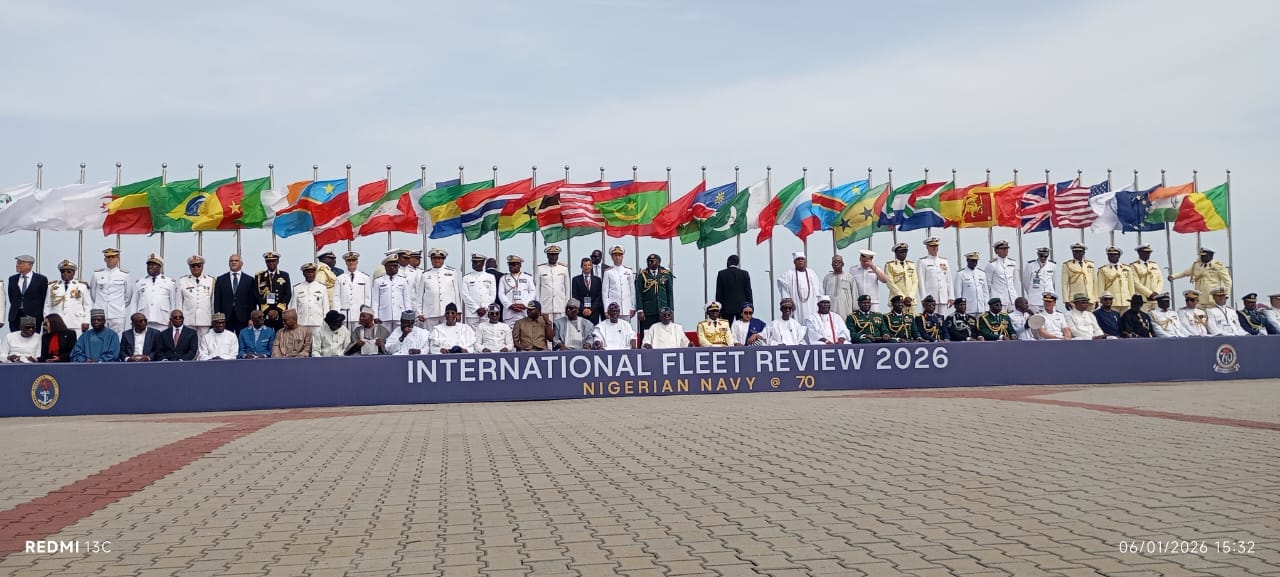
Coming only weeks after the African Union (AU) Peace and Security Council (PSC) considered the operationalisation of the CMTF at its 1346th session on 15 May 2026, the ceremony represented the most tangible manifestation yet of a process that began with the PSC’s call for a maritime task force in 2021. The flag-off not only signalled the transition of the CMTF from a conceptual framework into an operational mechanism, but also reflected growing continental recognition that maritime security has become an indispensable pillar of Africa’s peace, security, trade, and development agenda. The ceremony further underscored Nigeria’s leadership role in advancing regional maritime security and aligned with broader efforts under President Bola Ahmed Tinubu’s Renewed Hope Agenda to strengthen maritime governance and security cooperation across the Gulf of Guinea.
A central focus of the PSC’s deliberations was the assessment of progress toward operationalising the CMTF as Africa’s first standing and ready-to-deploy maritime force. The Council welcomed a series of developments that have steadily transformed the initiative from a political aspiration into an emerging operational reality. These included the adoption of the Concept of Operations (CONOPS) by ten Gulf of Guinea countries, the endorsement by the ECOWAS Authority of Heads of State and Government of Nigeria’s offer to host the headquarters, and Nigeria’s commitment to provide key operational assets, including three ships, one helicopter, eight vehicles, and temporary headquarters facilities in Lagos.
The subsequent flag-off ceremony on 1 June provided visible evidence that the CMTF has entered a new phase of development. While largely symbolic, the ceremony demonstrated that participating states are increasingly prepared to move beyond declarations of intent toward practical implementation. Viewed within the broader trajectory of PSC engagement on maritime security, the ceremony represents the culmination of a gradual institutional evolution: from the Council’s initial call for a Maritime Task Force during its 1012th session in 2021, through the formal endorsement of the CMTF in 2025, to the operational readiness milestones recorded in 2026. The challenge now will be ensuring that the momentum generated by the flag-off translates into sustained operational capability, regular deployments, and measurable improvements in maritime security outcomes.
Although piracy incidents in the Gulf of Guinea have declined significantly in recent years, the PSC correctly recognised that the region’s maritime security challenges have become increasingly diverse and complex. The reduction in piracy should not obscure the persistence of other forms of maritime criminality that continue to undermine regional stability and economic development. Illegal, unreported and unregulated (IUU) fishing, oil theft, trafficking in narcotics and arms, maritime-linked organised crime, and environmental crimes have emerged as some of the most significant threats confronting the region.
Particularly noteworthy is the growing recognition of the linkages between maritime insecurity and broader regional instability. Criminal networks increasingly operate across maritime and terrestrial domains, connecting illicit economies in the Gulf of Guinea with conflict dynamics in the Sahel. The southward expansion of violent extremist groups into northern areas of coastal states such as Benin, Togo, Ghana and Côte d’Ivoire has further blurred traditional distinctions between maritime and inland security threats. This evolving threat landscape reinforces the rationale for the CMTF not merely as a counter-piracy mechanism, but as a broader instrument to address transnational maritime threats that increasingly intersect with regional peace and security challenges.
The PSC’s discussions also reflected a growing appreciation that maritime security is not solely a security concern but a strategic development imperative. The Gulf of Guinea remains one of Africa’s most important maritime regions, facilitating the overwhelming majority of international trade for West and Central African coastal states while serving as a critical source of energy exports and marine resources. The Council’s emphasis on the relationship between maritime security, the Blue Economy, the African Continental Free Trade Area (AfCFTA), the 2050 Africa’s Integrated Maritime Strategy (2050 AIMS), and the Lomé Charter illustrates a more integrated understanding of maritime governance within continental development priorities.
Beyond its regional significance, the CMTF may also represent an important test case for strengthening the maritime dimension of the African Standby Force (ASF). As the AU continues to seek practical mechanisms for enhancing operational readiness, interoperability, and rapid deployment capabilities, the CMTF could provide valuable lessons for future maritime operations under the African Peace and Security Architecture. In this regard, the initiative’s success or failure will have implications that extend far beyond the Gulf of Guinea.
Despite the positive developments celebrated during the Lagos flag-off ceremony, questions surrounding sustainability remain largely unresolved. The communiqué reiterated the need for predictable financing, equitable burden-sharing, and collective ownership, yet stopped short of identifying concrete funding arrangements or operational cost-sharing mechanisms. This omission is particularly significant given that inadequate resources and inconsistent political commitment were identified within the CMTF’s own CONOPS as key factors limiting the effectiveness of existing maritime security arrangements under the Yaoundé Architecture.
The heavy reliance on Nigeria’s political leadership, naval assets, and logistical support demonstrates commendable regional leadership while also highlighting a structural vulnerability. Unless broader contributions are secured from participating states, there is a risk that the CMTF could become overly dependent on a single state’s capabilities. The true measure of success following the flag-off ceremony will therefore not be the symbolism of the launch itself, but rather whether participating states translate their political commitments into sustainable financial contributions, force-generation commitments, and operational participation. Without such collective ownership, the CMTF risks replicating many of the same institutional and resource constraints that have historically limited regional maritime security initiatives.
In a nutshell, the flag-off of the CMTF in Lagos on 1 June 2026 represents a landmark achievement for African-led maritime security cooperation. It also demonstrates the growing political commitment among Gulf of Guinea states to address maritime insecurity collectively. Yet the ceremony should be viewed as the beginning rather than the culmination of the process. The ultimate test of the CMTF will lie not in its establishment but in its sustainability, operational effectiveness, and ability to generate measurable security outcomes. Success will require predictable financing, equitable burden-sharing, robust coordination with the Yaoundé Architecture, harmonised legal frameworks, and continued political support from AU member states. If these challenges are addressed, the CMTF has the potential not only to strengthen security in the Gulf of Guinea but also to serve as a model for future AU-led maritime operational mechanisms and contribute to the development of the maritime dimension of the African Standby Force. If not, the Task Force risks becoming another ambitious institutional initiative that struggles to move beyond symbolic significance.
The content of this article does not represent the views of Amani Africa and reflect only the personal views of the authors who contribute to ‘Ideas Indaba’
Africa’s humanitarian response must be more than a reaction to crisis, Commissioner Amma tells the PSC
Statement of H.E. Amb. Amma A. Twum-Amoah
Commissioner for Health, Humanitarian Affairs and Social Development at the Peace and Security Council (PSC)
Date: 2nd June, 2026Venue: Plenary Hall, Old AU Conference Centre
Subject: Refugees, IDPs and Humanitarian Assistance in Africa
YOUR EXCELLENCY AMBASSADOR NASIR AMINU, PERMANENT REPRESENTATIVE OF THE FEDERAL REPUBLIC OF NIGERIA TO THE AFRICAN UNION AND STAND-IN CHAIRPERSON OF THE PEACE AND SECURITY COUNCIL OF THE AFRICAN UNION FOR JUNE 2026,
YOUR EXCELLENCY AMBASSADOR CHURCHILL EWUMBUE-MONONO, PERMANENT REPRESENTATIVE OF THE REPUBLIC OF CAMEROON AND CHAIRPERSON OF THE PRC SUB-COMMITTEE ON REFUGEES, RETURNEES, IDPS AND MIGRATION,
YOUR EXCELLENCIES PERMANENT REPRESENTATIVES AND DISTINQUISHED MEMBERS OF THE PSC,
YOUR EXCELLENCY AMBASSADOR BANKOLE ADEOYE, COMMISSIONER FOR POLITICAL AFFAIRS, PEACE AND SECURITY,
INVITED GUESTS,
LADIES AND GENTLEMEN,
I wish to thank the Peace and Security Council for convening this timely session and for inviting the Department of Health, Humanitarian Affairs and Social Development to brief the Council on refugees, internally displaced persons and humanitarian assistance in Africa.
This briefing is delivered at a moment when humanitarian needs and forced displacement are increasing in scale, complexity and duration, with direct implications for peace, security, social cohesion and stability across our continent. It seeks to support the Council’s consideration of practical, forward-looking and Africa-led responses anchored in the relevant African Union instruments, values and commitments.
I. INTRODUCTION AND KEY HUMANITARIAN CHALLENGES
Excellencies,
As we mark the World Refugee Day this month, the humanitarian and displacement situation across Africa remains deeply concerning. Conflict, insecurity, climate shocks, food insecurity and economic fragility continue to converge, pushing millions of people into displacement and placing sustained pressure on national systems, host communities and regional stability.
By the end of 2025, more than forty-five million (45 million) people were forcibly displaced across the continent. This includes approximately thirty-two million (32 million) internally displaced persons, ten to twelve million (10 to 12 million) refugees, two to three million (2 to 3 million) returnees and about one million (1 million) stateless persons.
Behind each of these figures Excellencies, is a human story: a family uprooted, a child out of school, a mother without access to basic services and a community carrying the burden of crisis with courage and resilience.
The situations in the Republic of the Sudan and the Democratic Republic of the Congo remain among the most urgent humanitarian crises on the continent. In Sudan, more than fourteen million (14 million) people have been displaced, including approximately four point one million (4.1 million) who have fled to neighbouring countries. In the Democratic Republic of the Congo, renewed conflict has displaced millions and severely disrupted access to essential services, including health care, education, protection, shelter, food and water.
At the same time, protracted and often under-reported crises in South Sudan, the Lake Chad Basin and the Sahel continue to generate enormous humanitarian needs. South Sudan remains one of Africa’s largest displacement situations, with two point three million (2.3 million) refugees hosted in neighbouring States and approximately two million (2 million) internally displaced persons. The Sahel hosts more than five point seven million (5.7 million) forcibly displaced persons, while refugee and asylum-seeker numbers are projected to increase further this year. In the Lake Chad Basin, the continued impact of Boko Haram and ISWAP-related violence has devastated communities for more than 15 years.
This renewed surge in humanitarian needs comes at a time of sharply declining humanitarian financing. In 2025, of the estimated Eleven Billion United States Dollars (USD 11 billion) required for humanitarian response plans in Africa, less than 27 per cent was funded. This has left millions of people without adequate food, shelter, protection, health care, education and other life-saving assistance.
This Session, convened in the month of World Refugee Day, provides an important opportunity to reaffirm the enduring relevance of the 1969 OAU Convention Governing the Specific Aspects of Refugee Problems in Africa and the African Union Convention for the Protection and Assistance of Internally Displaced Persons in Africa, commonly known as the Kampala Convention. These instruments remain central to Africa’s collective response to forced displacement, anchored in protection, solidarity, responsibility-sharing and durable solutions. It is also a moment to highlight African leadership in advancing durable solutions, resettlement, local integration and voluntary return, while embedding health, education and resilience into humanitarian responses.
At this point, I will like to expatiate on our Union’s response in 2025 as well as planned activities for 2026.
II. AFRICAN UNION’S RESPONSE
The Commission continues to advance a set of strategic priorities aimed at strengthening Africa-led humanitarian action, reinforcing coordination, supporting Member States and advancing durable solutions.
- AU Champion on Humanitarian Response and Protection of Vulnerable Populations: The African Union has appointed H.E. Teodoro Obiang Nguema Mbasogo, President of the Republic of Equatorial Guinea, as the African Union Champion on Humanitarian Response and Protection of Vulnerable Populations. With technical support from the Commission, the Champion will contribute to shaping the future of Africa’s humanitarian architecture, strengthening continental advocacy and mobilising greater political attention to the protection of vulnerable populations.
- Humanitarian Assessment Missions: The Commission conducted humanitarian assessment missions to Burundi, Mozambique, South Sudan and The Sudan in 2025. In 2026, the Commission plans to conduct humanitarian assessment missions to Algeria, Chad, DRC, Egypt, Ethiopia, Madagascar, Mozambique, Nigeria, Rwanda, The Sudan, Sierra Leone and Uganda.
- Solidarity Support to Member States: In 2025, The PRC Sub-Committee on Refugees, Returnees, IDPs and Migration provided One point Two Million United States Dollars (USD 1.2 million) as solidarity support. It has further approved a total Eleven point Five Million United States Dollars (USD 11.5 million) in solidarity support to Member States most affected by humanitarian crises. These include Algeria, Burundi, the Central African Republic, Chad, DRC, Egypt, Eswatini, Ethiopia, Kenya, Lesotho, Libya, Madagascar, Malawi, Mozambique, Namibia, Nigeria, Rwanda, Somalia, South Sudan, The Sudan, Sierra Leone, Tanzania, Uganda, Zambia, and Zimbabwe.
- Direct Humanitarian Assistance: In 2025, the Commission provided emergency food and non-food items amounting to One Hundred and Five Thousand United States Dollars (USD 105,000) and allocated One Hundred and Fifteen Thousand United States Dollars (USD 115,000) to provide core relief items in Member States where humanitarian assessment missions will be conducted. While modest in scale, this support reflects the AU’s commitment to practical solidarity and direct engagement with affected populations and host communities.
- Operationalisation of the African Humanitarian Agency: Progress towards the operationalisation of the African Humanitarian Agency (AfHA) remains a central priority, The Agency is expected to strengthen Africa-led coordination, enhance response capacity, promote more predictable and sustainable humanitarian action and reinforce the humanitarian-peace-development nexus. The Commission is working to establish the governance structures and is in the process of recruiting its initial staff, including the Executive Secretary and advance the Host Agreement process with the Republic of Uganda. We are putting place strategic mechanisms, systems and tools that will support AfHA to implement its mandate once fully operationalised.
- Advocacy, Coordination and Partnerships: The Commission has unveiled the African Union Humanitarian Coordination Platform with RECs and AU Organs. In addition, the Humanitarian Coordination Forum (HCF) continues to serve as a strategic space to highlight humanitarian needs, exchange timely information, align priorities, coordinate response efforts, advocate for resource mobilisation and strengthen collaboration among humanitarian partners. The Commission is also enhancing its communication efforts to enable sustainable advocacy and visibility of the commitments and implementation of AU-led mediation and support to our distressed African citizens.
III. KEY RECOMMENDATIONS TO THE PEACE AND SECURITY COUNCIL
In light of the foregoing, I wish to submit the following recommendations to the kind consideration of Council’s;
- EXPRESS DEEP CONCERN over continued humanitarian needs and displacement across Africa, COMMEND Member States and host communities for their solidarity in receiving and protecting refugees, asylum seekers, internally displaced persons and returnees, and URGE continued support to affected populations;
- WELCOME the appointment of H.E. Teodoro Obiang Nguema Mbasogo, President of the Republic of Equatorial Guinea, as the African Union Champion on Humanitarian Response and Protection of Vulnerable Populations, and ENCOURAGE close collaboration between the Champion, the Commission, Member States and relevant partners in addressing humanitarian challenges on the continent;
- TAKE NOTE that World Refugee Day, commemorated annually on 20th June, has its roots in African Refugee Day, formerly observed by the Organization of African Unity (OAU), and CALL FOR renewed continental solidarity with all persons forced to flee their homes;
- CALL FOR stronger advocacy and collective action to ensure full respect for international humanitarian law (IHL), including the protection of civilians, humanitarian workers and humanitarian assets, and to guarantee safe, rapid, sustained and unhindered humanitarian access to affected populations;
- DRAW ATTENTION to urgent, forgotten and protracted humanitarian caseloads across Africa, and CALL UPON the international community to renew its commitment to burden-sharing and sustained support for affected Member States and host communities;
- EXPRESS CONCERN over the severe decline in humanitarian financing, and ADVOCATE for increased contributions from Member States, RECs, African philanthropy, the private sector and international partners. FURTHER CALL for predictable, flexible and sustainable financing to address humanitarian needs in Africa;
- EMPHASISE the need to advance durable solutions, including by addressing the root causes of displacement and humanitarian crises through full implementation of AU flagship initiatives, including the Silencing the Guns, strengthening the mechanisms for effective humanitarian response, sustaining long-term rehabilitation interventions and reinforcing the operational linkages between peace, humanitarian and development efforts;
- ENCOURAGE the full implementation of relevant AU instruments, including the 1969 OAU Refugee Convention and the Kampala Convention, and CALL FOR stronger national implementation frameworks, data systems and coordination mechanisms to protect and assist refugees, returnees, internally displaced persons and stateless persons; and
- REMAIN ACTIVELY SEIZED of the matter and CONTINUE TO provide political guidance in support of a coherent, coordinated and Africa-led humanitarian response.
IV. CONCLUSION
The current trajectory of humanitarian needs and displacement in Africa requires urgent, sustained and collective action. Without strengthened political engagement, safe and unhindered humanitarian access, predictable financing and a deeper focus on durable solutions, protracted crises will continue to expand and undermine peace, security and development across the continent.
The Council’s leadership is, therefore, critical. Africa’s humanitarian response must be more than a reaction to crisis. It must be a continental expression of solidarity, a protection commitment to vulnerable populations, and a strategic investment in peace, resilience and human dignity.
As we commemorate World Refugee Day this month, let us reaffirm that refugees, internally displaced persons, returnees and stateless persons are not merely beneficiaries of assistance. They are rights-holders, members of our communities and contributors to Africa’s shared future.
I thank you.
Updates on the situation in Guinea
Updates on the situation in Guinea
Date | 3 June 2026
Tomorrow (4 June), the African Union (AU) Peace and Security Council (PSC) will convene its 1351st session to receive updates on the situation in Guinea.
The session will commence with opening statement by Nasir Aminu, Permanent Representative of Nigeria to the AU and Stand-in Chair of the PSC for June, followed by introductory remarks from Bankole Adeoye, AU Commissioner for Political Affairs, Peace and Security (PAPS). Statements are also expected from the representative of the Economic Community of West African States (ECOWAS), as the relevant Regional Economic Community, and from Guinea as the concerned Member State.
The last time the PSC met to discuss Guinea was during its 1325th session, held on 22 January, against the backdrop of the presidential election of 28 December 2025, which saw the participation and election of Mamadi Doumbouya, who led the 2021 military coup, with 86.72 percent of the vote. Following the election, it is to be recalled that the Chairperson of the AU Commission and the AU Election Observation Mission called for the lifting of Guinea’s suspension from the AU. Accordingly, during its 1325th session, the PSC decided to lift Guinea’s suspension and invited the country to immediately resume participation in the activities of the Union. ECOWAS subsequently followed suit by lifting sanctions on Guinea on 28 January and deciding to fully reintegrate the country into all the regional bloc’s decision-making organs and regional integration activities.
Tomorrow’s session comes on the heels of the legislative and local elections held on 31 May, during which Guineans went to the polls to elect 147 members of the National Assembly as well as municipal councillors in the country’s 342 communes. However, concerns persist regarding the democratic and political trajectory Guinea is taking under Doumbouya’s leadership, amid growing fears of the emergence of a de facto one-party state and increasing political repression. In March, Guinea’s Ministry of Territorial Administration and Decentralization dissolved 40 political parties, including three major opposition groups — the Union of Democratic Forces of Guinea (UFDG), the Rally of the Guinean People (RPG), and the Union of Republican Forces (UFR) — which had already been suspended since August 2025. The Government justified the measure as a necessary step, arguing that the parties had failed to comply with legal and financial requirements. Critics, however, condemned the move as a decisive step toward the consolidation of a one-party state and the effective elimination of organised political opposition. Observers further warn that the dissolution of these parties is likely to affect the composition of municipal councils and parliament, thereby increasing the risk of one-sided political institutions, weakening checks and balances, and undermining the quality of democratic governance.
Meanwhile, political and democratic space has reportedly continued to shrink amid an escalating crackdown on protests, as well as allegations of enforced disappearances and abductions targeting government critics and, in some cases, their relatives. In May, UN human rights experts expressed grave concern over the alleged abduction and enforced disappearance of three children and an adult in Conakry, half a year ago, in what appeared to be a targeted reprisal against prominent Guinean artist and human rights advocate Elie Kamano, who lives in exile. The experts stated that ‘the abduction and subsequent enforced disappearance of children as a means of punishing or pressuring a parent or relative is an act of exceptional cruelty.’ These incidents do not appear to be isolated cases, but rather part of a broader pattern of abductions and enforced disappearances involving government critics.
In March, security forces reportedly abducted the mother and sister of former Industry Minister Tibou Kamara, who served under former President Alpha Condé. In June last year, Mohamed Traore — a Guinean lawyer, former President of the Guinean Bar Association, and former member of the National Transitional Council — was reportedly abducted and assaulted. In January this year, Nene Oussou Diallo, a member of the opposition UFDG party’s national executive bureau, was also reportedly abducted. Prominent civil society leader Abdoul Sacko likewise went missing in February and was later found bearing injuries and signs of torture. Oumar Sylla and Mamadou Billo Bah, two leading anti-junta activists, have also remained missing since July 2024.
These developments run counter to the expectations expressed by both the PSC and ECOWAS for inclusive governance, reconciliation and national cohesion in Guinea’s post-transition period, and point instead to a trajectory of democratic backsliding. They are also likely to have had a direct impact on the legislative and local elections by leaving the political field to operate at the expense and to the exclusion of opposition parties and dissenting voices.
Guinea finds itself in this situation is due in no small part to the disregard by the AU and ECOWAS of foundational anti-coup principle of non-eligibility of coup makers for elections. This principle, enshrined in Article 25(4) of the African Charter on Democracy, Elections and Governance (ACDEG), is meant to forestall the misuse of elections by coup makers for legitimizing what is essentially an unconstitutional act, thereby to safeguard the political space necessary for a more credible and democratic electoral process. The fact that both the AU and ECOWAS enabled the disregard of the principle of non-eligibility and legitimized entities that came to power through coup set the scene for the government to deepen its grip on power through repressive means as events in Guinea and developments in Chad attest. The key question that the situation in Guinea raises for the PSC is whether it can respond to the conditions that can precipitate military coup and unconstitutional changes of government proactively or react belatedly when these conditions lead to unconstitutional changes of government. How would the PSC respond if the emerging trend of governing through authoritarian and repressive means lead to the overthrow Guinea’s current government through another coup?
The expected outcome of tomorrow’s session is a communiqué. The PSC is expected to take note of the holding of the legislative and municipal council elections on 31 May 2026. It may also state that it looks forward to the report of the election observation mission that the AU fielded to the country. The PSC may call for corrective measures to be taken, including the restoration of the operation of opposition political parties, in view of the political environment in which these elections were held and the exclusion of much of the political opposition from participation. It may also call for initiatives for institutionalizing political pluralism including through respect for and protection of freedom of association that requires the free organization and operation of opposition political parties and media freedom as critical conditions for preventing unconstitutional changes of government. The PSC may also express concern over reported trends of abductions and enforced disappearances targeting government critics, and stress the need for credible and impartial investigations, while recalling the Government of Guinea’s national, regional, and international human rights obligations. It may reiterate the imperative of consolidating democracy and good governance. Finally, the PSC may task the Panel of the Wise to undertake a mission and report back to the Council within three months.
The Last Serious African Mediation? Reflections on and lessons from the AUHIP Experience and the Meaning of African Political Agency
The Last Serious African Mediation?
Reflections on and lessons from the AUHIP Experience and the Meaning of African Political Agency
Date | 2 June 2026
Abdul Mohammed
Africa and the African Union (AU) have rich mediation experiences from the post-election crisis in Kenya (2007/2008) to the civil war in Darfur, Sudan to draw from for restoring the peacemaking and mediation leadership that the AU lost. The release of the book titled The Sudans by Alex de Waal and Willow Berridge providing the most comprehensive and detailed data and analysis on one of AU’s most sustained and impactful mediation process.
There are moments in history when institutions are not merely bureaucratic creations but expressions of political conviction. The African Union High-Level Implementation Panel (AUHIP) was born in such a moment.
To understand the significance of the AUHIP experience—and why its lessons matter urgently today—it is necessary to recall the Africa that gave rise to it.
The AUHIP emerged at the zenith of a remarkable era in which the continent’s organizations were invigorated: the transformation of the Organisation of African Unity into the African Union, the emergence of New Economic Partnership for Africa’s Development (NEPAD), and the construction of the African Peace and Security Architecture (APSA). Across Africa, leaders, intellectuals, diplomats, liberation veterans, civic formations, and policy thinkers were engaged in profound reflection on Pan-Africanism and African agency in a changing world.
This was not merely institutional reform. It was an attempt to redefine Africa’s political Destiny and agency.
New norms and principles were adopted. The Peace and Security Council was established. Mediation became a strategic political instrument rather than an ad hoc diplomatic exercise. The ‘primacy of politics’ was embraced as a guiding doctrine for conflict prevention and resolution. Africa committed itself, at least normatively, to leave no conflict unattended.
The phrase ‘African solutions to African problems’ was widely invoked during this period. Unfortunately, it is often misunderstood today. It never meant excluding international actors or retreating into continental isolation. Rather, it meant that Africans themselves had to assume responsibility for defining the political nature of their crises and shaping the frameworks for their resolution. International partnership remained essential, but African political ownership had to provide the strategic direction.
Sudan became one of the first and most consequential tests of this new African doctrine.
The Darfur conflict erupted in 2003 just as the APSA was taking shape. Indeed, Darfur was among the earliest agenda items confronted by the newly established PSC of the AU, leading to the adoption of several far-reaching decisions, including the deployment of a mission to protect civilians and oversee the ceasefire reached among the belligerents, as well as the launching of a political process to achieve a lasting settlement (see here).
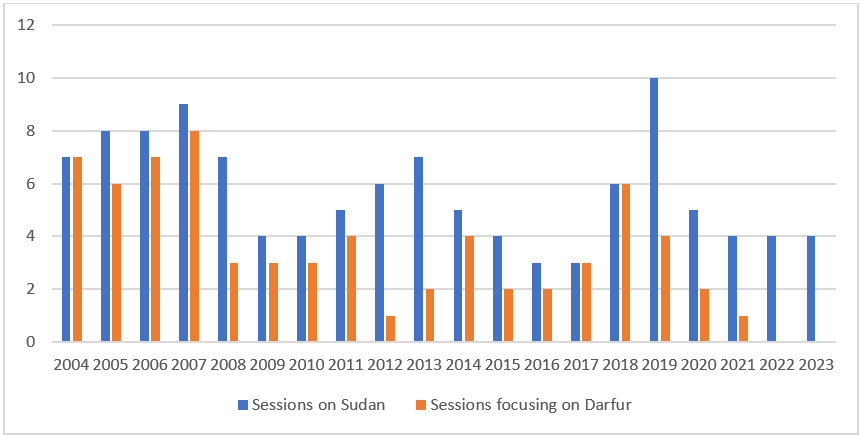
Taken from Amani Africa’s Ideas Indaba article titled Why Darfur deserves a special attention, published on 22 June 2023
At that moment, the crisis was being actively defined externally—by international advocacy groups, humanitarian campaigns, major powers, and competing geopolitical narratives. The dominant global framing of Darfur as genocide shaped international diplomacy, which resulted in the referral of the Sudan situation to the International Criminal Court and the indictment, years later, of President Omar al-Bashir But the AU recognized something important: unless Africa itself defined the political character of the crisis, it would never be able to contribute meaningfully to its resolution.
That was the significance of the July 2008 PSC decision to establish the African Union High-Level Panel on Darfur (AUPD). Chaired by former President Thabo Mbeki of South Africa and composed of former President Abdulsalami Abubakar of Nigeria and former President Pierre Buyoya of Burundi, the Panel later evolved into the African Union High-Level Implementation Panel (AUHIP).
The Panel’s first and most important decision was deceptively simple: it resolved to define the problem.
I remember vividly how seriously this was taken. Defining the problem was not treated as a rhetorical exercise. It was understood as the very foundation of mediation itself. A wrongly defined conflict inevitably produces a wrongly designed peace process.
The Panel therefore embarked upon one of the most extensive consultative exercises ever undertaken in African mediation. For more than forty days, it travelled throughout Darfur, speaking with people from all walks of life: armed movements, displaced communities, tribal leaders, women’s groups, civil society organizations, intellectuals, native administrations, youth groups, religious leaders, and ordinary citizens.
This was not diplomacy confined to hotels and conference halls. It was political listening as method.
The consultations were enabled by the joint AU–United Nations peacekeeping operation, UNAMID, particularly through the Darfur-Darfur Dialogue and Consultation mechanism. At the time, I was serving within the political structures supporting these processes and was directly involved in coordinating aspects of this engagement before later being seconded fully to the Panel itself, where I eventually served as Chief of Staff.
What struck me most was the seriousness with which mediation was approached—not as technical facilitation, but as political responsibility. The Panel assembled exceptionally competent African and international experts who worked collectively to support a political process rooted in African norms, principles, and institutional legitimacy. There was a belief that mediation required intellectual depth, historical understanding, political sensitivity, and strategic patience.
And above all, there was humility before the complexity of Sudan itself.
The consultations ultimately produced a definition of the Darfur crisis that differed significantly from prevailing international narratives. The Panel concluded that Darfur was not an isolated problem detached from Sudan’s wider political history. It was ‘the Sudanese crisis in Darfur.’ In other words, Darfur reflected deeper structural failures of governance, marginalization, exclusion, unequal development, and the unresolved management of diversity within the Sudanese state.
This distinction mattered enormously because it changed the logic of conflict resolution itself.
If Darfur was fundamentally a Sudanese political crisis, then the solution could not be reduced merely to humanitarian management, military containment, or negotiations among armed actors. There could be no stand-alone solution for Darfur. It required a broader political transformation of Sudan.
The Panel also proposed one of the most innovative recommendations in African mediation at the time: the establishment of a hybrid court to address questions of justice and accountability. But the Sudanese government hesitated to embrace this aspect of the recommendations. This reluctance proved consequential.
When the report was presented to a special summit of the PSC in Abuja in October 2009, the discussions among African heads of state were remarkable. Several leaders argued that for the first time, Africa had produced its own coherent political definition of a major continental conflict and that the methodology itself (extensive consultation with affected people and the various conflict actors) should guide future African conflict resolution efforts.
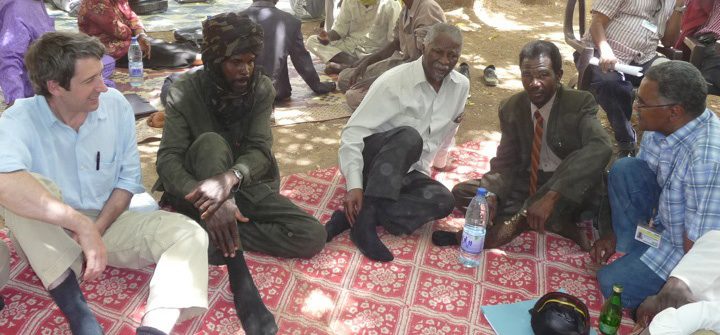
The AUHIP pivoted from the Darfur file toward another historic responsibility: accompanying the implementation of the outstanding matters of the Comprehensive Peace Agreement and helping manage the approaching referendum on self-determination for the people of southern Sudan.
The Panel had defined the Darfur issue through consultation with the people of Darfur. This was different: the Panel was mandated to facilitate the Government of Sudan and the Sudan People’s Liberation Movement in completing an agenda that had already been agreed. But the next stage demanded forward thinking, and the Panel defined the purpose of the post-referendum North-South negotiations around a central concept: the creation of’“two viable states.’ As extensively documented in the Two Sudans, this became the organizing political framework of the mediation.
The Panel understood clearly that if the referendum resulted in separation—as increasingly appeared inevitable—the task of mediation was not merely to manage partition administratively, but to ensure that both Sudan and South Sudan emerged as viable states capable of coexistence and future cooperation.
Every issue—citizenship, borders, oil, the disputed territory of Abyei, security arrangements, economic cooperation—was approached through the lens of whether it would contribute to stability, viability, and long-term coexistence between the two states.
The Panel constantly challenged the parties to think politically. The mediation sought not merely to broker deals, but to legitimize political thinking itself as a tool of statecraft and as a method of mediation.
On the eve of the referendum, as documented in details in the Two Sudans, President Thabo Mbeki delivered two seminal lectures—one at the University of Khartoum and another at the University of Juba. In both, he reminded leaders and citizens alike that if the people of South Sudan voted for independence, this would not produce one Arab country and one African country. Rather, it would produce two African countries, both carrying responsibilities toward Pan-African cooperation, coexistence, and integration.
Another important lesson from the AUHIP experience was the disciplined integration of international actors into the mediation process under African political leadership.
The United Nations, IGAD, the United States, the United Kingdom, and Norway—the Troika—were all closely integrated into the mediation framework. They contributed expertise, political leverage, technical support, and diplomatic backing. But critically, this occurred within a coherent political architecture led by the Panel.
This avoided the parallel mediation tracks and fragmentation that plague many contemporary peace processes today.
The Panel also took seriously its responsibility to regularly brief the AU PSC in detail. These substantive engagements enabled the Council to understand the complexity of the issues and adopted informed communiqués and decisions that strengthened the mediation process.
As a result, the PSC and the UN Security Council frequently operated in close coordination, issuing complementary statements and resolutions in support of the mediation effort.
As Chief of Staff of the AUHIP, I witnessed firsthand the remarkable commitment of the African and international experts who supported the process. They worked tirelessly, often under enormous pressure, and brought out the best in one another through collective purpose and discipline.
The resulting agreements were extraordinarily detailed and comprehensive—arguably among the most sophisticated political agreements ever produced in mediation history on the continent.
One aspect of the Panel’s work that remains especially vivid in my memory was President Mbeki’s practice during moments of crisis in the negotiations.
Whenever the process reached difficult impasses, President Mbeki would write lengthy and deeply thoughtful letters to President Omar al-Bashir, President Salva Kiir, and the two parties’ respective chief negotiators. These letters reminded the leaders of their historic responsibilities, outlined the difficulties confronting the mediation, proposed pathways forward, and insisted upon a central principle: that responsibility for peace ultimately belonged to the Sudanese parties themselves, not to the mediators.
I often reflect on those letters today. They represented mediation not simply as facilitation, but as sustained political engagement and ethical persuasion.
Among those who played an indispensable role in supporting the work of both the AUPD and the AUHIP was the late Prime Minister of Ethiopia, Meles Zenawi. As Chair of IGAD and as a sitting African head of government deeply invested in peace and stability in the region, Prime Minister Meles provided exceptional political support to the mediation effort. During moments of serious stalemate and tension, his interventions were often decisive. He engaged directly with the leadership of both Sudan and South Sudan and with the chief negotiators, offering ideas and political pathways that helped unlock difficult impasses. His support for the Panel was exemplary and reflected a profound understanding of mediation as strategic African statecraft.
Tragically, Prime Minister Meles Zenawi passed away before the completion of the negotiations. In recognition of his immense contribution, the two parties and the chief mediators agreed to dedicate the agreement signed between Sudan and South Sudan in his honor. It was a deeply emotional and symbolic moment that reflected the respect he had earned across the process. The resultant full confidence of the two countries in Ethiopia led to the unprecedented and historic development in which Ethiopia was invited to serve as the only troop contributing country for the UN Interim Security Force for Abyei (UNISFA).
Looking back today, I increasingly believe the AUHIP represented the high-water mark of an era when Africa attempted to practice mediation as serious political statecraft. What made this mediation practice standout was how it built and nurtured collective strategic leadership through leveraging AU’s normative and policy instruments, constantly galvanized the consensus and support of member states and successfully sustaining international alignment. It was also exemplary in being anchored on a political strategy pursued through the policy leadership of the PSC and the political and technical stewardship of the AUHIP.
Unfortunately, many of the lessons from that period were not sustained. Over time, fragmentation returned. Collective strategic leadership faded. Competing mediation initiatives proliferated. Geopolitical competition intensified. The coherence that once existed between African institutions and international actors gradually weakened. Respect for shared norms diminished and multilateral frameworks disregarded. This is the context in which contemporary mediation is taking place.
The central lesson of the AUHIP experience remains profoundly relevant: sustainable peace cannot emerge unless mediators possess the political courage and intellectual discipline to define conflicts honestly, engage societies broadly, and insist upon political solutions rooted in legitimacy and ownership.
Ownership means that the parties themselves take the credit and win the plaudits, not the mediator. That is one reason why it has taken more than a decade for this book to be published—none of those involved wanted to rush to claim the limelight.
Dag Hammarskjöld once observed that multilateral institutions were not created to take humanity to heaven, but to save it from hell. The AUHIP exemplifies the seriousness with which African institutions carried such responsibilities at that time.
The Panel also benefited enormously from the exemplary support and facilitation of the African Union Commission itself. Under the leadership of Chairperson Jean Ping and subsequently Nkosazana Dlamini-Zuma, along with Commissioner for Peace and Security Said Djinnit and his successor Ramtane Lamamra, El-Ghassim Wane, then Director of the Peace and Security Department, and senior staff, such as Dawit Toga played crucial roles.
All in all, the AU mobilized its political, diplomatic, and technical capacities in support of the Panel’s work, without fretting about control or taking credit. The commitment of various AU actors reflected a period when the AU approached mediation not as peripheral diplomacy, but as a central strategic responsibility. This responsibility was not seen as a matter of personal choice or discretion of particular leaders of the AU Commission but is discharged as mandatory pan-African public role and by actively seeking and harnessing the contribution of all those whose role advances the cause of peace.
The Panel also received dedicated and indispensable support from key international and regional partners, highlighting the collective nature of the exercise. Haile Menkerios and the late Nicholas Haysom, both serving as representatives of the United Nations Secretary-General, provided critical political and diplomatic backing throughout the process. Key UN staff included Vladimir Zhagora and Muin Shreim. Ambassador Lissane Yohannes, representing IGAD, the late Ambassador Princeton Lyman, the Special Envoy of the United States, and Mohamed Yonis, Head of Administration of UNAMID, all played vital roles in sustaining and supporting the mediation effort at crucial moments.
The Panel’s support team was the nerve centre of the work of the Panel. As Chief of Staff of the AUHIP, I attest with deep appreciation the extraordinary dedication and professionalism of the colleagues who formed part of the Panel’s support team. Among them were Paatii Ofosu-Amaah, Barney Afako, Alex de Waal, Allan Pillay, Sani Atsu, Neha Erasmus, Pauline Odera, Laura James, Sarah Nouwen, Chris Luckham, Boitshoko Mokgatlhe, Ambassador Mahmoud Kane, Ali Hassan, Fiona Lortan, Mukoni Ratshitanga, Mashood Issaka, Eric Abibo N’gandu, Sergine Gakwaya, Meron Genene and many others whose tireless efforts, intellectual rigor, and collective sense of purpose were indispensable to the success of the Panel.
The Sudans by Alex de Waal and Willow Berridge captures and documents this African mediation journey with exceptional richness and depth. The book is fundamentally about the work of the Panel itself and the broader political and mediation experience surrounding Sudan and South Sudan as well as the lessons from that experience.
The book documents the mediation experience, the negotiations, and the broader African political journey surrounding Sudan and South Sudan with sophistication and humanity. It is not merely a dry institutional account or technical documentation of negotiations. It captures the human drama, the tensions, the personalities, the political dilemmas, and the immense complexity of mediation itself. Much of what I have reflected upon in this essay is captured in the book in extraordinary detail and richness.
Alex de Waal himself was deeply involved in the work of the Panel and contributed immensely across multiple dimensions of the mediation process. No one could have documented this experience with the same depth of understanding.
As Chief of Staff of the AUHIP, I bear witness to the seriousness, commitment, and integrity with which this work was undertaken. For that reason, I believe The Sudans will stand as one of the most important contributions to the literature of mediation and African political history for many years to come, not least of all by availing authoritative source of reference on the exemplary contribution of the Panel to translating AU norms and processes into mediation practice.
The content of this article does not represent the views of Amani Africa and reflect only the personal views of the authors who contribute to ‘Ideas Indaba’
The Last Serious African Mediation? Reflections on and lessons from the AUHIP Experience and the Meaning of African Political Agency
The Last Serious African Mediation?
Reflections on and lessons from the AUHIP Experience and the Meaning of African Political Agency
Date | 2 June 2026
Abdul Mohammed
Africa and the African Union (AU) have rich mediation experiences from the post-election crisis in Kenya (2007/2008) to the civil war in Darfur, Sudan to draw from for restoring the peacemaking and mediation leadership that the AU lost. The release of the book titled The Sudans by Alex de Waal and Willow Berridge providing the most comprehensive and detailed data and analysis on one of AU’s most sustained and impactful mediation process.
There are moments in history when institutions are not merely bureaucratic creations but expressions of political conviction. The African Union High-Level Implementation Panel (AUHIP) was born in such a moment.
To understand the significance of the AUHIP experience—and why its lessons matter urgently today—it is necessary to recall the Africa that gave rise to it.
The AUHIP emerged at the zenith of a remarkable era in which the continent’s organizations were invigorated: the transformation of the Organisation of African Unity into the African Union, the emergence of New Economic Partnership for Africa’s Development (NEPAD), and the construction of the African Peace and Security Architecture (APSA). Across Africa, leaders, intellectuals, diplomats, liberation veterans, civic formations, and policy thinkers were engaged in profound reflection on Pan-Africanism and African agency in a changing world.
This was not merely institutional reform. It was an attempt to redefine Africa’s political Destiny and agency.
New norms and principles were adopted. The Peace and Security Council was established. Mediation became a strategic political instrument rather than an ad hoc diplomatic exercise. The ‘primacy of politics’ was embraced as a guiding doctrine for conflict prevention and resolution. Africa committed itself, at least normatively, to leave no conflict unattended.
The phrase ‘African solutions to African problems’ was widely invoked during this period. Unfortunately, it is often misunderstood today. It never meant excluding international actors or retreating into continental isolation. Rather, it meant that Africans themselves had to assume responsibility for defining the political nature of their crises and shaping the frameworks for their resolution. International partnership remained essential, but African political ownership had to provide the strategic direction.
Sudan became one of the first and most consequential tests of this new African doctrine.
The Darfur conflict erupted in 2003 just as the APSA was taking shape. Indeed, Darfur was among the earliest agenda items confronted by the newly established PSC of the AU, leading to the adoption of several far-reaching decisions, including the deployment of a mission to protect civilians and oversee the ceasefire reached among the belligerents, as well as the launching of a political process to achieve a lasting settlement (see here).
Taken from Amani Africa’s Ideas Indaba article titled Why Darfur deserves a special attention, published on 22 June 2023
At that moment, the crisis was being actively defined externally—by international advocacy groups, humanitarian campaigns, major powers, and competing geopolitical narratives. The dominant global framing of Darfur as genocide shaped international diplomacy, which resulted in the referral of the Sudan situation to the International Criminal Court and the indictment, years later, of President Omar al-Bashir But the AU recognized something important: unless Africa itself defined the political character of the crisis, it would never be able to contribute meaningfully to its resolution.
That was the significance of the July 2008 PSC decision to establish the African Union High-Level Panel on Darfur (AUPD). Chaired by former President Thabo Mbeki of South Africa and composed of former President Abdulsalami Abubakar of Nigeria and former President Pierre Buyoya of Burundi, the Panel later evolved into the African Union High-Level Implementation Panel (AUHIP).
The Panel’s first and most important decision was deceptively simple: it resolved to define the problem.
I remember vividly how seriously this was taken. Defining the problem was not treated as a rhetorical exercise. It was understood as the very foundation of mediation itself. A wrongly defined conflict inevitably produces a wrongly designed peace process.
The Panel therefore embarked upon one of the most extensive consultative exercises ever undertaken in African mediation. For more than forty days, it travelled throughout Darfur, speaking with people from all walks of life: armed movements, displaced communities, tribal leaders, women’s groups, civil society organizations, intellectuals, native administrations, youth groups, religious leaders, and ordinary citizens.
This was not diplomacy confined to hotels and conference halls. It was political listening as method.
The consultations were enabled by the joint AU–United Nations peacekeeping operation, UNAMID, particularly through the Darfur-Darfur Dialogue and Consultation mechanism. At the time, I was serving within the political structures supporting these processes and was directly involved in coordinating aspects of this engagement before later being seconded fully to the Panel itself, where I eventually served as Chief of Staff.
What struck me most was the seriousness with which mediation was approached—not as technical facilitation, but as political responsibility. The Panel assembled exceptionally competent African and international experts who worked collectively to support a political process rooted in African norms, principles, and institutional legitimacy. There was a belief that mediation required intellectual depth, historical understanding, political sensitivity, and strategic patience.
And above all, there was humility before the complexity of Sudan itself.
The consultations ultimately produced a definition of the Darfur crisis that differed significantly from prevailing international narratives. The Panel concluded that Darfur was not an isolated problem detached from Sudan’s wider political history. It was ‘the Sudanese crisis in Darfur.’ In other words, Darfur reflected deeper structural failures of governance, marginalization, exclusion, unequal development, and the unresolved management of diversity within the Sudanese state.
This distinction mattered enormously because it changed the logic of conflict resolution itself.
If Darfur was fundamentally a Sudanese political crisis, then the solution could not be reduced merely to humanitarian management, military containment, or negotiations among armed actors. There could be no stand-alone solution for Darfur. It required a broader political transformation of Sudan.
The Panel also proposed one of the most innovative recommendations in African mediation at the time: the establishment of a hybrid court to address questions of justice and accountability. But the Sudanese government hesitated to embrace this aspect of the recommendations. This reluctance proved consequential.
When the report was presented to a special summit of the PSC in Abuja in October 2009, the discussions among African heads of state were remarkable. Several leaders argued that for the first time, Africa had produced its own coherent political definition of a major continental conflict and that the methodology itself (extensive consultation with affected people and the various conflict actors) should guide future African conflict resolution efforts.
The AUHIP pivoted from the Darfur file toward another historic responsibility: accompanying the implementation of the outstanding matters of the Comprehensive Peace Agreement and helping manage the approaching referendum on self-determination for the people of southern Sudan.
The Panel had defined the Darfur issue through consultation with the people of Darfur. This was different: the Panel was mandated to facilitate the Government of Sudan and the Sudan People’s Liberation Movement in completing an agenda that had already been agreed. But the next stage demanded forward thinking, and the Panel defined the purpose of the post-referendum North-South negotiations around a central concept: the creation of’“two viable states.’ As extensively documented in the Two Sudans, this became the organizing political framework of the mediation.
The Panel understood clearly that if the referendum resulted in separation—as increasingly appeared inevitable—the task of mediation was not merely to manage partition administratively, but to ensure that both Sudan and South Sudan emerged as viable states capable of coexistence and future cooperation.
Every issue—citizenship, borders, oil, the disputed territory of Abyei, security arrangements, economic cooperation—was approached through the lens of whether it would contribute to stability, viability, and long-term coexistence between the two states.
The Panel constantly challenged the parties to think politically. The mediation sought not merely to broker deals, but to legitimize political thinking itself as a tool of statecraft and as a method of mediation.
On the eve of the referendum, as documented in details in the Two Sudans, President Thabo Mbeki delivered two seminal lectures—one at the University of Khartoum and another at the University of Juba. In both, he reminded leaders and citizens alike that if the people of South Sudan voted for independence, this would not produce one Arab country and one African country. Rather, it would produce two African countries, both carrying responsibilities toward Pan-African cooperation, coexistence, and integration.
Another important lesson from the AUHIP experience was the disciplined integration of international actors into the mediation process under African political leadership.
The United Nations, IGAD, the United States, the United Kingdom, and Norway—the Troika—were all closely integrated into the mediation framework. They contributed expertise, political leverage, technical support, and diplomatic backing. But critically, this occurred within a coherent political architecture led by the Panel.
This avoided the parallel mediation tracks and fragmentation that plague many contemporary peace processes today.
The Panel also took seriously its responsibility to regularly brief the AU PSC in detail. These substantive engagements enabled the Council to understand the complexity of the issues and adopted informed communiqués and decisions that strengthened the mediation process.
As a result, the PSC and the UN Security Council frequently operated in close coordination, issuing complementary statements and resolutions in support of the mediation effort.
As Chief of Staff of the AUHIP, I witnessed firsthand the remarkable commitment of the African and international experts who supported the process. They worked tirelessly, often under enormous pressure, and brought out the best in one another through collective purpose and discipline.
The resulting agreements were extraordinarily detailed and comprehensive—arguably among the most sophisticated political agreements ever produced in mediation history on the continent.
One aspect of the Panel’s work that remains especially vivid in my memory was President Mbeki’s practice during moments of crisis in the negotiations.
Whenever the process reached difficult impasses, President Mbeki would write lengthy and deeply thoughtful letters to President Omar al-Bashir, President Salva Kiir, and the two parties’ respective chief negotiators. These letters reminded the leaders of their historic responsibilities, outlined the difficulties confronting the mediation, proposed pathways forward, and insisted upon a central principle: that responsibility for peace ultimately belonged to the Sudanese parties themselves, not to the mediators.
I often reflect on those letters today. They represented mediation not simply as facilitation, but as sustained political engagement and ethical persuasion.
Among those who played an indispensable role in supporting the work of both the AUPD and the AUHIP was the late Prime Minister of Ethiopia, Meles Zenawi. As Chair of IGAD and as a sitting African head of government deeply invested in peace and stability in the region, Prime Minister Meles provided exceptional political support to the mediation effort. During moments of serious stalemate and tension, his interventions were often decisive. He engaged directly with the leadership of both Sudan and South Sudan and with the chief negotiators, offering ideas and political pathways that helped unlock difficult impasses. His support for the Panel was exemplary and reflected a profound understanding of mediation as strategic African statecraft.
Tragically, Prime Minister Meles Zenawi passed away before the completion of the negotiations. In recognition of his immense contribution, the two parties and the chief mediators agreed to dedicate the agreement signed between Sudan and South Sudan in his honor. It was a deeply emotional and symbolic moment that reflected the respect he had earned across the process. The resultant full confidence of the two countries in Ethiopia led to the unprecedented and historic development in which Ethiopia was invited to serve as the only troop contributing country for the UN Interim Security Force for Abyei (UNISFA).
Looking back today, I increasingly believe the AUHIP represented the high-water mark of an era when Africa attempted to practice mediation as serious political statecraft. What made this mediation practice standout was how it built and nurtured collective strategic leadership through leveraging AU’s normative and policy instruments, constantly galvanized the consensus and support of member states and successfully sustaining international alignment. It was also exemplary in being anchored on a political strategy pursued through the policy leadership of the PSC and the political and technical stewardship of the AUHIP.
Unfortunately, many of the lessons from that period were not sustained. Over time, fragmentation returned. Collective strategic leadership faded. Competing mediation initiatives proliferated. Geopolitical competition intensified. The coherence that once existed between African institutions and international actors gradually weakened. Respect for shared norms diminished and multilateral frameworks disregarded. This is the context in which contemporary mediation is taking place.
The central lesson of the AUHIP experience remains profoundly relevant: sustainable peace cannot emerge unless mediators possess the political courage and intellectual discipline to define conflicts honestly, engage societies broadly, and insist upon political solutions rooted in legitimacy and ownership.
Ownership means that the parties themselves take the credit and win the plaudits, not the mediator. That is one reason why it has taken more than a decade for this book to be published—none of those involved wanted to rush to claim the limelight.
Dag Hammarskjöld once observed that multilateral institutions were not created to take humanity to heaven, but to save it from hell. The AUHIP exemplifies the seriousness with which African institutions carried such responsibilities at that time.
The Panel also benefited enormously from the exemplary support and facilitation of the African Union Commission itself. Under the leadership of Chairperson Jean Ping and subsequently Nkosazana Dlamini-Zuma, along with Commissioner for Peace and Security Said Djinnit and his successor Ramtane Lamamra, El-Ghassim Wane, then Director of the Peace and Security Department, and senior staff, such as Dawit Toga played crucial roles.
All in all, the AU mobilized its political, diplomatic, and technical capacities in support of the Panel’s work, without fretting about control or taking credit. The commitment of various AU actors reflected a period when the AU approached mediation not as peripheral diplomacy, but as a central strategic responsibility. This responsibility was not seen as a matter of personal choice or discretion of particular leaders of the AU Commission but is discharged as mandatory pan-African public role and by actively seeking and harnessing the contribution of all those whose role advances the cause of peace.
The Panel also received dedicated and indispensable support from key international and regional partners, highlighting the collective nature of the exercise. Haile Menkerios and the late Nicholas Haysom, both serving as representatives of the United Nations Secretary-General, provided critical political and diplomatic backing throughout the process. Key UN staff included Vladimir Zhagora and Muin Shreim. Ambassador Lissane Yohannes, representing IGAD, the late Ambassador Princeton Lyman, the Special Envoy of the United States, and Mohamed Yonis, Head of Administration of UNAMID, all played vital roles in sustaining and supporting the mediation effort at crucial moments.
The Panel’s support team was the nerve centre of the work of the Panel. As Chief of Staff of the AUHIP, I attest with deep appreciation the extraordinary dedication and professionalism of the colleagues who formed part of the Panel’s support team. Among them were Paatii Ofosu-Amaah, Barney Afako, Alex de Waal, Allan Pillay, Sani Atsu, Neha Erasmus, Pauline Odera, Laura James, Sarah Nouwen, Chris Luckham, Boitshoko Mokgatlhe, Ambassador Mahmoud Kane, Ali Hassan, Fiona Lortan, Mukoni Ratshitanga, Mashood Issaka, Eric Abibo N’gandu, Sergine Gakwaya, Meron Genene and many others whose tireless efforts, intellectual rigor, and collective sense of purpose were indispensable to the success of the Panel.
The Sudans by Alex de Waal and Willow Berridge captures and documents this African mediation journey with exceptional richness and depth. The book is fundamentally about the work of the Panel itself and the broader political and mediation experience surrounding Sudan and South Sudan as well as the lessons from that experience.
The book documents the mediation experience, the negotiations, and the broader African political journey surrounding Sudan and South Sudan with sophistication and humanity. It is not merely a dry institutional account or technical documentation of negotiations. It captures the human drama, the tensions, the personalities, the political dilemmas, and the immense complexity of mediation itself. Much of what I have reflected upon in this essay is captured in the book in extraordinary detail and richness.
Alex de Waal himself was deeply involved in the work of the Panel and contributed immensely across multiple dimensions of the mediation process. No one could have documented this experience with the same depth of understanding.
As Chief of Staff of the AUHIP, I bear witness to the seriousness, commitment, and integrity with which this work was undertaken. For that reason, I believe The Sudans will stand as one of the most important contributions to the literature of mediation and African political history for many years to come, not least of all by availing authoritative source of reference on the exemplary contribution of the Panel to translating AU norms and processes into mediation practice.
The content of this article does not represent the views of Amani Africa and reflect only the personal views of the authors who contribute to ‘Ideas Indaba’